
All Articles
SPONSORED
Visiting the Dwight D. Eisenhower Memorial
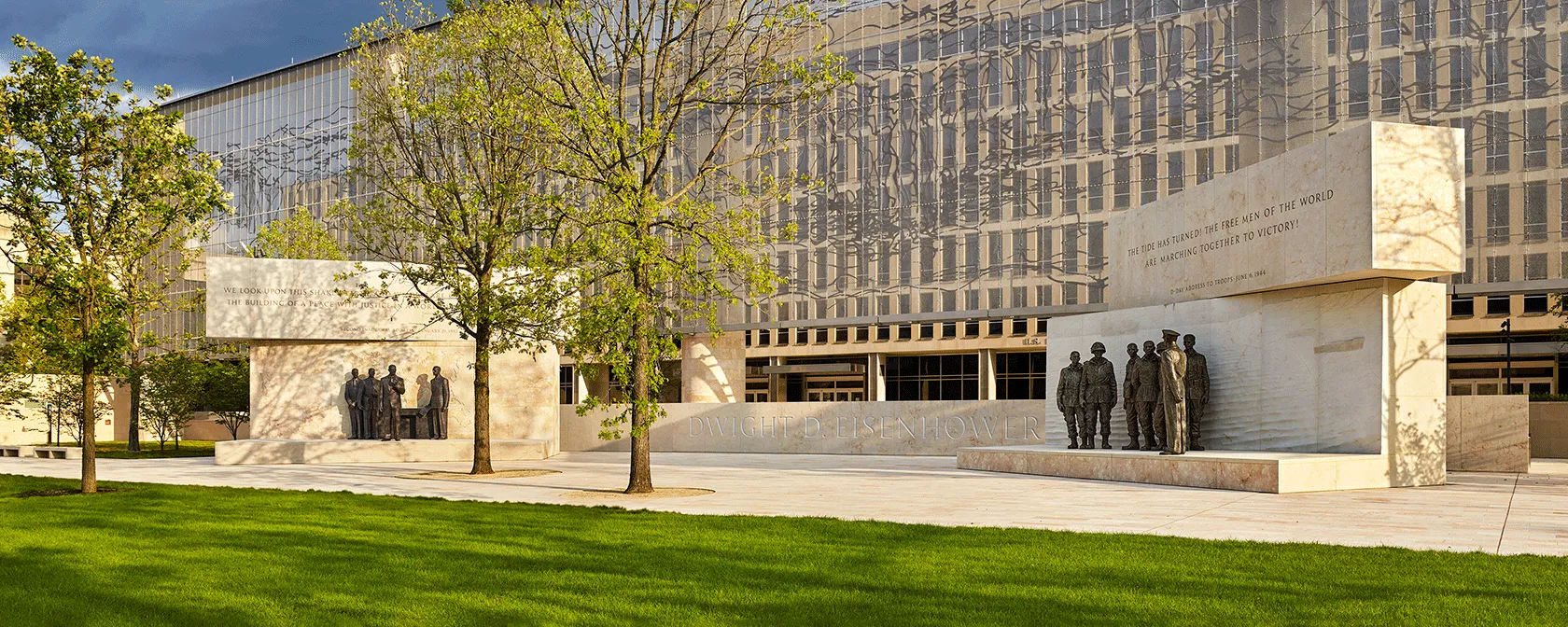
What is the Dwight D. Eisenhower Memorial and where is it? The Dwight D. Eisenhower Memorial, designed by world-renowned architect Frank Gehry, is located at the base of Capitol Hill at 540 Independence Avenue SW. The four-acre urban park features a variety of pieces that symbolize Eisenhower’s inspirational feats during his time as the supreme commander of the Allied Expeditionary Force in Europe during World War II and as the 34th U.S. president. View this post on Instagram A post shared by Mary Laurin (@fiddlefun2) What will I see at the Dwight D. Eisenhower Memorial? The memorial site itself holds a close and unique relationship to Eisenhower’s life-long commitment to public service. The federal entities neighboring the Maryland Avenue site demonstrate Eisenhower’s broad legacy of improved national infrastructure, the foundation upon which he worked to build “a peace with justice in a world where moral law prevails.” In honor of his military accomplishments, General Eisenhower appears with paratroopers of the 101st Airborne Division before the Battle of Normandy. Behind the sculptures is a bas relief featuring Eisenhower that depicts the Normandy landings on D-Day, June 6, 1944. His time as president is memorialized through sculptures that symbolize the balance of security and liberty that Eisenhower worked to achieve. One features Dwight in the Oval Office surrounded by military and civilian advisors. A map of the world in bas relief stands behind, reflecting Eisenhower’s internationalism and role as a world leader. A life-size sculpture of young Eisenhower takes you to the beginning of his journey. The piece is accompanied by an inscription of an excerpt from Eisenhower's Abilene Homecoming Speech in Kansas on June 22, 1945, where he declared “the proudest thing I can claim is that I am from Abilene.” A stainless-steel tapestry frames the entire memorial and portrays an abstract depiction of the Normandy coastline in peacetime to represent the peace Eisenhower won as supreme commander, then preserved as commander-in-chief. The iconic Pointe du Hoc landmark is featured at the center of the hand-drawn image. The one-of-a-kind piece is 450 feet long, supported by 80-foot stone-clad columns, and the image will appear differently throughout the day based on light and shadows. Free audio guides are available for your self-guided tour.
Visiting the National Gallery of Art in Washington, DC
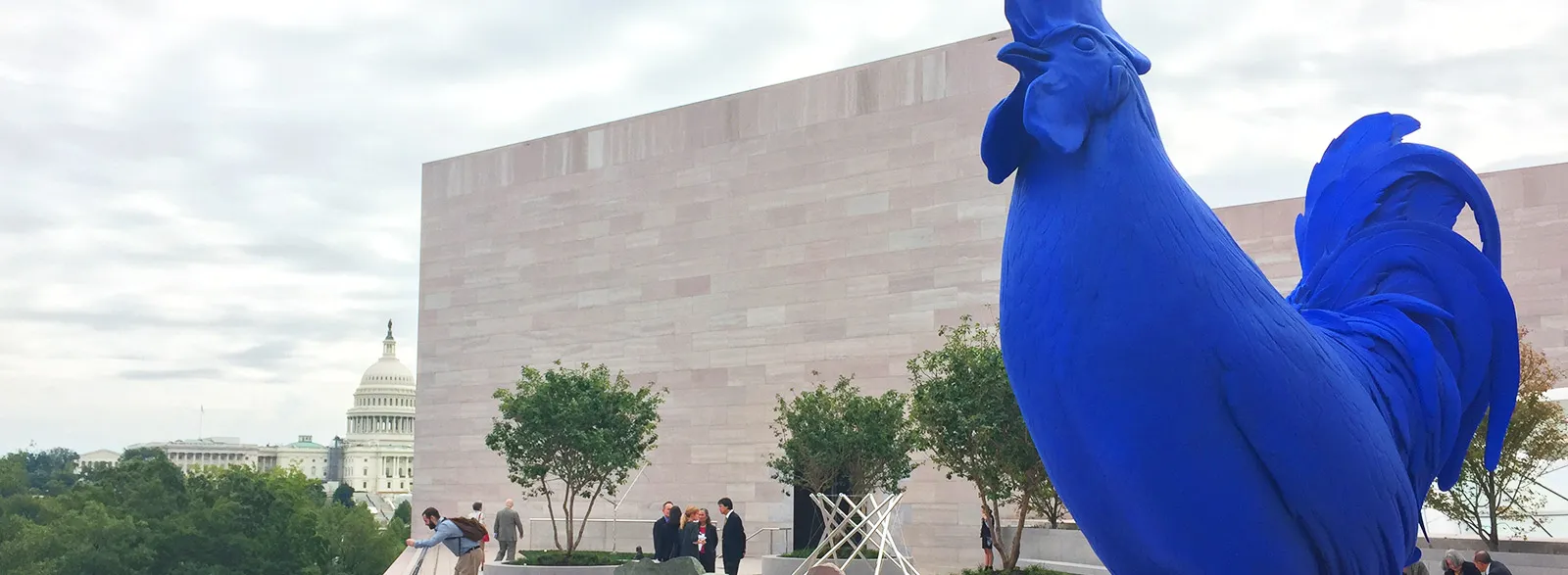
What and where is the National Gallery of Art? The National Gallery of Art and its gorgeous Sculpture Garden (which features an ice rink in the winter time) are located on Constitution Avenue NW between 3rd and 9th Streets NW. Through its East and West Buildings, the museum preserves, collects and exhibits works of art from numerous countries and historical eras. Its collection features roughly 141,000 paintings, drawings, photographs, sculptures and forms of new media that stretch all the way back to the Middle Ages. When is the National Gallery of Art open? The museum is open every day of the year except Dec. 25 and Jan. 1. Its hours are 10 a.m. – 5 p.m. daily. Admission is always free. How to get to the National Gallery of Art? The easiest way to reach the National Gallery of Art is via Metrorail or the DC Circulator. The closest Metro stop is Archives – Navy Memorial – Penn Quarter on the Green and Yellow Lines. The DC Circulator’s National Mall route will take you near the Gallery’s buildings and Sculpture Garden – making it easy to continue your exploration of the National Mall afterward. The facility is handicap-accessible. What’s inside the National Gallery of Art? The National Gallery of Art regularly features temporary exhibits that highlight distinctive artists in a range of mediums. From Renaissance masters to modern-day marvels, you will be able to take in creations that advance and challenge form and structure. Be sure to check out the museum’s current exhibits and installations as you plan your visit. After a three-year renovation, the Gallery’s East Building has added two sky-lit tower galleries, two staircases connecting all levels of the museum, a rooftop terrace with a dazzling blue rooster sculpture and more than 500 works of art, including pieces by Alexander Calder, Barbara Kruger, Jasper Johns, Pablo Picasso and Mark Rothko. The I.M. Pei-designed wing sleekly contrasts the Beaux Arts and Classical architecture throughout DC, making it a must-visit for those looking to have their mind blown by art. Connecting the West and East Buildings is Leo Villareal’s incredible Multiverse installation. More than 41,000 LED nodes light up the 200-foot space, creating abstract configurations that literally light your way as you head from one building to the other via an underground concourse. An exploration of the West Building is as revelatory and moving of a museum experience as exists in the U.S. Thousands of essential works, organized by period and national origin, are arranged in spectacular and comprehensive galleries across two floors of exhibition space. The main floor features European paintings and sculptures that date as far back as the 13th century, as well as seminal American art. On the ground floor, you can gaze at pieces by essential masters such as Manet, Renoir and Cézanne, as well as decorative art, prints and drawings. The museum’s expansive gift shop, also located on the ground floor, is well worth a visit. The Gallery’s Sculpture Garden should also be a part of your visit. The 6.1-acre space, adjacent to the West Building, features beautiful trees, walking and seating areas and 17 sculptures taken from the Gallery’s collection. Among them: Robert Indiana’s famous AMOR, a play on the artist’s LOVE sculpture. The Garden also sports a fountain that serves as an ice rink from November – March, as well as The Pavilion Café, which offers year-round service and indoor seating. The National Gallery of Art also hosts events throughout the year, including concerts, guided tours, gallery talks and much more. Check the museum’s calendar before you go.
Visiting the National Museum of Women in the Arts in Washington, DC
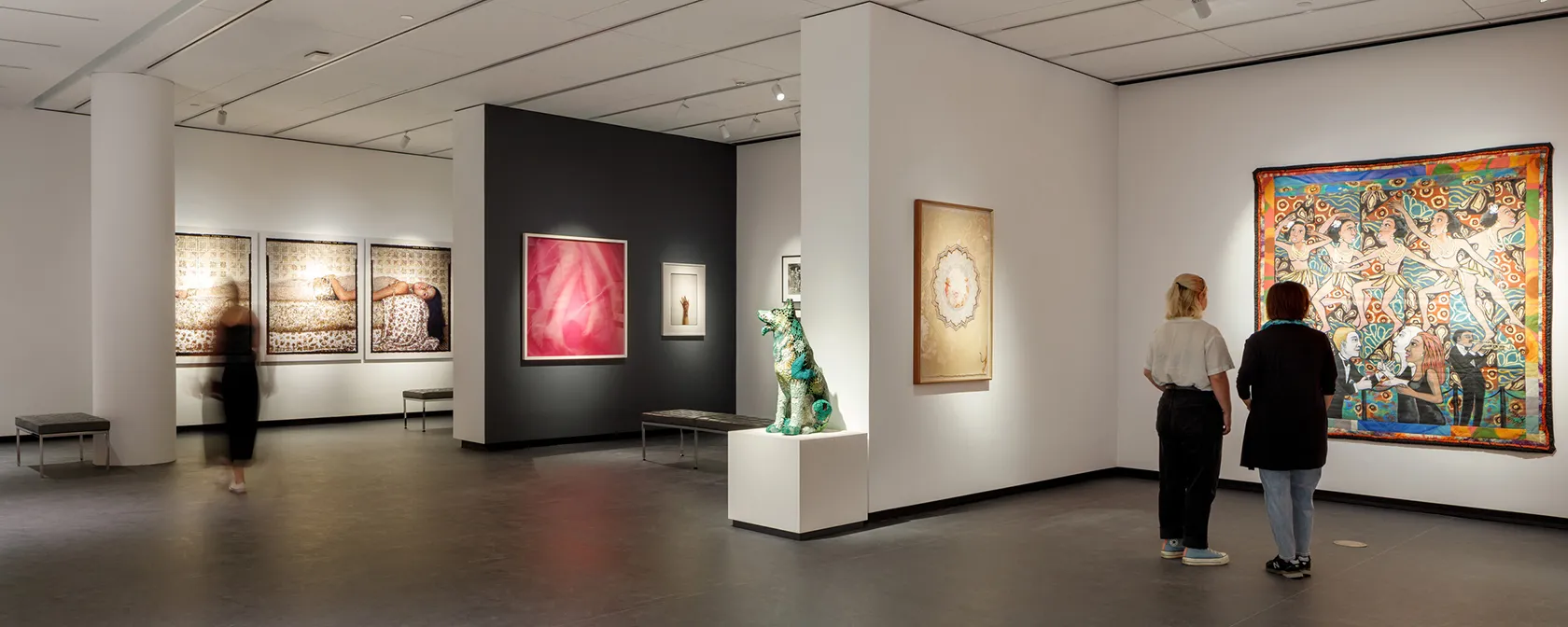
What and where is the National Museum of Women in the Arts? The National Museum of Women in the Arts (NMWA) is located at 1250 New York Avenue NW in DC's Downtown neighbohood. Founded in 1981 and opened in 1987, NMWA is the only major museum on the planet solely dedicated to celebrating the diverse achievements of women artists. The museum’s collection includes more than 6,000 works dating from the 16th century to the present. The museum is open every day of the year except for Thanksgiving, Christmas Day and New Year’s Day. Hours are Tuesday – Sunday, 10 a.m. – 5 p.m. Patrons under the age of 21 enter for free. Admission for adults is $16, while visitors ages 70 and over and DC residents pay $13. Become a member with NMWA and you can enter for free. The easiest way to get there is via Metrorail or Metrobus. The closest Metro stop is the Metro Center station on the Red, Blue, Orange and Silver lines. Numerous Metrobus routes, including the 80, G8, S2, S4, X2, 68 and 42 will take you to the corner of H and 13th Streets, a short walk from the museum. The facility is handicap-accessible. What’s inside the National Museum of Women in the Arts? A recent renovation has only added and enhanced the wonderful offerings at this only-in-DC museum. Enlarged gallery spaces make for more art, both in quantity and variety. A studio workshop has been added, where visitors can learn and create their own art. There's also a beautiful new performance hall and a brand new exhibit entitled The Sky's the Limit, which features hanging sculptures on the second floor thanks to a newly reinforced ceiling. In total, 40% of the 6,000 works now on display at the museum are making their debut. The powerful contributions that women have made to the art world can be surveyed inside NMWA. The collection spans hundreds of years, encompassing numerous eras and seminal artists. NMWA has organized the collections by theme, letting visitors observe how certain ideas and modes of art have been in dialogue with each other across centuries. Your journey will feature still-life paintings from the 1600s and cutting-edge photography from the 2000s. You’ll be able to observe the stunning detail of a portrait by Élisabeth Vigée Le Brun, the intimacy of a print made by Mary Cassatt, the abstract beauty of a sculpture by Judy Chicago and Frida Kahlo's Self-Portrait Dedicated to Leon Trotsky, with the social, cultural and political revolutions that women forged to make their voices heard serving as vital context throughout. Additional highlights include They Call Me Redbone but I’d Rather Be Strawberry Shortcake by Amy Sherald, the artist responsible for the new Michelle Obama portrait at the National Portrait Gallery, whose distinct style is evident in both pieces. There’s Sonya Clark’s transcendent Afro Abe II, a U.S. five-dollar bill featuring the 16th president outfitted with the hairstyle found in the title. Locals will love a view of Rainy Night, Downtown by Georgia Mills Jessup, an interpretation of a DC street with gorgeous contrasts and shapes. Of course, NMWA frequently offers exciting exhibits that hone in on a particular artist or theme, including its Women to Watch series. Visit the museum’s website to see what’s currently on display and what’s upcoming. To see what’s going on during your visit, check out the NMWA events calendar, plus you can experience programs and exhibitions online through NMWA at home. One recurring event to keep in mind: Free Community Day, which occurs on the first and third Sundays of each month through November and allows free admission to the museum all day with a timed ticket. The museum's reopened Mezzanine Café, which is operated by Little Food Studio (a local, woman-owned establishment), offers a selection of sandwiches, salads, snacks and pastries along with refreshing hot and cold beverages including juices, coffee, tea and sodas. Browse NMWA’s awesome online gift shop, which offers books, accessories, home goods and more.
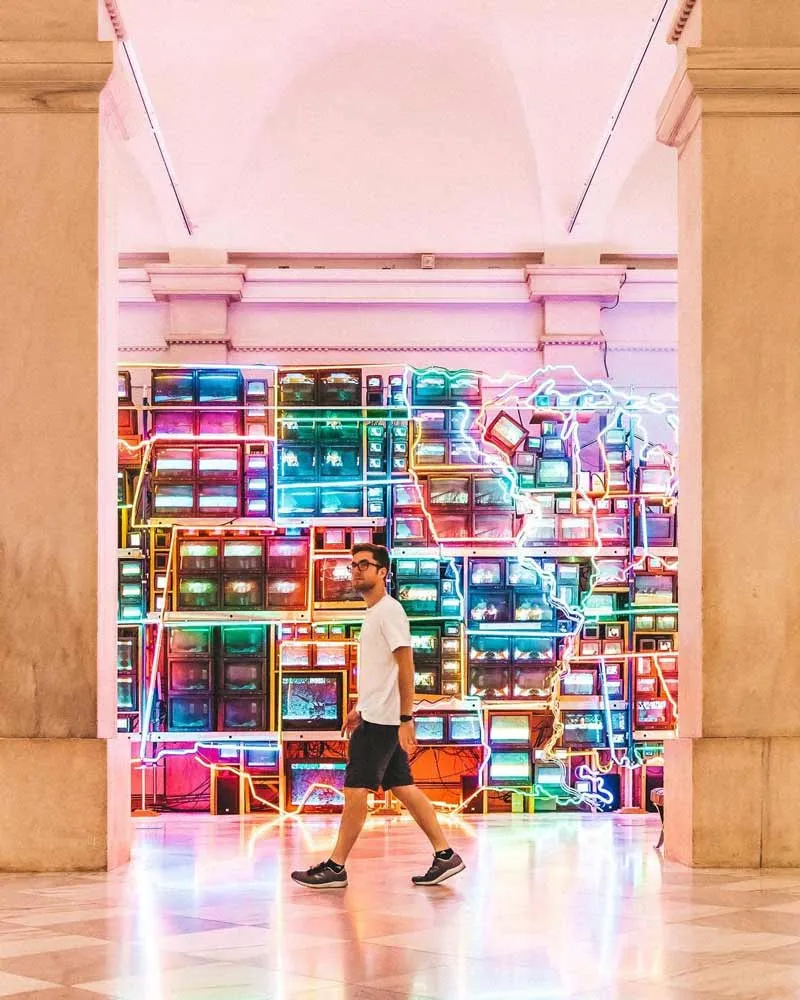
Visiting the Smithsonian American Art Museum and Renwick Gallery in Washington, DC
Wander through three centuries of American art The Smithsonian American Art Museum in Washington, DC is one of the largest and most expansive collections of American art in the world. The museum’s two locations, the main building in Penn Quarter and the Renwick Gallery located next to the White House, represent thousands of artists spanning hundreds of years. Journey through America’s artistic development by viewing 17th- and 18th-century paintings from from the colonies of New Spain and New England, then make your way through the 19th century art collection, which highlights the Western migration, impressionism and the Gilded Age. A visit to this museum is as encompassing a museum experience as one can find. What’s inside the Smithsonian American Art Museum? At the Smithsonian American Art Museum you will encounter America’s most revered artists of each time period, as forms, styles and genres were developed and perfected – as well as the National Portrait Gallery, which shares the same building. The 20th century saw progress in the realms of abstraction and realism, as visitors can see through the museum’s large collection of New Deal art and murals. The museum also hosts a vast contemporary art collection, so your trek through American art will bring you all the way to the present day. If you are looking for a more culturally oriented perspective, collections do stem beyond eras: the museum features exhibits specifically dedicated to African American and Latino artists, as well as folk art. The Renwick Gallery is the museum’s free-to-enter home for contemporary craft and decorative art, displaying the finest in American craft and decorative art in its beautiful, state-of-the-art building just steps from the White House. The Renwick is known for its groundbreaking interactive exhibits, so make sure to check out what's happening there before you go. Museum locations and hours The American Art Museum is located on 8th and F streets NW, while the Renwick Gallery can be found at Pennsylvania Avenue and 17th Street NW. Admission is always free, the museums are open Wednesday-Sunday and regular hours are 11:30 a.m. – 7 p.m at the American Art Museum and 10 a.m. – 5:30 p.m. at the Renwick. Both facilities are handicap accessible. Take a break in the Kogod Courtyard If your march through the annals of American art history has you feeling both amazed and a bit tired, enjoy the Kogod Courtyard, set in the Smithsonian American Art Museum. Here you can relax and gear your mind back toward the present via free Wi-Fi. The Courtyard Café is currently closed and outside food and drink is prohibited, with the exception of closed water bottles.
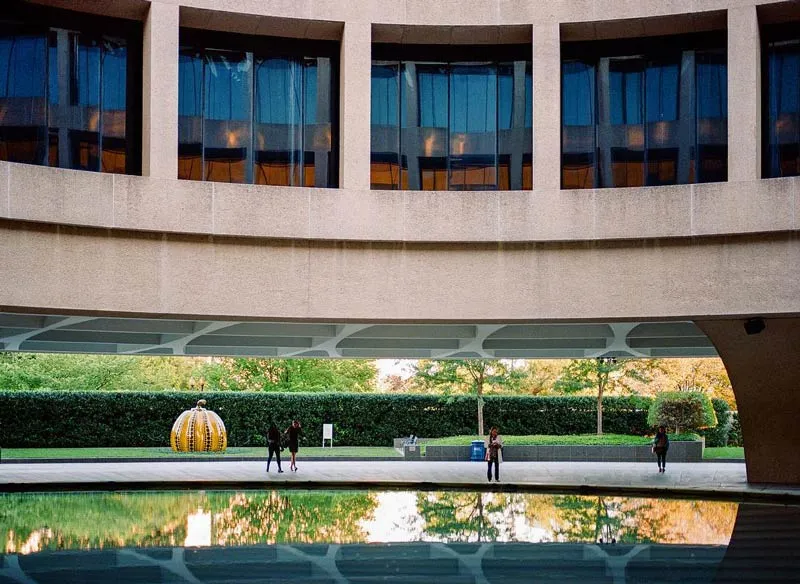
Visiting the Smithsonian Hirshhorn Museum and Sculpture Garden in Washington, DC
What is the and Sculpture Garden and where is it? The Smithsonian Hirshhorn Museum and Sculpture Garden displays some of the most unique artworks in modern and contemporary art, including painting, sculpture and photography. Located at the corner of 7th Street and Independence Avenue SW on the National Mall, the museum is passionate about creating shared experiences among artists, their art and audiences. Founded in 1974 by renowned art collector Joseph H. Hirshhorn, curators continue to expand the collection of the museum, which now boasts more than 12,000 pieces. The easiest way to get there is via Metrorail or Metrobus. The closest Metro stop is Smithsonian, on the Blue, Orange and Silver lines. The 32, 34 and 36 Metrobus routes will all take you to the National Mall. The museum is handicap-accessible. What’s inside the Hirshhorn Museum? The majestic Hirshhorn has a rotating roster of exhibitions, steadily engaging audiences with the finest in modern and contemporary artwork. From April 1, 2022, through June 14, 2023, the museum hosts One with Eternity: Yayoi Kusama in the Hirshhorn Collection, which promises to be one of the most popular exhibits of the year (timed passes are required). Acclaimed Japanese artist Hiroshi Sugimoto recently transformed the Hirshhorn lobby with designs inspired by a medieval Japanese nutmeg tree and its mess of roots. The look and feel extends to a complete redesign featuring a reconfigured entrance and new furnishings, welcome desks, digital signage and a gorgeous 20-foot metal coffee bar that serves up Dolcezza Coffee & Gelato. Visitors can also check out a prismatic light sculpture by Icelandic artist Olafur Eliasson. Of course, the Hirshhorn hosts in-depth exhibits outside of the realm of these series. You can always expect these exhibits to be edgy and innovative, highlighting artists and works that push the boundaries of what modern art can do. Keep an eye on current and upcoming exhibits as you plan your DC trip, as well as the museum’s regular programs, which include educational events, free tours, lectures and film screenings. What’s outside at the Sculpture Garden? Although it’s easy to get caught up in what’s inside the Hirshhorn Museum, what’s outside of it is equally fascinating, as 197,000 square feet of total exhibition space is put to great use. Take some time to gaze at the museum’s architecture, a magnificent circular structure that is the perfect introduction to the forward-thinking creations found inside. The famed Sculpture Garden (which measures 1.3 acres and is sunk 6-14 feet below street level) and accompanying plaza feature works from multiple artists, displaying their achievements in an open area that is easy to navigate. One of Auguste Rodin’s most famous sculptures, entitled The Burghers of Calais, can be found here. Other popular works include Yoko Ono’s Wish Tree for Washington, DC and David Smith’s Cubi XII. The nearby courtyard area boasts a circular fountain that has also become a trademark of the Hirshhorn. And make sure you fit in a stop to the Museum Shop, which features a great selection of exhibition catalogues, DVDs, postcards, books, posters and CDs. Be sure to check out our guide on accessibility within the Smithsonian museums.
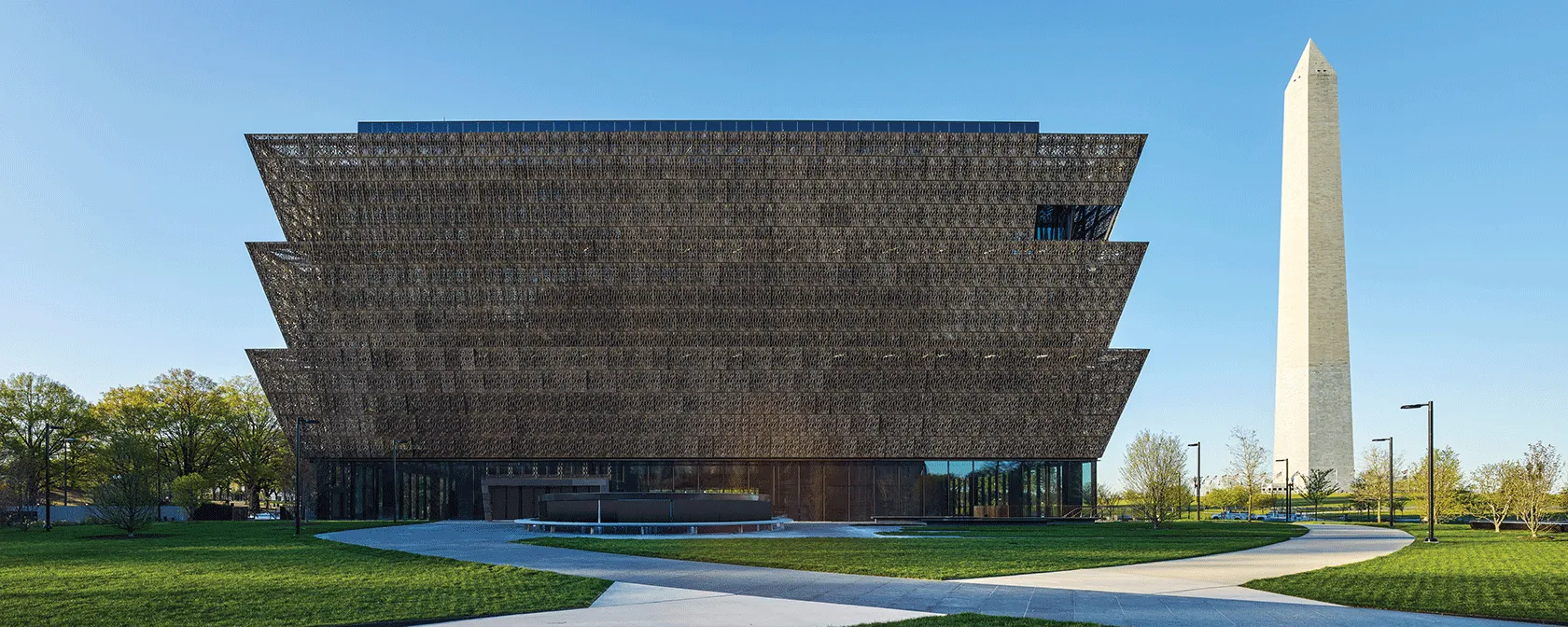
Visiting the Smithsonian National Museum of African American History and Culture
Where and what is the Smithsonian National Museum of African American History? The Smithsonian National Museum of African American History and Culture (NMAAHC) is located at 14th Street and Constitution Avenue NW on the National Mall. The four-level museum opened on Sept. 24, 2016, becoming the only national museum solely dedicated to the documentation of African American life, history and culture. This Smithsonian Institution museum is an architectural marvel that features numerous interactive exhibits. The museum is currently open Tuesday - Sunday from 10:00 a.m. - 5:30 p.m., and 12:00 p.m.-5:30 p.m. on Mondays. On Mondays that are observed as Federal Holidays, the museum opens at 10:00 a.m. The easiest way to get there is via Metrorail or the DC Circulator. The closest Metro stop is Federal Triangle on the Blue, Orange and Silver lines. The DC Circulator’s National Mall route is your best bus option, and it will be easy to continue your exploration of the National Mall afterwards. The facility is handicap-accessible. What’s inside the museum? The Smithsonian National Museum of African American History and Culture is a state-of-the-art building that addresses nearly every aspect of the African American experience, covering the arts, slavery, the Civil Rights Movement, athletics and much more. The building’s exterior, conceived by Ghanaian-born architect David Adjaye, is artfully made up of a three-tiered, bronze-colored screen. This lattice pays tribute to the intricate ironwork forged by enslaved African Americans in the southern United States. The museum’s collection of artifacts is astounding: 3,500 are on view, with another 35,000 or so in the collection. Standout items include a shawl given to Harriet Tubman by Queen Victoria, training aircraft used by the Tuskegee Institute, an invitation to President Obama’s 2009 inauguration and a boombox owned by Chuck D of Public Enemy. Navigating the entirety of the NMAAHC would be very difficult to accomplish in one visit, and the breadth of its exhibits is astonishing. However, there are several displays that you should be aware of before you go. The Musical Crossroads exhibit details the history African American music, from the arrival of the first Africans to today. From jazz to hip-hop, African American musicians brought forth new forms of expression that lit a candle for liberty, justice and change. You will be able to experience the emergence of some of America’s finest art forms and the amazing creative expressions that came from them. Slavery and Freedom uses first-person accounts and striking historical artifacts to tell an incredibly complicated tale. The exhibit traces slavery from 15th century Africa and Europe to the Civil War and Reconstruction in the United States. This vital history emphasizes that American slavery and freedom are deeply intertwined, and that the story of slavery is in fact a shared one that resides at the core of American politics, economics and daily life to this very day. Continue your dive into history with Defending Freedom, Defining Freedom and A Changing America. The former covers the era of segregation and the onset of the Civil Rights Movement, highlighting the struggle that African Americans faced and conquered in establishing a cultural identity and their own communities, changing the nation along the way. The latter goes from 1968 until today, covering the assassination of Martin Luther King, Jr. to Barack Obama’s two terms as president, journeying from the Black Panthers to #BlackLivesMatter. Check the museum’s calendar for online programming.
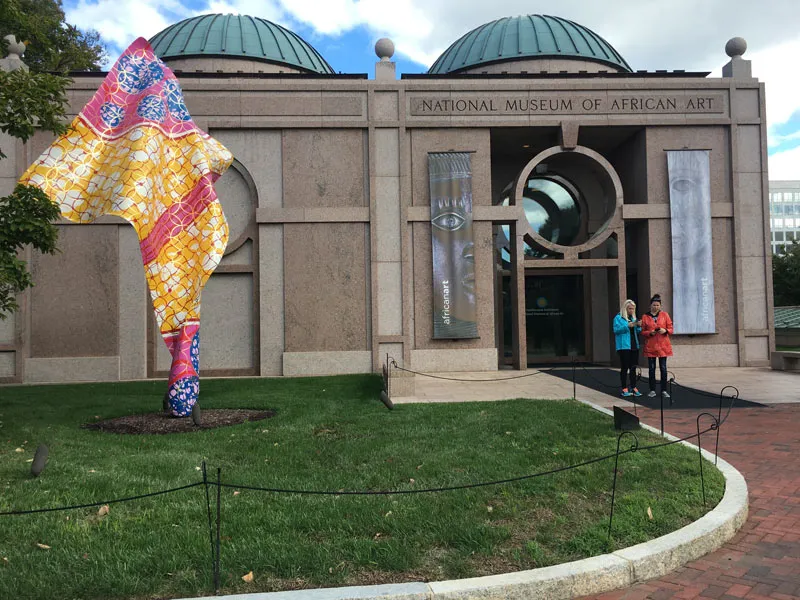
Visiting the Smithsonian National Museum of African Art in Washington, DC
What is the Smithsonian National Museum of African Art and where is it? The National Museum of African Art is located on Independence Avenue SW on the National Mall. The museum possesses the largest publicly held collection of African art in the United States, with roughly 12,000 objects in total. Its mission: to teach visitors about African art in order to create a dialogue that crosses cultural boundaries. Hours & Ticketing The museum is free and open to the public from 10 a.m. – 5:30 p.m. daily, except for Dec. 25. All public spaces, exhibitions and programs at the museum are accessible to visitors with disabilities. Best way to get there. The easiest way to reach the National Museum of African Art is via public transportation. If traveling by Metrorail, exit at the L’Enfant Plaza stop (on the Blue, Orange, Silver, Green and Yellow lines) and use the Maryland Avenue/Smithsonian Museums exit. If traveling by bus, take the DC Circulator’s National Mall route or 30, 32, 34 or 36 Metrobus lines. What will I find inside the National Museum of African Art? With a collection of artifacts that spans from the ancient to the contemporary, the museum provides a comprehensive look at the history of artistic expressions in Africa, presenting the continent through a creative lens that you would be hard-pressed to find anywhere else. Collection highlights include African Mosaic: Selections from the Permanent Collection, which collects museum purchases and gifts spanning a decade. The standout piece: an incredible sculpture of Haitian leader Toussaint Louverture by Senegalese artist Ousmane Sow. The Walt Disney-Tishman African Art Collection Highlights features rare works of traditional art from sub-Saharan Africa. The museum also boats stunning photographic archives and a world-class library. Currents: Water in African Art, one of the museum’s ongoing exhibits, focuses on pieces with water as their theme, encountering myths, metaphors and rituals along the way. Water’s importance is reflected across the many different materials and styles highlighted in this collection. The National Museum of African Art also offers docent-led tours of the museum every week, as well as film screenings and panel discussions that serve to increase the dialogue surrounding Africa and its art. The museum can also host private events throughout its spaces, including a pavilion, a mezzanine, a lecture hall and conference rooms.