
All Articles

Meeting in America’s Most Educated City
Washington, DC is a great place to host education-related meetings. With its educated workforce, commitment to lifelong learning, policymakers and industry associations, the DC region is booming with brainpower, fostering the next generation of thought leaders and innovators. Learn how to grow your delegate base, sponsorship dollars and exhibitor footprint to gain a competitive advantage for your organization. Connect with Destination DC staff, submit a meetings RFP or learn more about education-focused meetings and conventions in our education white paper. Workforce #3 most educated city in the U.S. (WalletHub, 2020) #8 for density of college students (Bloomberg CityLab) Most Bachelor’s degrees or higher than any city in the U.S. (The Washington Post) Federal government employs more highly educated workers than private sector 25,000 professionals employed at education institutions Institutions 21 higher education institutions Strong early childhood education degree programs at 17 area universities Top high school in the nation located in metro DC area Gallaudet University has consistently ranked among the top universities for deaf and hard of hearing students Innovation Education reform and innovations in school policy from early childhood education to adult New methods of learning More than 40% of DC’s public school students are enrolled in charter schools Office of State Superintendent of Education programs and agencies to ensure residents receive an education and are prepared for college, careers and life Access Federal policymakers shaping the future of education in Washington, DC Prevalence of higher education can attract attendees Proximity to Department of Education and other agencies spurs advocacy and lobbying Dozens of education associations and groups are based in DC Large availability of organizations focusing on new teaching methods such as DC Equity Lab, Citybridge Foundation and National Implementation Research Network Interested in learning more about Washington, DC as an education hub for meetings and conventions? Read our education white paper and connect with Destination DC staff for more information.

QA Test Automated cron Article sync 1
As you return to traveling this year, Washington, DC should be at the very top of your list. The nation’s capital offers more than 100 free things to do, but it should come as no surprise that museums are some of the most popular attractions. We’ve gone into deep detail on four of the city’s most popular museums (including one dedicated to living animals), none of which charge admission. Find the latest updates on visiting museums, including Smithsonian's plans to have all of its museums open by the end of August 2021, mask mandates for all indoor museums and the latest ticketing requirements. Book your next vacation to the nation’s capital and visit these only-in-the-District museums, free of charge. In the heart of the nation’s capital lives a portal to wildlife from around the world. Smithsonian’s National Zoo offers a firsthand, family-friendly experience through a 163-acre urban park in the Woodley Park neighborhood teeming with roughly 2,700 animals that represent more than 390 species. The zoo is also connected to the Smithsonian Conservation Biology Institute (a non-public facility located in Front Royal, Va.), a global effort to conserve species and train future conservationists. This focus on preserving endangered animals extends to the zoo, as one-fifth of its exhibited species fall into this category. In the heart of the nation’s capital lives a portal to wildlife from around the world. Smithsonian’s National Zoo offers a firsthand, family-friendly experience through a 163-acre urban park in the Woodley Park neighborhood teeming with roughly 2,700 animals that represent more than 390 species. The zoo is also connected to the Smithsonian Conservation Biology Institute (a non-public facility located in Front Royal, Va.), a global effort to conserve species and train future conservationists. This focus on preserving endangered animals extends to the zoo, as one-fifth of its exhibited species fall into this category. In the heart of the nation’s capital lives a portal to wildlife from around the world. Smithsonian’s National Zoo offers a firsthand, family-friendly experience through a 163-acre urban park in the Woodley Park neighborhood teeming with roughly 2,700 animals that represent more than 390 species. The zoo is also connected to the Smithsonian Conservation Biology Institute (a non-public facility located in Front Royal, Va.), a global effort to conserve species and train future conservationists. This focus on preserving endangered animals extends to the zoo, as one-fifth of its exhibited species fall into this category. In the heart of the nation’s capital lives a portal to wildlife from around the world. Smithsonian’s National Zoo offers a firsthand, family-friendly experience through a 163-acre urban park in the Woodley Park neighborhood teeming with roughly 2,700 animals that represent more than 390 species. The zoo is also connected to the Smithsonian Conservation Biology Institute (a non-public facility located in Front Royal, Va.), a global effort to conserve species and train future conservationists. This focus on preserving endangered animals extends to the zoo, as one-fifth of its exhibited species fall into this category. In the heart of the nation’s capital lives a portal to wildlife from around the world. Smithsonian’s National Zoo offers a firsthand, family-friendly experience through a 163-acre urban park in the Woodley Park neighborhood teeming with roughly 2,700 animals that represent more than 390 species. The zoo is also connected to the Smithsonian Conservation Biology Institute (a non-public facility located in Front Royal, Va.), a global effort to conserve species and train future conservationists. This focus on preserving endangered animals extends to the zoo, as one-fifth of its exhibited species fall into this category. In the heart of the nation’s capital lives a portal to wildlife from around the world. Smithsonian’s National Zoo offers a firsthand, family-friendly experience through a 163-acre urban park in the Woodley Park neighborhood teeming with roughly 2,700 animals that represent more than 390 species. The zoo is also connected to the Smithsonian Conservation Biology Institute (a non-public facility located in Front Royal, Va.), a global effort to conserve species and train future conservationists. This focus on preserving endangered animals extends to the zoo, as one-fifth of its exhibited species fall into this category. In the heart of the nation’s capital lives a portal to wildlife from around the world. Smithsonian’s National Zoo offers a firsthand, family-friendly experience through a 163-acre urban park in the Woodley Park neighborhood teeming with roughly 2,700 animals that represent more than 390 species. The zoo is also connected to the Smithsonian Conservation Biology Institute (a non-public facility located in Front Royal, Va.), a global effort to conserve species and train future conservationists. This focus on preserving endangered animals extends to the zoo, as one-fifth of its exhibited species fall into this category. In the heart of the nation’s capital lives a portal to wildlife from around the world. Smithsonian’s National Zoo offers a firsthand, family-friendly experience through a 163-acre urban park in the Woodley Park neighborhood teeming with roughly 2,700 animals that represent more than 390 species. The zoo is also connected to the Smithsonian Conservation Biology Institute (a non-public facility located in Front Royal, Va.), a global effort to conserve species and train future conservationists. This focus on preserving endangered animals extends to the zoo, as one-fifth of its exhibited species fall into this category. In the heart of the nation’s capital lives a portal to wildlife from around the world. Smithsonian’s National Zoo offers a firsthand, family-friendly experience through a 163-acre urban park in the Woodley Park neighborhood teeming with roughly 2,700 animals that represent more than 390 species. The zoo is also connected to the Smithsonian Conservation Biology Institute (a non-public facility located in Front Royal, Va.), a global effort to conserve species and train future conservationists. This focus on preserving endangered animals extends to the zoo, as one-fifth of its exhibited species fall into this category. In the heart of the nation’s capital lives a portal to wildlife from around the world. Smithsonian’s National Zoo offers a firsthand, family-friendly experience through a 163-acre urban park in the Woodley Park neighborhood teeming with roughly 2,700 animals that represent more than 390 species. The zoo is also connected to the Smithsonian Conservation Biology Institute (a non-public facility located in Front Royal, Va.), a global effort to conserve species and train future conservationists. This focus on preserving endangered animals extends to the zoo, as one-fifth of its exhibited species fall into this category. In the heart of the nation’s capital lives a portal to wildlife from around the world. Smithsonian’s National Zoo offers a firsthand, family-friendly experience through a 163-acre urban park in the Woodley Park neighborhood teeming with roughly 2,700 animals that represent more than 390 species. The zoo is also connected to the Smithsonian Conservation Biology Institute (a non-public facility located in Front Royal, Va.), a global effort to conserve species and train future conservationists. This focus on preserving endangered animals extends to the zoo, as one-fifth of its exhibited species fall into this category. In the heart of the nation’s capital lives a portal to wildlife from around the world. Smithsonian’s National Zoo offers a firsthand, family-friendly experience through a 163-acre urban park in the Woodley Park neighborhood teeming with roughly 2,700 animals that represent more than 390 species. The zoo is also connected to the Smithsonian Conservation Biology Institute (a non-public facility located in Front Royal, Va.), a global effort to conserve species and train future conservationists. This focus on preserving endangered animals extends to the zoo, as one-fifth of its exhibited species fall into this category. In the heart of the nation’s capital lives a portal to wildlife from around the world. Smithsonian’s National Zoo offers a firsthand, family-friendly experience through a 163-acre urban park in the Woodley Park neighborhood teeming with roughly 2,700 animals that represent more than 390 species. The zoo is also connected to the Smithsonian Conservation Biology Institute (a non-public facility located in Front Royal, Va.), a global effort to conserve species and train future conservationists. This focus on preserving endangered animals extends to the zoo, as one-fifth of its exhibited species fall into this category. In the heart of the nation’s capital lives a portal to wildlife from around the world. Smithsonian’s National Zoo offers a firsthand, family-friendly experience through a 163-acre urban park in the Woodley Park neighborhood teeming with roughly 2,700 animals that represent more than 390 species. The zoo is also connected to the Smithsonian Conservation Biology Institute (a non-public facility located in Front Royal, Va.), a global effort to conserve species and train future conservationists. This focus on preserving endangered animals extends to the zoo, as one-fifth of its exhibited species fall into this category. In the heart of the nation’s capital lives a portal to wildlife from around the world. Smithsonian’s National Zoo offers a firsthand, family-friendly experience through a 163-acre urban park in the Woodley Park neighborhood teeming with roughly 2,700 animals that represent more than 390 species. The zoo is also connected to the Smithsonian Conservation Biology Institute (a non-public facility located in Front Royal, Va.), a global effort to conserve species and train future conservationists. This focus on preserving endangered animals extends to the zoo, as one-fifth of its exhibited species fall into this category. In the heart of the nation’s capital lives a portal to wildlife from around the world. Smithsonian’s National Zoo offers a firsthand, family-friendly experience through a 163-acre urban park in the Woodley Park neighborhood teeming with roughly 2,700 animals that represent more than 390 species. The zoo is also connected to the Smithsonian Conservation Biology Institute (a non-public facility located in Front Royal, Va.), a global effort to conserve species and train future conservationists. This focus on preserving endangered animals extends to the zoo, as one-fifth of its exhibited species fall into this category. In the heart of the nation’s capital lives a portal to wildlife from around the world. Smithsonian’s National Zoo offers a firsthand, family-friendly experience through a 163-acre urban park in the Woodley Park neighborhood teeming with roughly 2,700 animals that represent more than 390 species. The zoo is also connected to the Smithsonian Conservation Biology Institute (a non-public facility located in Front Royal, Va.), a global effort to conserve species and train future conservationists. This focus on preserving endangered animals extends to the zoo, as one-fifth of its exhibited species fall into this category. In the heart of the nation’s capital lives a portal to wildlife from around the world. Smithsonian’s National Zoo offers a firsthand, family-friendly experience through a 163-acre urban park in the Woodley Park neighborhood teeming with roughly 2,700 animals that represent more than 390 species. The zoo is also connected to the Smithsonian Conservation Biology Institute (a non-public facility located in Front Royal, Va.), a global effort to conserve species and train future conservationists. This focus on preserving endangered animals extends to the zoo, as one-fifth of its exhibited species fall into this category. In the heart of the nation’s capital lives a portal to wildlife from around the world. Smithsonian’s National Zoo offers a firsthand, family-friendly experience through a 163-acre urban park in the Woodley Park neighborhood teeming with roughly 2,700 animals that represent more than 390 species. The zoo is also connected to the Smithsonian Conservation Biology Institute (a non-public facility located in Front Royal, Va.), a global effort to conserve species and train future conservationists. This focus on preserving endangered animals extends to the zoo, as one-fifth of its exhibited species fall into this category. In the heart of the nation’s capital lives a portal to wildlife from around the world. Smithsonian’s National Zoo offers a firsthand, family-friendly experience through a 163-acre urban park in the Woodley Park neighborhood teeming with roughly 2,700 animals that represent more than 390 species. The zoo is also connected to the Smithsonian Conservation Biology Institute (a non-public facility located in Front Royal, Va.), a global effort to conserve species and train future conservationists. This focus on preserving endangered animals extends to the zoo, as one-fifth of its exhibited species fall into this category. In the heart of the nation’s capital lives a portal to wildlife from around the world. Smithsonian’s National Zoo offers a firsthand, family-friendly experience through a 163-acre urban park in the Woodley Park neighborhood teeming with roughly 2,700 animals that represent more than 390 species. The zoo is also connected to the Smithsonian Conservation Biology Institute (a non-public facility located in Front Royal, Va.), a global effort to conserve species and train future conservationists. This focus on preserving endangered animals extends to the zoo, as one-fifth of its exhibited species fall into this category. In the heart of the nation’s capital lives a portal to wildlife from around the world. Smithsonian’s National Zoo offers a firsthand, family-friendly experience through a 163-acre urban park in the Woodley Park neighborhood teeming with roughly 2,700 animals that represent more than 390 species. The zoo is also connected to the Smithsonian Conservation Biology Institute (a non-public facility located in Front Royal, Va.), a global effort to conserve species and train future conservationists. This focus on preserving endangered animals extends to the zoo, as one-fifth of its exhibited species fall into this category. In the heart of the nation’s capital lives a portal to wildlife from around the world. Smithsonian’s National Zoo offers a firsthand, family-friendly experience through a 163-acre urban park in the Woodley Park neighborhood teeming with roughly 2,700 animals that represent more than 390 species. The zoo is also connected to the Smithsonian Conservation Biology Institute (a non-public facility located in Front Royal, Va.), a global effort to conserve species and train future conservationists. This focus on preserving endangered animals extends to the zoo, as one-fifth of its exhibited species fall into this category.
Sustainable Meetings
The nation's capital has built a path towards greener living and meetings with more LEED-certified buildings than any other city in the U.S. and an accessible environment where every government building is powered by renewable energy. With a goal to achieve 100 percent renewable electricity by 2032, the Clean Energy DC Omnibus Amendment Act, passed in December 2018, is some of the most aggressive, fast-acting climate change legislation in the U.S. Read on to learn how DC has become a leader in sustainability, helping its businesses reduce their carbon footprints and sharing a common vision for a sustainable planet. Connect with Destination DC staff, submit a meetings RFP or learn more about sustainable meetings and conventions in our sustainability white paper. Accolades #2 U.S. city with the most ENERGY STAR certified buildings (U.S. Environmental Protection Agency (EPA), 2022) #3 Greenest City (WalletHub, 2022) 1st LEED Platinum City in the World (U.S. Green Building Council (USGBC), 2017) More LEED-certified buildings than any other city in the U.S. (USGBC, 2022) #3 among North American cities for sustainability (Corporate Knights, 2022) #10 for Greenest Cities in the world and #1 among cities in North America (Resonance, 2022) Access Seven universities with significant credentials in sustainability both in terms of courses offered and in terms of a cross-department and connections to industry and key policy institutes. More than 50 associations, policy groups and advocacy organizations in the metro area focused on sustainability. U.S. Green Building Council (creator of LEED) is headquartered in DC. The Department of Energy and Environment (DOEE) is the leading authority on energy and environmental issues affecting Washington, DC and employs approximately 300 engineers, biologists, toxicologists, geologists and environmental specialists. Local Support The District of Columbia government is committed to sustainable practices affirmed by its commitment to the Paris Climate Agreement, and its course to meet its target of reducing greenhouse gas emissions 50% by 2032 and to become carbon neutral by 2050. The Clean Energy DC Omnibus Amendment Act aims for the city to adopt a Net Zero Energy building code by 2026, improve energy efficiency of existing buildings and reach 100% renewable electricity by 2032. The city has a growing fleet of electric buses (14) and public curbside chargers. DC hosts an annual Open Streets event where three miles of roads are closed to vehicular traffic and opened to pedestrians. Several roads have become pedestrian-only post-pandemic, including Beech Drive within Rock Creek Park. These efforts demonstrate how roads can be used as vibrant public space with minimal impact to traffic. Edit media The District has 78 miles of protected bike paths as of 2022. Washington, DC maintains all public trees. The urban forestry department sits within the transportation department and manages trees in parks, schools and public land. DC's urban tree canopy equals 38.7%, the city's goal is to reach 40% by 2032. Mayor Muriel E. Bowser is a member of the Global Covenant of Mayors for Climate & Energy. The Clean Energy DC Omnibus Amendment Act, passed in December 2018, was the nation's first 100 percent renewable energy bill and the most aggressive, fastest-acting climate change legislation in the country. Washington DC is part of the C40 initiative, a group of 96 cities worldwide dedicated to finding evidence-based and bold climate action solutions. The DC Green Bank is an innovative policy tool that will use public purpose funding to attract private investment and finds solutions that prioritize making the clean economy inclusive and affordable for residents, businesses and communities. DC Green Bank focuses it investments on solar energy, greener and more efficient buildings, infrastructure resilience and transportation electrification. Cities100 is an initiative shared by sustainability think tank Sustainia, C40 (a group of global mayors) and Danish philanthropic agency Realdania to find the 100 leading city solutions to climate change, three of which are from Washington, DC: DC introduced low-cost memberships as part of its bike-share program to ensure that healthy, green transport is widely available. DC applied Property Assessed Clean Energy (PACE) financing to a local affordable housing project, saving the property money as it promotes climate and energy equity. The largest thermal hydrolysis installation in the world helps DC produce bioenergy more efficiently while turning waste into a productive resource. Innovation Innovations have transformed the city into a living lab of sustainable policies and innovative technologies that seek to advance social, economic and environmental priorities that carry global relevance. Thirty domestic and international sustainable startups in the metro area such as Clean Choice Energy and Arcadia Power Potential Energy DC, is an incubator of 18 organizations dedicated to propelling energy and sustainability startups in the DC region. American Geophysical Union’s 62,000-square-foot headquarters is the first-ever net zero energy renovation of an existing building in DC. American University in Washington, DC is the first urban campus, the first research university and the largest higher education institution in the U.S. to achieve carbon neutrality. Discover the DC Sustainability Guide, your green travel resource for Washington, DC’s sustainable hotels, eco-friendly attractions, locally sourced food and more. Interested in learning more about Washington, DC as a leading destination for industry meetings? Connect with Destination DC staff for more information or read our sustainability white paper.
Transportation
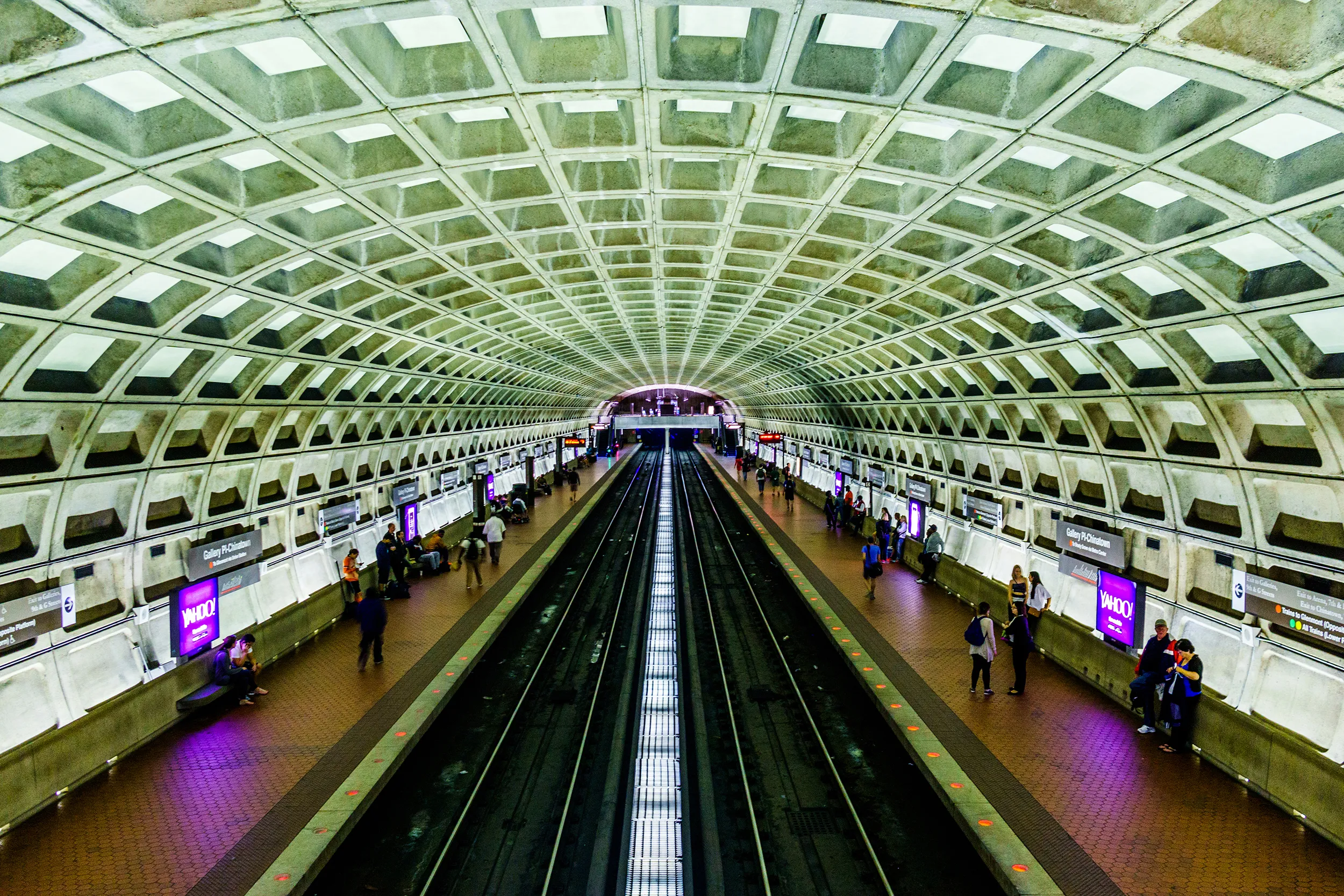
According to SmartAsset and WalletHub, Washington, DC is the #1 city for public transport in 2018. It also happens to be a great place to host transport-related meetings and is home to the annual Washington Auto Show’s MobilityTalks International conference, which gathers government policy makers from around the world to exchange ideas on best practices related to the development and regulation of connected and autonomous vehicles. Learn why DC has become a top destination for transport. Connect with Destination DC staff, submit a meetings RFP or learn more about transportation-focused meetings and conventions in our transportation white paper. Accolades #1 city for public transport (SmartAsset, WalletHub, 2018) #8 city for cycling (The PeopleforBikes Advocacy Group’s Places for Bike City Ratings, 2018) 22 businesses and 2 universities in DC received awards for being bicycle friendly communities (The League of American Bicyclists, 2018) #8 best place to live in the U.S. (U.S. News and World Report, 2018) 2nd largest subway system by ridership in the U.S. (SmartAsset, 2018) #7 most walkable city in the U.S. (WalkScore, 2017) #4 in the AllTransit Performance Score, which accounts for connectivity, access to jobs and frequency of service (Center for Neighborhood Technology, 2016) Access Thirteen operating administrations under the Department of Transportation cover nine areas of focus across all modes of transport supporting infrastructure and enabling information such as Transport Statistics. Access to Federal agencies including National Transportation Safety Board (NTSB) and Transportation Security Administration (TSA) More than 30 national associations and nonprofit organizations related to transportation headquartered in the region Transportation is the sixth-highest ranked sector for lobbying; More than 150 lobbying firms and more than 1,500 lobbyists are based in the region. Four local universities have peer-leading programs in transportation and related areas of study such as urban planning. Global hub for international policy organizations including the World Bank and International Road Federation Local Support George Washington University’s research on walkability portrays DC as a model for other cities, with walkable urban places across all types of real estate development. Move DC is a 25-year strategic plan launched by the District Department of Transportation (DDOT) in 2014 that supports reliable, safe and multi-modal transportation to fuel economic growth and was followed in fall 2017 by a move to the multi-year District of Columbia Statewide Transport Improvement Program (DC-STIP). Washington Metropolitan Area Transit Authority (WMATA) is committed to ensuring a reliable, safe and multi-modal transportation network between DC, Maryland and Virginia through its Momentum Plan. Ford Motor Company and the DC Infrastructure Academy formed a partnership in October 2018 to train DC residents for jobs and careers in the autonomous vehicle (AV) industry and prepare DC to test its self-driving vehicles. By spring 2019, DDOT will nearly double the number of street parking zones reserved for tour bus parking to create additional easy-to-use and safe places for large numbers of passengers visiting the District to get on and off motorcoaches. Innovation The Institute of Higher Business Studies (IESE) Business School at University of Navarra in Barcelona, Spain considers DC a smart city, holding a position of sustainable leadership in the future, according to its 2017 Cities in Motion Study. Home to a thriving transportation tech startup culture both in terms of firms based in the city and organizations choosing to pilot their products in DC, such as the new shared-ride mobility company Split. City of the Year in 2017 (SmartCitiesDive) Launched new transit methods to access the Southwest Waterfront Advance the Vision Zero initiative through data analytics Adopted five dockless bike-share pilot programs Developed new ride-share services, including Via and Maven Fourth City in the U.S. where Ford is testing self-driving vehicles First jurisdiction in North American to launch at bikeshare system, which now has more than 4,000 bikes and 500 stations National cultural institutions that showcase innovations in transportation include the Smithsonian’s National Air & Space Museum and National Postal Museum Interested in learning more about Washington, DC as a leading destination for industry meetings? Connect with Destination DC staff or read our transportation white paper for more information.