
All Articles
Visiting the Smithsonian National Air and Space Museum in Washington, DC
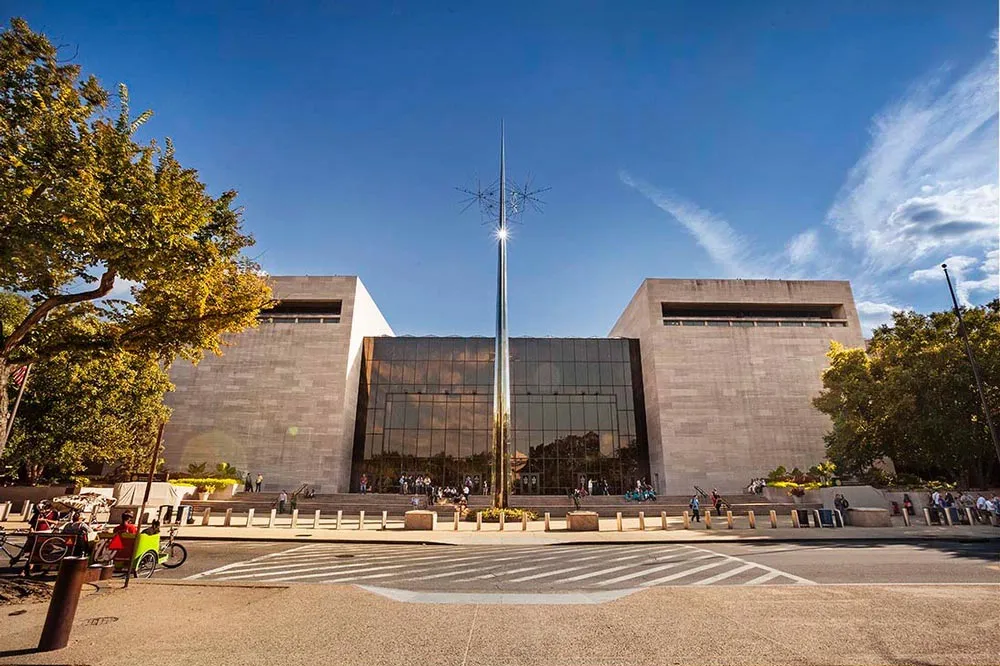
While it remains operational, the museum is currently undergoing a large-scale, multi-year renovation that will introduce all new galleries and public spaces. The first phase of the renovation was unveiled in Oct. 2022 and the remaining phases are slated for 2025 and 2026. Learn more and the transformation. The Smithsonian’s National Air and Space Museum is one of the most popular museums in the world – reserve your free timed-entry tickets today. Be sure to check out our guide to accessibility for DC's Smithsonian institutions. A museum that goes above and beyond Glimpse the 1903 Wright Flyer, run your hands over moon rock and experience the larger-than-life world of aviation and space travel at the National Air and Space Museum. Since opening on the National Mall in 1976, this hub of all things flight has educated and inspired future generations of pilots and astronauts from around the world. The museum (along with its second location, the Udvar-Hazy Center, in Chantilly, Va.) contains the largest and most significant collection of aviation and space artifacts in the world. All components of human flight are on display, including related art and archival materials. National Air and Space Museum hours and location The museum is located on Jefferson Drive, between 4th and 7th Streets SW and admission is always free. Regular hours are 10 a.m. – 5:30 p.m. The easiest way to reach the museum is via Metrorail or Metrobus. The closest Metro stop is The closest metro station is L’Enfant Plaza (Blue, Green, Orange, Silver and Yellow lines). The 32, 34 and 36 Metrobus routes will all take you to the Mall, which you can explore in full once you’ve experienced the Air and Space Museum’s wonders. The facility has a number of accessibility features. The Museum’s second facility, the Steven F. Udvar-Hazy Center is located just south of Dulles Airport’s runways in Fairfax County, Virginia. It is open daily from 10:00 am – 5:30 pm. Visit the Smithsonian's Udvar-Hazy Center website for more information. What’s inside the National Air and Space Museum? The Air and Space Museum takes visitors to the sky, showcasing the amazing technological achievements that have progressed aviation and space exploration throughout the last century. Our fascination with flight is still alive and well, as the museum (and the Udvar-Hazy Center) is one of the most visited in the world year-after-year. As you may imagine, the historical objects on display are fundamental to the story of flight. The 1903 Wright Flyer owns the distinction of flying the world’s first successful flight – and you can see the groundbreaking flying machine in person. There’s also Charles Lindbergh’s Spirit of St. Louis, the first aircraft to complete a nonstop flight from New York to Paris. The Apollo 11 Command Module Columbia, the only portion of the Apollo 11 spacecraft to return to Earth, is currently at the Udvar-Hazy Center. Visitors can also see the spacesuit astronaut Neil Armstrong wore during his mission to the moon and touch a sample of a lunar rock brought back from the Apollo 17 mission in 1972. The Boeing Milestones of Flight Hall features the Bell X-1 Glamorous Glennis (the first plane to break the sound barrier), aviation and spaceflight stories and an exclusive mobile experience that will let visitors personalize their exploration like never before. The IMAX Theater, Observatory, tours and educational programs will be on hold until further notice. A stellar Only1DC experience Look through the lens of a high-powered telescope and watch as celestial bodies come into focus. Held on select evenings throughout the year, astronomy program events like nighttime stargazing at the National Air and Space Museum’s Public Observatory bring out volunteer experts (many of whom share their personal telescopes), families and couples. On a given night, you may be able to look through three different telescopes, each focused on a different point in the sky.
Visiting the Smithsonian National Museum of African American History and Culture
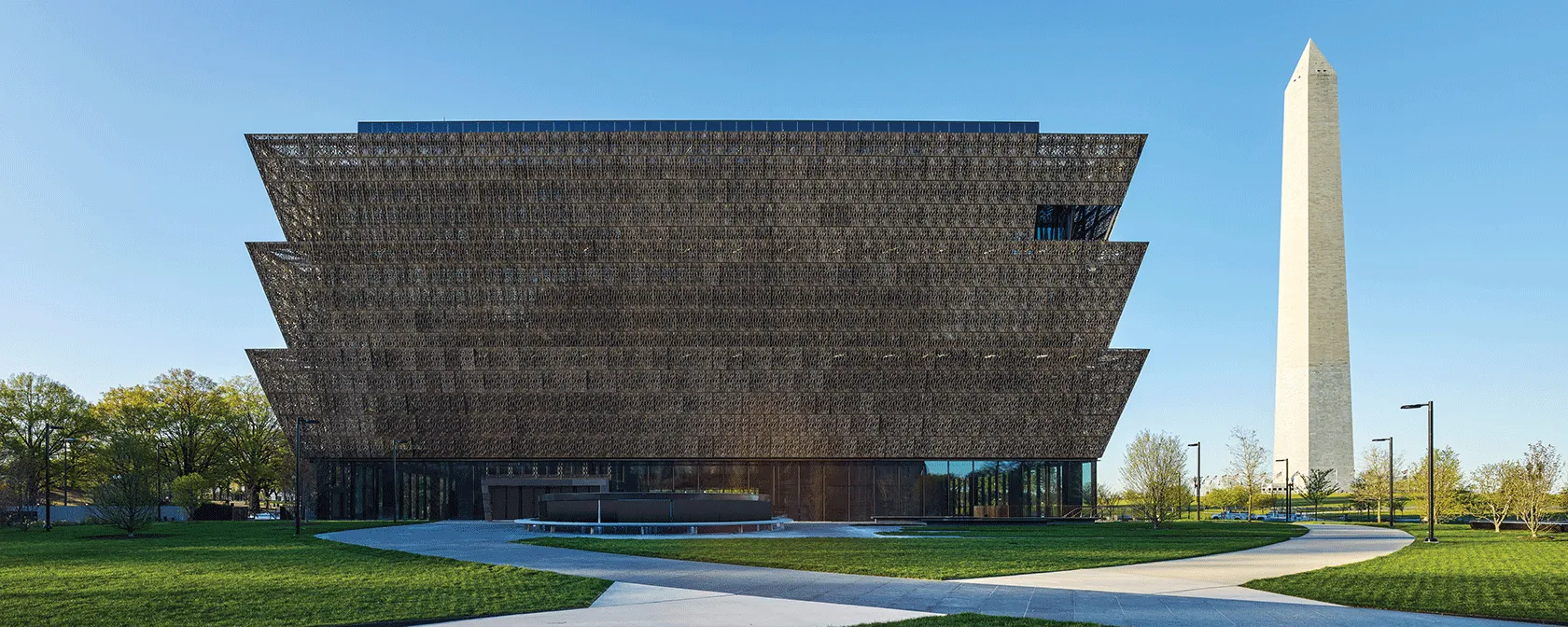
Where and what is the Smithsonian National Museum of African American History? The Smithsonian National Museum of African American History and Culture (NMAAHC) is located at 14th Street and Constitution Avenue NW on the National Mall. The four-level museum opened on Sept. 24, 2016, becoming the only national museum solely dedicated to the documentation of African American life, history and culture. This Smithsonian Institution museum is an architectural marvel that features numerous interactive exhibits. The museum is currently open Tuesday - Sunday from 10:00 a.m. - 5:30 p.m., and 12:00 p.m.-5:30 p.m. on Mondays. On Mondays that are observed as Federal Holidays, the museum opens at 10:00 a.m. The easiest way to get there is via Metrorail or the DC Circulator. The closest Metro stop is Federal Triangle on the Blue, Orange and Silver lines. The DC Circulator’s National Mall route is your best bus option, and it will be easy to continue your exploration of the National Mall afterwards. The facility is handicap-accessible. What’s inside the museum? The Smithsonian National Museum of African American History and Culture is a state-of-the-art building that addresses nearly every aspect of the African American experience, covering the arts, slavery, the Civil Rights Movement, athletics and much more. The building’s exterior, conceived by Ghanaian-born architect David Adjaye, is artfully made up of a three-tiered, bronze-colored screen. This lattice pays tribute to the intricate ironwork forged by enslaved African Americans in the southern United States. The museum’s collection of artifacts is astounding: 3,500 are on view, with another 35,000 or so in the collection. Standout items include a shawl given to Harriet Tubman by Queen Victoria, training aircraft used by the Tuskegee Institute, an invitation to President Obama’s 2009 inauguration and a boombox owned by Chuck D of Public Enemy. Navigating the entirety of the NMAAHC would be very difficult to accomplish in one visit, and the breadth of its exhibits is astonishing. However, there are several displays that you should be aware of before you go. The Musical Crossroads exhibit details the history African American music, from the arrival of the first Africans to today. From jazz to hip-hop, African American musicians brought forth new forms of expression that lit a candle for liberty, justice and change. You will be able to experience the emergence of some of America’s finest art forms and the amazing creative expressions that came from them. Slavery and Freedom uses first-person accounts and striking historical artifacts to tell an incredibly complicated tale. The exhibit traces slavery from 15th century Africa and Europe to the Civil War and Reconstruction in the United States. This vital history emphasizes that American slavery and freedom are deeply intertwined, and that the story of slavery is in fact a shared one that resides at the core of American politics, economics and daily life to this very day. Continue your dive into history with Defending Freedom, Defining Freedom and A Changing America. The former covers the era of segregation and the onset of the Civil Rights Movement, highlighting the struggle that African Americans faced and conquered in establishing a cultural identity and their own communities, changing the nation along the way. The latter goes from 1968 until today, covering the assassination of Martin Luther King, Jr. to Barack Obama’s two terms as president, journeying from the Black Panthers to #BlackLivesMatter. Check the museum’s calendar for online programming.
Visiting the Smithsonian National Museum of American History in Washington, DC
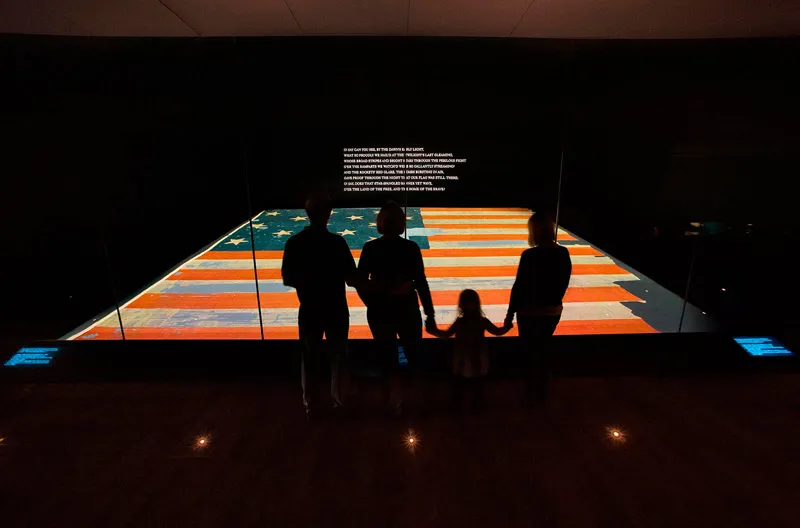
What and where is the National Museum of American History? The National Museum of American History is located on Constitution Avenue NW and runs along the National Mall. Through research, in-depth exhibits, extensive collections and public outreach, the museum presents America’s history in all of its complexity. The museum's collection features more than three million artifacts, from Dorothy’s ruby slippers in The Wizard of Oz to sheet music written by DC legend Duke Ellington. The easiest way to get there is via Metrorail or Metrobus. The closest Metro stop is Smithsonian, on the Blue, Orange and Silver lines. The 32, 34 and 36 Metrobus routes will all take you to the National Mall, where you can explore the iconic monuments and memorials after you’ve gotten your full dose of American history. The facility is handicap-accessible, and dedicated parking spaces are located on Madison Drive NW. What’s inside the National Museum of American History? Much beloved as a source for all things Americana, the museum features the most American artifact of all: the Star-Spangled Banner Flag. The flag flew above Fort McHenry in Baltimore during the War of 1812, inspiring Francis Scott Key to write our national anthem and now awaits your visit in a permanent exhibition. Another treasured item on display is the top hat worn by President Abraham Lincoln on the fateful night of April 14, 1865, when he set off to Ford’s Theatre and was later assassinated in by John Wilkes Booth. Lincoln’s hat is among a number of presidential relics that each tell a story in an exhibit entitled The American Presidency: A Glorious Burden. This 750,000 square-foot museum contains much more than presidential artifacts. The women who stood by the side of our nation’s leaders are memorialized in The First Ladies, which boasts more than two dozen gowns, fine china and other furnishings. And don’t forget to click your heels over to the aforementioned ruby slippers found in the American Stories exhibit, a fascinating compilation of story-making artifacts throughout American history. Marvel at the home kitchen of fine-cooking darling Julia Child, whose workshop is a part of the FOOD: Transforming America’s Table 1950-2000 exhibit, which delves into the evolution of eating in America thanks to new technologies, forward-thinkers and social and cultural shifts. The evolution of American transportation and business are also given their due in separate exhibits. Stroll the car-buff friendly America on the Move exhibit, which sports the first automobile driven across the U.S. and a 40-foot stretch of Route 66 within its collection of 340 objects. American Enterprise focuses on the country’s commercial innovations from the past 300 years.
Visiting the Smithsonian National Museum of Natural History in Washington, DC
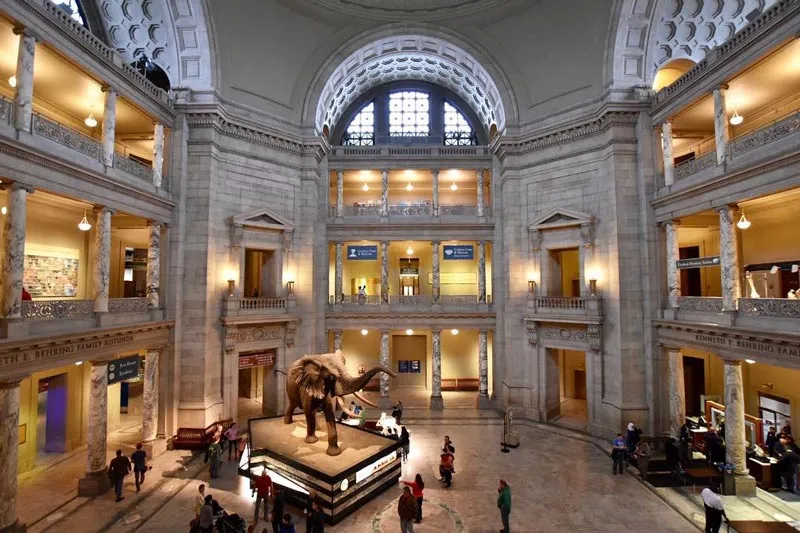
Planning your visit to the Natural History Museum The Smithsonian National Museum of Natural History opened in 1910 to invoke discovery and education of the natural world. Its green dome and immense size (comparable to 18 football fields) are signatures, as well as the 140 million-plus natural science specimens and cultural artifacts that the museum contains. The Museum of Natural History is centrally located in Washington, DC on the National Mall. Like all Smithsonian Institution museums, admission is free. Its regular hours are 10 a.m. – 5:30 p.m., but hours are extended during the spring and summer with a closing time of 7:30 p.m. The museum is open every day of the year except Dec. 25. The most convenient way to reach the museum is via public transportation. Public parking is scarce, but there are parking spaces available for visitors with disabilities. If using Metrorail, take the Orange or Blue lines to the Smithsonian station and use the Mall exit. If taking Metrobus, use the 32, 34 or 36 routes. What’s inside the National Museum of Natural History? The museum contains some of the most famous artifacts in the world. The Janet Annenberg Hooker Hall of Geology, Gems and Minerals has the supposedly cursed Hope Diamond on display. Meanwhile, Q?rius, the museum’s education center, offers teens and tweens a lab where they can make their own scientific discoveries. After a five-year renovation, the museum has reopened its David H. Koch Hall of Fossils. The 31,000-square-foot exhibit’s theme is Deep Time, borrowed from a scientific phrase that illustrates how Earth’s history has played out over billions of years. Prepare to be amazed, overwhelmed, engaged and dazzled by one of the biggest exhibitions to come to DC in years. Other permanent exhibits include an insect zoo and The Sant Ocean Hall, which features an exact replica of a living North Atlantic right whale. A visit to the Museum of Natural History is only the beginning – keep exploring the incredible selection of free museums and attractions available in the nation's capital.
Visiting the U.S. Bureau of Engraving & Printing in Washington, DC
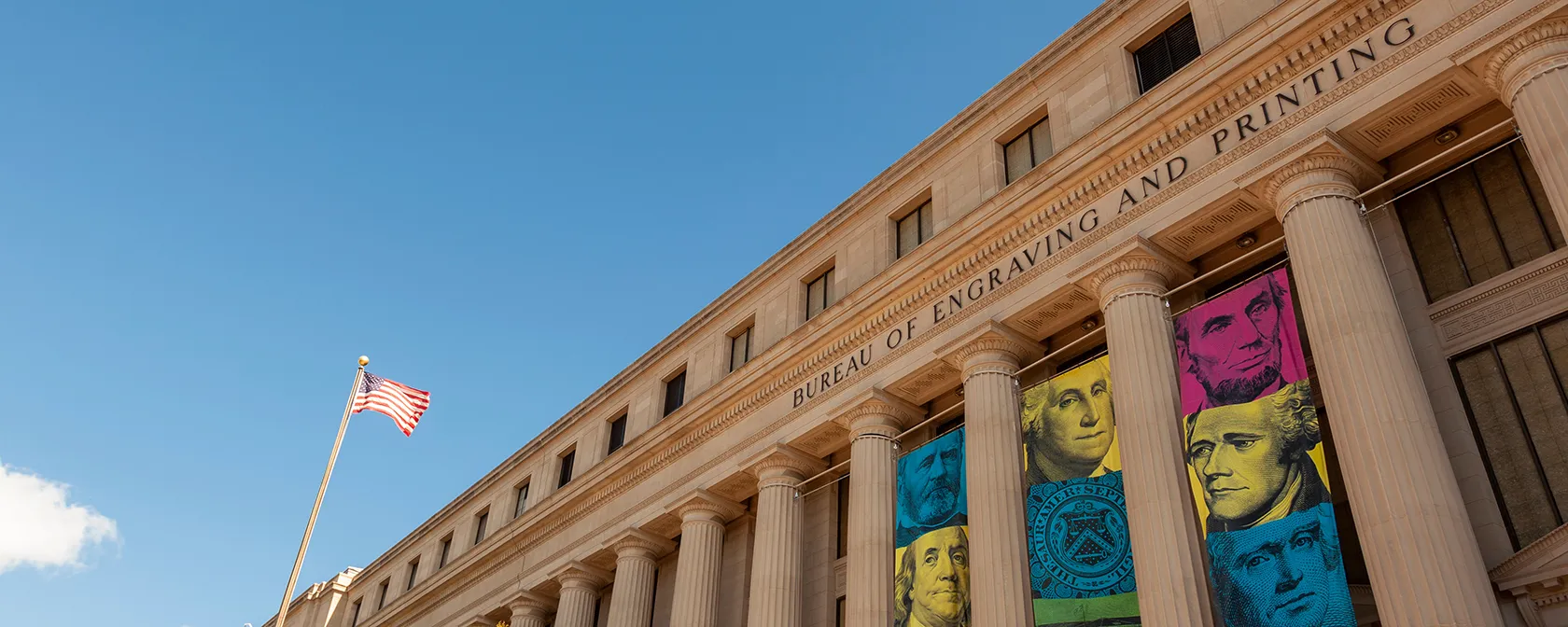
What and where is the U.S. Bureau of Engraving & Printing? The U.S. Bureau of Engraving and Printing, founded in 1862, produces Federal Reserve Notes (also known as paper money, or U.S. dollars) for the Federal Reserve, our country’s central bank (note that coins are made by the United States Mint). The Bureau also produces Treasury securities, military commissions and award certificates, ID cards, invitations and an additional range of security documents for government agencies, making it the largest producer of government security documents in the U.S. The Bureau has two locations: one in Forth Worth, Tx. and the other in, you guessed it, Washington, DC. The official address is 301 14th Street SW, Washington, DC 20228. The facility features two adjacent buildings, with the facade of the main building facing Raoul Wallenburg Place SW, the Tidal Basin and the Jefferson Memorial. Take a tour of the "money factory" Tickets, which are distributed on a first-come, first-served basis, are required for the tour from March through November. The ticket booth is located at Raoul Wallenburg Place SW (formerly known as 15th Street) and opens at 8 a.m., Monday through Friday. The booth closes when all tickets have been distributed for the day. Group tours for groups of 10 up to 30 people run every 30 minutes from 11 a.m. – noon. Limited reserved tour times are offered. To reserve a group tour, fill out the Group Reservation Request Form and e-mail it to TourScheduler@bep.gov. You can learn more about group tours by calling 202-874-2330 or 1-866-874-2330. Call 202-874-2330 for more information about the accessible entrance. All visitors must pass through a security screening before entering the Bureau. Tour guides will direct visitors to enter the building when appropriate. What will I see on the tour? The 40-minute experience will enlighten you on all things related to U.S. currency. The tour begins with an introductory film that details the function of the Bureau and its importance. Along the way, you’ll witness millions of dollars being printed as you stroll through the gallery that overlooks the production floor. The tour also includes exhibits that dive further into the production of our national currency. There’s also a gift shop, open from 8:30 a.m. – 2:45 p.m., that features currency products for sale.

Washington, DC Attraction & Tour Passes
Choose from Washington, DC’s best city and attraction passes and save big with discounted tickets. Find sightseeing tours, museum passes and so much more with the Washington DC Sightseeing Pass. Learn more about each sightseeing pass and choose the option that’s right for you. The Washington DC Sightseeing Pass The Sightseeing Pass DC helps visitors to the capital save money on admission fees and offers hassle-free entry into the city’s most popular attractions. Each pass includes a 24-hour Big Bus ticket and a choice of one, two or four attractions. Attractions include Madame Tussauds, the National Geographic Museum, a variety of bike tours, walking tours and cruises, a meal at Buca di Beppo and more. Passes are valid for 30 days to offer flexibility for visitors to enjoy the city at their pace. Prices from: $33 Child, $54 Adults Savings: Depends on which attractions you choose, up to 60% Get the Washington DC Sightseeing Pass Whiskey Rebellion Trail: DC's Ivy City One-Day Passport When it comes to spirit-making, the Ivy City neighborhood is DC’s distilling hub. Check out DC’s Ivy City One-Day Passport for a quartet of tastings, tours and cocktails, which you can comfortably pack into a day. For $39, you’ll get a tasting flight from Cotton and Reed, a cocktail from New Columbia Distillers, a tour and tasting at One Eight Distilling and a free cocktail from Republic Restoratives. Prices: $39 Get the Ivy City Passport Whiskey Rebellion Trail: Taste of DC Three-Day Passport The Taste of DC Three-Day Passport gives you a taste of history in addition to locally made spirits. Get access to George Washington’s Mount Vernon, where you learn about Washington’s rise from the president to one of the largest rye whiskey producers in the late 1790s. When it comes time to sampling, you’ll get access to everything in Ivy City from above, as well as a flight from Don Ciccio & Figli. Prices: $69 GET THE TASTE OF DC PASS