
All Articles
Celebrate the Lincoln Memorial Centennial This May in Washington, DC
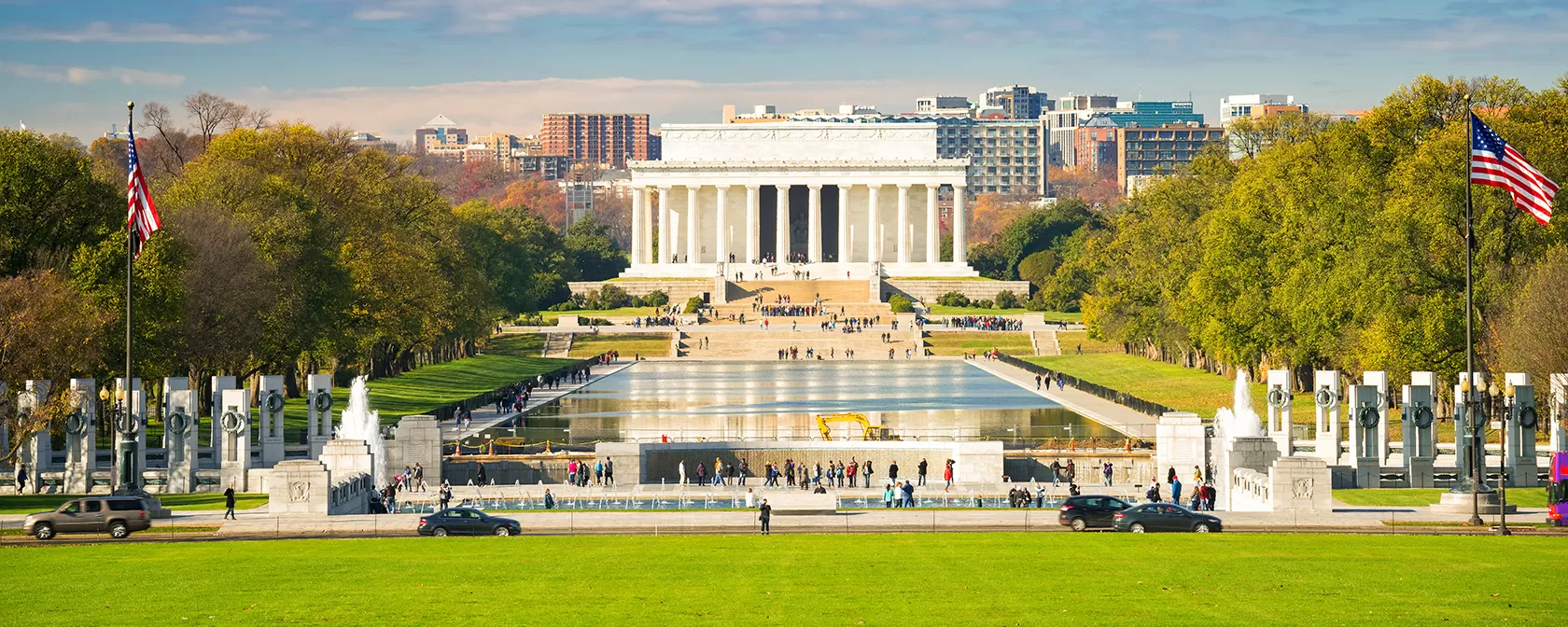
Lincoln Memorial Centennial Family Day: May 14, 10 a.m. – 1 p.m. Bring the whole family along to a Saturday celebration at the site of the memorial. The National Park Service, Ford’s Theatre Society, the Library of Congress, the National Archives, President Lincoln’s Cottage and Tudor Place have all teamed up to host a fun-filled day. Attendees will have a chance to meet staff from local historic sites and engage in hands-on activities that touch on the history and significance of the monument. Kids will have a chance to earn a special commemorative Junior Ranger badge. Lincoln Memorial, 2 Lincoln Memorial Circle NW, Washington, DC 20002 The Lincoln Memorial in Pop Culture: May 14, 7 p.m. Faith Salie of National Public Radio’s Wait, Wait…Don’t Tell Me and CBS Sunday Morning will join the National Park Service’s Mike Litterst at Sylvan Theater for an examination of the Lincoln Memorial’s most noteworthy moments in popular culture, from film to television to comic books. The duo will contemplate how these depictions have impacted the cultural understanding and meaning of the memorial. Sylvan Theater, Washington Monument Grounds, Independence Avenue and 15th Street NW, Washington, DC 20024 Commemorating Abraham Lincoln Through Oratory: May 17 & 18, 11 a.m. As evidenced by the Lincoln Memorial’s engravings of two of the great orator’s most notable speeches, his Gettysburg Address and Second Inaugural Address, the man knew how to deliver some remarks. On consecutive days, DC Public and Public Charter School classrooms from Ford’s Lincoln Oratory Festival program will perform speeches by President Lincoln, as well as additional speeches by other prominent figures such as Frederick Douglass and Mary McLeod Bethune. Lincoln Memorial, 2 Lincoln Memorial Circle NW, Washington, DC 20002 Words Count: Marian Anderson at the Lincoln Memorial: May 16, 11 a.m. Singer Marian Anderson, after being denied entry to an indoor venue for being Black, took to the steps of the Lincoln Memorial for an unforgettable Easter Sunday performance in 1939. With 75,000 spectators on-hand, Anderson gave a stirring concert and turned the memorial into a civil rights landmark overnight. The incident served as inspiration for Martin Luther King, Jr.’s “I Have A Dream” speech, given in the same location nearly 30 years later. This special National Park Service program will educate attendees on this momentous occasion and its long-lasting impact. Lincoln Memorial, 2 Lincoln Memorial Circle NW, Washington, DC 20002 Lincoln Memorial Centennial Celebration: May 22, 10 a.m. Discover the mountain of meaning behind the Lincoln Memorial during a ceremony hosted by The Lincoln Group of DC in partnership with the National Park Service. The event will feature a theme of “Building on Lincoln’s Vision of Unity and Equality,” with topics ranging from Lincoln’s background to his contributions as Commander-in-Chief to his leadership during the Civil War. Participants will include Lincoln historian Harold Holzer, Dr. Edna Greene Medford (noted Lincoln scholar from nearby Howard University), Dr. Charlotte Morris (president of Tuskegee University) and actor Steven Lan (featured in Avatar, Gettysburg and Gods and Generals). The United States Marine Quintet and singer/actress Felicia Curry (who recently portrayed Marian Anderson in the Ford’s Theatre production of My Lord, What a Night) will provide musical accompaniment. Lincoln Memorial, 2 Lincoln Memorial Circle NW, Washington, DC 20002 The Lincoln Memorial and Civil Rights: May 28, 11 a.m. Designers of the Lincoln Memorial sought to honor the American icon with a representation of a united nation, the one he fought to preserve. However, the story told on the stone, sculpture and inscriptions of the memorial is incomplete. In the century since the initial dedication, the site has served as a public square, a place where thousands have gathered to demand inclusion and equal rights, adding another layer to the story of Lincoln and the memorial. A park ranger will guide you through the evolution of the Lincoln Memorial and how it has become intertwined with the ongoing struggle for civil rights in the United States. Lincoln Memorial, 2 Lincoln Memorial Circle NW, Washington, DC 20002
Discover the National Gallery of Art East Building in Washington, DC
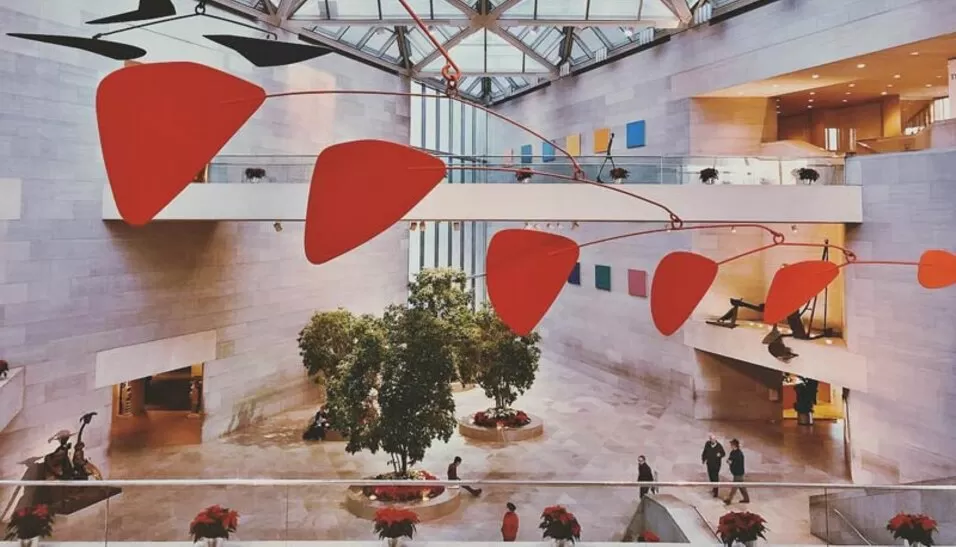
The I.M. Pei-designed East Building stands out in Washington, DC as a modern marvel, which sleekly contrasts with the Beaux Arts and Classical architecture seen throughout much of the nation’s capital. Architect I.M. Pei designed the museum based on an early sketch where the East Building is represented by two triangles. Featuring two sides of equal length, the isosceles triangle has been incorporated as a major feature of the building’s architecture. A peek over the railing of this staircase reveals two triangles placed end to end, forming a rhombus. This, and another set of stairs, connect museum-goers to all five levels of the East Building, improving the flow of foot traffic. A third set of stairs appears as if it converts 3D to 2D – as Instagram-worthy as it gets. The roof terrace, which concept architect Perry Chin likens to a “zen garden,” gives visitors a moment to pause and catch their breath in between visiting galleries. It comes with views of the Smithsonian Castle, the U.S. Capitol and some awesome sculptures, including Katharina Fritsch’s cobalt blue Hahn/Cock. In the Tower 1 gallery, colorful canvases from groundbreaking abstract expressionist Mark Rothko are a highlight. The works rotate through the Gallery’s vast collection of Rothkos. Check out even more Rothko paintings at The Phillips Collection. In Tower 2, Alexander Calder: A Survey boasts the largest display of works by the artist: 45 sculptures and paintings. The East Building’s wide-open atrium features a kinetic chandelier, a 76-foot-long mobile work that was the last sculpture Calder ever made. Unlike Calder’s other works, it remains Untitled because he passed away before he could name it. In the upper level, you can explore inventive and iconic works of modern art. Among the artists featured are members of the Washington Color School of the late 1950s and '60s, including Gene Davis and Kenneth Noland. Now that you’ve explored all there is to see in the East Building, venture through Leo Villareal’s Multiverse to the National Gallery of Art West Building. A preview of what you’ll see: early American artists, as well as European masters like Da Vinci, Van Gogh and Monet.
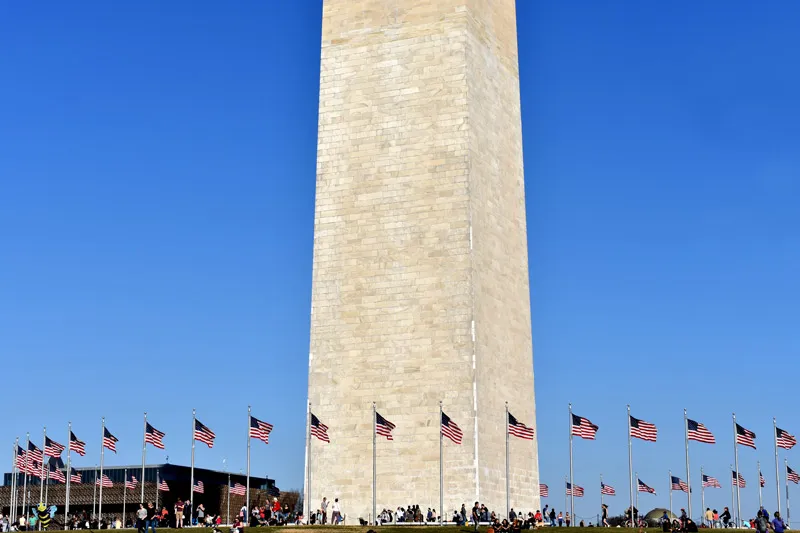
Everything You Need to Know About Washington Monument Tours & Tickets
If you’re looking to get tickets to the top or learn more, read below for some helpful tips for both groups and individuals to keep in mind when visiting the iconic monument built to honor George Washington, the commander-in-chief of the Continental Army and the first president of the United States. Where can I reserve tickets in advance? Advance reservation tickets can be reserved online through recreation.gov up to 30 days in advance (up to six tickets per transaction). While visiting the Washington Monument is free, a convenience fee of $1 USD will be charged for each ticket. This fee is non-refundable. There are also a limited number of tickets made available at 10 a.m. each day for the next day's visits (for example: On May 7 at 10 a.m., tickets will become available for visits on May 8). How do I acquire next-day tickets to the Washington Monument? Inventory for the next available day becomes available at 10 a.m. each morning. During peak season (March-August, late December-early January), demand for tickets is very high. Advance tickets may sell out within seconds. How do I acquire same-day tickets for the Washington Monument? Day-of walk-up tickets are distributed each morning at 8:45 a.m. at the Washington Monument Lodge, located on Madison Drive on the east side of the monument grounds. During peak season (March-August, late December-early January), demand for tickets is very high and the line begins forming as early as 7 a.m. Walk-up tickets are not available for groups. What are the ticketed time slots and how many tickets are available per time slot? The Washington Monument is open 9 a.m. to 5 p.m. daily except for Dec. 25, July 4 and part of July 3 and one day per month for scheduled maintenance. Tickets are scheduled every half hour from 9 a.m. to 4 p.m. How will the tickets be delivered? Visitors can access purchased tickets via confirmation email. All visitors must print their tickets in advance or have their tickets available to view on a mobile device. Please ensure you have these tickets ready to present prior to your arrival at the Washington Monument. Can tickets be returned? Yes, tickets can be cancelled until 2 p.m. the day prior to the tour. The convenience fee for purchase is non-refundable. In the case that the Monument must close, tickets will not be exchanged or refunded. What time should visitors arrive before their ticketed time? Visitors must arrive by the time on their ticket. If late, National Park Service staff has discretion to limit/deny monument entry. What is security like at the Washington Monument? Recent Washington Monument renovations have led to adjustments in security procedures. Please keep in mind: It is best to bring as little to the Washington Monument as possible. Water is only allowed in clear plastic bottles. Individuals do need to pass through a security area similar to an airport. Park Rangers will direct you to the security screening area in small groups. All visitors are subject to security screening. Weapons, strollers and bulky items are prohibited. Wheelchairs are permitted. Check online for a full list of restricted items. What is the tour flow after security? Visitors will be directed to the Washington Monument's ground floor lobby. Approximately 15 people will be allowed onto the elevator from the hallway by a National Park Service Ranger. The express ascent to the top floor (500 feet above the ground) lasts approximately 70 seconds. Groups may remain on the Observation Level for as long as they like. At the end of the visit, a park ranger will help you board the elevator for the descent, during which some of the commemorative stones on the monument’s interior walls will be visible. Is there still a stairway tour? No, stairway tours are no longer available. Will the Washington Monument have extended hours during the busy season? Not at the moment. During peak season (March-July), demand for tickets is very high. Advance tickets may sell out within minutes. Continue discovering the history of our nation's capital by exploring DC's other monuments and memorials.
Exploring Washington, DC's Alleys & Offshoots
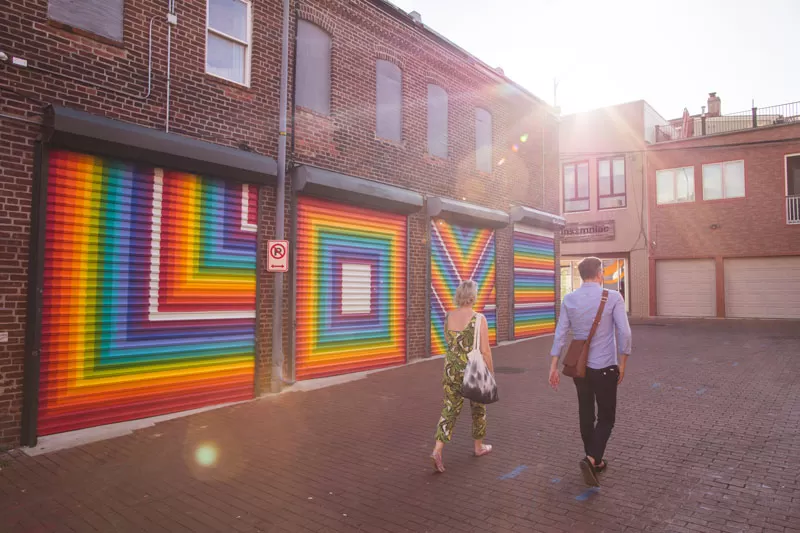
Blagden Alley & Naylor Court Shaw Neighborhood Shaw's neighboring alleyways were designated a historic district by the National Park Service. The photogenic and hip Blagden Alley is home to the outdoor DC Alley Museum – a series of colorful murals painted on garage doors and building walls that includes Lisa Marie Thalhammer's LOVE mural, a massive musical tribute to Sun Ra and Erykah Badu and mosaic images that pay homage to the working-class immigrants and Black families that once called the street home. There's even more to Blagden Alley than meets the eye – the redeveloped carriage homes hide some of the most revered culinary destinations in the city, the outlines of which are visible within revamped entryways, restaurant walls or decorative murals. La Colombe's first coffee-roasting outpost in the District maintained many of its original architectural features, making it a must-visit in this famous alley's lineup of hidden gems. Through contemporary farmhouse doors you'll find The Dabney's wood-fired Mid-Atlantic cuisine. Identify the black-and-white parakeet mural on the side of Causa/Amazonia, which touts award-winning Peruvian food and a low-key rooftop bar. Next door, the bar at Hong Kong-inspired Tiger Fork can be viewed through an octagonal window inserted into a former garage door. For a secret and sultry basement cocktail, you'll have to pass a loading dock and cross through a kitchen to Never Looked Better. For a secluded garden vibe with an antique greenhouse, pop in Calico. Architects’ studios and private homes are prevalent along Bladgen Alley’s tinier, U-shaped neighbor Naylor Court. Keep an eye out for a vestige of former inhabitant E.J. Adams & Co. Stables, and don't forget to stop by Sundevich, which transports customers to a different city of the world with each menu item. Cady's Alley & Blues Alley Georgetown Neighborhood If Blagden Alley and Naylor Court cater to food gurus and art lovers, Cady's Alley is for design aficionados and people-watching. This brick- and stone-lined pathway is the heart of Georgetown's Design District, where 20 showrooms and boutiques inhabit the skeletons of industrial properties. Antiques, jewelry, luxury clothing and DC-brand SCOUT bags are among the treasures you'll find. Cady's Alley also contains plenty of options to cap your shopping excursion. Step into the modern Kyojin for a high-end, sushi-sampling experience. Or, keep it quaint with the old-school Kafe Leopold, where you can spend a European afternoon sipping a specialty Austrian coffee on the courtyard. Visitors can access the walkway from 3300 M Street NW or from M and 33rd or 34th streets. The next alley over sees less foot traffic – and fewer designer shoes – but has hosted many of the greats at its namesake destination: Blues Alley Jazz Club. The other occupant of this small street is Hinckley Pottery, a locally owned and run ceramics studio and shop that lives in a 125-year-old horse stable. Bonus: just before you hit the busy intersection of Wisconsin and M, turn into the narrow alleyway beside the Abercrombie and Fitch for a Belgian beer at The Sovereign. Library Court NE+ Capitol Hill Neighborhood Take a walk through the Capitol Hill neighborhood to discover some of DC's historic alleyways, planned by Pierre L'Enfant to provide access points for working class citizens to discreetly enter the homes of their elite employers. In the shadow of the Library of Congress between 3rd and 4th Streets NE is one of the most notable – and narrow – residential streets in the area. Three courts (Library, Millers and Frederick Douglas) give way to each other, barely wide enough to fit a car and, in some spots, with just enough greenery to suggest a path less traveled. The residential homes along these passageways provide a window into life between the District's busy streets; keep wandering the quaint streets and you'll likely land on a street with landmark status. Morse Street Alley NoMa Neighborhood / Union Market Between 4th and 5th Streets NE at the center of the former wholesale hub, you'll find an easy-to-miss gem within the 200-year-old Union Market District. On first glance, there appears to be only back entrances, garage doors and overgrown walls covered in colorful graffiti. Upon closer inspection, you'll find a curly white arrow painted onto the brick that indicates the door to Bread Alley – the bakery responsible for the famous bread served at Le Diplomate. Pearl Street The Wharf Neighborhood While most of The Wharf's small streets are closed off to traffic, Pearl Street best captures the hidden gem-feel of some of DC's hippest alleyways. In the evenings, outdoor tables spill out onto the street under crisscrossing string lights and music can often be heard coming from the two venues that call the street home: Pearl Street Warehouse and Union Stage. People-watch with a Cuban sandwich or cocktail in hand at Colada Shop, which has folding tables and a covered patio. Continue your tour of DC's colorful street art and throw in some other photogenic spots while you're at it.
Fly High at the National Air and Space Museum's Steven F. Udvar-Hazy Center
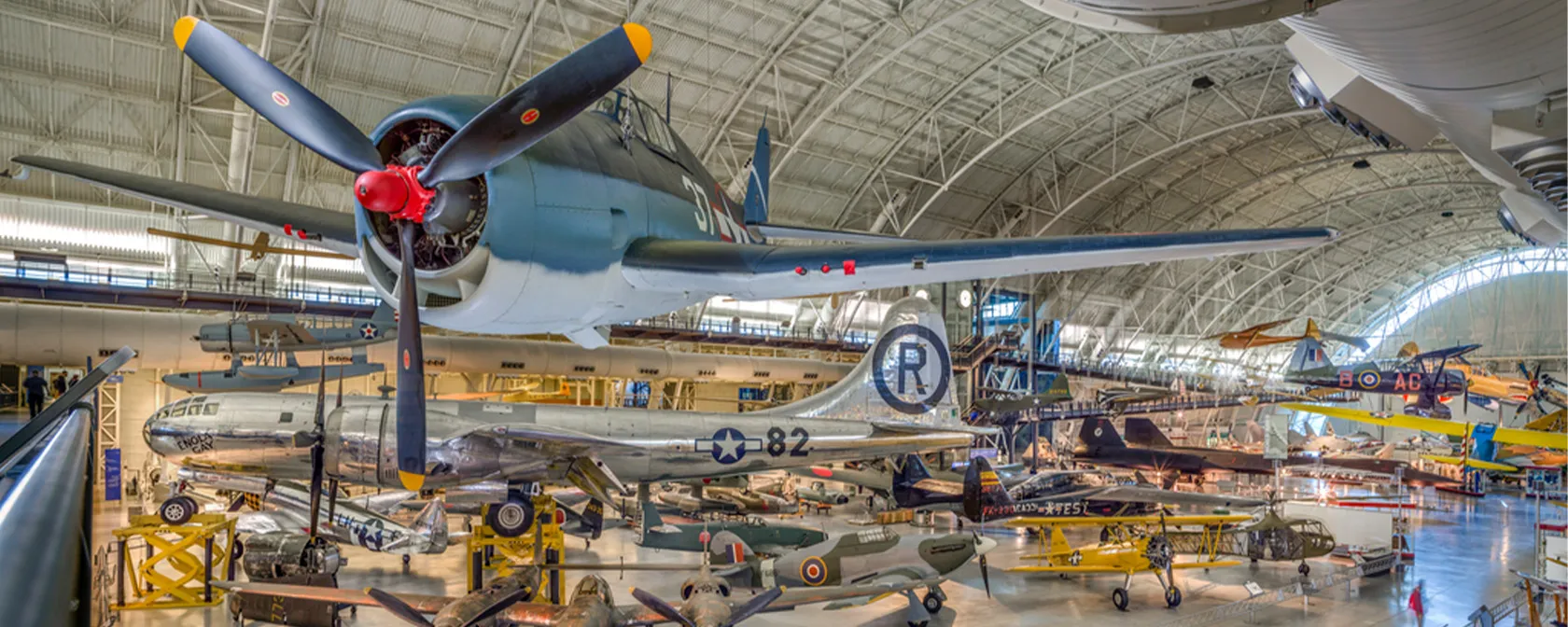
All about the Smithsonian's Steven F. Udvar-Hazy Center Opened in 2003, the Steven F. Udvar-Hazy Center serves as a partner facility to the National Air and Space Museum. The two locations together attract more than 8 million visits per year, making the National Air and Space complex the most popular museum in the United States. For aviation enthusiasts young and old, the Udvar-Hazy Center is just plain cool. The expansive museum consists of two hangars – the Boeing Aviation Hangar and the James S. McDonnell Space Hangar – which house dozens of aircraft and spacecraft. Some of the most notable include the Lockheed SR-71 Blackbird, a Concorde and the space shuttle Discovery. The Mary Baker Engen Restoration Hangar has an observation overlook, allowing visitors to see the preservation and restoration work underway by the Museum’s collections staff. Things to do at the Steven F. Udvar-Hazy Center The aircraft and spacecraft hanging overhead would be impressive enough, but the Udvar-Hazy Center also offers thousands of additional artifacts to view and many interactive, family friendly exhibits and activities. Prepare to take off and explore Sport Aviation, World War II Aviation, Space Science, and more. Talk to the Museum’s docents, who are stationed throughout the exhibit space both in person and via web conferencing, and ready to answer your questions and share the stories of the Museum’s collection. Enhance your experience with a giant screen film in the Airbus IMAX Theater (open Wednesday – Sunday), a simulator ride, or virtual reality experience. Before departure, browse the museum store and take home unique aviation and space themed souvenirs. Visiting the Steven F. Udvar-Hazy Center Regular hours are 10 a.m. – 5:30 p.m. at the Steven F. Udvar-Hazy Center, located at 14390 Air and Space Museum Parkway in Chantilly, Va., just minutes from Washington Dulles International Airport. The center can be reached by car via I-66 or the Dulles Toll Road. See detailed directions. On-site parking is available for $15 and is free for vehicles that arrive after 4 p.m. The center can also be reached via Metro. Take the Silver Line to the Wiehle-Reston East station and transfer to the Fairfax Connector Bus No. 983. The bus stops directly in front of the Steven F. Udvar-Hazy Center.