
All Articles
10+ Photo-Worthy Spots in Georgetown
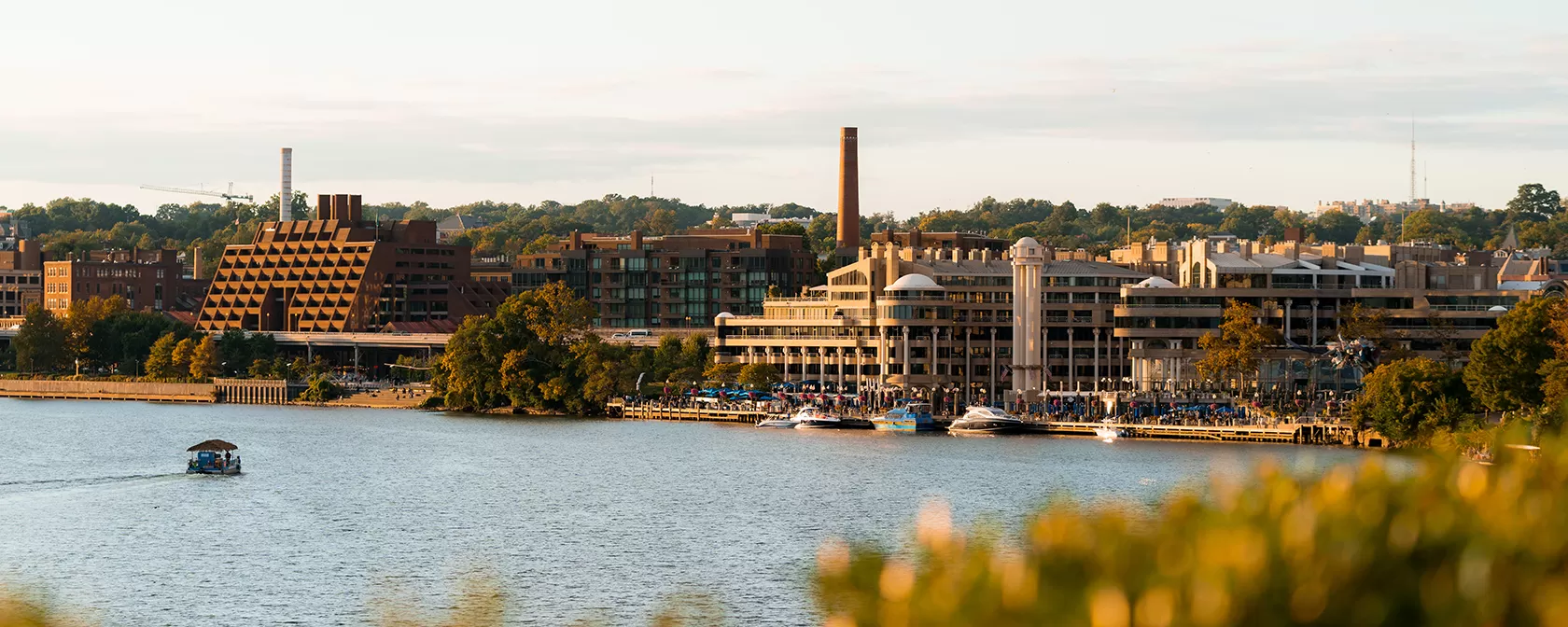
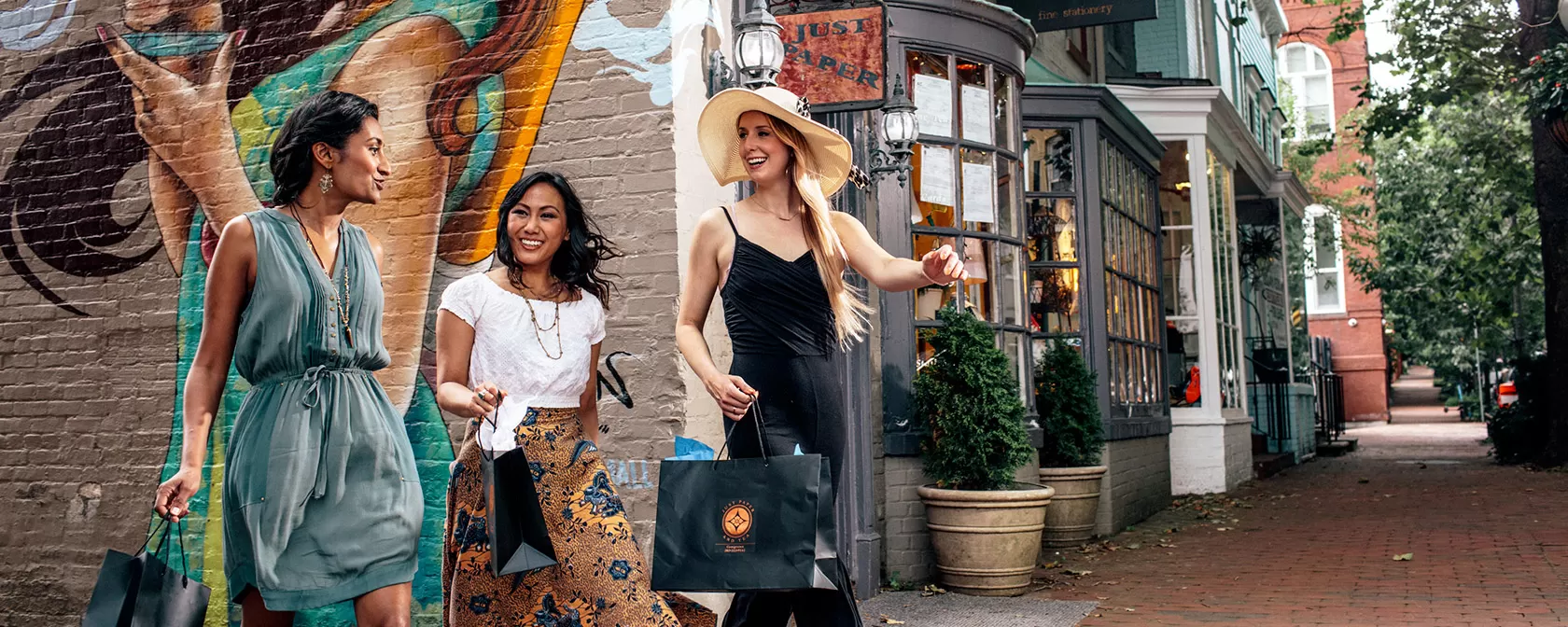
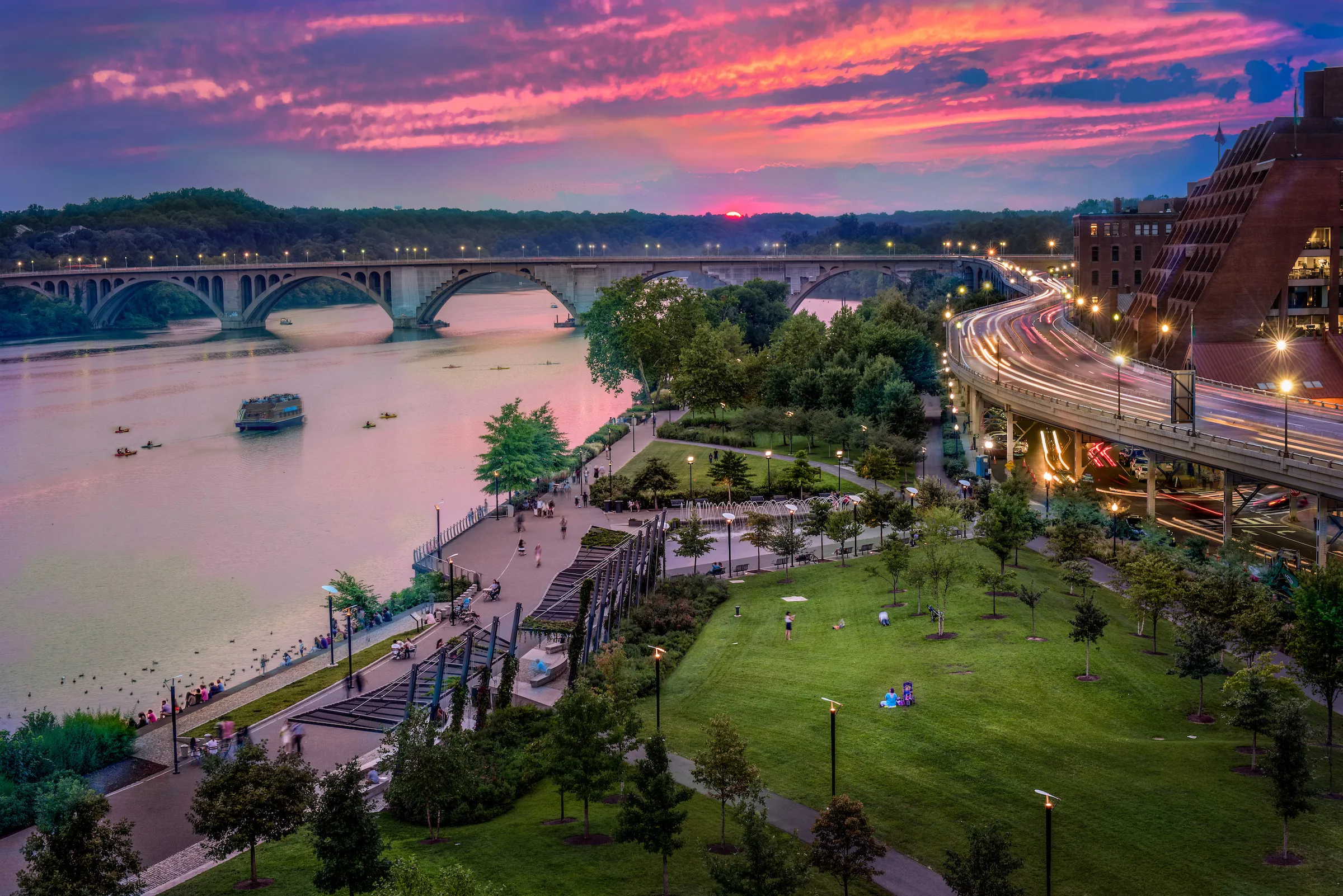
Start off north of downtown Georgetown in the charming area known as Book Hill, located along Wisconsin Avenue from O Street to Reservoir Road. Explore small, independent boutiques, galleries and restaurants, then take in the panoramic view of Georgetown, the Potomac River and Virginia from Book Hill Park. In between the row homes of Georgetown you'll also find stunning estate that is Tudor Place Historic House & Garden, as well as Dumbarton Oaks, where it is blissfully easy to get lost among the historic fountains and terraces dotted throughout the manicured grounds. Next, explore the residential, tree-lined streets of Georgetown. The rows of town houses – many of which date back to the 18th and 19th centuries – brim with history, including some famous former inhabitants. Julia Child taught cooking lessons and tested recipes for her legendary first cookbook while living in the yellow wood-frame house at 2706 Olive Street. The Kennedy family also has a rich history in Georgetown, including the house in which John F. Kennedy lived while running for president – 3307 N Street. As you make your way south, don't hesitate to poke in and out of Georgetown's side streets, especially smaller indie storefronts and shops, where wanderers can discover hidden patios and gardens. Reenter Wisconsin to pose below a neighborhood beacon: the red-and-white neon sign. Once upon a time, it drew customers into the Georgetown Theatre, but now it hangs above a Compass Coffee shop. This icon appeared first in 1945, and after some restorations, it shines brightly once again onto the busy street below. Pop inside Compass to see some vintage movie-inspired decor or duck into the alleyway next-door to admire a row of colorful murals. Turn onto O Street and stop at number 3510 to find a lesser-known mural based on Hokusai’s famous painting. Follow this quiet street a bit further and you'll stumble upon the picturesque campus of Georgetown University. Ascend (or better, descend) all 75 of the super-steep infamous Exorcist steps at the corner of 36th and Prospect streets. The steps had their moment of fame as the spot where Father Karras tumbled to his demise in the in the cult horror classic The Exorcist. Now, turn back into more commercial Georgetown to find your next gem. Tucked into an alley just south of M Street, Cady’s Alley is a darling brick walkway lined with design-focused shops. Don't forget to grab an outdoor table at European-inspired Kafe Leopold. Stop by Georgetown’s main intersection, where M Street meets Wisconsin Avenue, to see a local landmark anchors: the gold leaf-domed Farmers and Mechanics bank building (now owned by PNC Bank), which was built in the 1920s. If you're ready to escape the crowds of M Street, the towpath that runs along the historic C&O Canal is serene. Continue along the dirt path to the next stop on the quintessential Georgetown photo tour. Though Georgetown has no shortage of sweet treats – Georgetown Cupcake, Sprinkles, Olivia Macaron and Patisserie Poupon are all solid choices – a trip to the neighborhood isn’t complete without a coffee and a picture-perfect cupcake from local favorite Baked & Wired. Lastly, stroll past outdoor dining and boating parties to the edge of Georgetown's waterfront, where you can snap a pic in front of the iconic Francis Scott Key Memorial Bridge. Enjoy a moment of peace in the park to conclude your photo tour of this quintessential neighborhood. Interested in learning more about Georgetown? Explore all of the fabulous things to do, places to eat and spots to shop.
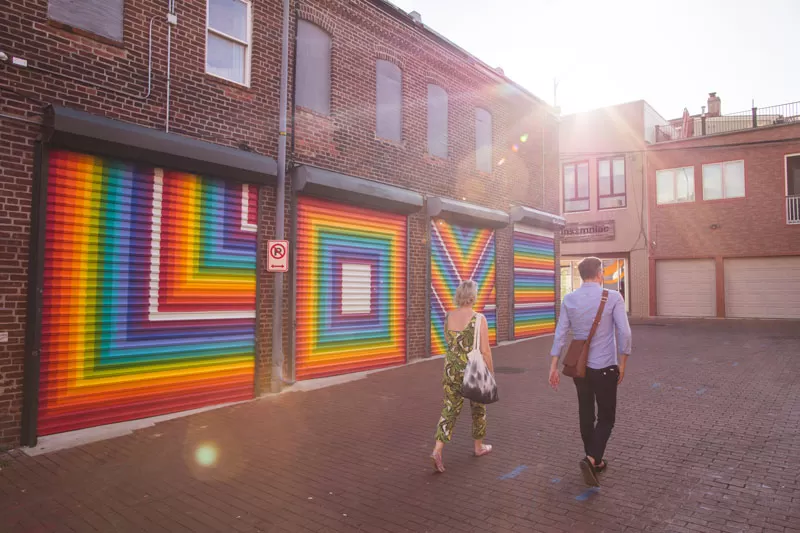
Exploring Washington, DC's Alleys & Offshoots
Blagden Alley & Naylor Court Shaw Neighborhood Shaw's neighboring alleyways were designated a historic district by the National Park Service. The photogenic and hip Blagden Alley is home to the outdoor DC Alley Museum – a series of colorful murals painted on garage doors and building walls that includes Lisa Marie Thalhammer's LOVE mural, a massive musical tribute to Sun Ra and Erykah Badu and mosaic images that pay homage to the working-class immigrants and Black families that once called the street home. There's even more to Blagden Alley than meets the eye – the redeveloped carriage homes hide some of the most revered culinary destinations in the city, the outlines of which are visible within revamped entryways, restaurant walls or decorative murals. La Colombe's first coffee-roasting outpost in the District maintained many of its original architectural features, making it a must-visit in this famous alley's lineup of hidden gems. Through contemporary farmhouse doors you'll find The Dabney's wood-fired Mid-Atlantic cuisine. Identify the black-and-white parakeet mural on the side of Causa/Amazonia, which touts award-winning Peruvian food and a low-key rooftop bar. Next door, the bar at Hong Kong-inspired Tiger Fork can be viewed through an octagonal window inserted into a former garage door. For a secret and sultry basement cocktail, you'll have to pass a loading dock and cross through a kitchen to Never Looked Better. For a secluded garden vibe with an antique greenhouse, pop in Calico. Architects’ studios and private homes are prevalent along Bladgen Alley’s tinier, U-shaped neighbor Naylor Court. Keep an eye out for a vestige of former inhabitant E.J. Adams & Co. Stables, and don't forget to stop by Sundevich, which transports customers to a different city of the world with each menu item. Cady's Alley & Blues Alley Georgetown Neighborhood If Blagden Alley and Naylor Court cater to food gurus and art lovers, Cady's Alley is for design aficionados and people-watching. This brick- and stone-lined pathway is the heart of Georgetown's Design District, where 20 showrooms and boutiques inhabit the skeletons of industrial properties. Antiques, jewelry, luxury clothing and DC-brand SCOUT bags are among the treasures you'll find. Cady's Alley also contains plenty of options to cap your shopping excursion. Step into the modern Kyojin for a high-end, sushi-sampling experience. Or, keep it quaint with the old-school Kafe Leopold, where you can spend a European afternoon sipping a specialty Austrian coffee on the courtyard. Visitors can access the walkway from 3300 M Street NW or from M and 33rd or 34th streets. The next alley over sees less foot traffic – and fewer designer shoes – but has hosted many of the greats at its namesake destination: Blues Alley Jazz Club. The other occupant of this small street is Hinckley Pottery, a locally owned and run ceramics studio and shop that lives in a 125-year-old horse stable. Bonus: just before you hit the busy intersection of Wisconsin and M, turn into the narrow alleyway beside the Abercrombie and Fitch for a Belgian beer at The Sovereign. Library Court NE+ Capitol Hill Neighborhood Take a walk through the Capitol Hill neighborhood to discover some of DC's historic alleyways, planned by Pierre L'Enfant to provide access points for working class citizens to discreetly enter the homes of their elite employers. In the shadow of the Library of Congress between 3rd and 4th Streets NE is one of the most notable – and narrow – residential streets in the area. Three courts (Library, Millers and Frederick Douglas) give way to each other, barely wide enough to fit a car and, in some spots, with just enough greenery to suggest a path less traveled. The residential homes along these passageways provide a window into life between the District's busy streets; keep wandering the quaint streets and you'll likely land on a street with landmark status. Morse Street Alley NoMa Neighborhood / Union Market Between 4th and 5th Streets NE at the center of the former wholesale hub, you'll find an easy-to-miss gem within the 200-year-old Union Market District. On first glance, there appears to be only back entrances, garage doors and overgrown walls covered in colorful graffiti. Upon closer inspection, you'll find a curly white arrow painted onto the brick that indicates the door to Bread Alley – the bakery responsible for the famous bread served at Le Diplomate. Pearl Street The Wharf Neighborhood While most of The Wharf's small streets are closed off to traffic, Pearl Street best captures the hidden gem-feel of some of DC's hippest alleyways. In the evenings, outdoor tables spill out onto the street under crisscrossing string lights and music can often be heard coming from the two venues that call the street home: Pearl Street Warehouse and Union Stage. People-watch with a Cuban sandwich or cocktail in hand at Colada Shop, which has folding tables and a covered patio. Continue your tour of DC's colorful street art and throw in some other photogenic spots while you're at it.

QA Test Automated cron Article sync 1
As you return to traveling this year, Washington, DC should be at the very top of your list. The nation’s capital offers more than 100 free things to do, but it should come as no surprise that museums are some of the most popular attractions. We’ve gone into deep detail on four of the city’s most popular museums (including one dedicated to living animals), none of which charge admission. Find the latest updates on visiting museums, including Smithsonian's plans to have all of its museums open by the end of August 2021, mask mandates for all indoor museums and the latest ticketing requirements. Book your next vacation to the nation’s capital and visit these only-in-the-District museums, free of charge. In the heart of the nation’s capital lives a portal to wildlife from around the world. Smithsonian’s National Zoo offers a firsthand, family-friendly experience through a 163-acre urban park in the Woodley Park neighborhood teeming with roughly 2,700 animals that represent more than 390 species. The zoo is also connected to the Smithsonian Conservation Biology Institute (a non-public facility located in Front Royal, Va.), a global effort to conserve species and train future conservationists. This focus on preserving endangered animals extends to the zoo, as one-fifth of its exhibited species fall into this category. In the heart of the nation’s capital lives a portal to wildlife from around the world. Smithsonian’s National Zoo offers a firsthand, family-friendly experience through a 163-acre urban park in the Woodley Park neighborhood teeming with roughly 2,700 animals that represent more than 390 species. The zoo is also connected to the Smithsonian Conservation Biology Institute (a non-public facility located in Front Royal, Va.), a global effort to conserve species and train future conservationists. This focus on preserving endangered animals extends to the zoo, as one-fifth of its exhibited species fall into this category. In the heart of the nation’s capital lives a portal to wildlife from around the world. Smithsonian’s National Zoo offers a firsthand, family-friendly experience through a 163-acre urban park in the Woodley Park neighborhood teeming with roughly 2,700 animals that represent more than 390 species. The zoo is also connected to the Smithsonian Conservation Biology Institute (a non-public facility located in Front Royal, Va.), a global effort to conserve species and train future conservationists. This focus on preserving endangered animals extends to the zoo, as one-fifth of its exhibited species fall into this category. In the heart of the nation’s capital lives a portal to wildlife from around the world. Smithsonian’s National Zoo offers a firsthand, family-friendly experience through a 163-acre urban park in the Woodley Park neighborhood teeming with roughly 2,700 animals that represent more than 390 species. The zoo is also connected to the Smithsonian Conservation Biology Institute (a non-public facility located in Front Royal, Va.), a global effort to conserve species and train future conservationists. This focus on preserving endangered animals extends to the zoo, as one-fifth of its exhibited species fall into this category. In the heart of the nation’s capital lives a portal to wildlife from around the world. Smithsonian’s National Zoo offers a firsthand, family-friendly experience through a 163-acre urban park in the Woodley Park neighborhood teeming with roughly 2,700 animals that represent more than 390 species. The zoo is also connected to the Smithsonian Conservation Biology Institute (a non-public facility located in Front Royal, Va.), a global effort to conserve species and train future conservationists. This focus on preserving endangered animals extends to the zoo, as one-fifth of its exhibited species fall into this category. In the heart of the nation’s capital lives a portal to wildlife from around the world. Smithsonian’s National Zoo offers a firsthand, family-friendly experience through a 163-acre urban park in the Woodley Park neighborhood teeming with roughly 2,700 animals that represent more than 390 species. The zoo is also connected to the Smithsonian Conservation Biology Institute (a non-public facility located in Front Royal, Va.), a global effort to conserve species and train future conservationists. This focus on preserving endangered animals extends to the zoo, as one-fifth of its exhibited species fall into this category. In the heart of the nation’s capital lives a portal to wildlife from around the world. Smithsonian’s National Zoo offers a firsthand, family-friendly experience through a 163-acre urban park in the Woodley Park neighborhood teeming with roughly 2,700 animals that represent more than 390 species. The zoo is also connected to the Smithsonian Conservation Biology Institute (a non-public facility located in Front Royal, Va.), a global effort to conserve species and train future conservationists. This focus on preserving endangered animals extends to the zoo, as one-fifth of its exhibited species fall into this category. In the heart of the nation’s capital lives a portal to wildlife from around the world. Smithsonian’s National Zoo offers a firsthand, family-friendly experience through a 163-acre urban park in the Woodley Park neighborhood teeming with roughly 2,700 animals that represent more than 390 species. The zoo is also connected to the Smithsonian Conservation Biology Institute (a non-public facility located in Front Royal, Va.), a global effort to conserve species and train future conservationists. This focus on preserving endangered animals extends to the zoo, as one-fifth of its exhibited species fall into this category. In the heart of the nation’s capital lives a portal to wildlife from around the world. Smithsonian’s National Zoo offers a firsthand, family-friendly experience through a 163-acre urban park in the Woodley Park neighborhood teeming with roughly 2,700 animals that represent more than 390 species. The zoo is also connected to the Smithsonian Conservation Biology Institute (a non-public facility located in Front Royal, Va.), a global effort to conserve species and train future conservationists. This focus on preserving endangered animals extends to the zoo, as one-fifth of its exhibited species fall into this category. In the heart of the nation’s capital lives a portal to wildlife from around the world. Smithsonian’s National Zoo offers a firsthand, family-friendly experience through a 163-acre urban park in the Woodley Park neighborhood teeming with roughly 2,700 animals that represent more than 390 species. The zoo is also connected to the Smithsonian Conservation Biology Institute (a non-public facility located in Front Royal, Va.), a global effort to conserve species and train future conservationists. This focus on preserving endangered animals extends to the zoo, as one-fifth of its exhibited species fall into this category. In the heart of the nation’s capital lives a portal to wildlife from around the world. Smithsonian’s National Zoo offers a firsthand, family-friendly experience through a 163-acre urban park in the Woodley Park neighborhood teeming with roughly 2,700 animals that represent more than 390 species. The zoo is also connected to the Smithsonian Conservation Biology Institute (a non-public facility located in Front Royal, Va.), a global effort to conserve species and train future conservationists. This focus on preserving endangered animals extends to the zoo, as one-fifth of its exhibited species fall into this category. In the heart of the nation’s capital lives a portal to wildlife from around the world. Smithsonian’s National Zoo offers a firsthand, family-friendly experience through a 163-acre urban park in the Woodley Park neighborhood teeming with roughly 2,700 animals that represent more than 390 species. The zoo is also connected to the Smithsonian Conservation Biology Institute (a non-public facility located in Front Royal, Va.), a global effort to conserve species and train future conservationists. This focus on preserving endangered animals extends to the zoo, as one-fifth of its exhibited species fall into this category. In the heart of the nation’s capital lives a portal to wildlife from around the world. Smithsonian’s National Zoo offers a firsthand, family-friendly experience through a 163-acre urban park in the Woodley Park neighborhood teeming with roughly 2,700 animals that represent more than 390 species. The zoo is also connected to the Smithsonian Conservation Biology Institute (a non-public facility located in Front Royal, Va.), a global effort to conserve species and train future conservationists. This focus on preserving endangered animals extends to the zoo, as one-fifth of its exhibited species fall into this category. In the heart of the nation’s capital lives a portal to wildlife from around the world. Smithsonian’s National Zoo offers a firsthand, family-friendly experience through a 163-acre urban park in the Woodley Park neighborhood teeming with roughly 2,700 animals that represent more than 390 species. The zoo is also connected to the Smithsonian Conservation Biology Institute (a non-public facility located in Front Royal, Va.), a global effort to conserve species and train future conservationists. This focus on preserving endangered animals extends to the zoo, as one-fifth of its exhibited species fall into this category. In the heart of the nation’s capital lives a portal to wildlife from around the world. Smithsonian’s National Zoo offers a firsthand, family-friendly experience through a 163-acre urban park in the Woodley Park neighborhood teeming with roughly 2,700 animals that represent more than 390 species. The zoo is also connected to the Smithsonian Conservation Biology Institute (a non-public facility located in Front Royal, Va.), a global effort to conserve species and train future conservationists. This focus on preserving endangered animals extends to the zoo, as one-fifth of its exhibited species fall into this category. In the heart of the nation’s capital lives a portal to wildlife from around the world. Smithsonian’s National Zoo offers a firsthand, family-friendly experience through a 163-acre urban park in the Woodley Park neighborhood teeming with roughly 2,700 animals that represent more than 390 species. The zoo is also connected to the Smithsonian Conservation Biology Institute (a non-public facility located in Front Royal, Va.), a global effort to conserve species and train future conservationists. This focus on preserving endangered animals extends to the zoo, as one-fifth of its exhibited species fall into this category. In the heart of the nation’s capital lives a portal to wildlife from around the world. Smithsonian’s National Zoo offers a firsthand, family-friendly experience through a 163-acre urban park in the Woodley Park neighborhood teeming with roughly 2,700 animals that represent more than 390 species. The zoo is also connected to the Smithsonian Conservation Biology Institute (a non-public facility located in Front Royal, Va.), a global effort to conserve species and train future conservationists. This focus on preserving endangered animals extends to the zoo, as one-fifth of its exhibited species fall into this category. In the heart of the nation’s capital lives a portal to wildlife from around the world. Smithsonian’s National Zoo offers a firsthand, family-friendly experience through a 163-acre urban park in the Woodley Park neighborhood teeming with roughly 2,700 animals that represent more than 390 species. The zoo is also connected to the Smithsonian Conservation Biology Institute (a non-public facility located in Front Royal, Va.), a global effort to conserve species and train future conservationists. This focus on preserving endangered animals extends to the zoo, as one-fifth of its exhibited species fall into this category. In the heart of the nation’s capital lives a portal to wildlife from around the world. Smithsonian’s National Zoo offers a firsthand, family-friendly experience through a 163-acre urban park in the Woodley Park neighborhood teeming with roughly 2,700 animals that represent more than 390 species. The zoo is also connected to the Smithsonian Conservation Biology Institute (a non-public facility located in Front Royal, Va.), a global effort to conserve species and train future conservationists. This focus on preserving endangered animals extends to the zoo, as one-fifth of its exhibited species fall into this category. In the heart of the nation’s capital lives a portal to wildlife from around the world. Smithsonian’s National Zoo offers a firsthand, family-friendly experience through a 163-acre urban park in the Woodley Park neighborhood teeming with roughly 2,700 animals that represent more than 390 species. The zoo is also connected to the Smithsonian Conservation Biology Institute (a non-public facility located in Front Royal, Va.), a global effort to conserve species and train future conservationists. This focus on preserving endangered animals extends to the zoo, as one-fifth of its exhibited species fall into this category. In the heart of the nation’s capital lives a portal to wildlife from around the world. Smithsonian’s National Zoo offers a firsthand, family-friendly experience through a 163-acre urban park in the Woodley Park neighborhood teeming with roughly 2,700 animals that represent more than 390 species. The zoo is also connected to the Smithsonian Conservation Biology Institute (a non-public facility located in Front Royal, Va.), a global effort to conserve species and train future conservationists. This focus on preserving endangered animals extends to the zoo, as one-fifth of its exhibited species fall into this category. In the heart of the nation’s capital lives a portal to wildlife from around the world. Smithsonian’s National Zoo offers a firsthand, family-friendly experience through a 163-acre urban park in the Woodley Park neighborhood teeming with roughly 2,700 animals that represent more than 390 species. The zoo is also connected to the Smithsonian Conservation Biology Institute (a non-public facility located in Front Royal, Va.), a global effort to conserve species and train future conservationists. This focus on preserving endangered animals extends to the zoo, as one-fifth of its exhibited species fall into this category. In the heart of the nation’s capital lives a portal to wildlife from around the world. Smithsonian’s National Zoo offers a firsthand, family-friendly experience through a 163-acre urban park in the Woodley Park neighborhood teeming with roughly 2,700 animals that represent more than 390 species. The zoo is also connected to the Smithsonian Conservation Biology Institute (a non-public facility located in Front Royal, Va.), a global effort to conserve species and train future conservationists. This focus on preserving endangered animals extends to the zoo, as one-fifth of its exhibited species fall into this category.