
All Articles
Guide to African American History & Culture in Washington, DC
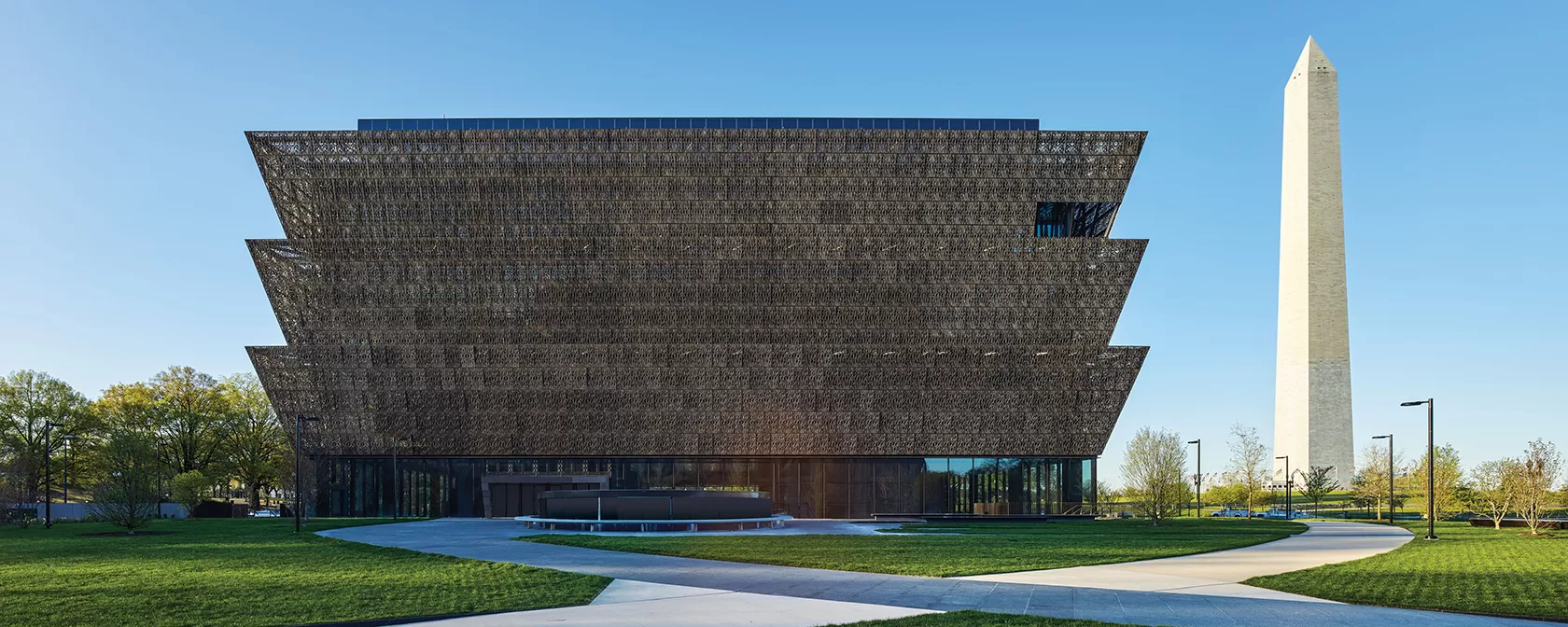
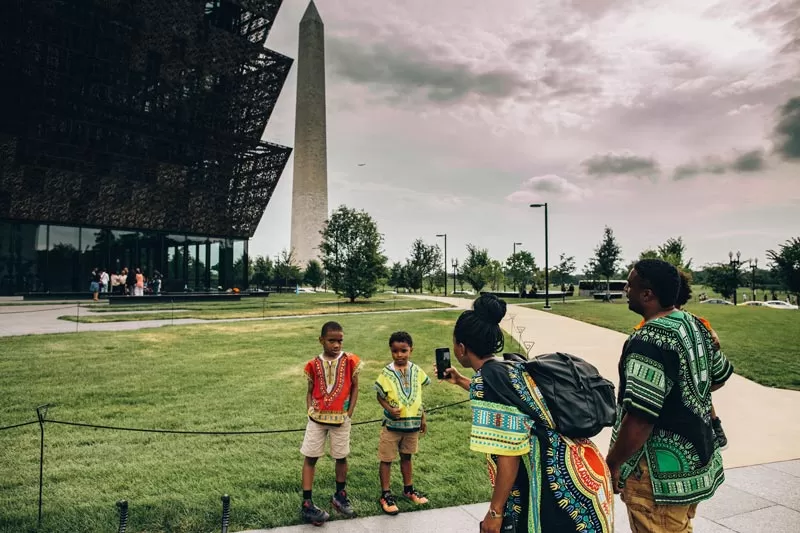
With its Southern connections, Washington, DC has always had a significant African American population. Before the Civil War, the city was home to a growing number of free Blacks who worked as skilled craftsmen, hack drivers, businessmen and laborers, and slave auctions were outlawed altogether in 1850. All slaves owned inside the city were emancipated on April 16, 1862. Since then, DC has remained home to a large African American population that has created vibrant communities and shaped the city’s identity as a culturally inclusive and intellectual capital. The influence of African American culture is undeniable as you make your way through the District. We’ve laid out must-see locations to help you take in this vibrant heritage and history. Historic Sites & Museums “Without a struggle, there can be no progress.” – Frederick Douglass Start your exploration with a visit to the Smithsonian Institution’s Anacostia Community Museum. Located in the historic African American neighborhood southeast of the U.S. Capitol called Anacostia, the museum houses a collection of approximately 6,000 objects dating back to the early 1800s. The history of this neighborhood – home to orator and abolitionist Frederick Douglass – is directly tied to the museum. Speaking of Frederick Douglass: make sure to visit the Frederick Douglass National Historic Site, located at his former home, Cedar Hill. Tour this 21-room Victorian mansion, learn of Douglass’ incredible efforts to abolish slavery and take in one of the city’s most breathtaking views. Make your way to the National Mall, where you’ll find two of DC’s most prominent enduring monuments to African American history and culture. The Martin Luther King, Jr. Memorial sits on a four-acre site and features a 30-foot statue of Dr. King that displays words from his famous “I Have A Dream” speech. The moving memorial also displays a 450-foot long Inscription Wall with 14 quotes from King’s unforgettable speeches, sermons and writings. In September 2016, the new Smithsonian National Museum of African American History and Culture opened its doors a short walk away from the Martin Luther King, Jr. Memorial. This eight-story building, with a stunning exterior that features a three-tiered, bronze-colored screen, focuses solely on African American life, art, history and culture, covering artifacts from the African Diaspora to the present day. Admission to the museum is free, but has been in extremely high demand since the facility opened its doors and timed passes are required on certain days. From September through February, timed passes are required only on weekends and are made available online three months in advance. On weekdays, visitors can enter the museum without passes beginning at 10 a.m. During peak season (from March through August), timed passes are required on weekdays before 1 p.m. and on weekends. For full details, please visit the museum passes guide. Journey to the U Street neighborhood next, where you’ll find the African American Civil War Memorial. Appropriately located near the Shaw neighborhood (named after Robert Gould Shaw, the white colonel of the all-Black Massachusetts 54th Regiment), the memorial is a sculpture that commemorates the 200,000-plus soldiers that served in the U.S. Color Troupes during the Civil War. The nearby museum features exhibits, stories and educational programming that build on the powerful message of the memorial. Last but not least, follow Cultural Tourism DC’s African American Heritage Trail to see more than 200 significant sites rich in local Black history, from churches and schools to famous residences and businesses. Music & Entertainment “Music is what I hear and something that I live by.” – Duke Ellington DC served as the starting place for some of music’s greatest figures, including jazz great Duke Ellington, R&B legend Marvin Gaye and the godfather of go-go, Chuck Brown. Their legacy is prominent, as the District remains a hotbed for grooves. Once known as “Black Broadway,” the U Street neighborhood is a perfect place to start your dive into the District’s rich musical history. Twins Jazz is a prime spot to kick back and enjoy smooth sounds. The U Street Corridor also features the Howard Theatre. Its stage hosted the likes of Duke, Ella Fitzgerald and Louis Armstrong in its 20th-century heyday, and now it boasts some of the best names in underground and popular music. Lincoln Theatre, also a historic hot spot for jazz, similarly features marquee names throughout its calendar. A cab ride to Georgetown to check out Blues Alley is also recommended – this jazz club has been standing for over fifty years. Finally, it never hurts to peep the schedules of other popular DC music venues like the 9:30 Club, Black Cat and The Hamilton Live to see who’s performing while you’re in town. Chuck Brown’s go-go music still thrives in DC, and you can pay homage to the legend at Chuck Brown Memorial Park in Northeast DC. Just as the music of Marvin Gaye still resonates, so does his impact on DC. Tap into some creative mojo by visiting Marvin Gaye Park – the singer used to sit by the stream on the east end of the park and write songs. We also recommend dining at Restaurant Marvin on 14th Street, decorated with images of the legendary singer and sporting an American/Belgian menu in honor of Gaye’s excursion to Belgium in 1981. If you’re interested in taking some of DC’s musical history home with you, the city has a litany of record shops where you can browse for jazz, go-go and R&B classics, among other genres (ask employees to point you in the right direction). Som Records on 14th Street lets you sample before you buy, while a jaunt down 18th Street will take you to Crooked Beat Records and Smash!, while Hill & Dale Records in Georgetown is also an option. Be sure to check out all the different ways to celebrate African American history and culture in Washington, DC.
Guide to Visiting Arlington National Cemetery
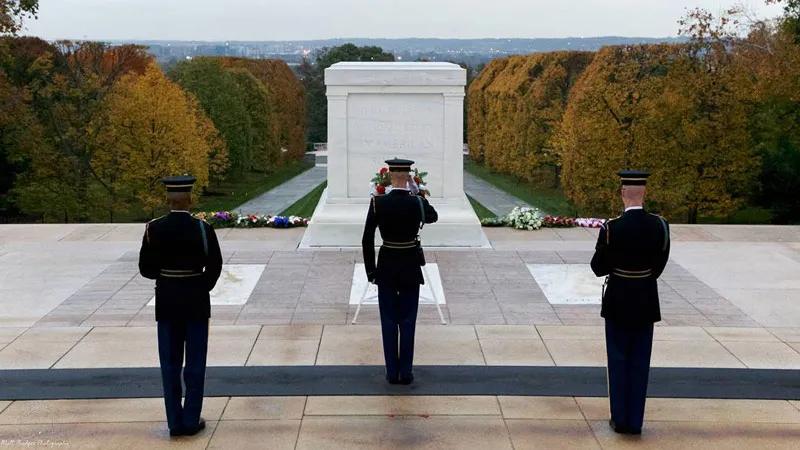
What is Arlington National Cemetery? The Arlington National Cemetery is the country’s largest military cemetery and serves as the final resting place for more than 400,000 military veterans and their immediate family from the fronts of Iraq and Afghanistan, as well as World Wars I and II, the Korean conflict, Vietnam, the Cold War and America’s Civil War. The cemetery conducts between 27 and 30 funerals every weekday. The site is open to the public 365 days a year with free admission for those who wish to tour the site and pay their respects. Important sites at Arlington National Cemetery Arlington National Cemetery is the home of several well-known historic sites, including the Tomb of the Unknown Soldier, which is a tribute to unidentified fallen soldiers who fought in World War I, World War II, Korea and Vietnam. The Tomb of the Unknown Soldier is a large white sarcophagus that is guarded 24 hours a day, 365 days a year by Tomb Guard sentinels from the elite 3rd U.S. Infantry Regiment. The Changing of the Guard ritual—an elaborate, somber ceremony where a sentinel seamlessly takes over guard duty for the previous sentinel—happens every hour from October through March and every half hour from April through September. The gravesite of President John F. Kennedy is also on view at Arlington National Cemetery. At his funeral on Nov. 25, 1963, Jacqueline and Robert Kennedy lit an eternal flame that remains alight today. Two of Kennedy’s children and Jacqueline Bouvier Kennedy Onassis are also buried alongside the president. In addition to the Kennedy family, President William Howard Taft, Senator Robert F. Kennedy, Supreme Court Justice Thurgood Marshall, world champion boxer Joe Louis, the seven Space Shuttle Challenger astronauts and the Tuskegee Airmen are also buried at Arlington National Cemetery. Arlington House, the former residence of Robert E. Lee, sits on a hill overlooking the cemetery. Originally built to be a living memorial to George Washington, in 1864 the grounds were taken over by the federal government to serve as a burial site for Civil War soldiers. Over the years, the house was also used as a plantation estate and home to 63 slaves, a military headquarters, a community for emancipated slaves and a national cemetery. The preserved historic home is open for public tours daily. On Memorial Day and Veterans Day, thousands of visitors attend remembrance services in the Memorial Amphitheater. These special services are often attended by the President or Vice President of the United States. Getting to and touring Arlington National Cemetery The easiest way to get to Arlington National Cemetery is by Metro via the direct Arlington Cemetery stop on the Blue Line. Metrobus routes also stop at the site and it is accessible by several major roadways, including the George Washington Parkway. Once you’ve arrived, start at the Welcome Center, which offers an overview of the site. Here you can also sign up for a bus tour that stops at various sites throughout the cemetery. The cemetery is built into a hill and requires extensive walking if you choose to skip the shuttle.

Guide to Visiting the Washington Monument
Built to honor George Washington, the Continental Army's commander-in-chief and the first United States president, the Washington Monument was once the tallest building in the world at just over 555 feet. The monument to America’s first president still holds the title of the world’s tallest stone structure and obelisk. The New & Improved Washington Monument After years of renovations and reopening in 2019, the Washington Monument has raised expectations for visitors with a new state-of-the-art elevator that will efficiently move hundreds of visitors up to the observation deck daily. The minute-long ride up 50 stories to the top of the world's tallest free-standing stone structure includes a video from the National Park Service about what to expect. From the observation deck, you can see nearly 25 miles into the horizon in every direction, including landmarks like the U.S. Capitol, the White House, Arlington National Cemetery and the Washington National Cathedral. Part of what makes traveling in the elevator so historic is that, on the two-minute descent, it offers a glimpse of the interior walls, which are lined with stones that commemorate George Washington, placed by states, civic groups and others. The modern system gives the National Park Service operators better control of the elevator with remote access from the ground. Before experiencing the new elevator, visitors will encounter another improvement to traveling to the top of the Washington Monument – an upgraded security screening facility at the base of the structure. The new security structure can accommodate up to 20 visitors and has more modern screening equipment. The Washington Monument is open 9 a.m. to 5 p.m. daily (last available tour ticket is at 4 p.m.) except for December 25, July 4 and part of July 3. Visitors can reserve tickets on recreation.gov in advance. A limited number of walk-up tickets are available on a first-come, first-serve basis beginning at 8:45 a.m. outside of the Washington Monument Lodge. Find out more information with our Washington Monument tour and ticket guide for both groups and individuals. More on the Washington Monument Maintained by the National Park Service, the Washington Monument is located on the center of the National Mall between the U.S. Capitol and the Lincoln Memorial. The easiest way to get to the monument is by taking the Metro. The two closest Metro stops are Federal Triangle and Smithsonian, both on the Blue, Orange and Silver lines. If traveling by bus, take DC Circulator’s National Mall route or ride Metrobus routes 32, 34, or 36. If driving, visitor parking is available on Ohio Drive, between the Lincoln and Jefferson memorials. Note that street parking is often limited near the National Mall. Why does the Washington Monument have two colors? It wasn't easy to build Washington Monument. The structure was originally designed by Robert Mills, with construction beginning in 1848. The combination of the Civil War, the Know Nothing Party's rise to control of the Washington National Monument Society through an illegal election and lack of funding led to a halt in construction in 1854. When construction resumed in 1879, marble was used from a different quarry, and time and weather erosion led to the difference in color, which begins at the 150-foot mark. The monument was finally completed in 1884 by Thomas Casey and the U.S. Army Corps of Engineers and an elevator was added to the monument in 1889.
Holidays in the White House: First Family Traditions
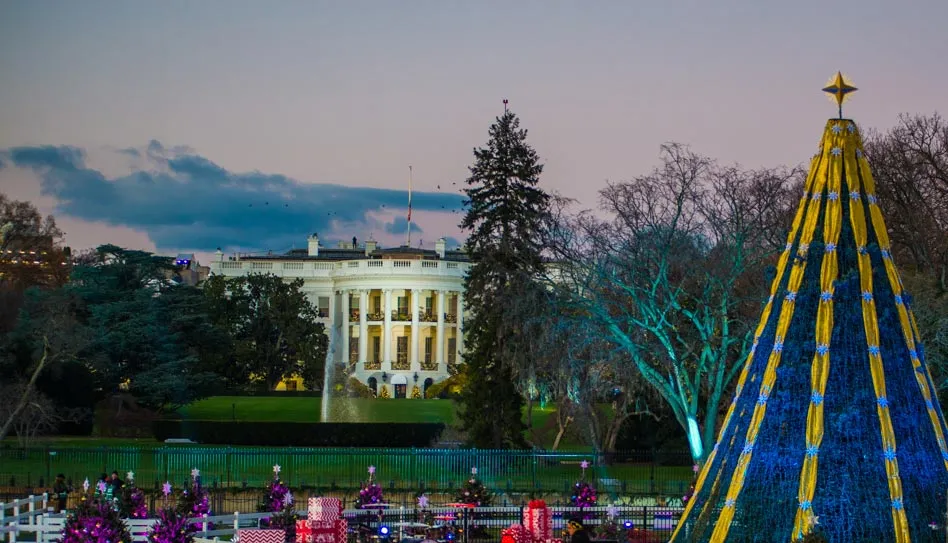
Holidays at the White House are a family affair…with thousands of guests. Each December, the president and their family deck the White House’s halls and opens the doors for dozens of parties and public tours. It’s a big job to prepare the country’s most famous residence for a month of celebrations. In fact, it takes about 400 staff members and volunteers to decorate the public rooms. From numerous Christmas trees to a 300-pound white chocolate replica of the White House, the First Lady and her staff devote much of December to decorating and entertaining guests from all across the country. Over the years, White House holidays have evolved from an intimate family affair in the private quarters to the national celebration that it is today. But through it all, some heart-warming traditions have developed and endured. See how the holidays have changed over the years, then compare them to your own family’s traditions. 1834, An indoor snowball fight: Washington, DC doesn’t always get a white Christmas, but President Andrew Jackson made sure to remedy that with an elaborate Christmas party he threw for his children and grandchildren. It included games, dancing, a grand dinner and culminated in an indoor “snowball fight” with specially fashioned cotton balls. Today, the White House remains a particularly magical place for children at Christmas. School groups and other youth-oriented civic organizations are invited to participate in many of the holiday parties and fill up on delicious holiday treats prepared by the White House chef. 1889, The First Tree: Prior to the 20th century, Christmas at the White House was celebrated privately. The first White House Christmas tree, pre-electricity, was decorated with candles and toys and placed in President Benjamin Harrison’s living quarters. 1903, A ‘Green’ Christmas: Noted conservationist President Theodore Roosevelt didn’t believe in cutting down trees for Christmas decorations. Instead, he threw a carnival for 500 children complete with dinner, dancing, souvenirs and Santa-shaped ice cream. However, Roosevelt’s son Archie defied the Christmas tree ban and smuggled a small tree into an upstairs sewing room. Today, the environmentally friendly tradition continues with the National Christmas Tree. Instead of getting a new tree each year, a fir tree planted on the White House Ellipse is redecorated each year. In addition, the National Tree is decorated with energy efficient LED lights. 1909, A ‘Blue’ Christmas: President William H. Taft was the first president to have a tree in the public portion of the White House. His children helped him decorate that first tree in the Blue Room. Today, the Blue Room still hosts the official tree (one of many trees in the White House) and many presidents and their families have posed in front of it for their official Christmas photo. 1923, A National Tree: President Calvin Coolidge expanded the celebration beyond the Blue Room with the lighting of the first National Christmas Tree, located outside the White House in a public viewing area. The celebration became the month-long Pageant of Peace following World War II and the Korean War as a way to commemorate the end of the wars. Today, the lighting of the National Christmas Tree and the Pageant of Peace on the White House Ellipse is the centerpiece of the holidays in Washington, DC. The First Family officially lights the National Tree in a special ceremony. For the remainder of the month visitors can enjoy nightly musical entertainment, visit Santa’s Workshop and explore the miniature Christmas trees each featuring homemade ornaments from all 50 states, the District of Columbia and U.S. territories. 1961, A Camelot Christmas: First Lady Jacqueline Kennedy started the tradition of selecting a theme for the official White House Christmas tree. That first year she selected the “Nutcracker Suite” – a popular theme. First ladies Barbara Bush and Hillary Clinton both revisited the theme in later years. Visitors who attend a White House holiday party or go on a public tour have the opportunity to view the official tree, as well as the decorations in about 10 other rooms. A commemorative program highlights the decorations in each room and their significance. Because the White House hosts so many people during the holidays, many a family has posed in front of the official Christmas Tree for their very own holiday photo. 1979, The First National Menorah: President Jimmy Carter was the first to officially recognize the Jewish holiday of Hanukkah when he lit the nation’s first National Menorah. Today, the presidential lighting ceremony continues and the National Menorah is part of the Pageant of Peace. 1995, A Chocolate Christmas: A highlight of the holiday decorations has become the white chocolate replica of the White House. A tradition since the 1960s, today visitors will find this delicious architectural feat, which can weigh up to 300 pounds and take months to create, displayed in the State Dining Room. In 1995, the White House pastry chef also created a replica of First Lady Hillary Clinton’s girlhood home on Wisner Street in Park Ridge, Ill. No detail was left unturned, including tiny stocking hung by the chimney with care. 2008, A Red, White and Blue Christmas: While the First Lady picks the official holiday theme, she is often inspired by American citizens. In 2008, First Lady Laura Bush selected a patriotic theme after receiving many letters suggesting the White House make it a red, white and blue Christmas to recognize the nation’s patriotic pride during war time. 2010, Simple Gifts: For their second holiday season at 1600 Pennsylvania Avenue, the First Lady Michelle Obama chose the theme of “Simple Gifts.” In lieu of material gifts, the Obamas chose to celebrate their friends and family that bring joy during the holidays. The first lady stated, “The greatest blessings of all are the ones that don’t cost a thing: the time that we spend with our loved ones, the freedoms we enjoy as Americans and the joy we feel from reaching out to those in need.” How to visit the National Christmas Tree: The National Christmas Tree and Christmas Pathway of Peace are displayed on the White House Ellipse, which is located just south of the White House and north of the National Mall. Traveling by Metrorail is the best way to see the tree, which is within walking distance from the following stops: Federal Triangle, Farragut North, McPherson Square and Metro Center. For more information on visiting the National Christmas Tree and the Pageant of Peace, visit www.thenationaltree.org.