
All Articles
How Can I Tour the White House in Washington, DC?
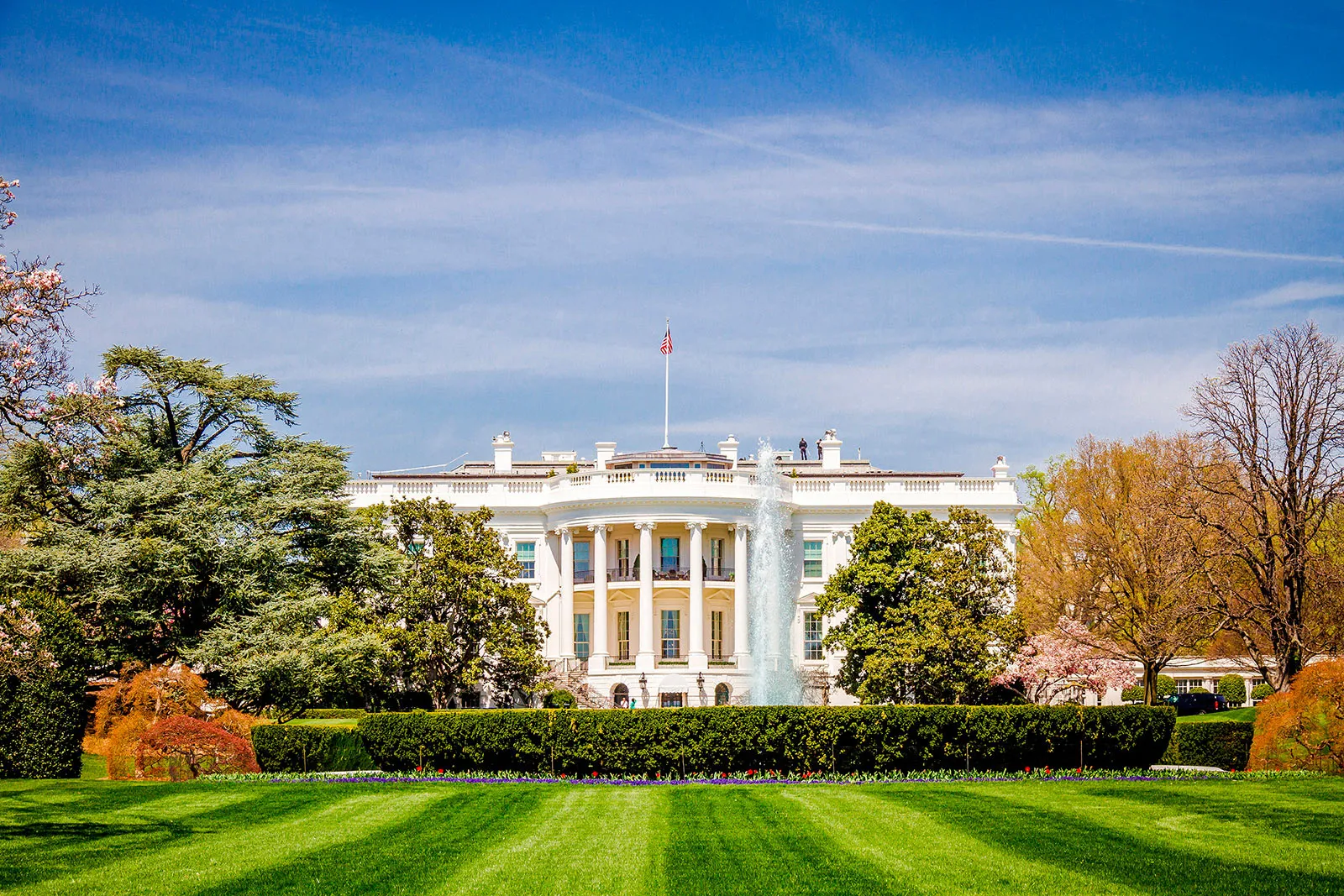
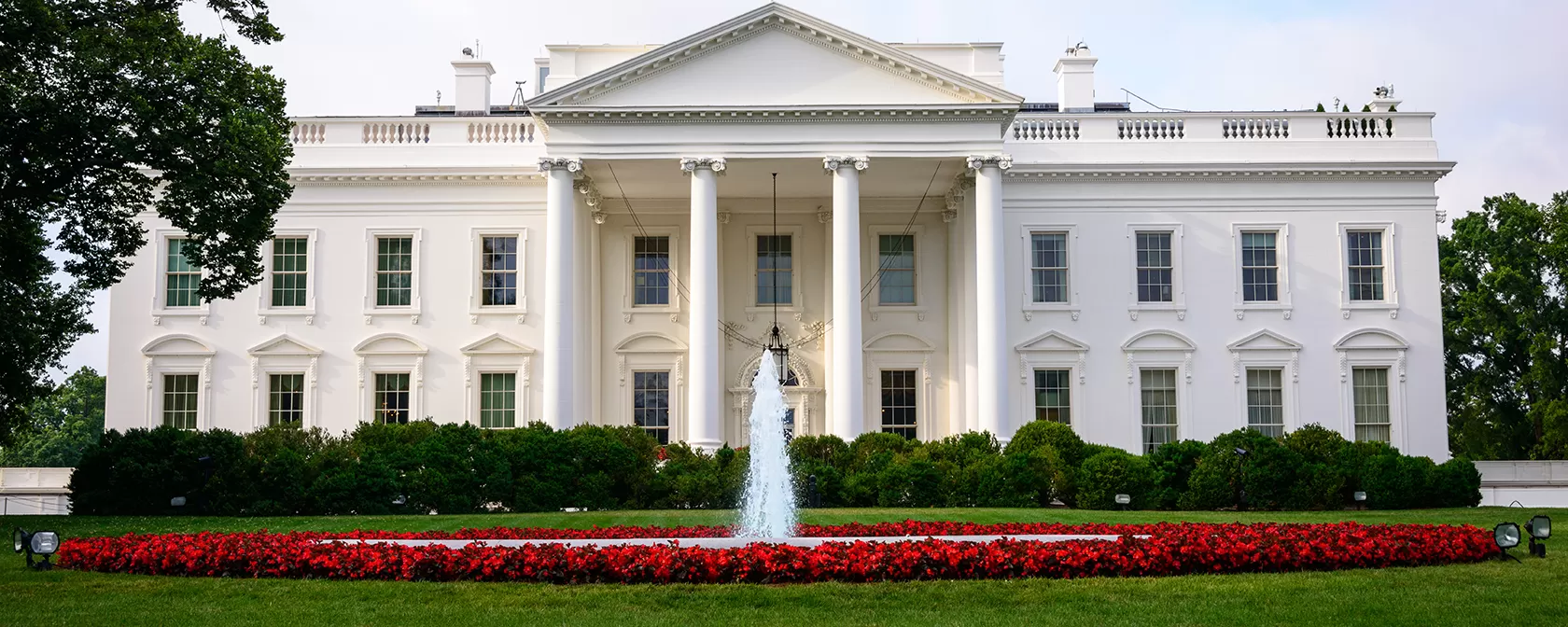
Requesting a White House tour Touring the White House requires some advance planning. Public tour requests must be made through your member of Congress (find your member of Congress and contact information) and submitted up to three months in advance and no less than 21 days prior to your visit. If you're an international visitor and wish to schedule a tour, please contact your home country’s embassy in Washington, DC. You are encouraged to submit your tour request as early as possible as tours fill up quickly and a limited number of spaces are available. Tours are filled on a first-come, first-served basis. All White House tours are free. Please note tours are subject to last-minute cancellations based on the official White House schedule. Public, self-guided tours are 45 minutes and are run between 8 a.m. and 12:30 p.m., Tuesdays through Saturdays unless otherwise noted. For complete details on White House tours, visit the White House tours and events page or call the White House Visitors Office 24-hour information line at (202) 456-7041. The White House is located at 1600 Pennsylvania Avenue NW. What to expect on a White House tour If there is a tour slot available during your visit to DC, you will be given a specific date and time to arrive and be instructed on where to check in. All guests over 18 years old will be required to present a valid, government-issued photo ID upon check-in. Foreign nationals must present their passport. Please bring as little as possible (avoid backpacks, food, large handbags, bottled water, etc.). Note that smartphones and compact cameras with a lens no longer than 3 inches are permitted on the public tour route, but video recording devices and flash photography are not allowed inside the White House. Visitors will go through security prior to entering the White House. There are no restrooms available at the White House. The closest restroom is located at the Ellipse Visitor Pavilion nearby. Public tours of the White House include the public rooms in the East Wing, which includes the Blue Room, Red Room and Green Room; the State Dining Room; the China Room; and a view of the White House Rose Garden. Secret Service members are stationed in each room and are available to answer questions about the history and architecture of each room. You can also visit the White House Visitor Center before or after your tour. How to get to the White House The closest Metro stations to the White House are Federal Triangle (Blue and Orange lines), Metro Center (Blue, Orange and Red lines) and McPherson Square (Blue and Orange lines). Please note there is NO PARKING near the White House. Public transportation is strongly encouraged. How to tour the White House Garden Another opportunity to visit the White House is to attend either its fall or spring garden tour. Check whitehouse.gov in early October and April. The announcement of the garden tours is usually made within a week or two of when they take place. Garden tours generally run for two consecutive days. They may be canceled due to poor weather. A ticket is required for all attendees (including small children). Usually, tickets are distributed by the National Park Service at the Ellipse Visitor Pavilion on 15th and E streets NW on each tour day beginning at 9 a.m. Review the announcement for specific details. Will I still be able to see the White House without going on a tour? While visitors are not allowed entry to the White House without requesting a tour through your congressional representative, you will still be able to see the White House from Pennsylvania Avenue NW at Lafayette Square and view the White House and the South Lawn from the Ellipse. Please note that a new fence is currently under construction at the White House, as the current 6-foot fence is being replaced by a stronger, wider fence that will be 13 feet. Where can I store my belongings during the tour? It is important to note that security at the White House is extremely high. If your hotel is nearby, we suggest leaving your belongings in your room during the tour. If this is not possible, there are a few other options. You can designate one member of your tour group to hold everyone’s belongings. That person can take the self-guided tour once his or her group has finished the tour. If you're a ticketed Amtrak customer, you may be able to check luggage in advance at Union Station. These are located near Gate A. Lockers are available from 6 a.m. to 10 p.m. daily. A photo ID is required and lockers must be paid for via cash or credit in advance. Rates are $3-$6 per hour per bag depending on the size of your bag. For questions on bag storage, please call 202-906-3000. Catch up on White House history with the free podcast The 1600 Sessions and enhance your trip with the White House Experience app from the White House Historical Association. The app offers three tour experiences, including a virtual tour of the White House (with rooms you normally don't see on the tour), a neighborhood walking tour and a room-by-room guide for visitors on an in-person tour of the White House. Now that you have read up on the White House, explore DC’s other awesome monuments and memorials.
How Do I Tour the U.S. Capitol and See Congress in Session?
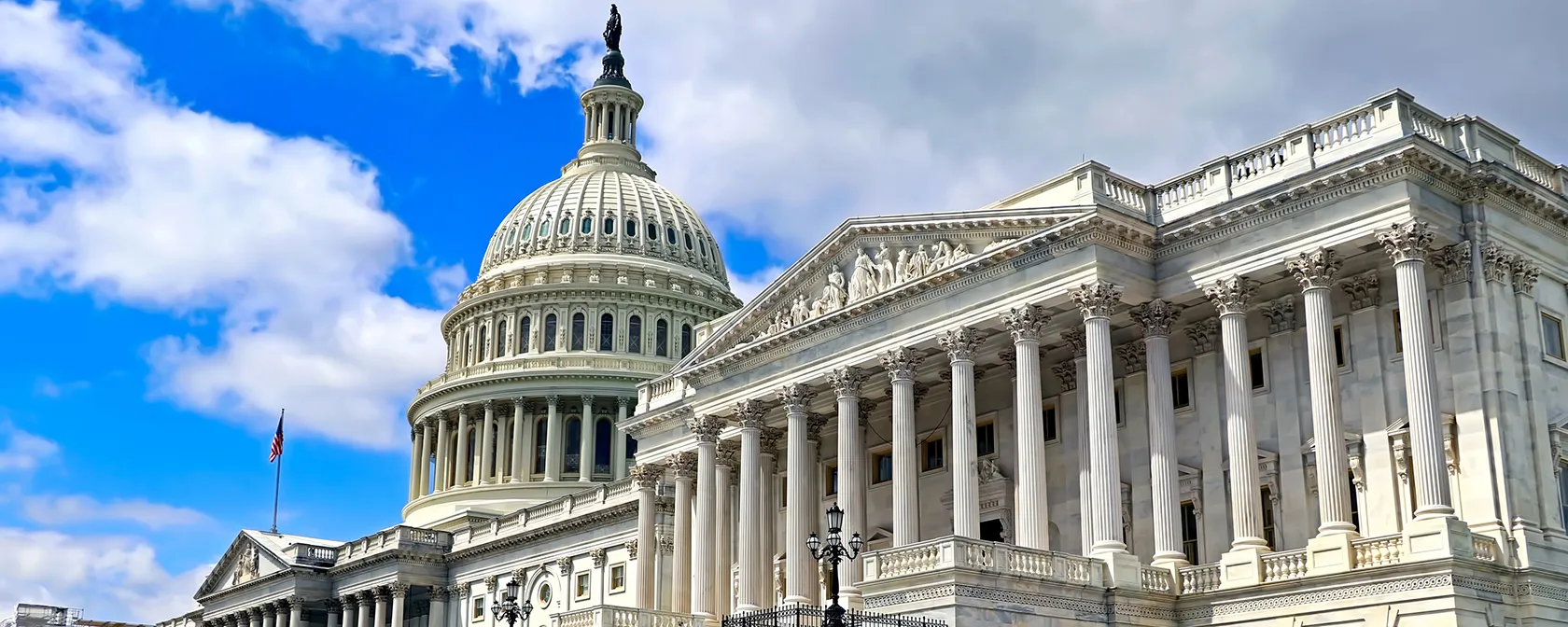
The U.S. Capitol Building is one of the most recognizable buildings in the world and the center of American democracy. The world-famous domed building is home to the United States House of Representatives and Senate; where America’s congressmen and congresswomen conduct business, debate laws and pass bills on behalf of the American people. The U.S. Capitol and U.S. Capitol Visitor Center is also one of DC’s most popular monuments and museums and welcomes millions of visitors each year. How do I arrange a tour of the United States Capitol Building? Plan your visit in advance! A public tour of the U.S. Capitol is free and open to anyone who makes an advanced reservation, although there are some same-day tickets available by standing in line at the U.S. Capitol Visitors Center (note that lines will be long during spring and summer). We recommend reserving a reserving a tour date and time. All tours begin and end at the U.S. Capitol Visitor Center, open Monday-Saturday from 8:30 a.m. to 4:30 p.m. (except Thanksgiving, Christmas, New Year’s Day and Inauguration Day). Tours typically take about 90 minutes and are fully accessible for people with disabilities. What will I see on a Capitol tour? Guided tours begin with a 13-minute intro film, followed stops in the Capitol Rotunda, where guides point out the center point of the District of Columbia, as well as demonstrate the unique acoustical effect where a speaker several yards away can be heard more clearly than a speaker close to the listener. The Capitol Dome is encircled by murals, and the fresco on the eye of the ceiling is called The Apotheosis of Washington showing President Washington rising to the heavens in glory with Liberty and Victory/Fame beside him. Below, on the walls of the Rotunda, are large paintings depicting significant events in American history: The Signing of the Declaration of Independence, The Baptism of Pocohontas, The Embarkation of the Pilgrims, The Landing of Columbus and General George Washington Resigning His Commission. Other stops on the 45-minute walking tour include the Crypt, National Statuary Hall and connecting corridors of the U.S. Capitol, where you’ll see statues representing every state Can I see Congress in session? The guided tour doesn't include the Senate and House galleries. However, visitors can obtain free passes through their congressmen to view both chambers when Congress is in session. International visitors can ask about gallery passes at the House and Senate Appointment Desks on the upper level of the Capitol Visitor Center. When Congress is not in session, the galleries are open to the public Monday-Friday from 9 a.m. to 4:15 p.m. However, viewing hours are subject to change and are not always the same for the House and Senate galleries. You can check the schedules with your Congressional office when requesting gallery passes. Read more information about watching Congress in session and viewing the House and Senate galleries. What’s in the U.S. Capitol Visitor Center? You’ll find a cafeteria and gift shop in the Capitol Visitor Center. The gift shop carries merchandise inspired by the art and architecture of the U.S. Capitol. The restaurant is open Monday through Saturday from 8:30 a.m. to 11 a.m. for continental breakfast and lunch from 11 a.m. to 4 p.m. If you haven’t printed your tour reservation, bring along the number you were assigned. There are free listening devices in multiple languages for international visitors. How do I get to the U.S. Capitol Visitor Center? Because there is very little parking, it is best to travel via the Metro or the DC Circulator. There are three Metro stops within walking distance of the U.S. Capitol: Union Station (Red Line), Capitol South and Federal Center SW (Orange, Silver and Blue lines). The Capitol Visitor Center, which serves as the main public entrance, is located beneath the East Front plaza of the U.S. Capitol at First and East Capitol streets. Looking for more in the neighborhood? Take advantage of our guide to Capitol Hill.
Q&A with Mrs. Virginia Ali, Matriarch of Ben’s Chili Bowl
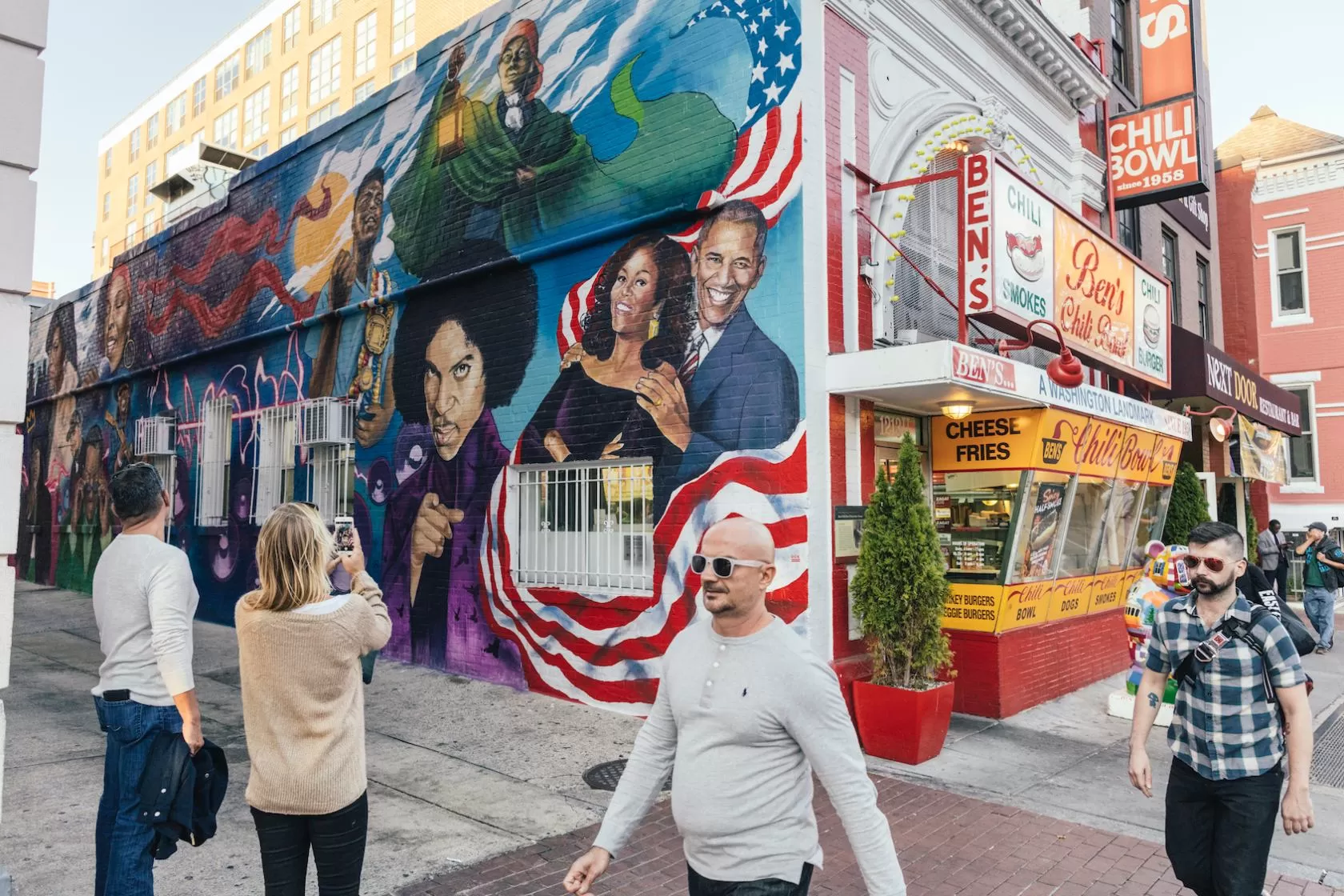
What keeps a restaurant open for more than 65 years? What is it that draws national attention to a neighborhood eatery? What magnetic force can possibly be behind the amount of love and dedication that this city (this coast, this country) feels for Ben’s Chili Bowl and its half-smokes? Certainly one factor is its location on U Street – once known as DC’s Black Broadway – and the symbol of community Ben’s became as the city prevailed through segregation, the societal upheaval of the 1960s and ensuing decades of drastic change in the neighborhood. But the leading reason Ben’s has grown to be an institution in the nation’s capital is its people. The restaurant’s dedicated staff is led with heart by Virginia Ali, the widow of Ben, with whom she cofounded the restaurant when she was just 24 years old. Virginia is approaching 90 years old, yet she remains a walking lesson in warmth and hospitality. She wants every customer to feel at home and thanks to her smile and a pat on the back, everyone does. It’s clear that she’d give you whatever you needed to feel comfortable and cared for. You can begin to see why Martin Luther King, Jr., for one, chose to spend many of his DC lunchtimes at Ben’s, and why the restaurant stayed open and served meals during the riots on U Street after the civil rights leader was assassinated. In the week leading up to the March on Washington’s 60th anniversary, we had the chance to talk to Virginia about MLK and other Ben’s lore: Ben’s arrived on the scene, in a segregated country, five years before the March on Washington. What did DC feel like to you during those five years? VA: In 1958, I left Industrial Bank (where I’d worked since 1952) to open the restaurant. We were going through the civil rights movement down south. Washington had begun to open up a few places to be integrated. And it was after the March that we passed the Civil Rights Bill. The March was on August 28, 1963. And the Uprising [the assassination of Dr. King] took place five years later. Has Ben’s been integrated since it opened? VA: Of course! We were never the prejudiced people. White people could go wherever they wanted. If they’d gone to the Howard Theatre to see one of our big entertainers, there’d be a whole bunch of white people [in the restaurant after]. To put it in perspective, behind me, if you walk to the end of this alley, around that circle where those beautiful townhouses are, it was Children’s Hospital. Children’s Hospital! Which had all kinds of doctors and lawyers and everybody running down here for lunch. You know what I mean? Thompson’s Dairy was one of the big businesses in the community that delivered milk to my house every day. … Smith’s Storage right up the street; C & P [Chesapeake and Potomac] Telephone Company was in the area … so there were large businesses here. That brought everyone together? VA: Yeah. We all lived together. Do you remember any specifics from interactions with MLK? VA: Well, I do remember one: one day we were talking and he said he’d had a meeting with President Kennedy. And with Bayard Rustin, A. Philip Randolph and young John Lewis, and I don’t remember who else. And he had told President Kennedy, in order to bring attention to these injustices to Black people, he was going to bring a large group of protestors here. And he told me President Kennedy said to him, “I don’t think that’s a good idea. Because if you bring a large group of people here, and there’s an incident, it will set your movement back, Dr. King.” Dr. King said, “There will be. No. Incident.” Wow. VA: He brought 250,000 people. A sea of people. Did you attend the March? VA: Ben and I were there. A sea of people. And not a single incident. Just a very inspiring, beautiful day. And the very next year, guess what happened? They passed the Civil Rights Bill. The very next year. Do you have ideas about making more progress in America? VA: You know, the way I’ve operated my business certainly came from the teachings of my dad, my mom, from my home growing up. The way we lived. And that philosophy was: always, always, treat people the way you want to be treated. All people. Whether it’s the president, the judge, the guy on the corner, whatever it is – just treat all people the way you would like to be treated. And if you do that, you don’t have a problem. It’s that simple. It’s not rocket science at all. And it doesn’t take anything to do it but kindness. Ben’s is celebrating its 65th anniversary. It’s amazing to see such a happy story has lasted for so long. Do you ever think about what you would have done if there had never been Ben’s Chili Bowl? VA: No. And I do know that I love what I do. And when people came to me and said, “Are you going to stay here? Why didn’t you open someplace else?” I said, “This is the nation’s capital! It’s got to get better, right?” It’s got to get better. We are the nation’s capital. Check out Ben's Chili Bowl next time you're in DC. And if you want a taste of Ben's at home, order nationwide today.