
All Articles
Visiting the Martin Luther King, Jr. Memorial in Washington, DC
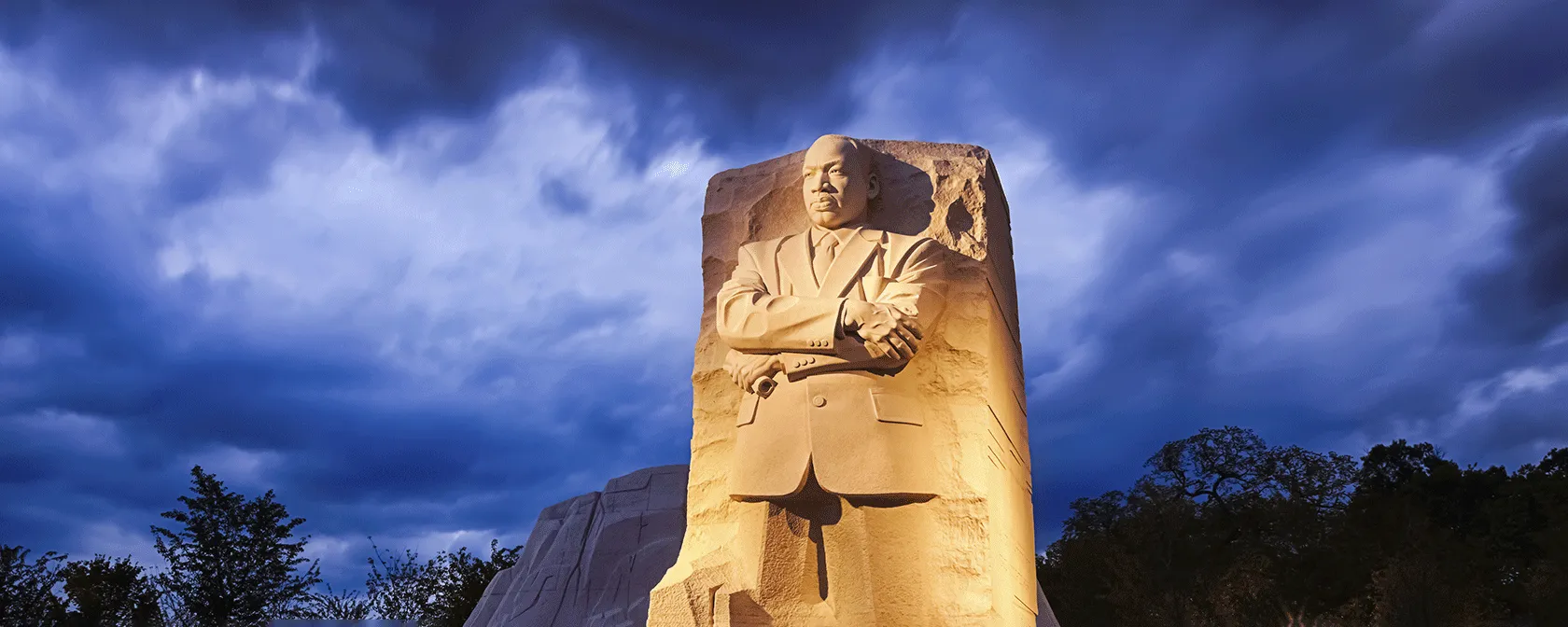
Experience the Martin Luther King, Jr. Memorial in 360-degree video On your Phone? Open the 360-degree video in the YouTube app for the best viewing experience. What is the Martin Luther King, Jr. Memorial and where is it? The Martin Luther King, Jr. Memorial is situated on a four-acre site along the National Mall's Tidal Basin, adjacent to the Franklin D. Roosevelt Memorial and shares a direct line of sight between the Lincoln and Jefferson memorials. Its official address is 1964 Independence Avenue SW, in honor of the Civil Rights Act of 1964, a landmark legislation in which King played an important role. Dr. Martin Luther King, Jr. was one of the most prominent leaders of the Civil Rights Movement in the 1960s, becoming an iconic figure through his incredible speeches and his use of nonviolent resistance. He led the famous March on Washington in 1963, where he gave his legendary “I Have a Dream” speech on the steps of the Lincoln Memorial. Opened to the public in 2011, the memorial is the fourth in Washington, DC to honor a non-president and the first to honor a man of color. The site was designed as a lasting tribute to Dr. King’s legacy and will forever serve as a monument to the freedom, opportunity and justice for which he stood. Martin Luther King, Jr. Memorial hours and directions The most convenient way to reach the Martin Luther King, Jr. Memorial is by Metrobus or Metro. The closest Metro stop is Smithsonian, on the Orange, Blue and Silver lines. Of course, the memorial is in very close proximity to the other memorials surrounding the Tidal Basin. The Martin Luther King, Jr. Memorial is open 24 hours a day, seven days a week. There is no fee to visit. National Park Service rangers are on site to answer questions from 9:30 a.m. to 10 p.m. daily. Interpretive programs are available throughout the day and upon request. Please make sure to wear a facial covering and maintain a safe social distance when visiting the memorial. What will I see at the Martin Luther King, Jr. Memorial? The centerpiece of the memorial is a 30-foot statue of Dr. King, featuring his likeness carved into the Stone of Hope, which emerges powerfully from two large boulders, known as the Mountain of Despair. Together, they represent soul-stirring words from Dr. King’s “I Have a Dream” speech. Text from this speech is cut sharply into the rock of the Stone: “Out of the mountain of despair, a stone of hope.” Visitors enter through the Mountain of Despair and tour the memorial as if moving through the struggles that Dr. King faced during his life. Visitors end in the open freedom of the plaza. The solitary Stone of Hope stands proudly, depicting the civil rights leader gazing over the Tidal Basin towards the horizon, forever encouraging all citizens to strive for justice and equality. Surrounding the statue of Dr. King is a 450-foot long Inscription Wall, which features 14 quotes from King’s speeches, sermons and writings. Inscriptions were chosen by a special “Council of Historians,” which included Maya Angelou and Henry Louis Gates. Quotes were chosen with Dr. King’s four main principles in mind: justice, democracy, hope and love.
Visiting the National Archives Building & Museum in Washington, DC
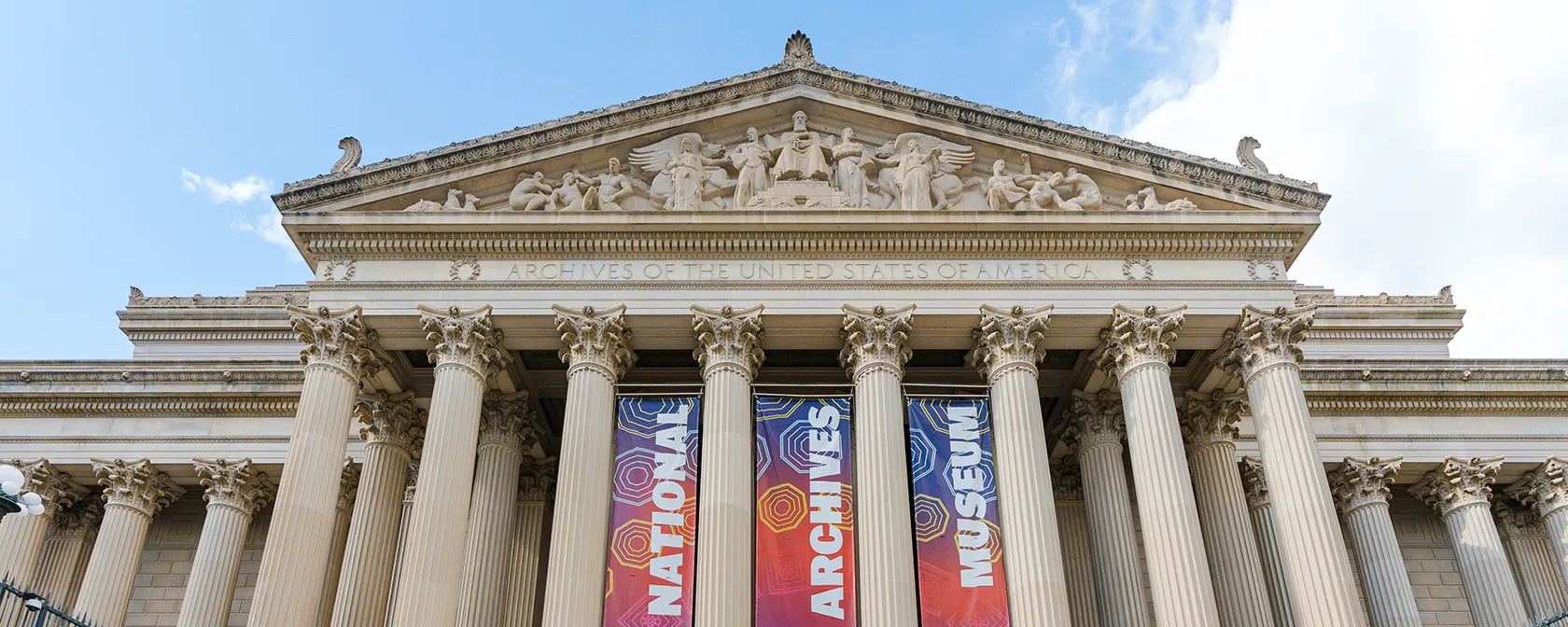
What and where is the National Archives Building & Museum? The National Archives & Records Administration Building and Museum is located on Constitution Avenue NW, between 7th and 9th Streets, just north of the National Mall. The building houses both a museum and the National Archives and Records Administration, which is responsible for federal records deemed to be of historical importance. The National Archives Building is home to more than three billion records in total, including the three most important documents in American history: the Declaration of Independence, the U.S. Constitution and the Bill of Rights. These can be viewed in the building’s Rotunda for the Charters of Freedom. The museum is open every day of the year except Thanksgiving Day and Christmas Day. Its hours are 10 a.m. – 5:30 p.m., seven days a week. Admission is always free. The easiest way to reach the National Archives is via Metrorail or the DC Circulator. The closest Metro stop is Archives – Navy Memorial – Penn Quarter on the Green and Yellow lines. The DC Circulator’s National Mall route will take you near the building, making it easy to continue your exploration of the National Mall afterwards. The facility is handicap accessible. What’s inside the National Archives? The National Archives features distinct areas that all serve a different purpose in illuminating American history through vital documents. The aforementioned Rotunda for the Charters of Freedom enjoys the most attention, and for good reason. The semicircular room contains the Declaration of Independence, the U.S. Constitution and the Bill of Rights. The exhibition surrounding the charters highlights the composition and continuing significance of each document. The David M. Rubenstein Gallery is home to Records of Rights, which features numerous Archives documents and a 17-foot touch screen to summarize American debate around essential issues such as citizenship, voting rights, equal opportunity, free speech and more. The highlight of the gallery is one of four surviving originals of the 1297 Magna Carta. The Public Vaults take you deeper into the Archives’ records. At any given time, more than 1,000 documents are on display, indicating the incredible breadth of American democracy. Each vault is themed based on words from the Preamble to the U.S. Constitution, which is only fitting. The exhibit has also added an interactive element to take you even closer to the country’s history. Beyond its myriad exhibits and historical documents, the National Archives Museum also features the William G. McGowan Theater, a 290-seat venue that often hosts documentary films and forum discussions. You can also educate and entertain the next generation in the Boeing Learning Center, which offers hands-on activities relating to Archive materials. Last but not least, the National Archives Store is a great spot to pick up American memorabilia and souvenirs to take home with you.
Visiting the National World War II Memorial in Washington, DC
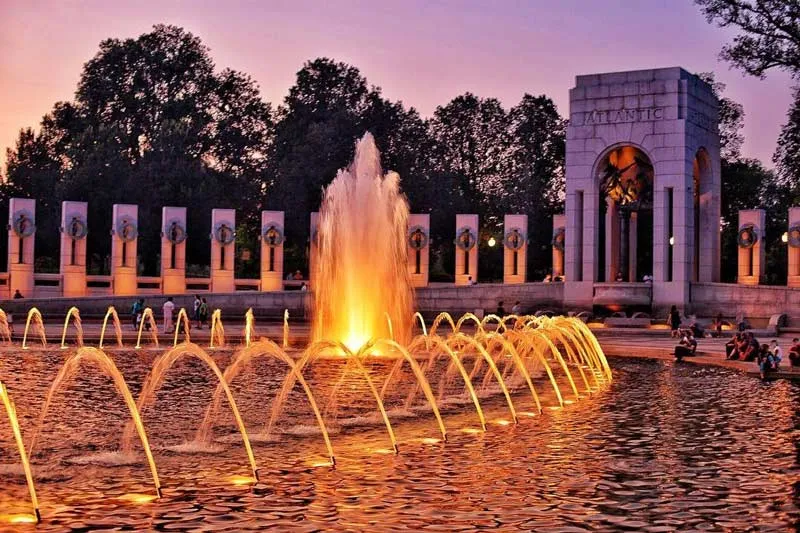
What is the National World War II Memorial and where is it? The National World War II Memorial honors the 16 million people who served as part of the U.S. Armed Forces during World War II, including more than 400,000 who gave the ultimate sacrifice for their country. The memorial sits along the central vista of the National Mall, at the east end of the Lincoln Memorial Reflecting Pool. The World War II Memorial is free and open to the public 24 hours a day. Park rangers are on duty to answer questions from 9:30 a.m. to 10 p.m. daily, and interpretive programs are provided throughout the day and upon request. The most convenient way to reach the memorial, often referred to as the WWII Memorial, is by Metrobus or Metro. There are two Metro stations close by: Smithsonian and Federal Triangle, both located on the Orange, Blue and Silver lines. As for the bus,take either the 32, 34 or 36 Metrobus routes. What will I see at the National World War II Memorial? Symbols of America’s triumph in the Second World War are artfully displayed all over the World War II Memorial, which has a splendid fountain at its center. 56 granite columns symbolize unity among the 48 states, seven federal territories and the District of Columbia. The columns form a semi-circle around the memorial’s plaza, with two 43-foot tall arches on opposite sides. The northern arch represents victory in the Atlantic, while the southern arch symbolizes victory in the Pacific. When you enter the memorial’s semi-circle from the east, look for two walls on each side of you. Each contains scenes from the war beautifully rendered in bronze relief. On the left (towards the Pacific arch), the scenes progress through the experience of war, from physical exams all the way to homecoming. The right side pays tribute to the Atlantic, as the last scene depicts American and Russian armies shaking hands as the two sides met in Germany at the conclusion of the war. One of the World War II Memorial’s most striking features is the Freedom Wall. 4,048 gold stars pay tribute to American lives lost at war (each star represents 100 Americans), while dozens of battle names and military campaign destinations are also on display. In front of the wall, a stone fittingly reads, “Here we mark the price of freedom.” Be sure to look for the memorial’s two tough-to-find inscriptions of “Kilroy was here,” another powerful American symbol from World War II. The saying represents the presence of U.S. soldiers, and was scribbled (with an accompanying doodle) at numerous locations during the war. Honor a veteran On any given visit, you may encounter former servicemen at the memorial. In fact, the Honor Flight Network is a non-profit dedicated to bringing vets, often elderly, to DC to visit the memorials which honor their service to the nation. These visits are often filled with emotions and help provide closure for veterans by reinforcing the importance of their service and sacrifice.
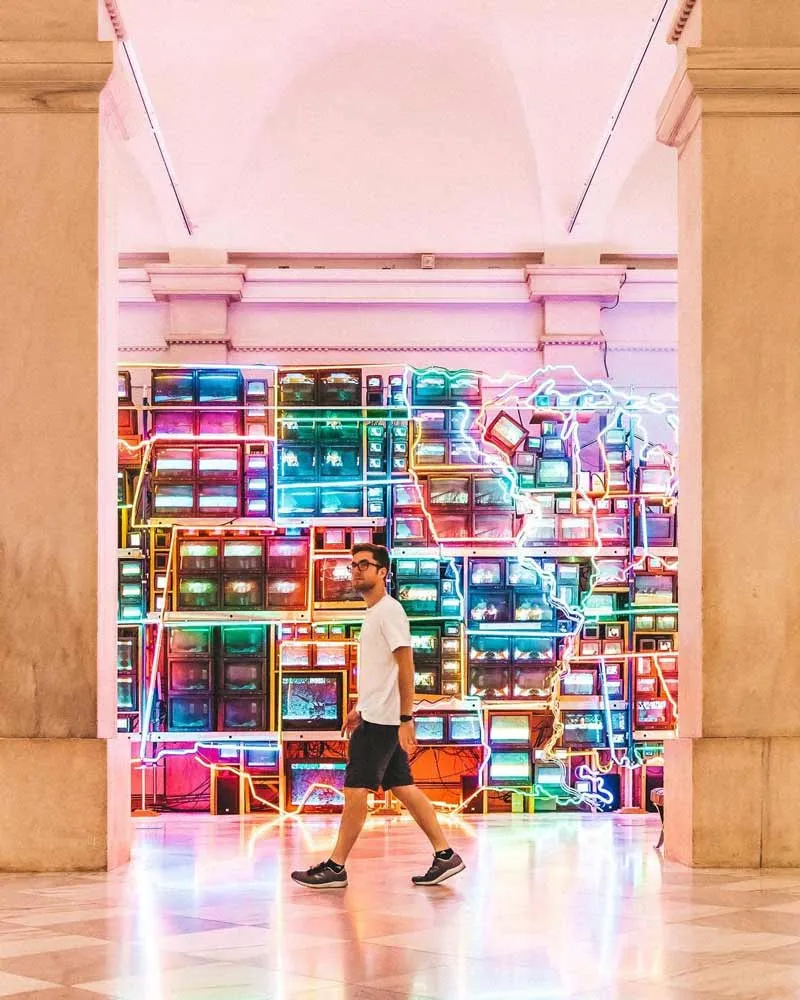
Visiting the Smithsonian American Art Museum and Renwick Gallery in Washington, DC
Wander through three centuries of American art The Smithsonian American Art Museum in Washington, DC is one of the largest and most expansive collections of American art in the world. The museum’s two locations, the main building in Penn Quarter and the Renwick Gallery located next to the White House, represent thousands of artists spanning hundreds of years. Journey through America’s artistic development by viewing 17th- and 18th-century paintings from from the colonies of New Spain and New England, then make your way through the 19th century art collection, which highlights the Western migration, impressionism and the Gilded Age. A visit to this museum is as encompassing a museum experience as one can find. What’s inside the Smithsonian American Art Museum? At the Smithsonian American Art Museum you will encounter America’s most revered artists of each time period, as forms, styles and genres were developed and perfected – as well as the National Portrait Gallery, which shares the same building. The 20th century saw progress in the realms of abstraction and realism, as visitors can see through the museum’s large collection of New Deal art and murals. The museum also hosts a vast contemporary art collection, so your trek through American art will bring you all the way to the present day. If you are looking for a more culturally oriented perspective, collections do stem beyond eras: the museum features exhibits specifically dedicated to African American and Latino artists, as well as folk art. The Renwick Gallery is the museum’s free-to-enter home for contemporary craft and decorative art, displaying the finest in American craft and decorative art in its beautiful, state-of-the-art building just steps from the White House. The Renwick is known for its groundbreaking interactive exhibits, so make sure to check out what's happening there before you go. Museum locations and hours The American Art Museum is located on 8th and F streets NW, while the Renwick Gallery can be found at Pennsylvania Avenue and 17th Street NW. Admission is always free, the museums are open Wednesday-Sunday and regular hours are 11:30 a.m. – 7 p.m at the American Art Museum and 10 a.m. – 5:30 p.m. at the Renwick. Both facilities are handicap accessible. Take a break in the Kogod Courtyard If your march through the annals of American art history has you feeling both amazed and a bit tired, enjoy the Kogod Courtyard, set in the Smithsonian American Art Museum. Here you can relax and gear your mind back toward the present via free Wi-Fi. The Courtyard Café is currently closed and outside food and drink is prohibited, with the exception of closed water bottles.
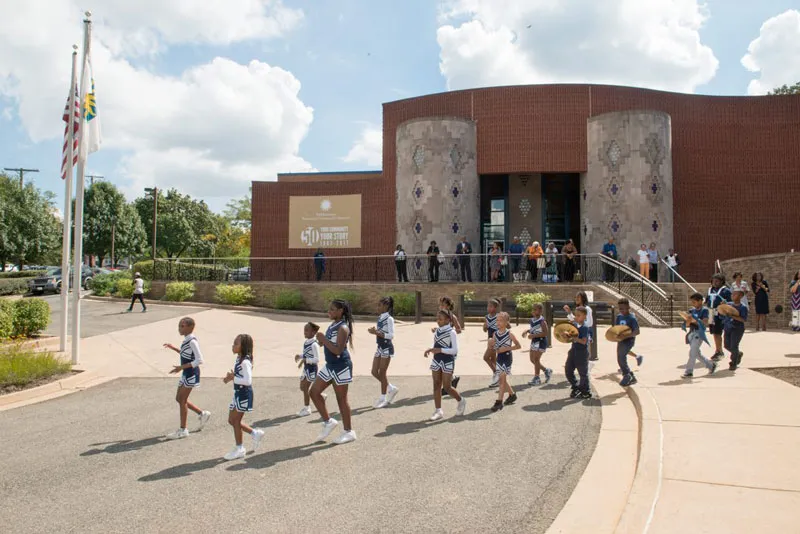
Visiting the Smithsonian Anacostia Community Museum in Washington, DC
What is the Smithsonian Anacostia Community Museum and where is it? Shining a lens on urban life, the Anacostia Community Museum examines, documents and interprets the impact of historical and contemporary social issues on communities. However, the museum didn't always focus on global communities, as the museum owes its roots to Anacostia's local African American history and culture. The museum is located a mile from the Anacostia stop on Metro’s Green Line in DC's Anacostia neighborhood. It is also serviced by taxis and ride-sharing options like Uber and Lyft. The museum offers free parking and, in summertime, a free round-trip shuttle that picks up at the National Mall and Anacostia Metro station. The museum is open daily from 10 a.m. – 5 p.m. After seven months of renovations, the museum reopened to the public in October 2019 with an enhanced visitor experience and improved accessibility. Going global through locals After opening in 1967, the Anacostia Neighborhood Museum – as it was known then – helped tell the history and experience of its surroundings, largely African American neighborhoods. After the National Museum of African American History and Culture was announced, the museum took its local community focus and applied it more globally. It changed its name to the Anacostia Community Museum in 2006 to magnify ethnic themes and social and cultural issues occurring within urban communities. Rotating exhibits often focus on human stories and are the source of community partnerships where curators and creators work alongside residents, local officials, activists, artists, businesses, families and other organizations. Check out the current exhibitions at the museum, as well as a wide range of upcoming events for all ages. African American history and culture at the museum Even though the museum has broadened its focus in recent years, its collections contain thousands of unique artifacts related to the local African American community. From family archives of 19th-century African American locals to works from black DC artists, the artifacts highlight how inextricably linked the museum is to its local surroundings. These relics have been used in exhibits and continue to tell the story of east-of-the-river communities in DC.
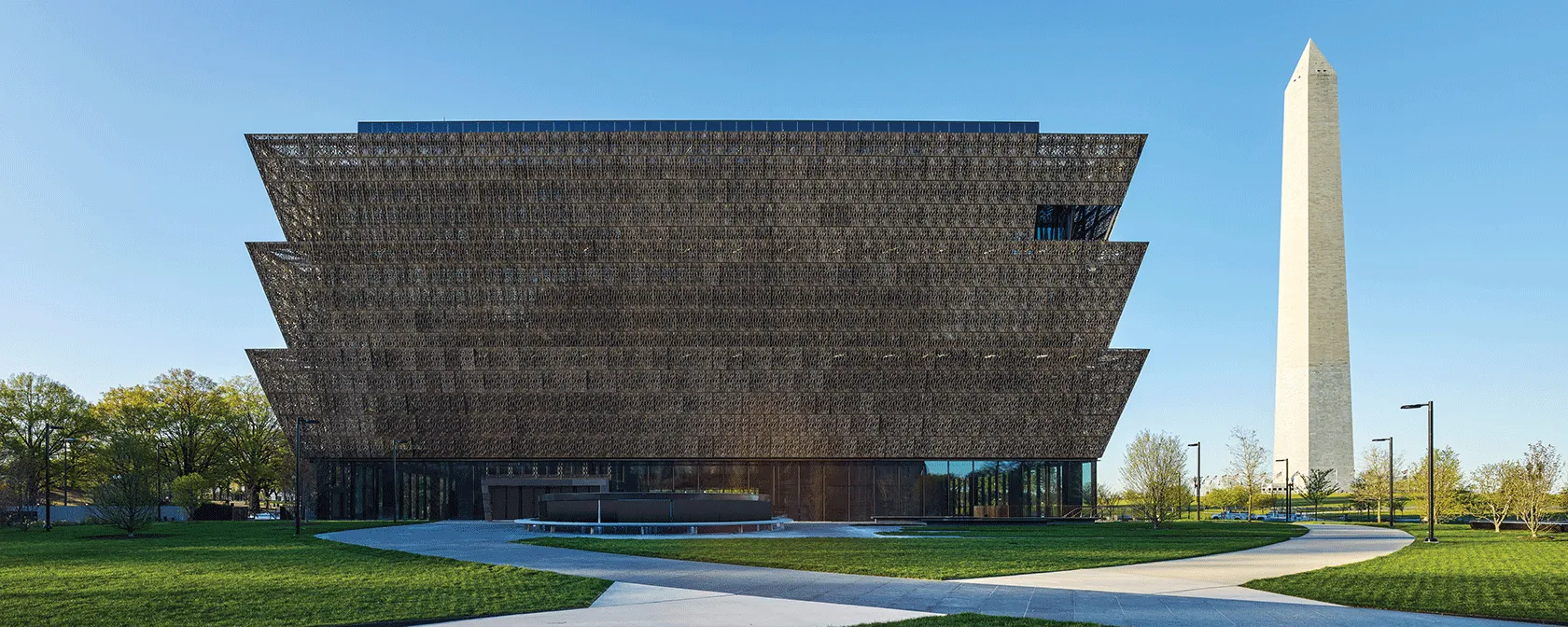
Visiting the Smithsonian National Museum of African American History and Culture
Where and what is the Smithsonian National Museum of African American History? The Smithsonian National Museum of African American History and Culture (NMAAHC) is located at 14th Street and Constitution Avenue NW on the National Mall. The four-level museum opened on Sept. 24, 2016, becoming the only national museum solely dedicated to the documentation of African American life, history and culture. This Smithsonian Institution museum is an architectural marvel that features numerous interactive exhibits. The museum is currently open Tuesday - Sunday from 10:00 a.m. - 5:30 p.m., and 12:00 p.m.-5:30 p.m. on Mondays. On Mondays that are observed as Federal Holidays, the museum opens at 10:00 a.m. The easiest way to get there is via Metrorail or the DC Circulator. The closest Metro stop is Federal Triangle on the Blue, Orange and Silver lines. The DC Circulator’s National Mall route is your best bus option, and it will be easy to continue your exploration of the National Mall afterwards. The facility is handicap-accessible. What’s inside the museum? The Smithsonian National Museum of African American History and Culture is a state-of-the-art building that addresses nearly every aspect of the African American experience, covering the arts, slavery, the Civil Rights Movement, athletics and much more. The building’s exterior, conceived by Ghanaian-born architect David Adjaye, is artfully made up of a three-tiered, bronze-colored screen. This lattice pays tribute to the intricate ironwork forged by enslaved African Americans in the southern United States. The museum’s collection of artifacts is astounding: 3,500 are on view, with another 35,000 or so in the collection. Standout items include a shawl given to Harriet Tubman by Queen Victoria, training aircraft used by the Tuskegee Institute, an invitation to President Obama’s 2009 inauguration and a boombox owned by Chuck D of Public Enemy. Navigating the entirety of the NMAAHC would be very difficult to accomplish in one visit, and the breadth of its exhibits is astonishing. However, there are several displays that you should be aware of before you go. The Musical Crossroads exhibit details the history African American music, from the arrival of the first Africans to today. From jazz to hip-hop, African American musicians brought forth new forms of expression that lit a candle for liberty, justice and change. You will be able to experience the emergence of some of America’s finest art forms and the amazing creative expressions that came from them. Slavery and Freedom uses first-person accounts and striking historical artifacts to tell an incredibly complicated tale. The exhibit traces slavery from 15th century Africa and Europe to the Civil War and Reconstruction in the United States. This vital history emphasizes that American slavery and freedom are deeply intertwined, and that the story of slavery is in fact a shared one that resides at the core of American politics, economics and daily life to this very day. Continue your dive into history with Defending Freedom, Defining Freedom and A Changing America. The former covers the era of segregation and the onset of the Civil Rights Movement, highlighting the struggle that African Americans faced and conquered in establishing a cultural identity and their own communities, changing the nation along the way. The latter goes from 1968 until today, covering the assassination of Martin Luther King, Jr. to Barack Obama’s two terms as president, journeying from the Black Panthers to #BlackLivesMatter. Check the museum’s calendar for online programming.