
All Articles
Visiting the Smithsonian National Museum of American History in Washington, DC
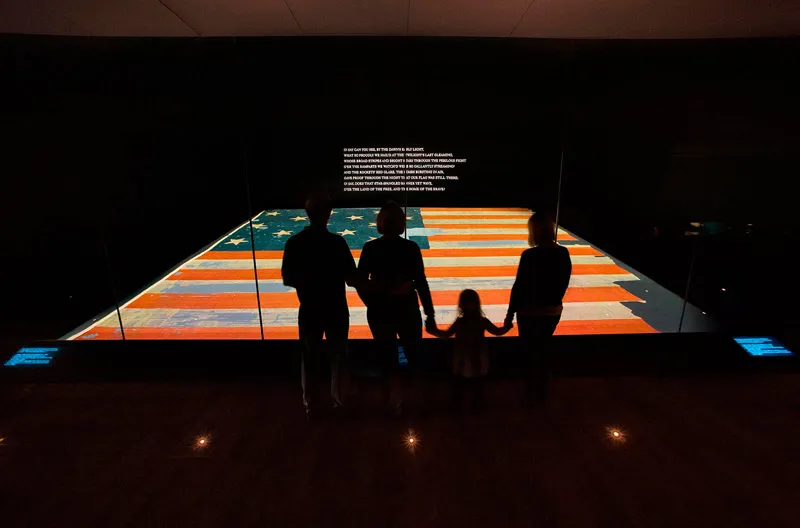
What and where is the National Museum of American History? The National Museum of American History is located on Constitution Avenue NW and runs along the National Mall. Through research, in-depth exhibits, extensive collections and public outreach, the museum presents America’s history in all of its complexity. The museum's collection features more than three million artifacts, from Dorothy’s ruby slippers in The Wizard of Oz to sheet music written by DC legend Duke Ellington. The easiest way to get there is via Metrorail or Metrobus. The closest Metro stop is Smithsonian, on the Blue, Orange and Silver lines. The 32, 34 and 36 Metrobus routes will all take you to the National Mall, where you can explore the iconic monuments and memorials after you’ve gotten your full dose of American history. The facility is handicap-accessible, and dedicated parking spaces are located on Madison Drive NW. What’s inside the National Museum of American History? Much beloved as a source for all things Americana, the museum features the most American artifact of all: the Star-Spangled Banner Flag. The flag flew above Fort McHenry in Baltimore during the War of 1812, inspiring Francis Scott Key to write our national anthem and now awaits your visit in a permanent exhibition. Another treasured item on display is the top hat worn by President Abraham Lincoln on the fateful night of April 14, 1865, when he set off to Ford’s Theatre and was later assassinated in by John Wilkes Booth. Lincoln’s hat is among a number of presidential relics that each tell a story in an exhibit entitled The American Presidency: A Glorious Burden. This 750,000 square-foot museum contains much more than presidential artifacts. The women who stood by the side of our nation’s leaders are memorialized in The First Ladies, which boasts more than two dozen gowns, fine china and other furnishings. And don’t forget to click your heels over to the aforementioned ruby slippers found in the American Stories exhibit, a fascinating compilation of story-making artifacts throughout American history. Marvel at the home kitchen of fine-cooking darling Julia Child, whose workshop is a part of the FOOD: Transforming America’s Table 1950-2000 exhibit, which delves into the evolution of eating in America thanks to new technologies, forward-thinkers and social and cultural shifts. The evolution of American transportation and business are also given their due in separate exhibits. Stroll the car-buff friendly America on the Move exhibit, which sports the first automobile driven across the U.S. and a 40-foot stretch of Route 66 within its collection of 340 objects. American Enterprise focuses on the country’s commercial innovations from the past 300 years.
Visiting the Smithsonian National Museum of the American Indian in Washington, DC
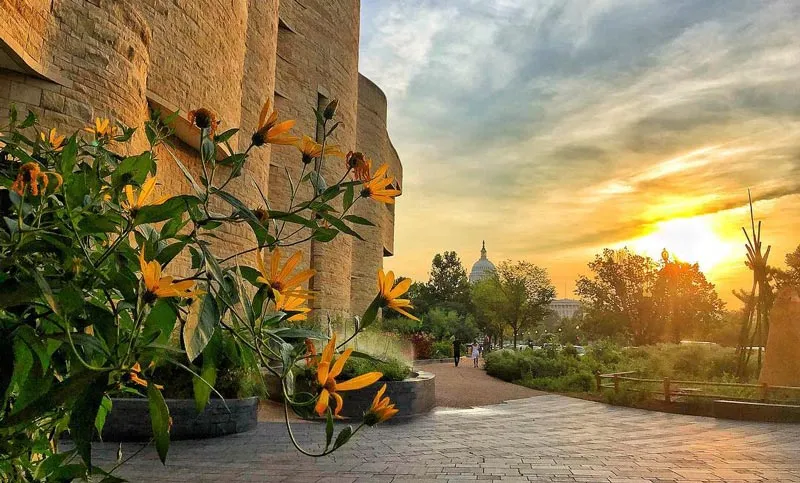
What is the Smithsonian National Museum of the American Indian and where is it? The National Museum of the American Indian (NMAI) is located on Independence Avenue SW on the National Mall. The museum boasts one of the world’s most expansive collections of Native American objects, photographs, artifacts and media. The NMAI is dedicated to bringing Native voices to life throughout its contemplative exhibitions and colorful activities. The easiest way to get there is via public transportation. If traveling by Metrorail, get off at the L’Enfant Plaza stop on the Blue, Orange, Silver, Green and Yellow lines and use the Maryland Avenue/Smithsonian Museums exit. If traveling by bus, take the DC Circulator’s National Mall route or the 30, 32, 34 or 36 Metrobus lines. What’s inside the National Museum of the American Indian? The NMAI provides its first “wow!” moment before you even walk in the door. The building (designed entirely by Native architects) is one of DC’s most visually striking, with its curvilinear structure and limestone material designed to resemble rock formations affected by wind and water over thousands of years. The museum's collections represent more than 12,000 years of history across 1,200-plus indigenous cultures from the Americas. These objects range from the aesthetic to the religious to the historical, helping to form a comprehensive catalogue of Native American culture. Ongoing exhibitions at the museum include Return to a Native Place: Algonquian Peoples of the Chesapeake, which allows you to meet the Native peoples of the Chesapeake Bay through maps, ceremonial objects, photographs and interactive displays. These details can help you have a deeper understanding of just how prevalent Native Americans were, and are, to the areas surrounding DC. The Great Inka Road: Engineering an Empire takes you back to earlier Andean cultures to explore the foundations of the Inka Road. You will learn of technologies that made the road possible, the politics and cosmology of the Inka world and the legacy that the Inka Empire left, from the colonial period to today. Of course, the museum regularly features new exhibits, so check to see what’s on display before you go. Your visit must include the National Native American Veterans Memorial, located on museum grounds. The touching tribute to Native heroes is beautifully designed, featuring an elevated stainless-steel circle balanced on a stone drum.
Visiting the Smithsonian National Postal Museum in Washington, DC
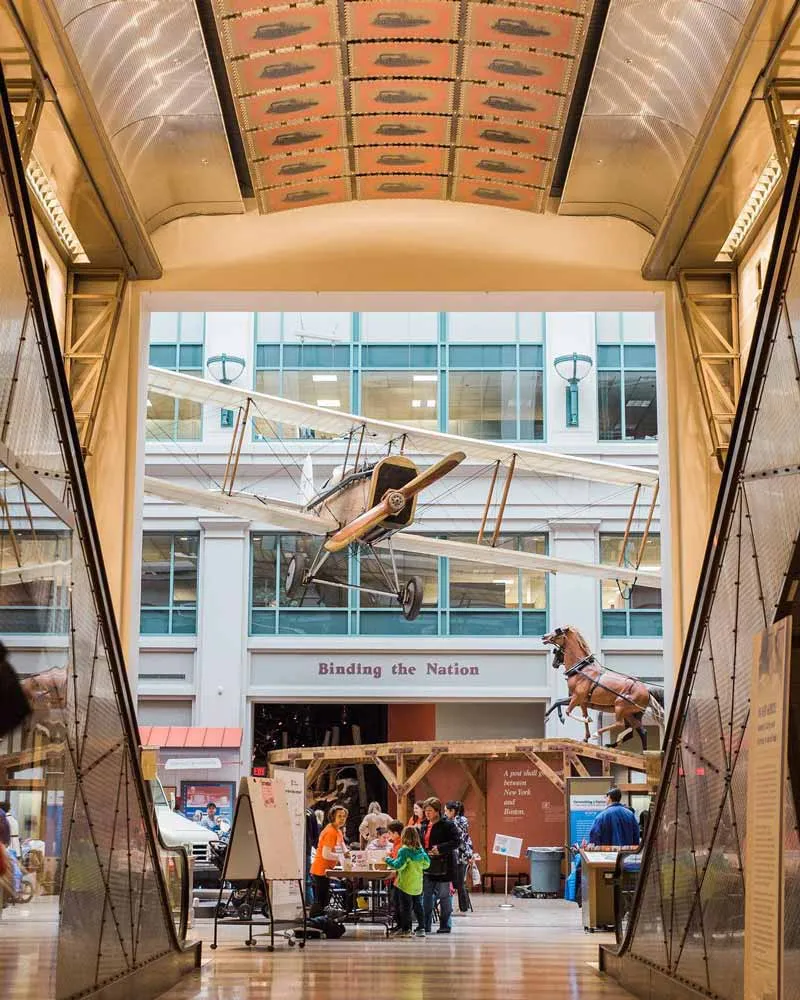
Since its opening in 1993 in the historic City Post Office Building, the Smithsonian National Postal Museum has served to honor and celebrate America’s proud postal history. Located next to Union Station in DC’s NoMa neighborhood, the museum houses a vast collection of stamps, historic artifacts and interactive exhibits. Visitors will learn the fascinating evolution of how Americans have used the mail to communicate with each other and the world. What’s inside the Smithsonian National Postal Museum? Whether it be early automobiles on dirt roads, stagecoaches chugging across the country, prop planes in the skies above or being pulled by actual horsepower, guests will take a walk through history and see how mail has been transported in a variety of eye-catching displays. Visitors to the Postal Museum will also discover the art of stamp making and design and how to start their own collection, allowing patrons to see the diversity of postage from around the globe. Collectors will marvel at the William H. Gross Stamp Gallery, the largest of its kind. The Postal Museum houses an atrium sporting a 90-foot-high ceiling and vital objects from the postal past. Three airmail planes hang overhead, while a stagecoach from 1851 and a 1932 Ford Model A postal truck also adorn the room. Take a journey on a colonial post road, browse through a 1920s-style post office and experience the National Philatelic Collection, which features more than 5.9 million items. Planning your visit to the National Postal Museum Hours & Ticketing The National Postal Museum resides at 2 Massachusetts Avenue NE and is open from 10 a.m. – 5:30 p.m. daily. December 25 is the only day of the year that the museum is closed and admission is free. Best way to get there. Street parking is available nearby and all-day paid parking can be had at Union Station, located right next to the museum. If you elect to use public transportation, take the Metro's Red Line to Union Station and use the Massachusetts Avenue exit – the museum is across the street. The DC Circulator connects the museum and Union Station to the National Mall. The museum is accessible by wheelchair, with ramps at its 1st Street entrance and North Capitol Street entrance, via the U.S. Post Office.
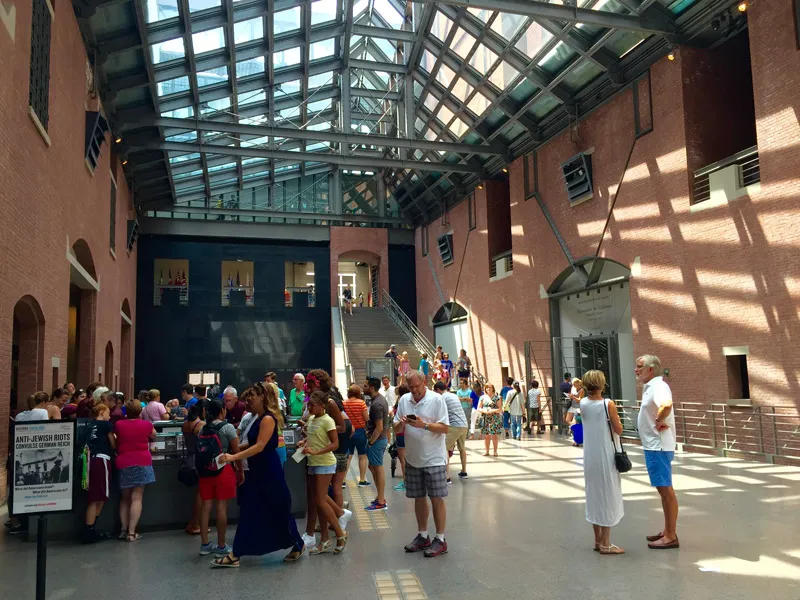
Visiting the United States Holocaust Memorial Museum in Washington, DC
What and where is the United States Holocaust Memorial Museum? The United States Holocaust Memorial Museum is located on the National Mall, just south of Independence Avenue SW, between 14th Street and Raoul Wallenberg Place SW. Its official address is 100 Raoul Wallenberg Place SW, Washington, DC 20024. The museum serves as a living memorial to the Holocaust, one of the worst tragedies the world has ever seen. Its purpose is to educate its visitors on the dangers of hatred and the atrocities of genocide, and how society can confront challenges to freedom and human dignity. Hours & Ticketing The museum is open from 10 a.m. to 5:20 p.m. every day of the year except for Yom Kippur and Christmas Day, December 25. Admission to the museum is free, but from March 1 to Aug. 31, timed tickets (subject to a $1 transaction fee) are needed to enter the museum’s permanent exhibition, which details the story of the Holocaust from 1933-1945. At any other time of the year, you can enter every part of the museum for free. Find out more info on acquiring tickets to the United States Holocaust Memorial Museum. Best way to get there. The easiest way to get to the United States Holocaust Memorial Museum is via Metrorail or the DC Circulator’s National Mall route. The closest Metro stop is the Smithsonian station on the Orange, Blue and Silver lines, just one block from the museum. The closest Circulator stop is no. 6 on the Mall route, which will take you directly in front of the museum. The facility is accessible to visitors who require mobility assistive devices. What exhibits are inside the United States Holocaust Memorial Museum? The centerpiece of the United States Holocaust Memorial Museum is its permanent exhibition, simply titled The Holocaust. Covering three floors, the exhibit uses artifacts, photographs and film to provide a chronological telling of the tragedy, with each floor covering a different era. Along the way, you will see personal objects that belonged to survivors, as well as hear their eyewitness testimonies. The museum’s other exhibits, which often rotate, further serve to educate visitors about the perils of discrimination and violence motivated by prejudice. The learning does not have to stop there. The United States Holocaust Memorial Museum’s website is also full of resources in order to further inform citizens about the damaging effects of prejudice and discriminatory violence, as well as how to confront such behavior and beliefs. The museum frequently hosts film screenings and events, including first-person testimonials from brave survivors of the Holocaust.
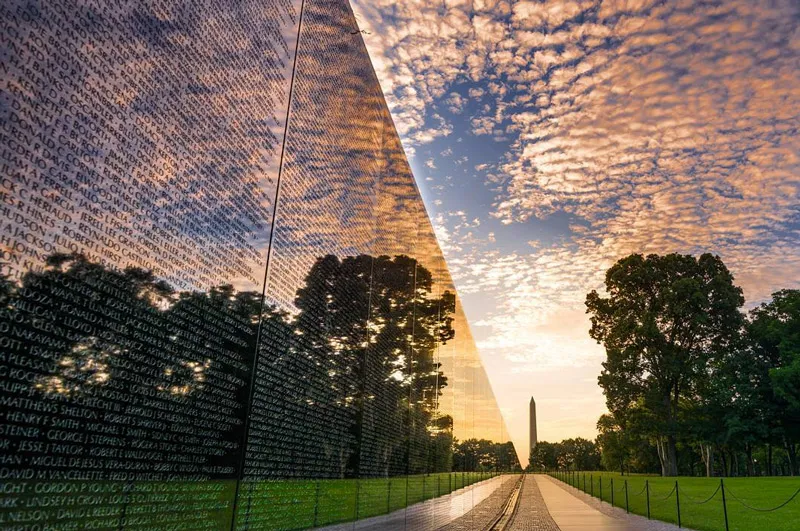
Visiting the Vietnam Veterans Memorial in Washington, DC
What is the Vietnam Veterans Memorial and where is it? The Vietnam Veterans Memorial on the National Mall pays tribute to the brave members of the U.S. Armed Forces who fought in the Vietnam War and were killed or missing in action. The memorial consists of three separate parts: The Three Soldiers statue, the Vietnam Women’s Memorial and the Vietnam Veterans Memorial Wall, also known as The Wall That Heals, which is the most popular feature. The memorial is free and open to the public 24 hours a day, with rangers on duty to answer questions from 9:30 a.m. to 10 p.m. daily. Interpretive programs are provided throughout the day and upon request. You’ll find the memorial located near Constitution Gardens on the National Mall. The closest Metro stops are Foggy Bottom or Federal Triangle on the Orange, Blue and Silver lines. Visitors can also get to the memorial via the DC Circulator’s National Mall route and Metrobus routes 32, 34 and 36. One of the nation’s most poignant war memorials The Vietnam Veterans Memorial Wall provides one of the National Mall’s most powerful scenes. In truth, the “wall” is actually made up of two identical walls that each stretch 246 feet and 9 inches, containing more than 58,000 names. The names are listed in chronological order based on the date of casualty, and within each day, names are shown in alphabetical order. Perhaps the memorial wall’s most defining characteristic is a visitor’s ability to see his or her reflection at the same time as the engraved names, connecting the past and the present like few other monuments can. If you wish to spot the name of a relative or friend while there, search the Vietnam Veterans Memorial Fund’s Virtual Wall before you embark or find the on-site list. Just south of the Vietnam Veterans Memorial Wall is the Vietnam Women’s Memorial, which commemorates the 265,000 women that served in the Vietnam War, many of whom worked as nurses. The 2,000 pound bronze structure stands 15 feet tall and depicts three women attending to a wounded soldier, reflecting the unity required during the conflict. The third part of the Vietnam Veterans Memorial is The Three Soldiers (also known as The Three Servicemen) bronze statue, another moving reminder of the disparate groups that had to come together during the Vietnam War. Each of the three soldiers stands seven feet tall, situated on top of a one-foot granite base, and are arranged as if to show the three soldiers gazing upon the memorial wall at the names of their fellow comrades. Honoring veterans On any given visit, you may encounter former servicemen at the memorial. In fact, the Honor Flight Network is a non-profit dedicated to bringing vets, often elderly, to DC to visit the memorials which honor their service to the nation. These visits are often filled with emotions and help provide closure for veterans by reinforcing the importance of their service and sacrifice.
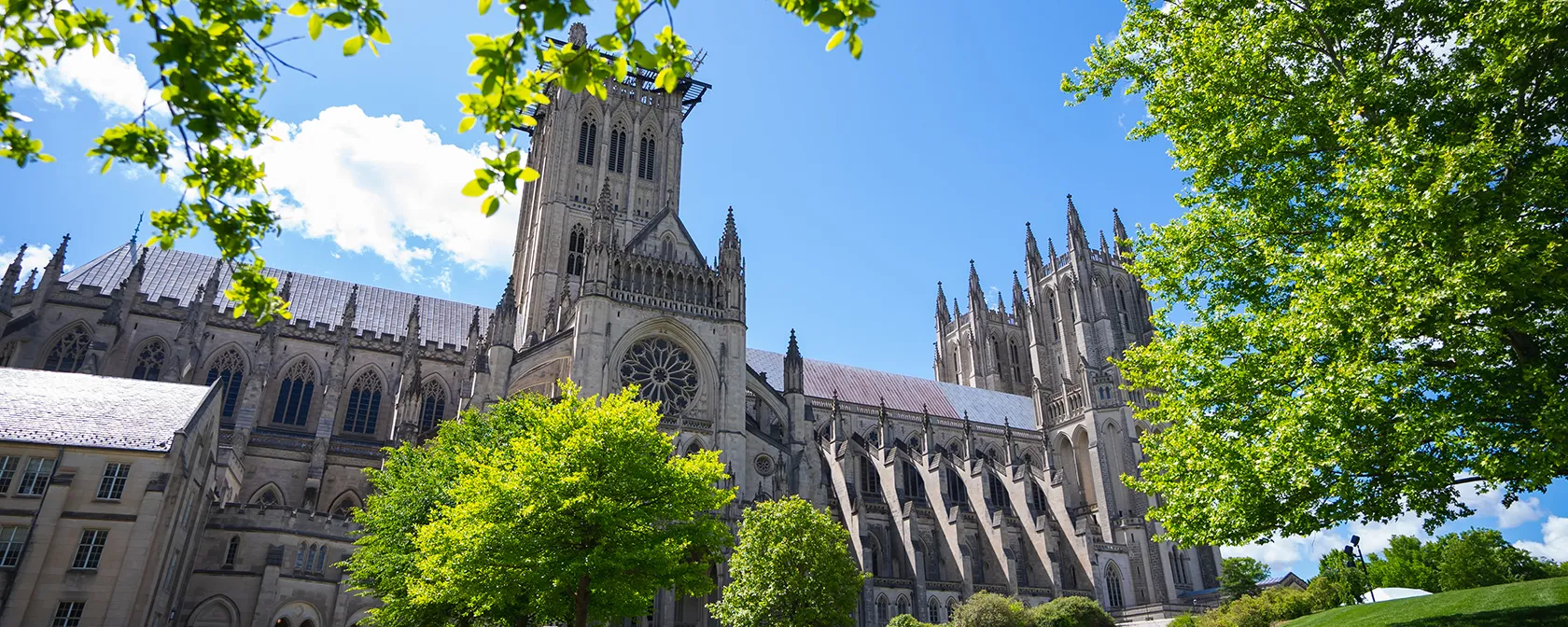
Visiting the Washington National Cathedral
Stained-glass windows, Gothic spires and flying buttresses make the Washington National Cathedral look ages old, but the grand church was actually constructed during the 20th century. Though overseen by the Episcopal Church, the house of worship welcomes people of all faiths to its impressive site on the highest point in DC. History and architecture Stonemasons and builders erected the cathedral beginning in 1907, completing it 83 years later in 1990. Carved from Indiana limestone, the structure boasts a 30-story-tall central tower, an interior nine-bay nave and 215 stained glass windows, including one embedded with a moon rock. Inside, you’ll find a crypt level where Helen Keller and President Woodrow Wilson are buried. On the nave level, you’ll discover an intricately carved wooden choir area and numerous serene chapels. On the exterior, you can search out the 112 gargoyles (decorative rain spouts) and grotesques (carved stone creatures) with the help of a map (available at the entrance) or via guided tours conducted during summer months. Be on the lookout for the grotesque of Darth Vader and the hippie gargoyle. The grounds You’ll find 59 acres of grounds designed by Frederick Law Olmsted Jr. around the National Cathedral. Enclosed by stone walls, the medieval-style Bishop’s Garden includes herb plantings, roses and a 13th-century Norman arch. Stone paths wind through Olmstead Woods, one of the only old-growth forests in DC. There’s also a cafe serving coffee, desserts, brunch and lunch located on the grounds in the 1904 Old Baptistry building. Guided tours and a self-guided tour brochure can help you explore the green spaces. Seeing the Cathedral Church services and musical performances are the only way to experience the cathedral for free. Sunday services are open to all, and Monday through Thursday at 5:30 p.m., evening concerts fill the nave with singing. Outside of spiritual visits, admission to the cathedral is required: $12 for adults, $8 for children ages 5 to 17 and free for kids 4 and under. The cathedral offers daily guided walking highlights tours with admission at 10:15 a.m. Monday through Saturday, and 1 p.m. on Sunday, although check the tour schedule for the latest updates. Numerous ticketed specialty tours, including seasonal gargoyle hunts, artisanship-themed walks and tower climbs, are available to be booked in advance. You can also sightsee with Big Bus Tours, and its hop-on, hop-off tickets let you exit the bus to explore inside the cathedral once you're there. After the National Cathedral, make a day of it exploring the Upper Northwest neighborhood.