
All Articles

Guide to LEED-Certified Hotels & Venues
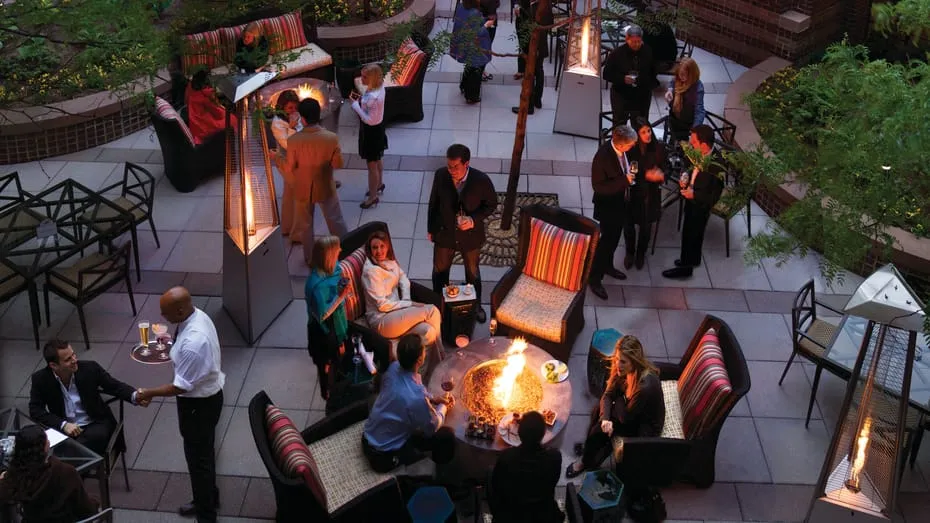
The Wharf The Hoffman-Madison Waterfront mixed-use development at The Wharf in Southwest DC is the perfect example of a new environmentally-friendly development that is LEED-Neighborhood Development Gold status. The sustainability pillars contributing to the neighborhood include InterContinental Washington, DC- The Wharf, a LEED Gold-certified hotel and the dual-branded property featuring the Hyatt House and Canopy by Hilton, which achieved its LEED Gold-certification. Highlights of the development’s sustainability initiatives include more than 87 percent of material being diverted from landfill and disposal, flooring made from low volatile organic compounds and the hotel’s respective structures made from 23 percent recycled content. Farmers Restaurant Group All of the delicious farm-to-table restaurants in Farmers Restaurant Group – Founding Farmers, Farmers Fishers Bakers, and Farmers & Distillers – are LEED-certified. Founding Farmers was the first full service, upscale casual restaurant to pursue LEED certification and many more continue to follow suit. The mezzanine level of Founding Farmers has a capacity of up to 75 guests while the General’s Parlor on the lower level of Farmers & Distillers is a 16-seat private dining room. The Concordia Located between Dupont Circle and Washington Circle, The Concordia boasts a LEED Gold-certification, providing guests with an environmentally conscious experience. Among the hotel’s many features are guestroom kitchen appliances that are Energy Star-rated and a green roof and green screen that reduce rain water runoff from entering local waterways and help insulate the building from the elements. Motto by Hilton Washington DC City Center The Motto by Hilton Washington DC City Center is LEED Silver-certified with a design full of extensive green features. You will find refillable water stations throughout the hotel, a vegetated roof area for hosting events and smart LED lighting and air conditioning with infrared sensors that auto shut when you are not in the room. Hilton Washington DC National Mall Hilton Washington DC National Mall is a LEED Silver-certified hotel with 23,000 sq. ft. of meeting space, a unique Solarium offering a year-round indoor/outdoor ambience and poolside event space with fire pits, cabanas and a bar that can accommodate up to 300 people. Marriott Marquis Washington DC As the only hotel adjacent to the Walter E. Washington Convention Center, the Marriott Marquis Washington DC is a LEED Silver-certified 15-story property with 105,000 sq. feet of meeting space, making it one of the largest LEED Silver-certified hotels in the U.S. Nationals Park Nationals Park is the nation’s first major professional stadium to become LEED Silver-certified by the U.S. Green Building Council. The project incorporates a variety of sustainable design elements including a brownfield redevelopment located near the Anacostia River, energy conserving light fixtures and an intricate water filtration system. Audi Field The 20,000-seat home field of the D.C. United team of Major League Soccer is a LEED Gold-certified venue. Audi Field also partners with Recycle Track Systems and New Columbia Solar on multiple sustainable initiatives throughout the stadium. Viceroy Washington DC The 178-room Viceroy Washington DC is LEED Silver-certified, featuring green key switches in each guest room, low-emitting materials such as paint, finishes and floorings and refillable bottles of showering essentials as opposed to disposable bottles. Eaton Washington DC Eaton Washington DC is LEED Gold-certified, featuring many sustainable initiatives throughout the hotel and house. Guestrooms feature the most natural and organic mattresses and bathroom amenities are 100 percent natural, while the rooftop features an herb garden and wind turbine. Once you're done reading about LEED-certified hotels and venues, check out why DC is one of the healthiest, greenest and most livable cities in the nation.
Guide to Sustainable Spaces for Your Next Event
Companies are increasingly adopting sustainable practices, energy-efficient lighting and reusable products to reduce their carbon footprints and save costs. Their efforts benefit meeting planners considering the Washington metropolitan area, which is a destination that boasts multiple key industries and shares a common vision for a sustainable planet as the world’s first LEED Platinum city according to the U.S. Green Building Council. Check out the variety of sustainable spaces the city boasts in each quadrant. Northeast DC: Right Proper Brewing Company is run completely on solar power, producing almost all of the company’s consumed electricity. As part of their leadership’s focus on the local community and their Brookland neighbors, the independent craft brewery wanted to minimize its environmental impact. For a brewery, this means returning to the roots of brewing. Right Proper proudly says “our beer starts and ends with the sun.” The company also uses LED lights in the tasting rooms and production facilities and gives spent grain away for free to local farmers. DC Harvest is a beautiful local restaurant on H Street, perfect for a business meeting or gathering for up to 60 guests. The family-owned restaurant specifically sources products from local farms and vendors, offering one of the freshest farm-to-table meals in the District. Northwest DC: Set in historic Georgetown, the Four Seasons Hotel Washington, DC prides itself in its green initiatives, especially when booking events. Planners and attendees can “determine their shade of green” by choosing filtered water by the pitcher over plastic bottles, organic meal breaks and recycled notepads. The Forbes five-star hotel also gives attendees the option of adding extra plants for additional oxygenation and airport pickup via a hybrid sedan. The highly anticipated Eaton DC opening summer 2018 approaches sustainability from inside the hotel to the event spaces and beyond. Guestrooms feature natural and organic mattresses and bathroom amenities, while the rooftop houses an herb garden and wind turbine. The hotel employs an aerobic food waste decomposition system that eliminates food waste on-site. Ben’s Chili Bowl, located on U Street where some of mural artist Aniekan Udofia's beautiful alleyway murals live, runs on energy-efficient HPT8, reducing energy use by up to 50 percent in comparison to its original 60-year-old lighting. The Ben’s Chili Bowl location on H Street NE, which opened in 2015, also boasts efficient lighting, HVAC and Energy Star-certified appliances. Farmers Restaurant Group, the brand that runs Farmers & Distillers, Farmers Fishers Bakers and Founding Farmers, makes sustainability their mission and was named one of the “10 Most Sustainable Restaurants in America” by HuffPost. The brand has in-house recycling and composting programs that keep 90 percent of waste out of landfills and uses Energy Star qualified appliances and monitors, low-flow faucet aerators, refurbished-recycled materials in furniture and green cleaning products. The Walter E. Washington Convention Center is committed to reducing its carbon footprint and making a difference through its “Know the Code” color-coded recycling and waste minimization program. The program has helped the convention center take the lead on extensive recycling initiatives, along with its PepsiCo partnership that has installed “dream machines” surrounding the convention center to encourage beverage container recycling rates. Monumental Sports, the operator of Capital One Arena in Chinatown, recently embarked on a new solar project with OneEnergy Baker Point solar. Baker Point solar produces clean renewable energy for the arena, which is now operating using 25 percent solar energy. Southwest DC: The 100 percent wind-powered Mandarin Oriental is a proud partner of the Anacostia River Keepers, who offer a series of volunteer cleanups removing thousands of pounds of trash a year from the Anacostia. Mandarin Oriental also offers Anacostia River Keepers’ services to organizations that want to add sustainability and charity elements to their events. The new Wharf along the Southwest Waterfront has multiple green options. Choose from InterContinental Washington, DC - The Wharf or the dual-branded property featuring the Hyatt House and Canopy by Hilton, all of which offer a variety of sustainable meeting spaces with breathtaking waterfront views. Highlights of the development’s sustainability initiatives include more than 87 percent of material being diverted from landfill and disposal, flooring made from low VOC and hotel buildings comprised of recycled content. Audi Field is the new green home of Major League Soccer’s D.C. United. The 20,000-seat field, which opened in July 2018, is not only LEED Gold certified, but also a partner to Recycle Track Systems and New Columbia Solar. Recycle Track Systems is implementing food waste composting and staff training. There will be a short educational pregame video that is meant to teach fans how to recycle waste. In addition, solar panels in the venue are expected to offset the stadium’s electrical usage by one third. Southeast DC: Nationals Park is the nation’s first major professional stadium to become LEED Silver-certified. The project incorporates a variety of sustainable design elements including a brownfield redevelopment that is located near the Anacostia River, energy conserving light fixtures and an intricate water filtration system. District Winery is DC’s first winery, boasting 17,000 sq. feet in Capitol Riverfront and overlooking the Anacostia River. The vibrant waterfront venue has LED lighting, energy-efficient equipment and a green roof for storm water control. Northern Virginia: The National Conference Center in Leesburg, Va. is Green Seal™ GS-33 Silver and Virginia Green™ certified. The National continues to host eco-friendly events and sustainable meetings, taking proactive measures to save energy. As a member of the International Association of Conference Centers (IACC) and the winner of the 2010 Loudon Country Green Business Challenge, it is no surprise that green initiatives are a priority for the National Conference Center, which boasts 250,000 square feet of meeting space and 250 meeting rooms. Lansdowne Resort and Spa is committed to protecting the environment and conserving natural resources, as a Virginia Green Lodging facility. The resort sports high-efficiency LED lighting in all guest rooms, restaurants and public areas; bee hives that support vital bee populations and a certified Monarch Butterfly way station to help bolster the population of local Monarch butterflies; and all restaurants are committed to purchasing fresh and sustainable foods grown locally. Continue your exploration of one of the healthiest, greenest and most livable cities and plan your next green meeting or event in Washington, DC.
Private Dining Spots for Intimate Groups of 150 or Less in Washington, DC
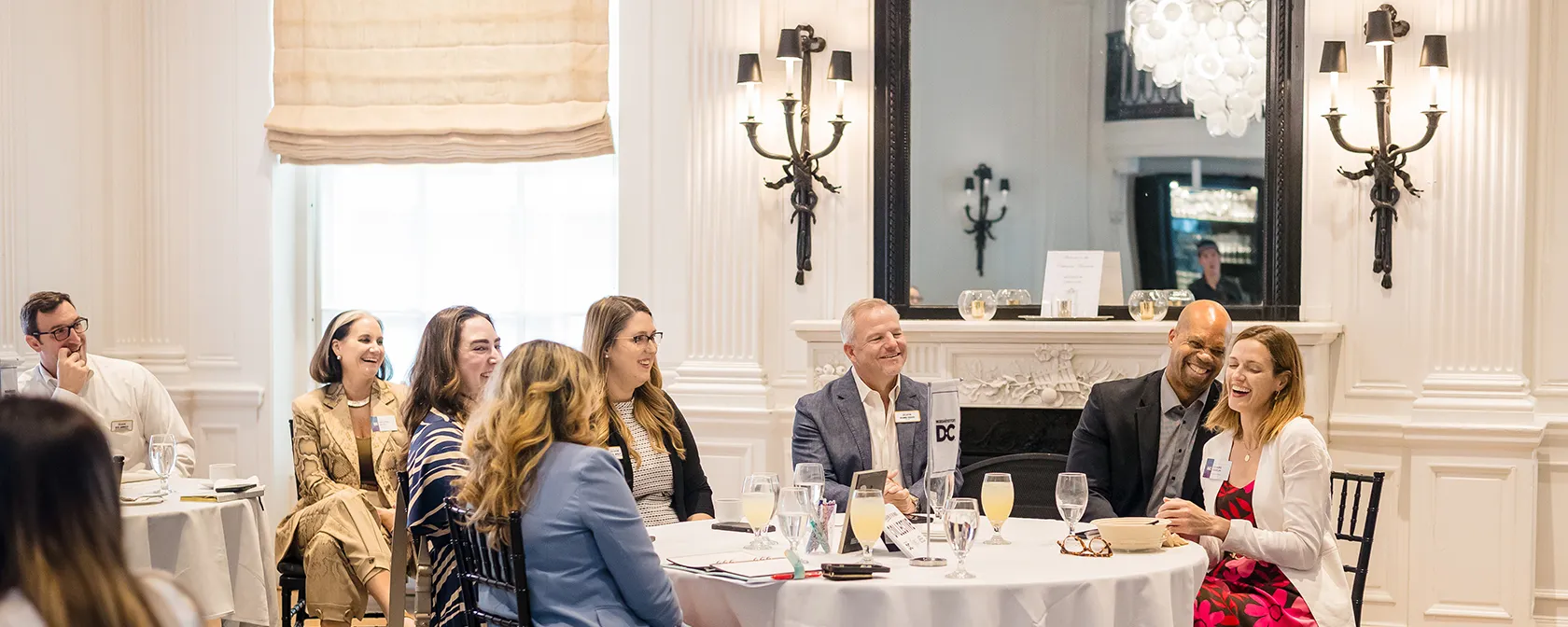
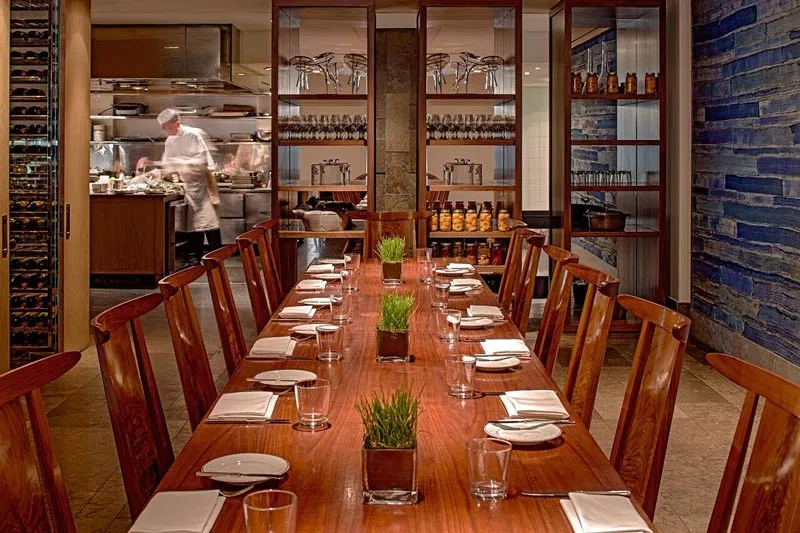
Washington, DC hosts exclusive meetings of all types and sizes, making intimate dining spaces for groups a necessity. From Michelin-starred restaurants to museums and historic buildings, the nation’s capital does not disappoint. Check out some of our top choices for your next private dining experience for groups of 150 or less. Groups of 50 or less: CIRCA at Chinatown CIRCA at Chinatown is conveniently located right next to the Capital One Arena and two blocks from the Walter E. Washington Convention Center, making it an ideal spot for a private dinner, cocktail reception or banquet. The private dining room seats up to 34 guests or up to 20 guests for a cocktail reception, while the main bar can hold a maximum of 50 guests for any small gathering. President Woodrow Wilson House The house of the 28th U.S. president, located just off Embassy Row, offers intimate dining with classic Washington style. Groups of 36 or fewer can dine in the presidential dining room and larger groups are able to dine in the restored garden of the President Woodrow Wilson House. Guests can also tour the house with museum staff stationed to share information on the house and collection. minibar by José Andrés For an exclusive dining experience at a Michelin-starred restaurant, check out José Andrés’ minibar and reserve José’s Table. As the winner of the James Beard Award for Humanitarian of the Year in 2018, José Andrés will take your private event and kick it up a notch. José’s Table is adjacent to the kitchen and designed exclusively for parties of up to 6 people. The event space allows guests to enjoy minibar from an entirely different perspective, offering a sneak peek of José’s newest creations with rare wine pairings – it is the perfect spot for an exclusive small group experience. Dirty Habit At the epicenter of Chinatown nightlife, Dirty Habit brings a gorgeous modern twist to its private patio and alluring dining rooms. Whether it be the Birdcage, perfect for groups of 40-50 guests or the Eston Room, ideal for intimate dinners of up to 10 guests, Dirty Habit has multiple options. Visitors can look forward to globally-inspired, seasonal shared plates as well as inventive craft cocktails. Blue Duck Tavern Blue Duck Tavern offers an intimate experience for up to 20 people at the Chef’s Table. The space is ideal for hosting a small meeting, during which the restaurant’s culinary team will create a special three, four, or five-course menu. The Chef’s Table is available daily for breakfast, brunch, lunch and dinner. Groups of 100 or less: Charlie Palmer Steak The Landscape Room at Charlie Palmer Steak features beautiful artwork and is a luxurious destination for intimate private dining. With seating for up to 20 people, the room is an ideal location for group dinners and business meetings. The Alcove has also been a favorite for many years. The room can be altered into various shapes and sizes, suiting groups from 25 to 100 people. Modena The authentic Italian fare at Modena in Northwest DC can be enjoyed by many groups with the restaurant’s abundant private space. The restaurant seats 65 in the main dining room, 12 guests seated in the semi-private dining room and 48 guests in a large private dining room. Reception style can accommodate up to 80 people. The Oval Room The Oval Room, located one block from The White House, offers modern American cuisine and plenty of dining options for groups. The restaurant has three private rooms - The Green Room can seat up to 36 guests seated or hold 65 guests for a standing reception; The Main Room can accommodate 65 guests seated or 100 guests for a standing reception; and The Curtain Room can combined accommodate up to 14 people for seated dining. Executive Chef Bryan Moscatello brings an array of options for lunch, dinner and dessert and even offers a Test Kitchen Tuesday interactive dining option for those interested in exploring his new techniques, ingredients and dishes. Groups of 150 or less: Clyde's of Gallery Place The classic American restaurant in Chinatown boasts a versatile grand room, the Piedmont Room, that allows for seated events from 20 to 130 guests or cocktail receptions for up to 200 guests. Joe's Seafood, Prime Steak and Stone Crab Joe's Seafood, Prime Steak and Stone Crab offers five spaces perfect for any entertaining occasion. The Gigi Room, the largest room, can accommodate 120 seated guests or 200 guests reception style. The space can also be partitioned into two smaller rooms, while the South Beach Room features leopard print carpeting and retro-style chandelier for 30 guests seated or 50 guests reception style. Villa Yara Nestled in Georgetown, Villa Yara is a Lebanese treasure offering an enchanting setting for private events, accommodating up to 100 guests. With diverse dining spaces, Yara’s Chamber provides intimate seating for 14 guests, while Yara’s Salon accommodates 40 guests with flexible seating for larger gatherings. For a magical outdoor experience, Yara’s Covered Garden seats 60 guests amidst flowers, art and a whimsical fountain, and can be covered for any weather. Inspired by the nostalgic tale of Yara, a character drawn from the essence of Lebanese singer Fairouz, Villa Yara transforms an old Georgetown home into a vibrant piece of Lebanon. The restaurant’s cuisine, rooted in the tradition of Mezza, is designed to be shared, making it the perfect place to enjoy specialty cocktails and traditional dishes with friends. Looking for more private dining options in the nation's capital? We've got plenty more great spots for group dining in DC.

QA Test Automated cron Article sync 1
As you return to traveling this year, Washington, DC should be at the very top of your list. The nation’s capital offers more than 100 free things to do, but it should come as no surprise that museums are some of the most popular attractions. We’ve gone into deep detail on four of the city’s most popular museums (including one dedicated to living animals), none of which charge admission. Find the latest updates on visiting museums, including Smithsonian's plans to have all of its museums open by the end of August 2021, mask mandates for all indoor museums and the latest ticketing requirements. Book your next vacation to the nation’s capital and visit these only-in-the-District museums, free of charge. In the heart of the nation’s capital lives a portal to wildlife from around the world. Smithsonian’s National Zoo offers a firsthand, family-friendly experience through a 163-acre urban park in the Woodley Park neighborhood teeming with roughly 2,700 animals that represent more than 390 species. The zoo is also connected to the Smithsonian Conservation Biology Institute (a non-public facility located in Front Royal, Va.), a global effort to conserve species and train future conservationists. This focus on preserving endangered animals extends to the zoo, as one-fifth of its exhibited species fall into this category. In the heart of the nation’s capital lives a portal to wildlife from around the world. Smithsonian’s National Zoo offers a firsthand, family-friendly experience through a 163-acre urban park in the Woodley Park neighborhood teeming with roughly 2,700 animals that represent more than 390 species. The zoo is also connected to the Smithsonian Conservation Biology Institute (a non-public facility located in Front Royal, Va.), a global effort to conserve species and train future conservationists. This focus on preserving endangered animals extends to the zoo, as one-fifth of its exhibited species fall into this category. In the heart of the nation’s capital lives a portal to wildlife from around the world. Smithsonian’s National Zoo offers a firsthand, family-friendly experience through a 163-acre urban park in the Woodley Park neighborhood teeming with roughly 2,700 animals that represent more than 390 species. The zoo is also connected to the Smithsonian Conservation Biology Institute (a non-public facility located in Front Royal, Va.), a global effort to conserve species and train future conservationists. This focus on preserving endangered animals extends to the zoo, as one-fifth of its exhibited species fall into this category. In the heart of the nation’s capital lives a portal to wildlife from around the world. Smithsonian’s National Zoo offers a firsthand, family-friendly experience through a 163-acre urban park in the Woodley Park neighborhood teeming with roughly 2,700 animals that represent more than 390 species. The zoo is also connected to the Smithsonian Conservation Biology Institute (a non-public facility located in Front Royal, Va.), a global effort to conserve species and train future conservationists. This focus on preserving endangered animals extends to the zoo, as one-fifth of its exhibited species fall into this category. In the heart of the nation’s capital lives a portal to wildlife from around the world. Smithsonian’s National Zoo offers a firsthand, family-friendly experience through a 163-acre urban park in the Woodley Park neighborhood teeming with roughly 2,700 animals that represent more than 390 species. The zoo is also connected to the Smithsonian Conservation Biology Institute (a non-public facility located in Front Royal, Va.), a global effort to conserve species and train future conservationists. This focus on preserving endangered animals extends to the zoo, as one-fifth of its exhibited species fall into this category. In the heart of the nation’s capital lives a portal to wildlife from around the world. Smithsonian’s National Zoo offers a firsthand, family-friendly experience through a 163-acre urban park in the Woodley Park neighborhood teeming with roughly 2,700 animals that represent more than 390 species. The zoo is also connected to the Smithsonian Conservation Biology Institute (a non-public facility located in Front Royal, Va.), a global effort to conserve species and train future conservationists. This focus on preserving endangered animals extends to the zoo, as one-fifth of its exhibited species fall into this category. In the heart of the nation’s capital lives a portal to wildlife from around the world. Smithsonian’s National Zoo offers a firsthand, family-friendly experience through a 163-acre urban park in the Woodley Park neighborhood teeming with roughly 2,700 animals that represent more than 390 species. The zoo is also connected to the Smithsonian Conservation Biology Institute (a non-public facility located in Front Royal, Va.), a global effort to conserve species and train future conservationists. This focus on preserving endangered animals extends to the zoo, as one-fifth of its exhibited species fall into this category. In the heart of the nation’s capital lives a portal to wildlife from around the world. Smithsonian’s National Zoo offers a firsthand, family-friendly experience through a 163-acre urban park in the Woodley Park neighborhood teeming with roughly 2,700 animals that represent more than 390 species. The zoo is also connected to the Smithsonian Conservation Biology Institute (a non-public facility located in Front Royal, Va.), a global effort to conserve species and train future conservationists. This focus on preserving endangered animals extends to the zoo, as one-fifth of its exhibited species fall into this category. In the heart of the nation’s capital lives a portal to wildlife from around the world. Smithsonian’s National Zoo offers a firsthand, family-friendly experience through a 163-acre urban park in the Woodley Park neighborhood teeming with roughly 2,700 animals that represent more than 390 species. The zoo is also connected to the Smithsonian Conservation Biology Institute (a non-public facility located in Front Royal, Va.), a global effort to conserve species and train future conservationists. This focus on preserving endangered animals extends to the zoo, as one-fifth of its exhibited species fall into this category. In the heart of the nation’s capital lives a portal to wildlife from around the world. Smithsonian’s National Zoo offers a firsthand, family-friendly experience through a 163-acre urban park in the Woodley Park neighborhood teeming with roughly 2,700 animals that represent more than 390 species. The zoo is also connected to the Smithsonian Conservation Biology Institute (a non-public facility located in Front Royal, Va.), a global effort to conserve species and train future conservationists. This focus on preserving endangered animals extends to the zoo, as one-fifth of its exhibited species fall into this category. In the heart of the nation’s capital lives a portal to wildlife from around the world. Smithsonian’s National Zoo offers a firsthand, family-friendly experience through a 163-acre urban park in the Woodley Park neighborhood teeming with roughly 2,700 animals that represent more than 390 species. The zoo is also connected to the Smithsonian Conservation Biology Institute (a non-public facility located in Front Royal, Va.), a global effort to conserve species and train future conservationists. This focus on preserving endangered animals extends to the zoo, as one-fifth of its exhibited species fall into this category. In the heart of the nation’s capital lives a portal to wildlife from around the world. Smithsonian’s National Zoo offers a firsthand, family-friendly experience through a 163-acre urban park in the Woodley Park neighborhood teeming with roughly 2,700 animals that represent more than 390 species. The zoo is also connected to the Smithsonian Conservation Biology Institute (a non-public facility located in Front Royal, Va.), a global effort to conserve species and train future conservationists. This focus on preserving endangered animals extends to the zoo, as one-fifth of its exhibited species fall into this category. In the heart of the nation’s capital lives a portal to wildlife from around the world. Smithsonian’s National Zoo offers a firsthand, family-friendly experience through a 163-acre urban park in the Woodley Park neighborhood teeming with roughly 2,700 animals that represent more than 390 species. The zoo is also connected to the Smithsonian Conservation Biology Institute (a non-public facility located in Front Royal, Va.), a global effort to conserve species and train future conservationists. This focus on preserving endangered animals extends to the zoo, as one-fifth of its exhibited species fall into this category. In the heart of the nation’s capital lives a portal to wildlife from around the world. Smithsonian’s National Zoo offers a firsthand, family-friendly experience through a 163-acre urban park in the Woodley Park neighborhood teeming with roughly 2,700 animals that represent more than 390 species. The zoo is also connected to the Smithsonian Conservation Biology Institute (a non-public facility located in Front Royal, Va.), a global effort to conserve species and train future conservationists. This focus on preserving endangered animals extends to the zoo, as one-fifth of its exhibited species fall into this category. In the heart of the nation’s capital lives a portal to wildlife from around the world. Smithsonian’s National Zoo offers a firsthand, family-friendly experience through a 163-acre urban park in the Woodley Park neighborhood teeming with roughly 2,700 animals that represent more than 390 species. The zoo is also connected to the Smithsonian Conservation Biology Institute (a non-public facility located in Front Royal, Va.), a global effort to conserve species and train future conservationists. This focus on preserving endangered animals extends to the zoo, as one-fifth of its exhibited species fall into this category. In the heart of the nation’s capital lives a portal to wildlife from around the world. Smithsonian’s National Zoo offers a firsthand, family-friendly experience through a 163-acre urban park in the Woodley Park neighborhood teeming with roughly 2,700 animals that represent more than 390 species. The zoo is also connected to the Smithsonian Conservation Biology Institute (a non-public facility located in Front Royal, Va.), a global effort to conserve species and train future conservationists. This focus on preserving endangered animals extends to the zoo, as one-fifth of its exhibited species fall into this category. In the heart of the nation’s capital lives a portal to wildlife from around the world. Smithsonian’s National Zoo offers a firsthand, family-friendly experience through a 163-acre urban park in the Woodley Park neighborhood teeming with roughly 2,700 animals that represent more than 390 species. The zoo is also connected to the Smithsonian Conservation Biology Institute (a non-public facility located in Front Royal, Va.), a global effort to conserve species and train future conservationists. This focus on preserving endangered animals extends to the zoo, as one-fifth of its exhibited species fall into this category. In the heart of the nation’s capital lives a portal to wildlife from around the world. Smithsonian’s National Zoo offers a firsthand, family-friendly experience through a 163-acre urban park in the Woodley Park neighborhood teeming with roughly 2,700 animals that represent more than 390 species. The zoo is also connected to the Smithsonian Conservation Biology Institute (a non-public facility located in Front Royal, Va.), a global effort to conserve species and train future conservationists. This focus on preserving endangered animals extends to the zoo, as one-fifth of its exhibited species fall into this category. In the heart of the nation’s capital lives a portal to wildlife from around the world. Smithsonian’s National Zoo offers a firsthand, family-friendly experience through a 163-acre urban park in the Woodley Park neighborhood teeming with roughly 2,700 animals that represent more than 390 species. The zoo is also connected to the Smithsonian Conservation Biology Institute (a non-public facility located in Front Royal, Va.), a global effort to conserve species and train future conservationists. This focus on preserving endangered animals extends to the zoo, as one-fifth of its exhibited species fall into this category. In the heart of the nation’s capital lives a portal to wildlife from around the world. Smithsonian’s National Zoo offers a firsthand, family-friendly experience through a 163-acre urban park in the Woodley Park neighborhood teeming with roughly 2,700 animals that represent more than 390 species. The zoo is also connected to the Smithsonian Conservation Biology Institute (a non-public facility located in Front Royal, Va.), a global effort to conserve species and train future conservationists. This focus on preserving endangered animals extends to the zoo, as one-fifth of its exhibited species fall into this category. In the heart of the nation’s capital lives a portal to wildlife from around the world. Smithsonian’s National Zoo offers a firsthand, family-friendly experience through a 163-acre urban park in the Woodley Park neighborhood teeming with roughly 2,700 animals that represent more than 390 species. The zoo is also connected to the Smithsonian Conservation Biology Institute (a non-public facility located in Front Royal, Va.), a global effort to conserve species and train future conservationists. This focus on preserving endangered animals extends to the zoo, as one-fifth of its exhibited species fall into this category. In the heart of the nation’s capital lives a portal to wildlife from around the world. Smithsonian’s National Zoo offers a firsthand, family-friendly experience through a 163-acre urban park in the Woodley Park neighborhood teeming with roughly 2,700 animals that represent more than 390 species. The zoo is also connected to the Smithsonian Conservation Biology Institute (a non-public facility located in Front Royal, Va.), a global effort to conserve species and train future conservationists. This focus on preserving endangered animals extends to the zoo, as one-fifth of its exhibited species fall into this category. In the heart of the nation’s capital lives a portal to wildlife from around the world. Smithsonian’s National Zoo offers a firsthand, family-friendly experience through a 163-acre urban park in the Woodley Park neighborhood teeming with roughly 2,700 animals that represent more than 390 species. The zoo is also connected to the Smithsonian Conservation Biology Institute (a non-public facility located in Front Royal, Va.), a global effort to conserve species and train future conservationists. This focus on preserving endangered animals extends to the zoo, as one-fifth of its exhibited species fall into this category.