
All Articles
SPONSORED
Visiting the Dwight D. Eisenhower Memorial
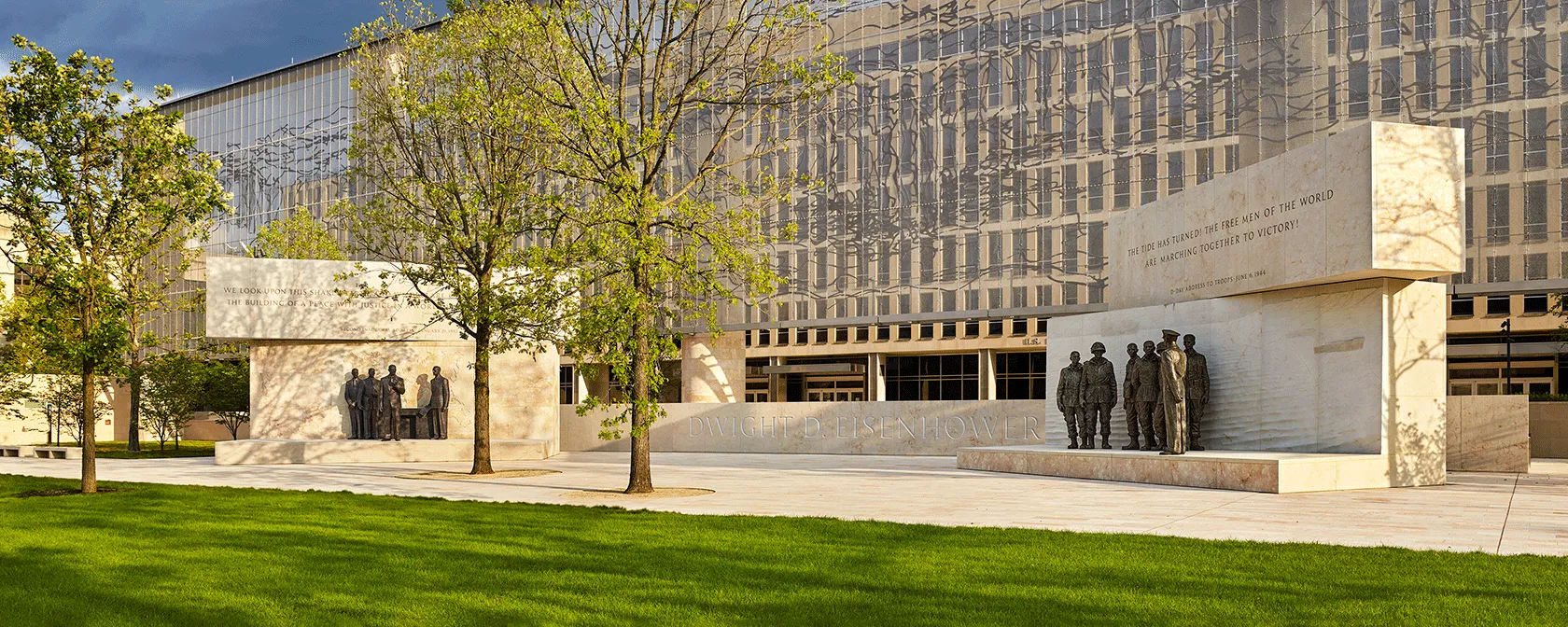
What is the Dwight D. Eisenhower Memorial and where is it? The Dwight D. Eisenhower Memorial, designed by world-renowned architect Frank Gehry, is located at the base of Capitol Hill at 540 Independence Avenue SW. The four-acre urban park features a variety of pieces that symbolize Eisenhower’s inspirational feats during his time as the supreme commander of the Allied Expeditionary Force in Europe during World War II and as the 34th U.S. president. View this post on Instagram A post shared by Mary Laurin (@fiddlefun2) What will I see at the Dwight D. Eisenhower Memorial? The memorial site itself holds a close and unique relationship to Eisenhower’s life-long commitment to public service. The federal entities neighboring the Maryland Avenue site demonstrate Eisenhower’s broad legacy of improved national infrastructure, the foundation upon which he worked to build “a peace with justice in a world where moral law prevails.” In honor of his military accomplishments, General Eisenhower appears with paratroopers of the 101st Airborne Division before the Battle of Normandy. Behind the sculptures is a bas relief featuring Eisenhower that depicts the Normandy landings on D-Day, June 6, 1944. His time as president is memorialized through sculptures that symbolize the balance of security and liberty that Eisenhower worked to achieve. One features Dwight in the Oval Office surrounded by military and civilian advisors. A map of the world in bas relief stands behind, reflecting Eisenhower’s internationalism and role as a world leader. A life-size sculpture of young Eisenhower takes you to the beginning of his journey. The piece is accompanied by an inscription of an excerpt from Eisenhower's Abilene Homecoming Speech in Kansas on June 22, 1945, where he declared “the proudest thing I can claim is that I am from Abilene.” A stainless-steel tapestry frames the entire memorial and portrays an abstract depiction of the Normandy coastline in peacetime to represent the peace Eisenhower won as supreme commander, then preserved as commander-in-chief. The iconic Pointe du Hoc landmark is featured at the center of the hand-drawn image. The one-of-a-kind piece is 450 feet long, supported by 80-foot stone-clad columns, and the image will appear differently throughout the day based on light and shadows. Free audio guides are available for your self-guided tour.
How Can I Tour the Monuments & Memorials in Washington, DC?
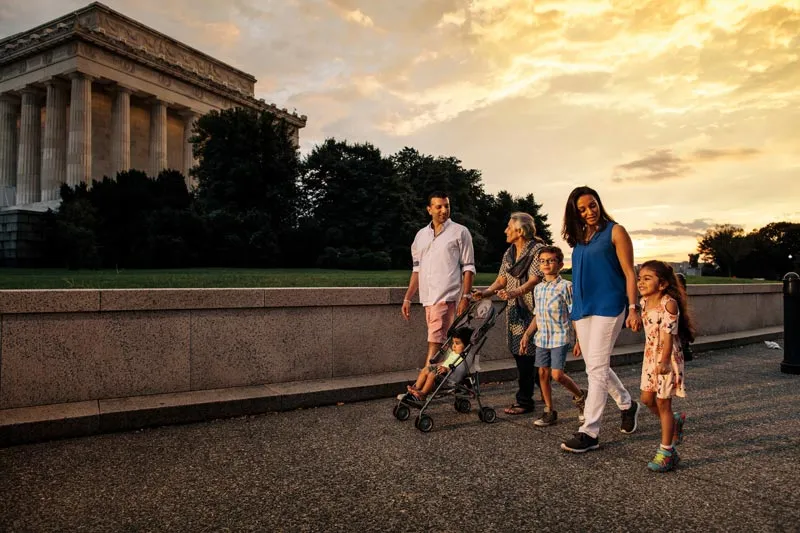
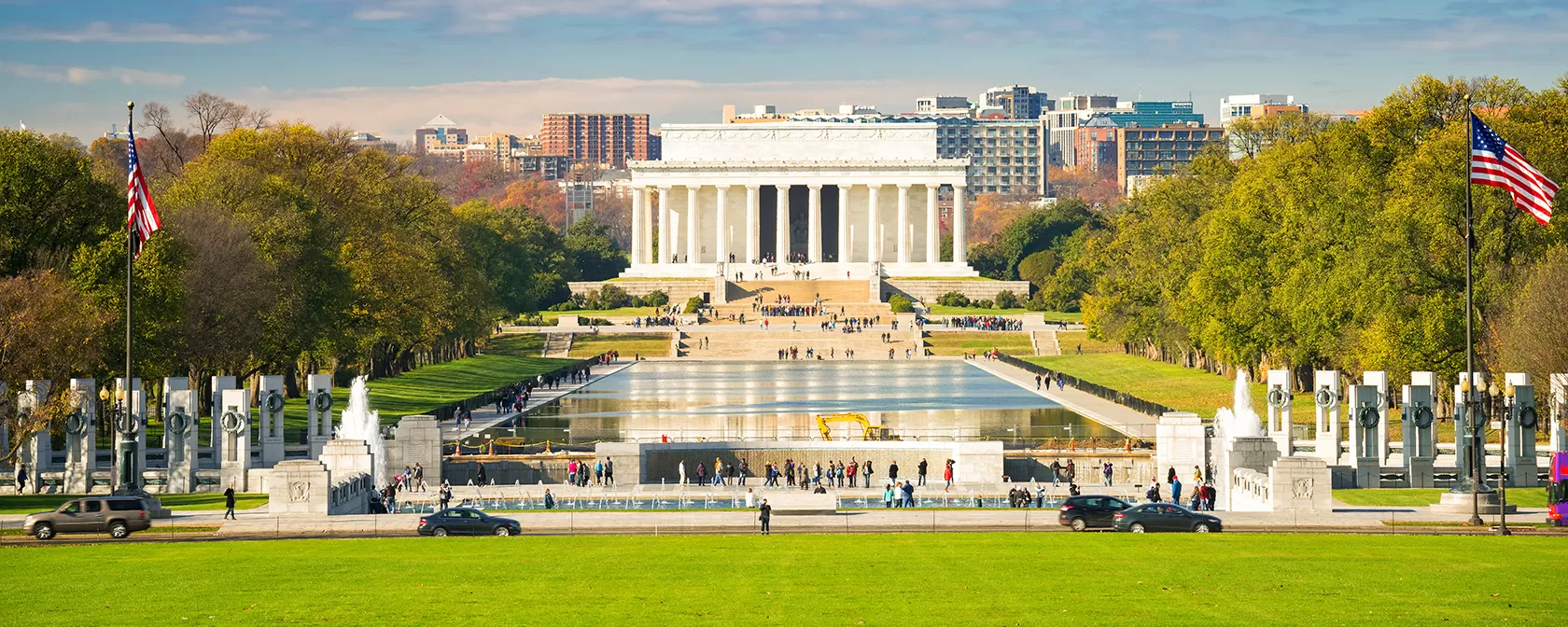
Touring DC’s iconic attractions When you come to DC, especially if you’re a first-time visitor, it’s likely that our world-famous monuments and memorials will be at the top of your must-see list. Most of these major attractions are located on the National Mall, which extends from the U.S. Capitol to the Lincoln Memorial, with many of them running along Constitution Avenue. Many of the monuments and memorials are open 24-hours a day, 365-days-a-year and you do not need to make advance reservations. These include the Lincoln Memorial, Jefferson Memorial, National World War II Memorial, the Martin Luther King, Jr. Memorial, the FDR Memorial and the Vietnam Veterans Memorial. These National Park Service (NPS)-run memorials are usually staffed by NPS Rangers who can answer your questions from 9:30 a.m. - 10 p.m. Rangers also conduct various tours and special programming throughout the year. Visit the National Mall calendar page for more information. Tours that require tickets There are several major attractions that do require advance tickets. These tickets are usually free or have a minimal charge. Tickets are required to go to the top of the recently reopened Washington Monument. Tickets may be ordered online for tour dates up to 90 days in advance, while additional tickets listed as "Not Yet Released" are made available the day prior to the desired tour date at 10 a.m. EST. Same-day tickets are also available on a first-come, first-served basis daily starting at 8:30 a.m. at the Washington Monument Lodge, located on 15th Street between Madison Drive NW and Jefferson Drive SW. Tours of the U.S. Capitol also need to be arranged in advance. Free reservations can be made via the visitthecapitol.gov website. Guided tours begin at the Capitol Visitor Center and include a 13-minute intro film, along with visits to the Crypt, the Rotunda and National Statuary Hall. Visitors can also request a staff-led tour through their Senator or Congress person. When court is not in session, visitors can take free, self-guided tours of the Supreme Court. Trained docents are on-hand to give courtroom lectures every 30-minutes from 9:30 a.m. - 3:30 p.m. on weekdays. Visitors are also invited to attend oral arguments when court is in session. These seats are extremely limited. Visitors must wait in line the morning of a courtroom session. See the Visitor’s Guide to Oral Arguments page for more information. Admission to both the Bureau of Engraving and Printing (see where U.S. dollars are made!) and the National Archives (home of the original U.S. Constitution, Declaration of Independence and Bill of Rights) are free and open to the public. In busier months, you’ll need to queue in an outdoor line to get inside. Please visit our touring the White House guide for more information on booking a tour (Note: these tours must be booked well in advance). Great options for guided tours The highly acclaimed Unlimited Biking offers daily, three-hour guided bicycle tours of the monuments with stops at all of the major attractions along the National Mall. Unlimited Biking also offers tours after dark so that visitors can experience magnificent views of the attractions illuminated at night. Big Bus Tours offers open-top sightseeing tours of the National Mall. Enjoy 24 or 48-hour hop-on, hop-off tours of the city's iconic landmarks. Along the way, you can learn about the city's history while listening to the entertaining and informative commentary. Your hop-on, hop-off ticket also allows you to exit the bus to explore and visit attractions up-close. Get an exclusive discount and save big on your next Big Bus Tour. Just enter the promotional code VISITDC for the best available deal and start exploring the nation's capital. Adventure DC Tricycle Tours offers live and entertaining historical narration as they transport you via pedicab to each monument and memorial. You can enjoy a customized tour that is pet-, child-, and mobility-impaired-friendly. Additionally, private golf cart and electric scooter tours are available. Public scooter tours are open to the general public on Saturdays, with limited availability. The code "DCFUN" will secure a discount on the public scooter tour. Cruise around the nation's capital in style on Washington, DC Urban Adventures' unique electric vehicles, where you can see the monuments and memorials on the National Mall by day or night. For a truly unique way to see the city, Capital Segway Tours offers guided experiences of the National Mall and surrounding sites. Visitors glide across town on a Segway, all while taking in the sites of Washington, DC. DC by Foot offers free, tip-based walking tours of Washington, DC. These informative tours are conducted by expert guides who make it fun and educational. In addition to the National Mall, DC by Foot takes visitors to the Tidal Basin, Pennsylvania Avenue and Capitol Hill. Visitors can also learn all about President Lincoln’s assassination or about Washington’s secrets and scandals. Contact Fiat Luxe Tours for an exciting private tour experience along the National Mall. Whether you want to learn the history of DC's most iconic landmarks or find the most perfect photo-ops, Fiat Luxe Tours has a tour for you. The company also conducts custom-made tours, too.

QA Test Automated cron Article sync 1
As you return to traveling this year, Washington, DC should be at the very top of your list. The nation’s capital offers more than 100 free things to do, but it should come as no surprise that museums are some of the most popular attractions. We’ve gone into deep detail on four of the city’s most popular museums (including one dedicated to living animals), none of which charge admission. Find the latest updates on visiting museums, including Smithsonian's plans to have all of its museums open by the end of August 2021, mask mandates for all indoor museums and the latest ticketing requirements. Book your next vacation to the nation’s capital and visit these only-in-the-District museums, free of charge. In the heart of the nation’s capital lives a portal to wildlife from around the world. Smithsonian’s National Zoo offers a firsthand, family-friendly experience through a 163-acre urban park in the Woodley Park neighborhood teeming with roughly 2,700 animals that represent more than 390 species. The zoo is also connected to the Smithsonian Conservation Biology Institute (a non-public facility located in Front Royal, Va.), a global effort to conserve species and train future conservationists. This focus on preserving endangered animals extends to the zoo, as one-fifth of its exhibited species fall into this category. In the heart of the nation’s capital lives a portal to wildlife from around the world. Smithsonian’s National Zoo offers a firsthand, family-friendly experience through a 163-acre urban park in the Woodley Park neighborhood teeming with roughly 2,700 animals that represent more than 390 species. The zoo is also connected to the Smithsonian Conservation Biology Institute (a non-public facility located in Front Royal, Va.), a global effort to conserve species and train future conservationists. This focus on preserving endangered animals extends to the zoo, as one-fifth of its exhibited species fall into this category. In the heart of the nation’s capital lives a portal to wildlife from around the world. Smithsonian’s National Zoo offers a firsthand, family-friendly experience through a 163-acre urban park in the Woodley Park neighborhood teeming with roughly 2,700 animals that represent more than 390 species. The zoo is also connected to the Smithsonian Conservation Biology Institute (a non-public facility located in Front Royal, Va.), a global effort to conserve species and train future conservationists. This focus on preserving endangered animals extends to the zoo, as one-fifth of its exhibited species fall into this category. In the heart of the nation’s capital lives a portal to wildlife from around the world. Smithsonian’s National Zoo offers a firsthand, family-friendly experience through a 163-acre urban park in the Woodley Park neighborhood teeming with roughly 2,700 animals that represent more than 390 species. The zoo is also connected to the Smithsonian Conservation Biology Institute (a non-public facility located in Front Royal, Va.), a global effort to conserve species and train future conservationists. This focus on preserving endangered animals extends to the zoo, as one-fifth of its exhibited species fall into this category. In the heart of the nation’s capital lives a portal to wildlife from around the world. Smithsonian’s National Zoo offers a firsthand, family-friendly experience through a 163-acre urban park in the Woodley Park neighborhood teeming with roughly 2,700 animals that represent more than 390 species. The zoo is also connected to the Smithsonian Conservation Biology Institute (a non-public facility located in Front Royal, Va.), a global effort to conserve species and train future conservationists. This focus on preserving endangered animals extends to the zoo, as one-fifth of its exhibited species fall into this category. In the heart of the nation’s capital lives a portal to wildlife from around the world. Smithsonian’s National Zoo offers a firsthand, family-friendly experience through a 163-acre urban park in the Woodley Park neighborhood teeming with roughly 2,700 animals that represent more than 390 species. The zoo is also connected to the Smithsonian Conservation Biology Institute (a non-public facility located in Front Royal, Va.), a global effort to conserve species and train future conservationists. This focus on preserving endangered animals extends to the zoo, as one-fifth of its exhibited species fall into this category. In the heart of the nation’s capital lives a portal to wildlife from around the world. Smithsonian’s National Zoo offers a firsthand, family-friendly experience through a 163-acre urban park in the Woodley Park neighborhood teeming with roughly 2,700 animals that represent more than 390 species. The zoo is also connected to the Smithsonian Conservation Biology Institute (a non-public facility located in Front Royal, Va.), a global effort to conserve species and train future conservationists. This focus on preserving endangered animals extends to the zoo, as one-fifth of its exhibited species fall into this category. In the heart of the nation’s capital lives a portal to wildlife from around the world. Smithsonian’s National Zoo offers a firsthand, family-friendly experience through a 163-acre urban park in the Woodley Park neighborhood teeming with roughly 2,700 animals that represent more than 390 species. The zoo is also connected to the Smithsonian Conservation Biology Institute (a non-public facility located in Front Royal, Va.), a global effort to conserve species and train future conservationists. This focus on preserving endangered animals extends to the zoo, as one-fifth of its exhibited species fall into this category. In the heart of the nation’s capital lives a portal to wildlife from around the world. Smithsonian’s National Zoo offers a firsthand, family-friendly experience through a 163-acre urban park in the Woodley Park neighborhood teeming with roughly 2,700 animals that represent more than 390 species. The zoo is also connected to the Smithsonian Conservation Biology Institute (a non-public facility located in Front Royal, Va.), a global effort to conserve species and train future conservationists. This focus on preserving endangered animals extends to the zoo, as one-fifth of its exhibited species fall into this category. In the heart of the nation’s capital lives a portal to wildlife from around the world. Smithsonian’s National Zoo offers a firsthand, family-friendly experience through a 163-acre urban park in the Woodley Park neighborhood teeming with roughly 2,700 animals that represent more than 390 species. The zoo is also connected to the Smithsonian Conservation Biology Institute (a non-public facility located in Front Royal, Va.), a global effort to conserve species and train future conservationists. This focus on preserving endangered animals extends to the zoo, as one-fifth of its exhibited species fall into this category. In the heart of the nation’s capital lives a portal to wildlife from around the world. Smithsonian’s National Zoo offers a firsthand, family-friendly experience through a 163-acre urban park in the Woodley Park neighborhood teeming with roughly 2,700 animals that represent more than 390 species. The zoo is also connected to the Smithsonian Conservation Biology Institute (a non-public facility located in Front Royal, Va.), a global effort to conserve species and train future conservationists. This focus on preserving endangered animals extends to the zoo, as one-fifth of its exhibited species fall into this category. In the heart of the nation’s capital lives a portal to wildlife from around the world. Smithsonian’s National Zoo offers a firsthand, family-friendly experience through a 163-acre urban park in the Woodley Park neighborhood teeming with roughly 2,700 animals that represent more than 390 species. The zoo is also connected to the Smithsonian Conservation Biology Institute (a non-public facility located in Front Royal, Va.), a global effort to conserve species and train future conservationists. This focus on preserving endangered animals extends to the zoo, as one-fifth of its exhibited species fall into this category. In the heart of the nation’s capital lives a portal to wildlife from around the world. Smithsonian’s National Zoo offers a firsthand, family-friendly experience through a 163-acre urban park in the Woodley Park neighborhood teeming with roughly 2,700 animals that represent more than 390 species. The zoo is also connected to the Smithsonian Conservation Biology Institute (a non-public facility located in Front Royal, Va.), a global effort to conserve species and train future conservationists. This focus on preserving endangered animals extends to the zoo, as one-fifth of its exhibited species fall into this category. In the heart of the nation’s capital lives a portal to wildlife from around the world. Smithsonian’s National Zoo offers a firsthand, family-friendly experience through a 163-acre urban park in the Woodley Park neighborhood teeming with roughly 2,700 animals that represent more than 390 species. The zoo is also connected to the Smithsonian Conservation Biology Institute (a non-public facility located in Front Royal, Va.), a global effort to conserve species and train future conservationists. This focus on preserving endangered animals extends to the zoo, as one-fifth of its exhibited species fall into this category. In the heart of the nation’s capital lives a portal to wildlife from around the world. Smithsonian’s National Zoo offers a firsthand, family-friendly experience through a 163-acre urban park in the Woodley Park neighborhood teeming with roughly 2,700 animals that represent more than 390 species. The zoo is also connected to the Smithsonian Conservation Biology Institute (a non-public facility located in Front Royal, Va.), a global effort to conserve species and train future conservationists. This focus on preserving endangered animals extends to the zoo, as one-fifth of its exhibited species fall into this category. In the heart of the nation’s capital lives a portal to wildlife from around the world. Smithsonian’s National Zoo offers a firsthand, family-friendly experience through a 163-acre urban park in the Woodley Park neighborhood teeming with roughly 2,700 animals that represent more than 390 species. The zoo is also connected to the Smithsonian Conservation Biology Institute (a non-public facility located in Front Royal, Va.), a global effort to conserve species and train future conservationists. This focus on preserving endangered animals extends to the zoo, as one-fifth of its exhibited species fall into this category. In the heart of the nation’s capital lives a portal to wildlife from around the world. Smithsonian’s National Zoo offers a firsthand, family-friendly experience through a 163-acre urban park in the Woodley Park neighborhood teeming with roughly 2,700 animals that represent more than 390 species. The zoo is also connected to the Smithsonian Conservation Biology Institute (a non-public facility located in Front Royal, Va.), a global effort to conserve species and train future conservationists. This focus on preserving endangered animals extends to the zoo, as one-fifth of its exhibited species fall into this category. In the heart of the nation’s capital lives a portal to wildlife from around the world. Smithsonian’s National Zoo offers a firsthand, family-friendly experience through a 163-acre urban park in the Woodley Park neighborhood teeming with roughly 2,700 animals that represent more than 390 species. The zoo is also connected to the Smithsonian Conservation Biology Institute (a non-public facility located in Front Royal, Va.), a global effort to conserve species and train future conservationists. This focus on preserving endangered animals extends to the zoo, as one-fifth of its exhibited species fall into this category. In the heart of the nation’s capital lives a portal to wildlife from around the world. Smithsonian’s National Zoo offers a firsthand, family-friendly experience through a 163-acre urban park in the Woodley Park neighborhood teeming with roughly 2,700 animals that represent more than 390 species. The zoo is also connected to the Smithsonian Conservation Biology Institute (a non-public facility located in Front Royal, Va.), a global effort to conserve species and train future conservationists. This focus on preserving endangered animals extends to the zoo, as one-fifth of its exhibited species fall into this category. In the heart of the nation’s capital lives a portal to wildlife from around the world. Smithsonian’s National Zoo offers a firsthand, family-friendly experience through a 163-acre urban park in the Woodley Park neighborhood teeming with roughly 2,700 animals that represent more than 390 species. The zoo is also connected to the Smithsonian Conservation Biology Institute (a non-public facility located in Front Royal, Va.), a global effort to conserve species and train future conservationists. This focus on preserving endangered animals extends to the zoo, as one-fifth of its exhibited species fall into this category. In the heart of the nation’s capital lives a portal to wildlife from around the world. Smithsonian’s National Zoo offers a firsthand, family-friendly experience through a 163-acre urban park in the Woodley Park neighborhood teeming with roughly 2,700 animals that represent more than 390 species. The zoo is also connected to the Smithsonian Conservation Biology Institute (a non-public facility located in Front Royal, Va.), a global effort to conserve species and train future conservationists. This focus on preserving endangered animals extends to the zoo, as one-fifth of its exhibited species fall into this category. In the heart of the nation’s capital lives a portal to wildlife from around the world. Smithsonian’s National Zoo offers a firsthand, family-friendly experience through a 163-acre urban park in the Woodley Park neighborhood teeming with roughly 2,700 animals that represent more than 390 species. The zoo is also connected to the Smithsonian Conservation Biology Institute (a non-public facility located in Front Royal, Va.), a global effort to conserve species and train future conservationists. This focus on preserving endangered animals extends to the zoo, as one-fifth of its exhibited species fall into this category. In the heart of the nation’s capital lives a portal to wildlife from around the world. Smithsonian’s National Zoo offers a firsthand, family-friendly experience through a 163-acre urban park in the Woodley Park neighborhood teeming with roughly 2,700 animals that represent more than 390 species. The zoo is also connected to the Smithsonian Conservation Biology Institute (a non-public facility located in Front Royal, Va.), a global effort to conserve species and train future conservationists. This focus on preserving endangered animals extends to the zoo, as one-fifth of its exhibited species fall into this category.
Visiting the American Veterans Disabled for Life Memorial in Washington, DC
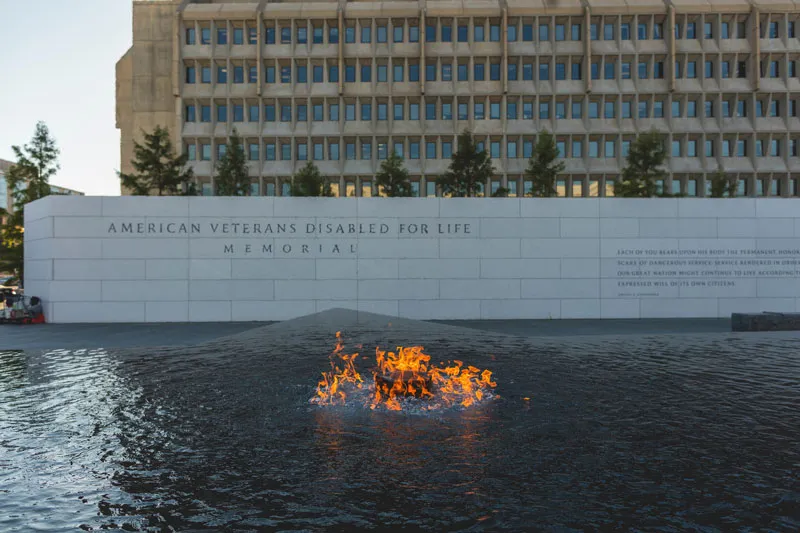
A visit to the American Veterans Disabled for Life Memorial is a solemn and powerful reminder of the very human cost of war. The memorial “conveys a combination of strength and vulnerability, of loss and renewal… through juxtaposition of granite and glass,” according to the National Park Service, which manages and maintains the first national memorial dedicated to disabled veterans. The memorial, which opened in October 2014, honors the sacrifice of those who were disabled in service to this country across all branches of the U.S. Armed Forces. Planning your visit to the American Veterans Disabled for Life Memorial The American Veterans Disabled for Life Memorial is located just east of the United States Capitol and the United States Botanic Garden. The most convenient way to get to the memorial is by taking the Metrorail. The two closest Metro stops are Federal Center SW and Capitol South, both on the Blue, Orange and Silver lines. If traveling by bus, take DC Circulator’s National Mall route or ride Metrobus routes 32, 34 and 36 or P17 and P19. Note that street parking is often limited in DC. Be advised that the memorial is not regularly staffed by National Park Service Rangers. To find out when rangers will be present to assist visitors and provide interpretive programs, check out the National Park Service’s schedule of events. What does the memorial represent? As you wander through the nearly 2.5-acre memorial, you’ll notice many beautiful and serene features that lend to the memorial’s contemplative and reflective aura. The centerpiece of the memorial is the star-shaped fountain and triangular reflecting pool with a ceremonial flame at the center of the star. Tributes and stories of servicemen and women are told through 48 etched glass panels featuring photographs and quotations, and four large bronze sculptures. According to the National Park Service, these features “help interpret the challenges and feelings of the disabled veteran: call of duty and pride in service; trauma of injury; healing; and renewal of purpose.” How did the memorial get built? While the American Veterans Disabled for Life Memorial didn't officially open to the public until October 2014, Congress approved the memorial in 2000 and the Disabled Veterans’ Life Memorial Foundation was charged with raising the funds necessary for construction, maintenance and preservation. After a decade of fundraising, the official groundbreaking ceremony was held in November 2010 and on October 5, 2014, former President Barack Obama helped open the memorial to the public.
Visiting the Franklin Delano Roosevelt Memorial in Washington, DC
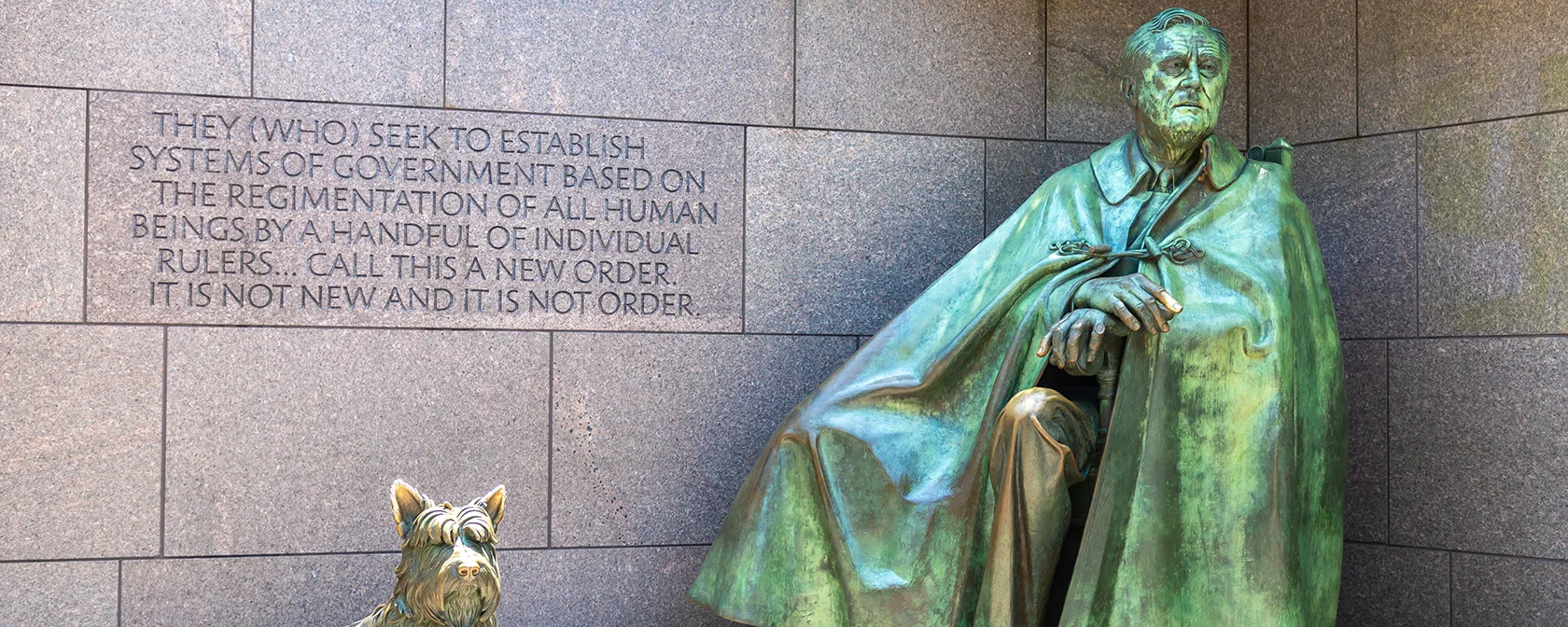
A visit to the Franklin Delano Roosevelt Memorial is to be transported to a trying time in American history, an era rife with economic depression and international conflict. The memorial, which honors the 32nd president of the United States, is composed of four “outdoor rooms” which represent each of President Roosevelt’s four terms as commander in chief. Bronze sculptures of the president, First Lady Eleanor Roosevelt, his trusty canine and First Pet Fala, as well as scenes from the Great Depression of fireside chats and waiting in bread lines are surrounded by engravings of 21 famous quotes and waterfalls cascading over red South Dakota granite. The memorial provides an in-depth experience and unparalleled insight into the trials and tribulations of America’s longest-serving president. Planning your visit to the Franklin Delano Roosevelt Memorial The FDR Memorial, which is located along the National Mall's Tidal Basin in between the Martin Luther King, Jr. and Jefferson memorials, opened to the public in 1997 and is maintained by the National Park Service. Like all the monuments and memorials on the National Mall, the FDR Memorial is free and open to the public. The memorial is also the first on the National Mall to be built wheelchair accessible. Given its location on the Tidal Basin among the cherry blossom trees, it is especially popular to visit during the National Cherry Blossom Festival. The most convenient way to get to the memorial is by taking the Metrorail. The two closest Metro stops are Federal Triangle and Smithsonian, both on the Blue, Orange and Silver lines. If traveling by bus, take the DC Circulator’s National Mall route. If driving, visitor parking is available on Ohio Drive, between the Lincoln and Jefferson memorials. Handicapped parking spaces are set aside at locations on West Basin Drive in front of the memorial. Note that street parking is often limited in DC. Have a question? National Park Service Rangers are on hand to assist visitors daily from 9:30 a.m. to 10 p.m. and provide interpretive programs throughout the day and upon request. What does all the water at the FDR Memorial represent? By now you have learned that the four outdoor “rooms” are symbolic of Roosevelt’s four terms as president and what the statues represent, but what about all of the waterfalls and fountains? There are many water features, all with their own meaning. There’s the water feature comprised of one large drop, which depicts the crash of the economy that led to the Great Depression; multiple stair-like drops pay homage to the Tennessee Valley Authority dam-building project; there are chaotic falls at varying angles signifying World War II; and a still pool for Roosevelt's death. The water and more than seven acres of space to explore at the FDR Memorial provide for an educational and introspective experience you’re not soon to forget. Did you know there are two FDR memorials? President Roosevelt guided the United States through the Great Depression and World War II during four terms as president, so it’s only fitting that he be honored with a memorial on the National Mall. However, this was not his first memorial constructed in Washington, DC. Roosevelt once joked to his friend, Supreme Court Justice Felix Frankfurter, that if Congress ever made a monument in his honor, he would like it to be no larger than the size of his desk and placed in front of the National Archives. Obliging this request, Congress placed a desk size stone and a plaque in honor of FDR in that exact location. However, years later, Congress decided that this was not enough of a tribute and selected the memorial’s present day location for a much larger tribute.