
All Articles
Visiting the National Archives Building & Museum in Washington, DC
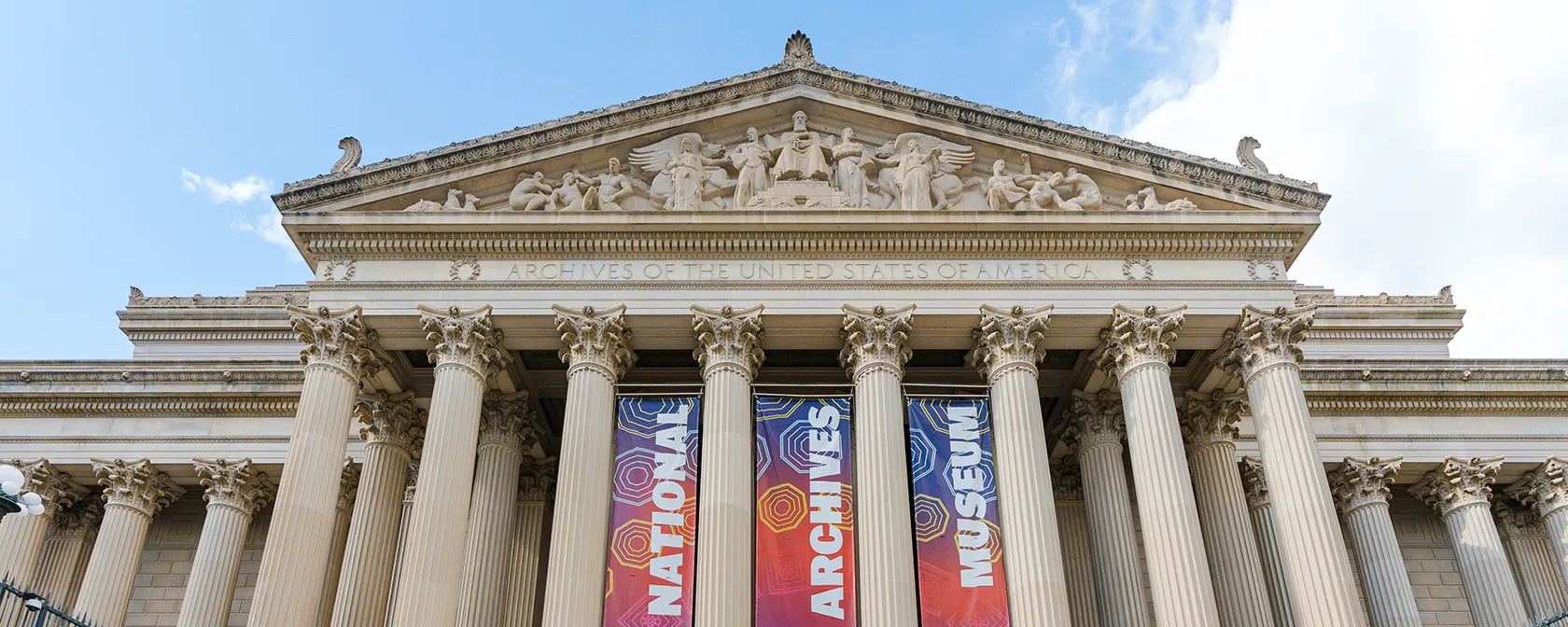
What and where is the National Archives Building & Museum? The National Archives & Records Administration Building and Museum is located on Constitution Avenue NW, between 7th and 9th Streets, just north of the National Mall. The building houses both a museum and the National Archives and Records Administration, which is responsible for federal records deemed to be of historical importance. The National Archives Building is home to more than three billion records in total, including the three most important documents in American history: the Declaration of Independence, the U.S. Constitution and the Bill of Rights. These can be viewed in the building’s Rotunda for the Charters of Freedom. The museum is open every day of the year except Thanksgiving Day and Christmas Day. Its hours are 10 a.m. – 5:30 p.m., seven days a week. Admission is always free. The easiest way to reach the National Archives is via Metrorail or the DC Circulator. The closest Metro stop is Archives – Navy Memorial – Penn Quarter on the Green and Yellow lines. The DC Circulator’s National Mall route will take you near the building, making it easy to continue your exploration of the National Mall afterwards. The facility is handicap accessible. What’s inside the National Archives? The National Archives features distinct areas that all serve a different purpose in illuminating American history through vital documents. The aforementioned Rotunda for the Charters of Freedom enjoys the most attention, and for good reason. The semicircular room contains the Declaration of Independence, the U.S. Constitution and the Bill of Rights. The exhibition surrounding the charters highlights the composition and continuing significance of each document. The David M. Rubenstein Gallery is home to Records of Rights, which features numerous Archives documents and a 17-foot touch screen to summarize American debate around essential issues such as citizenship, voting rights, equal opportunity, free speech and more. The highlight of the gallery is one of four surviving originals of the 1297 Magna Carta. The Public Vaults take you deeper into the Archives’ records. At any given time, more than 1,000 documents are on display, indicating the incredible breadth of American democracy. Each vault is themed based on words from the Preamble to the U.S. Constitution, which is only fitting. The exhibit has also added an interactive element to take you even closer to the country’s history. Beyond its myriad exhibits and historical documents, the National Archives Museum also features the William G. McGowan Theater, a 290-seat venue that often hosts documentary films and forum discussions. You can also educate and entertain the next generation in the Boeing Learning Center, which offers hands-on activities relating to Archive materials. Last but not least, the National Archives Store is a great spot to pick up American memorabilia and souvenirs to take home with you.
Visiting the National Gallery of Art in Washington, DC
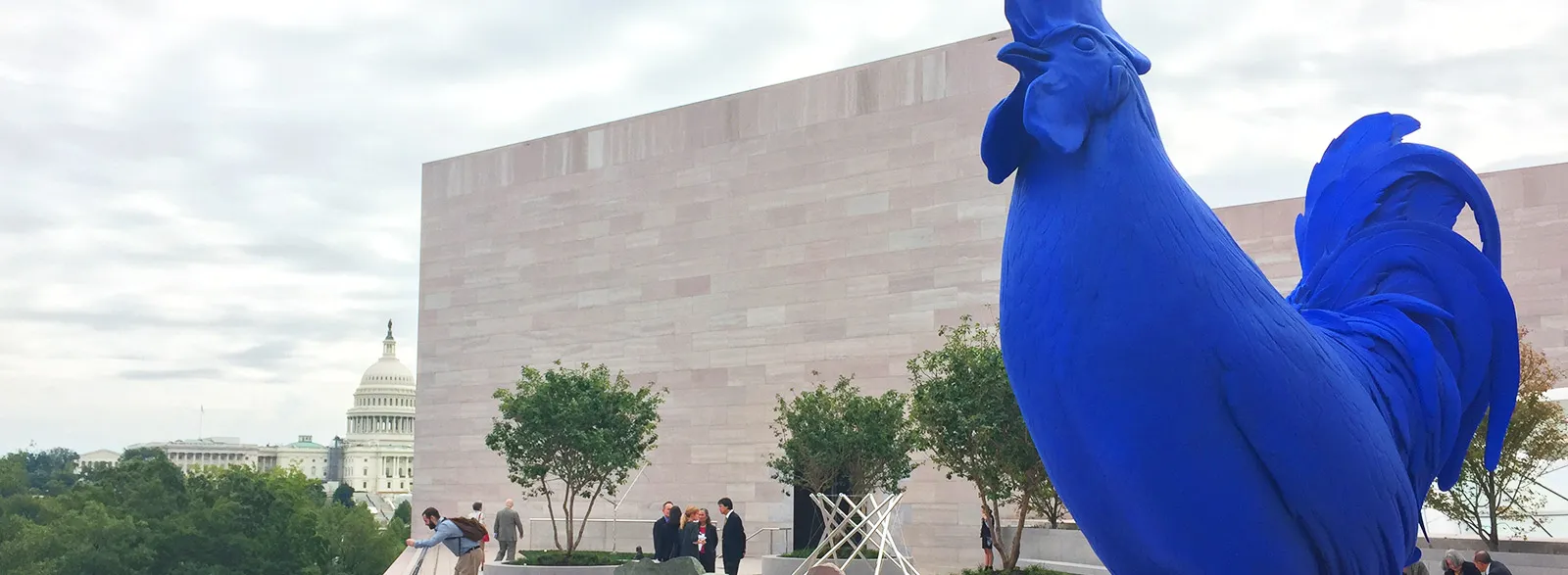
What and where is the National Gallery of Art? The National Gallery of Art and its gorgeous Sculpture Garden (which features an ice rink in the winter time) are located on Constitution Avenue NW between 3rd and 9th Streets NW. Through its East and West Buildings, the museum preserves, collects and exhibits works of art from numerous countries and historical eras. Its collection features roughly 141,000 paintings, drawings, photographs, sculptures and forms of new media that stretch all the way back to the Middle Ages. When is the National Gallery of Art open? The museum is open every day of the year except Dec. 25 and Jan. 1. Its hours are 10 a.m. – 5 p.m. daily. Admission is always free. How to get to the National Gallery of Art? The easiest way to reach the National Gallery of Art is via Metrorail or the DC Circulator. The closest Metro stop is Archives – Navy Memorial – Penn Quarter on the Green and Yellow Lines. The DC Circulator’s National Mall route will take you near the Gallery’s buildings and Sculpture Garden – making it easy to continue your exploration of the National Mall afterward. The facility is handicap-accessible. What’s inside the National Gallery of Art? The National Gallery of Art regularly features temporary exhibits that highlight distinctive artists in a range of mediums. From Renaissance masters to modern-day marvels, you will be able to take in creations that advance and challenge form and structure. Be sure to check out the museum’s current exhibits and installations as you plan your visit. After a three-year renovation, the Gallery’s East Building has added two sky-lit tower galleries, two staircases connecting all levels of the museum, a rooftop terrace with a dazzling blue rooster sculpture and more than 500 works of art, including pieces by Alexander Calder, Barbara Kruger, Jasper Johns, Pablo Picasso and Mark Rothko. The I.M. Pei-designed wing sleekly contrasts the Beaux Arts and Classical architecture throughout DC, making it a must-visit for those looking to have their mind blown by art. Connecting the West and East Buildings is Leo Villareal’s incredible Multiverse installation. More than 41,000 LED nodes light up the 200-foot space, creating abstract configurations that literally light your way as you head from one building to the other via an underground concourse. An exploration of the West Building is as revelatory and moving of a museum experience as exists in the U.S. Thousands of essential works, organized by period and national origin, are arranged in spectacular and comprehensive galleries across two floors of exhibition space. The main floor features European paintings and sculptures that date as far back as the 13th century, as well as seminal American art. On the ground floor, you can gaze at pieces by essential masters such as Manet, Renoir and Cézanne, as well as decorative art, prints and drawings. The museum’s expansive gift shop, also located on the ground floor, is well worth a visit. The Gallery’s Sculpture Garden should also be a part of your visit. The 6.1-acre space, adjacent to the West Building, features beautiful trees, walking and seating areas and 17 sculptures taken from the Gallery’s collection. Among them: Robert Indiana’s famous AMOR, a play on the artist’s LOVE sculpture. The Garden also sports a fountain that serves as an ice rink from November – March, as well as The Pavilion Café, which offers year-round service and indoor seating. The National Gallery of Art also hosts events throughout the year, including concerts, guided tours, gallery talks and much more. Check the museum’s calendar before you go.
Visiting the National World War II Memorial in Washington, DC
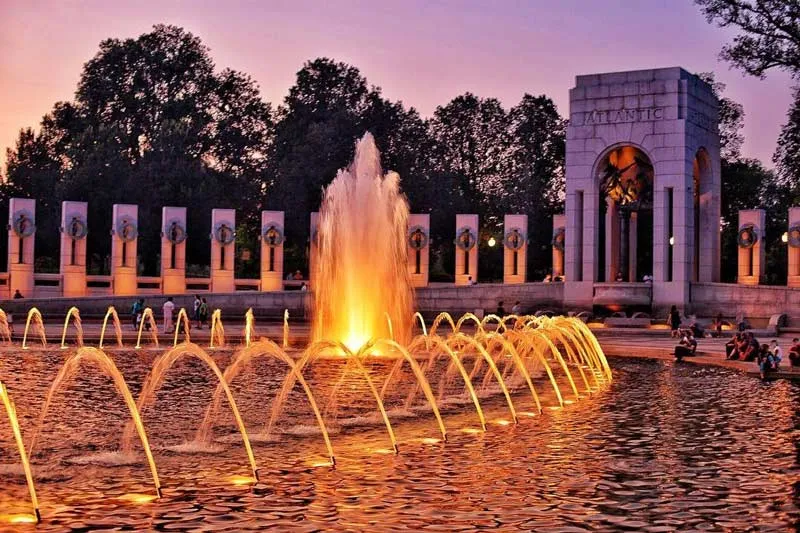
What is the National World War II Memorial and where is it? The National World War II Memorial honors the 16 million people who served as part of the U.S. Armed Forces during World War II, including more than 400,000 who gave the ultimate sacrifice for their country. The memorial sits along the central vista of the National Mall, at the east end of the Lincoln Memorial Reflecting Pool. The World War II Memorial is free and open to the public 24 hours a day. Park rangers are on duty to answer questions from 9:30 a.m. to 10 p.m. daily, and interpretive programs are provided throughout the day and upon request. The most convenient way to reach the memorial, often referred to as the WWII Memorial, is by Metrobus or Metro. There are two Metro stations close by: Smithsonian and Federal Triangle, both located on the Orange, Blue and Silver lines. As for the bus,take either the 32, 34 or 36 Metrobus routes. What will I see at the National World War II Memorial? Symbols of America’s triumph in the Second World War are artfully displayed all over the World War II Memorial, which has a splendid fountain at its center. 56 granite columns symbolize unity among the 48 states, seven federal territories and the District of Columbia. The columns form a semi-circle around the memorial’s plaza, with two 43-foot tall arches on opposite sides. The northern arch represents victory in the Atlantic, while the southern arch symbolizes victory in the Pacific. When you enter the memorial’s semi-circle from the east, look for two walls on each side of you. Each contains scenes from the war beautifully rendered in bronze relief. On the left (towards the Pacific arch), the scenes progress through the experience of war, from physical exams all the way to homecoming. The right side pays tribute to the Atlantic, as the last scene depicts American and Russian armies shaking hands as the two sides met in Germany at the conclusion of the war. One of the World War II Memorial’s most striking features is the Freedom Wall. 4,048 gold stars pay tribute to American lives lost at war (each star represents 100 Americans), while dozens of battle names and military campaign destinations are also on display. In front of the wall, a stone fittingly reads, “Here we mark the price of freedom.” Be sure to look for the memorial’s two tough-to-find inscriptions of “Kilroy was here,” another powerful American symbol from World War II. The saying represents the presence of U.S. soldiers, and was scribbled (with an accompanying doodle) at numerous locations during the war. Honor a veteran On any given visit, you may encounter former servicemen at the memorial. In fact, the Honor Flight Network is a non-profit dedicated to bringing vets, often elderly, to DC to visit the memorials which honor their service to the nation. These visits are often filled with emotions and help provide closure for veterans by reinforcing the importance of their service and sacrifice.
Visiting the Smithsonian Hirshhorn Museum and Sculpture Garden in Washington, DC
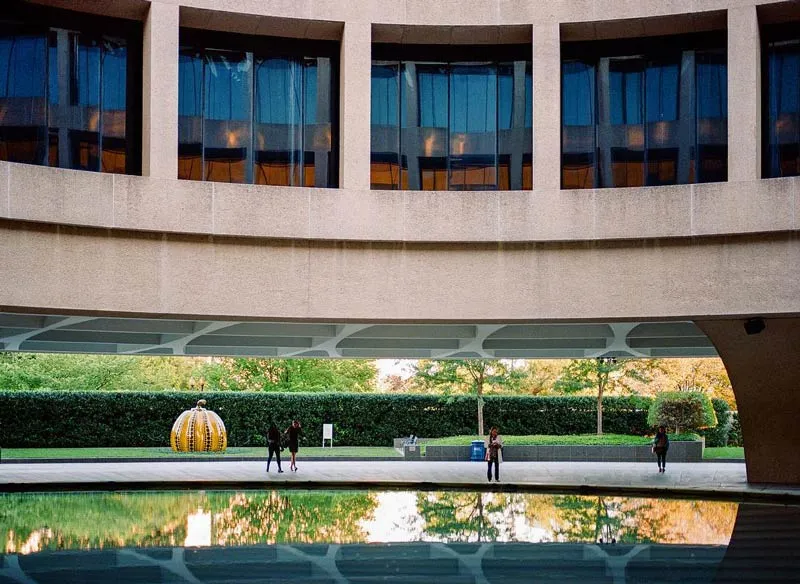
What is the and Sculpture Garden and where is it? The Smithsonian Hirshhorn Museum and Sculpture Garden displays some of the most unique artworks in modern and contemporary art, including painting, sculpture and photography. Located at the corner of 7th Street and Independence Avenue SW on the National Mall, the museum is passionate about creating shared experiences among artists, their art and audiences. Founded in 1974 by renowned art collector Joseph H. Hirshhorn, curators continue to expand the collection of the museum, which now boasts more than 12,000 pieces. The easiest way to get there is via Metrorail or Metrobus. The closest Metro stop is Smithsonian, on the Blue, Orange and Silver lines. The 32, 34 and 36 Metrobus routes will all take you to the National Mall. The museum is handicap-accessible. What’s inside the Hirshhorn Museum? The majestic Hirshhorn has a rotating roster of exhibitions, steadily engaging audiences with the finest in modern and contemporary artwork. From April 1, 2022, through June 14, 2023, the museum hosts One with Eternity: Yayoi Kusama in the Hirshhorn Collection, which promises to be one of the most popular exhibits of the year (timed passes are required). Acclaimed Japanese artist Hiroshi Sugimoto recently transformed the Hirshhorn lobby with designs inspired by a medieval Japanese nutmeg tree and its mess of roots. The look and feel extends to a complete redesign featuring a reconfigured entrance and new furnishings, welcome desks, digital signage and a gorgeous 20-foot metal coffee bar that serves up Dolcezza Coffee & Gelato. Visitors can also check out a prismatic light sculpture by Icelandic artist Olafur Eliasson. Of course, the Hirshhorn hosts in-depth exhibits outside of the realm of these series. You can always expect these exhibits to be edgy and innovative, highlighting artists and works that push the boundaries of what modern art can do. Keep an eye on current and upcoming exhibits as you plan your DC trip, as well as the museum’s regular programs, which include educational events, free tours, lectures and film screenings. What’s outside at the Sculpture Garden? Although it’s easy to get caught up in what’s inside the Hirshhorn Museum, what’s outside of it is equally fascinating, as 197,000 square feet of total exhibition space is put to great use. Take some time to gaze at the museum’s architecture, a magnificent circular structure that is the perfect introduction to the forward-thinking creations found inside. The famed Sculpture Garden (which measures 1.3 acres and is sunk 6-14 feet below street level) and accompanying plaza feature works from multiple artists, displaying their achievements in an open area that is easy to navigate. One of Auguste Rodin’s most famous sculptures, entitled The Burghers of Calais, can be found here. Other popular works include Yoko Ono’s Wish Tree for Washington, DC and David Smith’s Cubi XII. The nearby courtyard area boasts a circular fountain that has also become a trademark of the Hirshhorn. And make sure you fit in a stop to the Museum Shop, which features a great selection of exhibition catalogues, DVDs, postcards, books, posters and CDs. Be sure to check out our guide on accessibility within the Smithsonian museums.
Visiting the Smithsonian National Air and Space Museum in Washington, DC
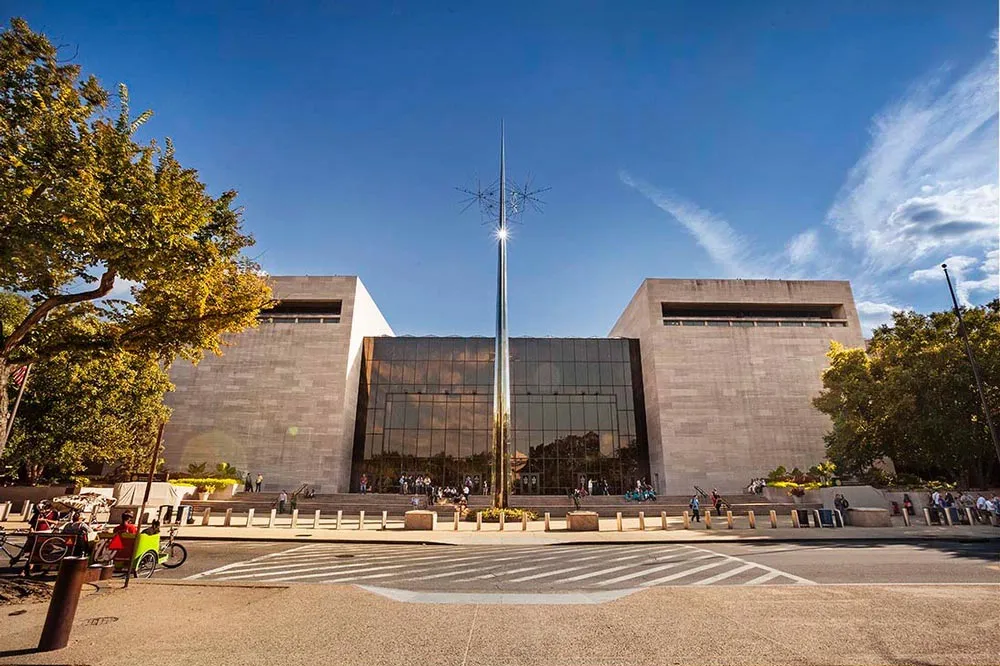
While it remains operational, the museum is currently undergoing a large-scale, multi-year renovation that will introduce all new galleries and public spaces. The first phase of the renovation was unveiled in Oct. 2022 and the remaining phases are slated for 2025 and 2026. Learn more and the transformation. The Smithsonian’s National Air and Space Museum is one of the most popular museums in the world – reserve your free timed-entry tickets today. Be sure to check out our guide to accessibility for DC's Smithsonian institutions. A museum that goes above and beyond Glimpse the 1903 Wright Flyer, run your hands over moon rock and experience the larger-than-life world of aviation and space travel at the National Air and Space Museum. Since opening on the National Mall in 1976, this hub of all things flight has educated and inspired future generations of pilots and astronauts from around the world. The museum (along with its second location, the Udvar-Hazy Center, in Chantilly, Va.) contains the largest and most significant collection of aviation and space artifacts in the world. All components of human flight are on display, including related art and archival materials. National Air and Space Museum hours and location The museum is located on Jefferson Drive, between 4th and 7th Streets SW and admission is always free. Regular hours are 10 a.m. – 5:30 p.m. The easiest way to reach the museum is via Metrorail or Metrobus. The closest Metro stop is The closest metro station is L’Enfant Plaza (Blue, Green, Orange, Silver and Yellow lines). The 32, 34 and 36 Metrobus routes will all take you to the Mall, which you can explore in full once you’ve experienced the Air and Space Museum’s wonders. The facility has a number of accessibility features. The Museum’s second facility, the Steven F. Udvar-Hazy Center is located just south of Dulles Airport’s runways in Fairfax County, Virginia. It is open daily from 10:00 am – 5:30 pm. Visit the Smithsonian's Udvar-Hazy Center website for more information. What’s inside the National Air and Space Museum? The Air and Space Museum takes visitors to the sky, showcasing the amazing technological achievements that have progressed aviation and space exploration throughout the last century. Our fascination with flight is still alive and well, as the museum (and the Udvar-Hazy Center) is one of the most visited in the world year-after-year. As you may imagine, the historical objects on display are fundamental to the story of flight. The 1903 Wright Flyer owns the distinction of flying the world’s first successful flight – and you can see the groundbreaking flying machine in person. There’s also Charles Lindbergh’s Spirit of St. Louis, the first aircraft to complete a nonstop flight from New York to Paris. The Apollo 11 Command Module Columbia, the only portion of the Apollo 11 spacecraft to return to Earth, is currently at the Udvar-Hazy Center. Visitors can also see the spacesuit astronaut Neil Armstrong wore during his mission to the moon and touch a sample of a lunar rock brought back from the Apollo 17 mission in 1972. The Boeing Milestones of Flight Hall features the Bell X-1 Glamorous Glennis (the first plane to break the sound barrier), aviation and spaceflight stories and an exclusive mobile experience that will let visitors personalize their exploration like never before. The IMAX Theater, Observatory, tours and educational programs will be on hold until further notice. A stellar Only1DC experience Look through the lens of a high-powered telescope and watch as celestial bodies come into focus. Held on select evenings throughout the year, astronomy program events like nighttime stargazing at the National Air and Space Museum’s Public Observatory bring out volunteer experts (many of whom share their personal telescopes), families and couples. On a given night, you may be able to look through three different telescopes, each focused on a different point in the sky.
Visiting the Smithsonian National Museum of African American History and Culture
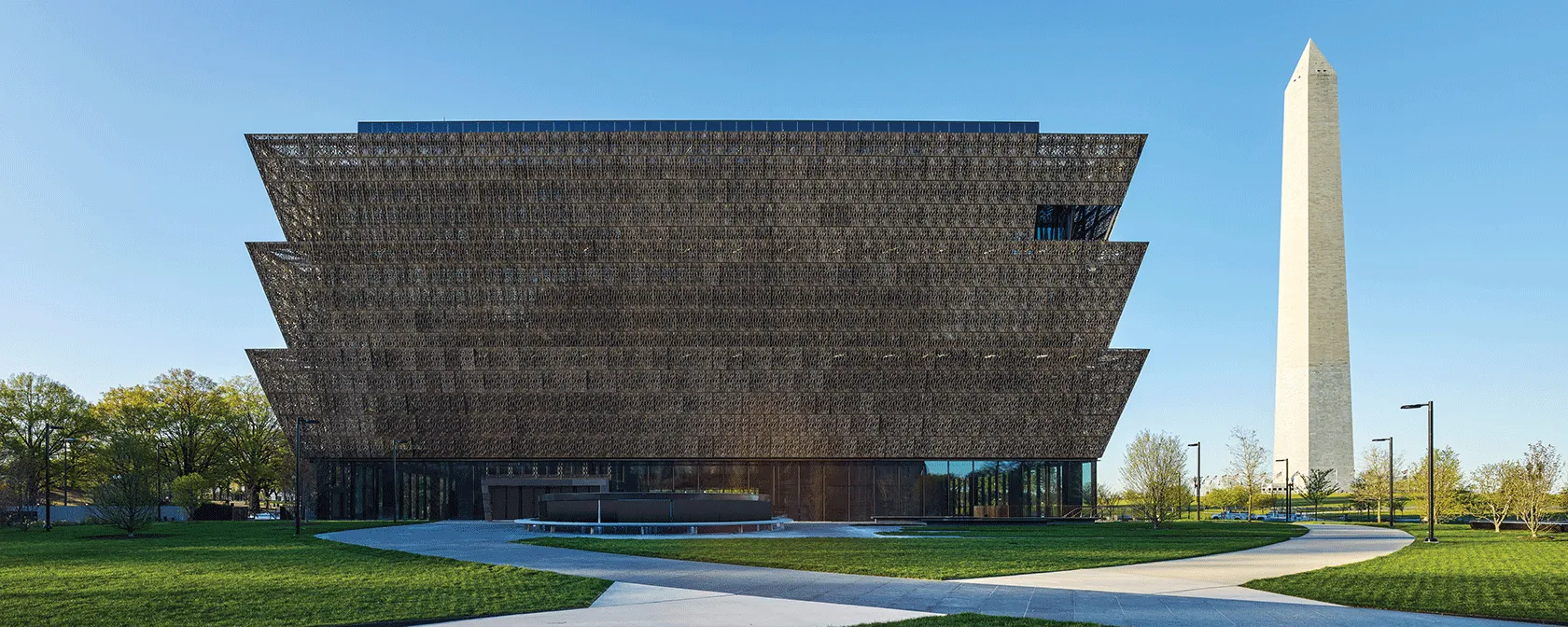
Where and what is the Smithsonian National Museum of African American History? The Smithsonian National Museum of African American History and Culture (NMAAHC) is located at 14th Street and Constitution Avenue NW on the National Mall. The four-level museum opened on Sept. 24, 2016, becoming the only national museum solely dedicated to the documentation of African American life, history and culture. This Smithsonian Institution museum is an architectural marvel that features numerous interactive exhibits. The museum is currently open Tuesday - Sunday from 10:00 a.m. - 5:30 p.m., and 12:00 p.m.-5:30 p.m. on Mondays. On Mondays that are observed as Federal Holidays, the museum opens at 10:00 a.m. The easiest way to get there is via Metrorail or the DC Circulator. The closest Metro stop is Federal Triangle on the Blue, Orange and Silver lines. The DC Circulator’s National Mall route is your best bus option, and it will be easy to continue your exploration of the National Mall afterwards. The facility is handicap-accessible. What’s inside the museum? The Smithsonian National Museum of African American History and Culture is a state-of-the-art building that addresses nearly every aspect of the African American experience, covering the arts, slavery, the Civil Rights Movement, athletics and much more. The building’s exterior, conceived by Ghanaian-born architect David Adjaye, is artfully made up of a three-tiered, bronze-colored screen. This lattice pays tribute to the intricate ironwork forged by enslaved African Americans in the southern United States. The museum’s collection of artifacts is astounding: 3,500 are on view, with another 35,000 or so in the collection. Standout items include a shawl given to Harriet Tubman by Queen Victoria, training aircraft used by the Tuskegee Institute, an invitation to President Obama’s 2009 inauguration and a boombox owned by Chuck D of Public Enemy. Navigating the entirety of the NMAAHC would be very difficult to accomplish in one visit, and the breadth of its exhibits is astonishing. However, there are several displays that you should be aware of before you go. The Musical Crossroads exhibit details the history African American music, from the arrival of the first Africans to today. From jazz to hip-hop, African American musicians brought forth new forms of expression that lit a candle for liberty, justice and change. You will be able to experience the emergence of some of America’s finest art forms and the amazing creative expressions that came from them. Slavery and Freedom uses first-person accounts and striking historical artifacts to tell an incredibly complicated tale. The exhibit traces slavery from 15th century Africa and Europe to the Civil War and Reconstruction in the United States. This vital history emphasizes that American slavery and freedom are deeply intertwined, and that the story of slavery is in fact a shared one that resides at the core of American politics, economics and daily life to this very day. Continue your dive into history with Defending Freedom, Defining Freedom and A Changing America. The former covers the era of segregation and the onset of the Civil Rights Movement, highlighting the struggle that African Americans faced and conquered in establishing a cultural identity and their own communities, changing the nation along the way. The latter goes from 1968 until today, covering the assassination of Martin Luther King, Jr. to Barack Obama’s two terms as president, journeying from the Black Panthers to #BlackLivesMatter. Check the museum’s calendar for online programming.