
All Articles
SPONSORED
Visiting the Dwight D. Eisenhower Memorial
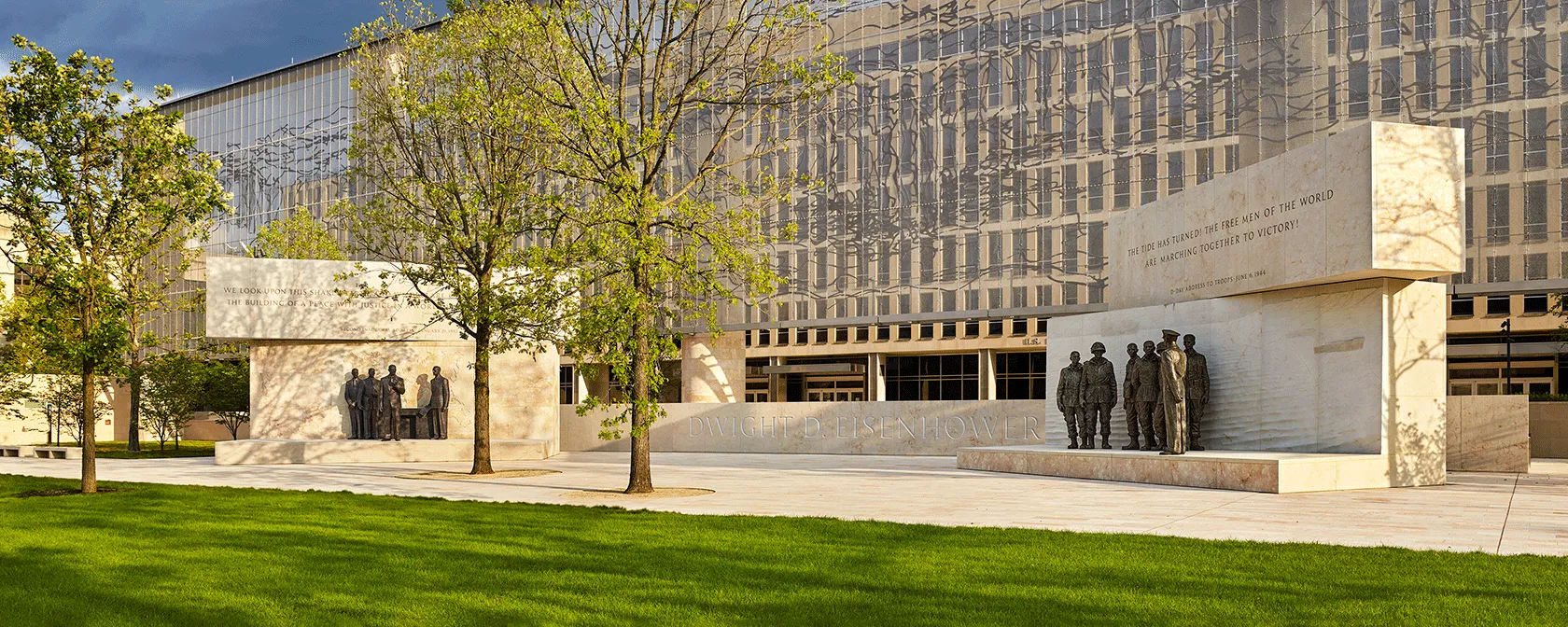
What is the Dwight D. Eisenhower Memorial and where is it? The Dwight D. Eisenhower Memorial, designed by world-renowned architect Frank Gehry, is located at the base of Capitol Hill at 540 Independence Avenue SW. The four-acre urban park features a variety of pieces that symbolize Eisenhower’s inspirational feats during his time as the supreme commander of the Allied Expeditionary Force in Europe during World War II and as the 34th U.S. president. View this post on Instagram A post shared by Mary Laurin (@fiddlefun2) What will I see at the Dwight D. Eisenhower Memorial? The memorial site itself holds a close and unique relationship to Eisenhower’s life-long commitment to public service. The federal entities neighboring the Maryland Avenue site demonstrate Eisenhower’s broad legacy of improved national infrastructure, the foundation upon which he worked to build “a peace with justice in a world where moral law prevails.” In honor of his military accomplishments, General Eisenhower appears with paratroopers of the 101st Airborne Division before the Battle of Normandy. Behind the sculptures is a bas relief featuring Eisenhower that depicts the Normandy landings on D-Day, June 6, 1944. His time as president is memorialized through sculptures that symbolize the balance of security and liberty that Eisenhower worked to achieve. One features Dwight in the Oval Office surrounded by military and civilian advisors. A map of the world in bas relief stands behind, reflecting Eisenhower’s internationalism and role as a world leader. A life-size sculpture of young Eisenhower takes you to the beginning of his journey. The piece is accompanied by an inscription of an excerpt from Eisenhower's Abilene Homecoming Speech in Kansas on June 22, 1945, where he declared “the proudest thing I can claim is that I am from Abilene.” A stainless-steel tapestry frames the entire memorial and portrays an abstract depiction of the Normandy coastline in peacetime to represent the peace Eisenhower won as supreme commander, then preserved as commander-in-chief. The iconic Pointe du Hoc landmark is featured at the center of the hand-drawn image. The one-of-a-kind piece is 450 feet long, supported by 80-foot stone-clad columns, and the image will appear differently throughout the day based on light and shadows. Free audio guides are available for your self-guided tour.
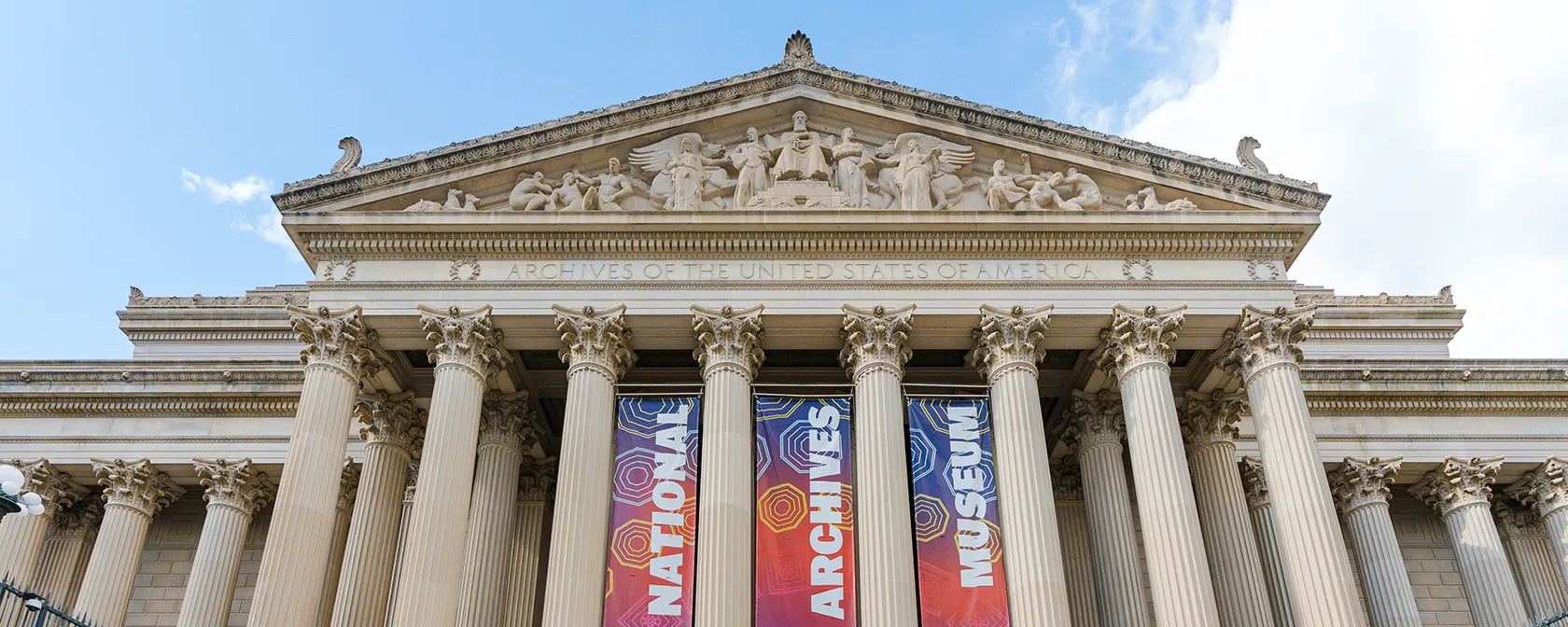
Visiting the National Archives Building & Museum in Washington, DC
What and where is the National Archives Building & Museum? The National Archives & Records Administration Building and Museum is located on Constitution Avenue NW, between 7th and 9th Streets, just north of the National Mall. The building houses both a museum and the National Archives and Records Administration, which is responsible for federal records deemed to be of historical importance. The National Archives Building is home to more than three billion records in total, including the three most important documents in American history: the Declaration of Independence, the U.S. Constitution and the Bill of Rights. These can be viewed in the building’s Rotunda for the Charters of Freedom. The museum is open every day of the year except Thanksgiving Day and Christmas Day. Its hours are 10 a.m. – 5:30 p.m., seven days a week. Admission is always free. The easiest way to reach the National Archives is via Metrorail or the DC Circulator. The closest Metro stop is Archives – Navy Memorial – Penn Quarter on the Green and Yellow lines. The DC Circulator’s National Mall route will take you near the building, making it easy to continue your exploration of the National Mall afterwards. The facility is handicap accessible. What’s inside the National Archives? The National Archives features distinct areas that all serve a different purpose in illuminating American history through vital documents. The aforementioned Rotunda for the Charters of Freedom enjoys the most attention, and for good reason. The semicircular room contains the Declaration of Independence, the U.S. Constitution and the Bill of Rights. The exhibition surrounding the charters highlights the composition and continuing significance of each document. The David M. Rubenstein Gallery is home to Records of Rights, which features numerous Archives documents and a 17-foot touch screen to summarize American debate around essential issues such as citizenship, voting rights, equal opportunity, free speech and more. The highlight of the gallery is one of four surviving originals of the 1297 Magna Carta. The Public Vaults take you deeper into the Archives’ records. At any given time, more than 1,000 documents are on display, indicating the incredible breadth of American democracy. Each vault is themed based on words from the Preamble to the U.S. Constitution, which is only fitting. The exhibit has also added an interactive element to take you even closer to the country’s history. Beyond its myriad exhibits and historical documents, the National Archives Museum also features the William G. McGowan Theater, a 290-seat venue that often hosts documentary films and forum discussions. You can also educate and entertain the next generation in the Boeing Learning Center, which offers hands-on activities relating to Archive materials. Last but not least, the National Archives Store is a great spot to pick up American memorabilia and souvenirs to take home with you.
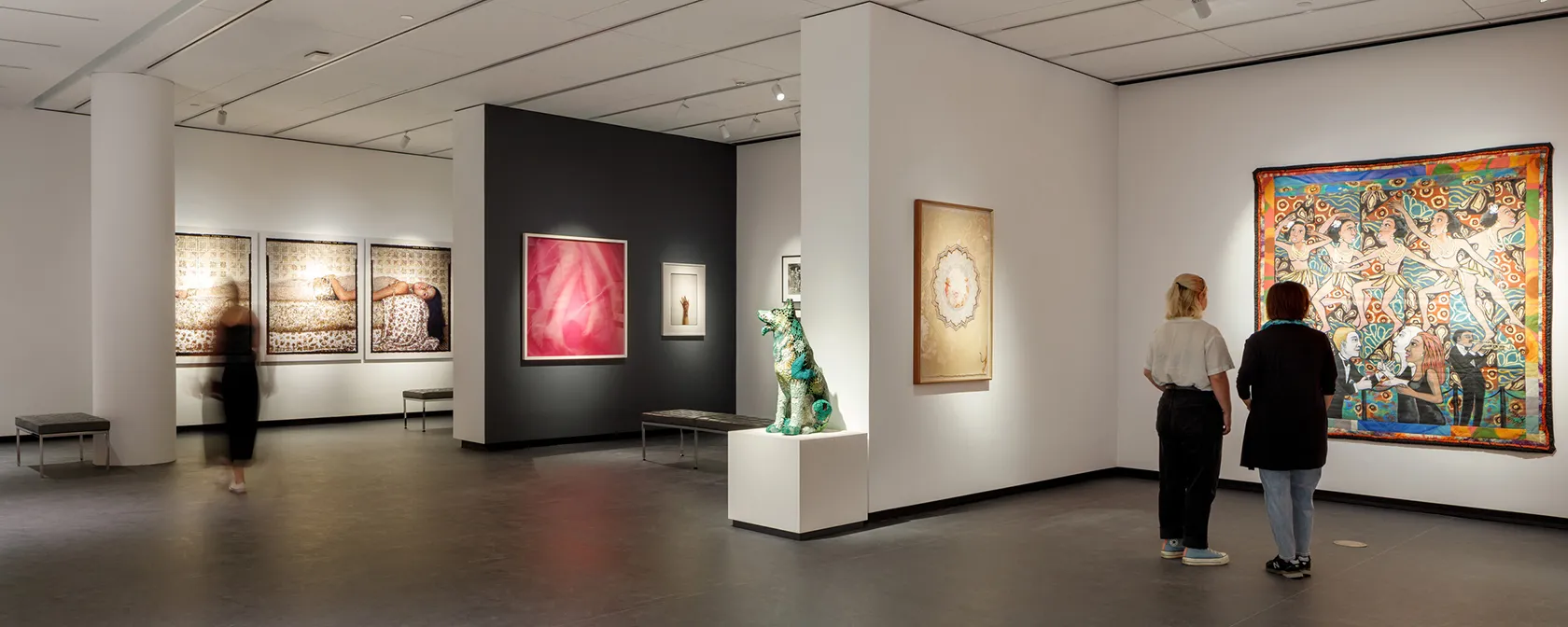
Visiting the National Museum of Women in the Arts in Washington, DC
What and where is the National Museum of Women in the Arts? The National Museum of Women in the Arts (NMWA) is located at 1250 New York Avenue NW in DC's Downtown neighbohood. Founded in 1981 and opened in 1987, NMWA is the only major museum on the planet solely dedicated to celebrating the diverse achievements of women artists. The museum’s collection includes more than 6,000 works dating from the 16th century to the present. The museum is open every day of the year except for Thanksgiving, Christmas Day and New Year’s Day. Hours are Tuesday – Sunday, 10 a.m. – 5 p.m. Patrons under the age of 21 enter for free. Admission for adults is $16, while visitors ages 70 and over and DC residents pay $13. Become a member with NMWA and you can enter for free. The easiest way to get there is via Metrorail or Metrobus. The closest Metro stop is the Metro Center station on the Red, Blue, Orange and Silver lines. Numerous Metrobus routes, including the 80, G8, S2, S4, X2, 68 and 42 will take you to the corner of H and 13th Streets, a short walk from the museum. The facility is handicap-accessible. What’s inside the National Museum of Women in the Arts? A recent renovation has only added and enhanced the wonderful offerings at this only-in-DC museum. Enlarged gallery spaces make for more art, both in quantity and variety. A studio workshop has been added, where visitors can learn and create their own art. There's also a beautiful new performance hall and a brand new exhibit entitled The Sky's the Limit, which features hanging sculptures on the second floor thanks to a newly reinforced ceiling. In total, 40% of the 6,000 works now on display at the museum are making their debut. The powerful contributions that women have made to the art world can be surveyed inside NMWA. The collection spans hundreds of years, encompassing numerous eras and seminal artists. NMWA has organized the collections by theme, letting visitors observe how certain ideas and modes of art have been in dialogue with each other across centuries. Your journey will feature still-life paintings from the 1600s and cutting-edge photography from the 2000s. You’ll be able to observe the stunning detail of a portrait by Élisabeth Vigée Le Brun, the intimacy of a print made by Mary Cassatt, the abstract beauty of a sculpture by Judy Chicago and Frida Kahlo's Self-Portrait Dedicated to Leon Trotsky, with the social, cultural and political revolutions that women forged to make their voices heard serving as vital context throughout. Additional highlights include They Call Me Redbone but I’d Rather Be Strawberry Shortcake by Amy Sherald, the artist responsible for the new Michelle Obama portrait at the National Portrait Gallery, whose distinct style is evident in both pieces. There’s Sonya Clark’s transcendent Afro Abe II, a U.S. five-dollar bill featuring the 16th president outfitted with the hairstyle found in the title. Locals will love a view of Rainy Night, Downtown by Georgia Mills Jessup, an interpretation of a DC street with gorgeous contrasts and shapes. Of course, NMWA frequently offers exciting exhibits that hone in on a particular artist or theme, including its Women to Watch series. Visit the museum’s website to see what’s currently on display and what’s upcoming. To see what’s going on during your visit, check out the NMWA events calendar, plus you can experience programs and exhibitions online through NMWA at home. One recurring event to keep in mind: Free Community Day, which occurs on the first and third Sundays of each month through November and allows free admission to the museum all day with a timed ticket. The museum's reopened Mezzanine Café, which is operated by Little Food Studio (a local, woman-owned establishment), offers a selection of sandwiches, salads, snacks and pastries along with refreshing hot and cold beverages including juices, coffee, tea and sodas. Browse NMWA’s awesome online gift shop, which offers books, accessories, home goods and more.
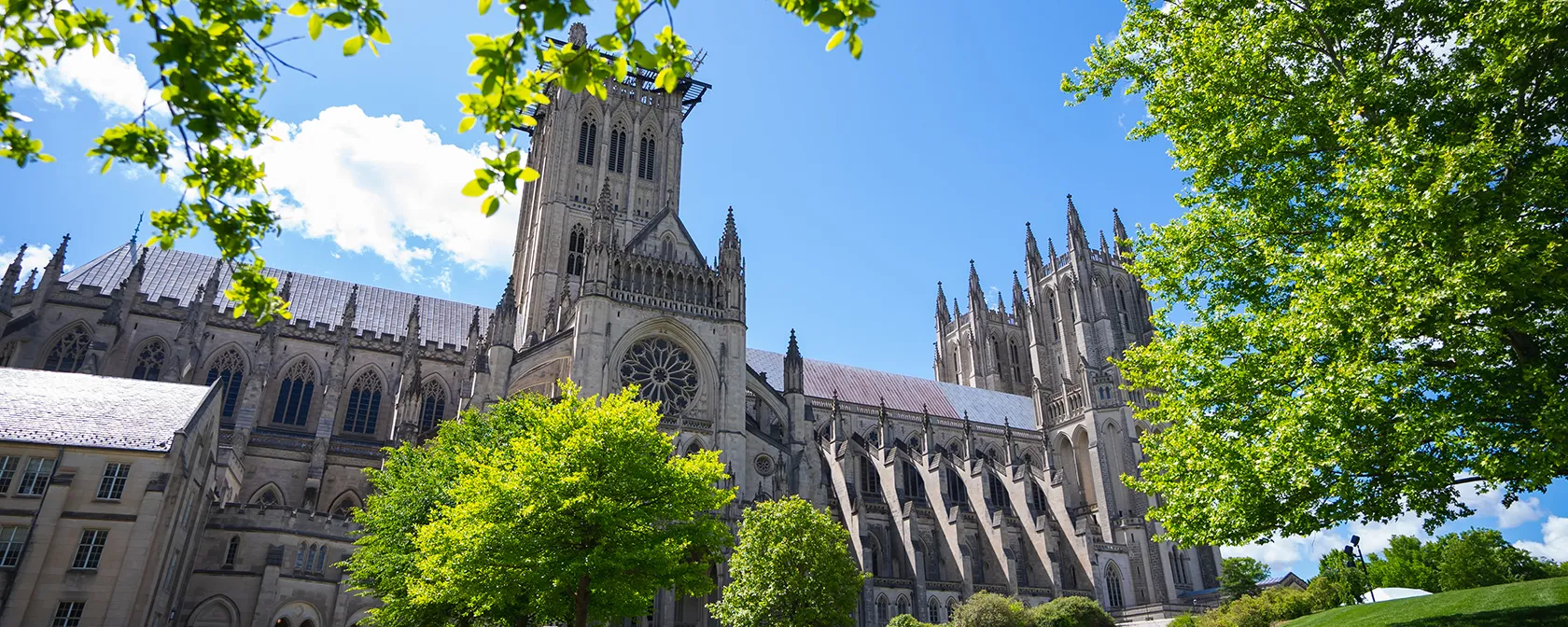
Visiting the Washington National Cathedral
Stained-glass windows, Gothic spires and flying buttresses make the Washington National Cathedral look ages old, but the grand church was actually constructed during the 20th century. Though overseen by the Episcopal Church, the house of worship welcomes people of all faiths to its impressive site on the highest point in DC. History and architecture Stonemasons and builders erected the cathedral beginning in 1907, completing it 83 years later in 1990. Carved from Indiana limestone, the structure boasts a 30-story-tall central tower, an interior nine-bay nave and 215 stained glass windows, including one embedded with a moon rock. Inside, you’ll find a crypt level where Helen Keller and President Woodrow Wilson are buried. On the nave level, you’ll discover an intricately carved wooden choir area and numerous serene chapels. On the exterior, you can search out the 112 gargoyles (decorative rain spouts) and grotesques (carved stone creatures) with the help of a map (available at the entrance) or via guided tours conducted during summer months. Be on the lookout for the grotesque of Darth Vader and the hippie gargoyle. The grounds You’ll find 59 acres of grounds designed by Frederick Law Olmsted Jr. around the National Cathedral. Enclosed by stone walls, the medieval-style Bishop’s Garden includes herb plantings, roses and a 13th-century Norman arch. Stone paths wind through Olmstead Woods, one of the only old-growth forests in DC. There’s also a cafe serving coffee, desserts, brunch and lunch located on the grounds in the 1904 Old Baptistry building. Guided tours and a self-guided tour brochure can help you explore the green spaces. Seeing the Cathedral Church services and musical performances are the only way to experience the cathedral for free. Sunday services are open to all, and Monday through Thursday at 5:30 p.m., evening concerts fill the nave with singing. Outside of spiritual visits, admission to the cathedral is required: $12 for adults, $8 for children ages 5 to 17 and free for kids 4 and under. The cathedral offers daily guided walking highlights tours with admission at 10:15 a.m. Monday through Saturday, and 1 p.m. on Sunday, although check the tour schedule for the latest updates. Numerous ticketed specialty tours, including seasonal gargoyle hunts, artisanship-themed walks and tower climbs, are available to be booked in advance. You can also sightsee with Big Bus Tours, and its hop-on, hop-off tickets let you exit the bus to explore inside the cathedral once you're there. After the National Cathedral, make a day of it exploring the Upper Northwest neighborhood.

Washington, DC Attraction & Tour Passes
Choose from Washington, DC’s best city and attraction passes and save big with discounted tickets. Find sightseeing tours, museum passes and so much more with the Washington DC Sightseeing Pass. Learn more about each sightseeing pass and choose the option that’s right for you. The Washington DC Sightseeing Pass The Sightseeing Pass DC helps visitors to the capital save money on admission fees and offers hassle-free entry into the city’s most popular attractions. Each pass includes a 24-hour Big Bus ticket and a choice of one, two or four attractions. Attractions include Madame Tussauds, the National Geographic Museum, a variety of bike tours, walking tours and cruises, a meal at Buca di Beppo and more. Passes are valid for 30 days to offer flexibility for visitors to enjoy the city at their pace. Prices from: $33 Child, $54 Adults Savings: Depends on which attractions you choose, up to 60% Get the Washington DC Sightseeing Pass Whiskey Rebellion Trail: DC's Ivy City One-Day Passport When it comes to spirit-making, the Ivy City neighborhood is DC’s distilling hub. Check out DC’s Ivy City One-Day Passport for a quartet of tastings, tours and cocktails, which you can comfortably pack into a day. For $39, you’ll get a tasting flight from Cotton and Reed, a cocktail from New Columbia Distillers, a tour and tasting at One Eight Distilling and a free cocktail from Republic Restoratives. Prices: $39 Get the Ivy City Passport Whiskey Rebellion Trail: Taste of DC Three-Day Passport The Taste of DC Three-Day Passport gives you a taste of history in addition to locally made spirits. Get access to George Washington’s Mount Vernon, where you learn about Washington’s rise from the president to one of the largest rye whiskey producers in the late 1790s. When it comes time to sampling, you’ll get access to everything in Ivy City from above, as well as a flight from Don Ciccio & Figli. Prices: $69 GET THE TASTE OF DC PASS
