All Articles
Getting to Washington, DC
As a traveler, you have a wealth of options for reaching the wonders that await in America’s capital city. We’ve broken those down below. By Air There are three major airports in the Washington, DC region: Ronald Reagan Washington National Airport (airport code: DCA), Washington Dulles International Airport (airport code: IAD) and Baltimore/Washington International Thurgood Marshall Airport (airport code: BWI). All three offer multiple U.S. and international flights daily. Both American Airlines and United Airlines service all three airports. Reagan National Airport is the closest airport to DC proper, just a 10-minute drive from city lines. The airport is accessible from its own Metro stop on the Blue and Yellow lines. To catch a taxi, look for the official taxi stand outside of baggage claim. A ride into downtown DC will cost about $15-$20. Visit the Reagan Airport transportation and parking page for more information. Dulles Airport is located 26 miles from DC in suburban Virginia. The airport has a dedicated access road that makes getting into the city efficient via car, taxi or airport shuttle. Washington Flyer taxi cabs exclusively service Dulles Airport. Taxi stands are located outside the main terminal at Door 2 and Door 6. A ride into DC will cost about $60-$68. BWI Airport is accessible via an Amtrak train route that drops off at DC’s Union Station. A reserved seat on the train will cost $15-$30. Visit the BWI Airport ground transportation page for more information. The Metropolitan Washington Airports Authority recently announced the opening of two XpresCheck™ COVID-19 testing facilities located at Dulles International Airport and Reagan National Airport. COVID-19 testing options include the Rapid Molecular COVID-19 Test, with test results available immediately, and the Polymerase Chain Reaction (PCR) Test, with results available typically in one to three days. Tests are available on a walk-in basis or by appointment at xprescheck.com. By Train Due to the coronavirus, Amtrak has launched new health and safety procedures, including a partnership with Lysol and enhanced cleaning protocols, limited capacity, assigned seating and mandatory face coverings. Learn more about how Amtrak is addressing rider safety during the coronavirus pandemic. If you’d rather travel to DC on the ground, Amtrak is the ideal solution. The Northeast Regional train runs every hour from New York City to the District, including early morning and late night departures. The train saves time and can save you money, too – when you purchase a ticket two weeks in advance of your trip, you can save up to 25% on the lowest available fares. The train departs and arrives from New York’s Penn Station and DC’s Union Station, which is centrally located, features its own Metro stop and plenty of taxis awaiting as you exit. By Bus Travelling by bus to and from DC is easy. Choose from an array of options, including Megabus.com, Battle’s Transportation and Vamoose. While in DC, you can sightsee on a bus with Big Bus Tours, which offers 24 or 48-hour hop-on, hop-off tickets, letting you explore attractions at your convenience. By Car If you’ve chosen to drive to the District with your own wheels, SpotHero and ParkWhiz are fantastic apps to use in order to find a parking spot that suits you. Many hotels also offer parking options, so check with yours when securing your reservation. Looking for more information on transportation? Check out our Getting Around in DC page.

Guide to the DC Streetcar
After a more than a 50-year hiatus, the DC Streetcar, one of the city’s first modes of public transportation made its triumphant return in 2016, transporting riders through the revitalized H Street NE corridor. What is it? The DC Streetcar makes traveling within the District much easier for residents and visitors, connecting commuters to the bustling H Street NE neighborhood up to Benning Road with a modern twist. The innovative streetcar design is a far cry from the days when the District’s streetcars were drawn by horse. Operating on fixed rails with low floors for quick and easy boarding and wheelchair accessibility, each streetcar can accommodate about 150 people, seated and standing. The average streetcar travels between 25 and 35 miles per hour. Where does it pick up and drop off? The H Street/Benning Road Line is currently the only route and runs east starting from Union Station toward Oklahoma Avenue and west starting at the Benning Road/Oklahoma Avenue stop. The streetcars run every 10-15 minutes. The Streetcar Tracker provides real-time vehicle arrivals for eastbound and westbound travel. When can I ride it? Hours of operation are Monday through Thursday from 6 a.m. to midnight, Friday from 6 a.m. to 2 a.m., Saturday from 8 a.m. to 2 a.m., and Sunday from 8 a.m. to 10 p.m. How much does it cost to ride? DC Streetcar is currently free to ride until the District Department of Transportation announces a change in fare policy. How can I ride it? Riders may board DC Streetcar at any of the eight stops on the H Street/Benning Road Line. When waiting for a streetcar, please stand clear of the platform edge. Once the doors open, let others disembark before boarding, and board carefully, noting areas reserved for disabled or elderly riders. All stops and streetcars are ADA accessible. On the streetcar, press the “stop request” button to exit. Check out the ‘How to Ride’ brochure for more riding tips. What’s next? Future lines may serve the neighborhoods of Georgetown, Anacostia, Woodley Park/Adams Morgan, Congress Heights, Buzzard Point and Rhode Island/Eastern Avenue. The DC Streetcar system adds to the neighborhood’s transportation options and it allows you to experience the lively H Street NE corridor, a locally beloved neighborhood with arcade bars, live music venues, bustling cafes and top restaurants! If you liked this piece, you may want to read some more tips to getting around DC.
Guide to Union Station in Washington, DC
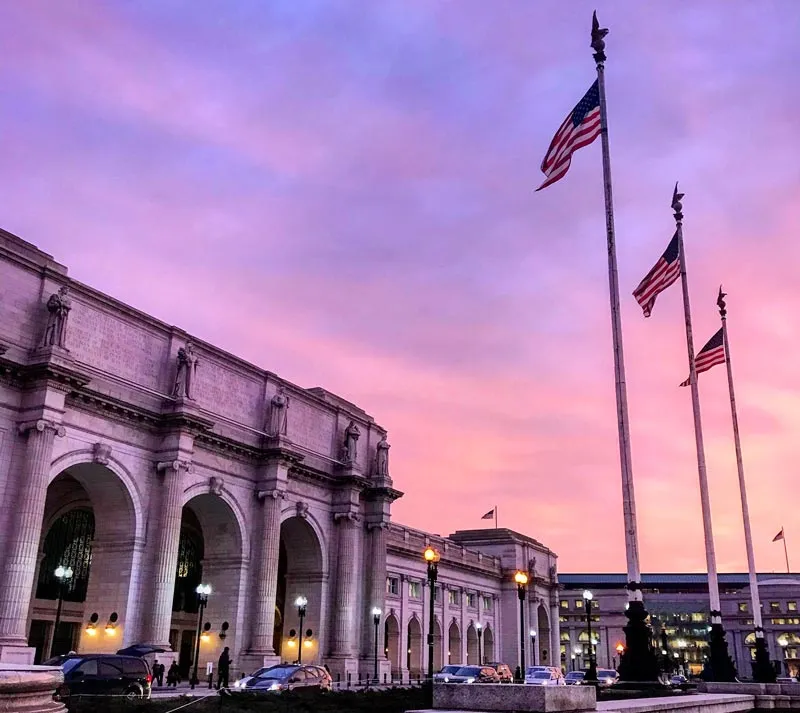
DC’s Union Station receives roughly 40 million visitors per year. Its beautiful architecture, various shops and dining options and status as one of the largest transportation hubs in the country, as well as a healthy dose of history, make the station a popular destination. We break down the DC landmark below. Transportation Options at Union Station Union Station is one of the busiest spots for transit and travel in the country. Numerous transportation modes are available, including rail options in the form of Metro, Amtrak, MARC trains and the Virginia Railway Express. There is a taxi dispatch at the Main Hall entrance that is open from 8 a.m. – 1 a.m. daily. You can also easily catch a bus or rent a car at Union Station. Parking is available at the Union Station Parking Garage at 30 Massachusetts Avenue NE. You can also book a sightseeing tour from Union Station through Old Town Trolley Tours. Shopping & Dining at Union Station The shopping options at Union Station are plentiful and address an array of needs and interests. The roster includes Walgreens, Warby Parker, Lee's Flower Shop, Andrew's Ties and many, many more. There's a restaurant for every taste inside Union Station. Quick options like Raising Cane's, Cava, Chipotle, Potbelly, Shake Shack and Taco Bell are on-site. You can enjoy a delicious cup of coffee from Blue Bottle Coffee or a flavorful smoothie from Jamba Juice. For bakery specialties, head to Cinnabon or grab a Chicago-style pizza at UNO Pizzeria & Grill. History The construction of Union Station was fully completed in April 1908, launching one of DC’s largest transportation hubs in the process. Architect Daniel Burnham designed the Beaux Arts building, which featured a jaw-dropping Main Hall (also known as the “General Waiting Room”) that dazzled patrons. By the early 1940s, roughly 200,000 passengers would pass through the station on any given day, as the railways were the most popular avenue for long-distance travel at the time. The station faced difficulties after the Second World War as plane travel became more popular. The facility was turned into a new National Visitor Center in 1976, but for only a short time due to poor funding and organization. By 1981, the building was in total disarray, leading to the structure being closed to the public and prompting Congress to pass the Union Station Redevelopment Act. Union Station reopened in 1988 with restored elements and three new levels of retail space. Its next difficulty arose from an earthquake that shook DC in August of 2011. By the fall of 2016, the entire Main Hall of the station had been restored, matching the Beaux Arts splendor showcased by Burnham in the early 1900s. These days, Union Station is again a crown jewel for DC, serving as one of the country’s busiest rail facilities as well as a prime destination for shopping and dining. If you’re looking for more information on DC’s transportation hubs, find out what you need to know about getting around Washington, DC.

Guide to Washington, DC-Area Airports
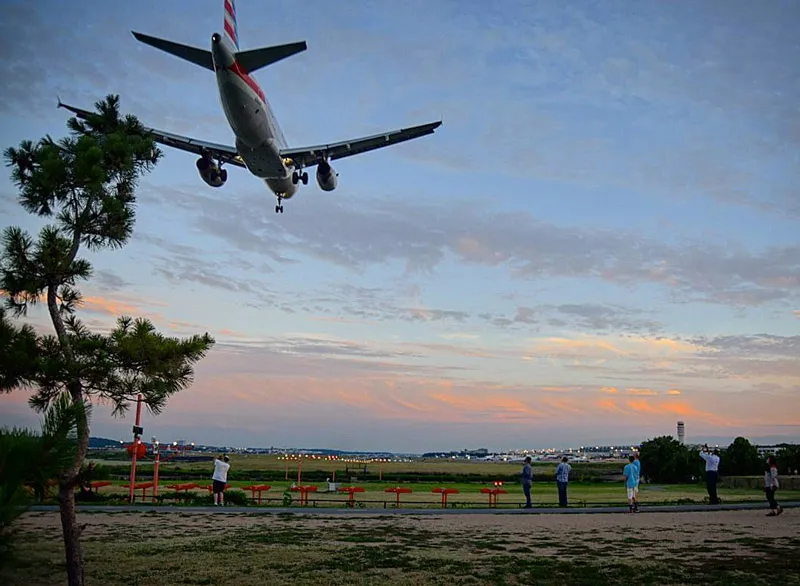
There are three major airports in the Washington, DC region: Ronald Reagan Washington National Airport (airport code: DCA), Washington Dulles International Airport (airport code: IAD) and Baltimore/Washington International Thurgood Marshall Airport (airport code: BWI). Both American Airlines and United Airlines service all three airports. If you're looking for general information about how to get to all three DC-area airports, discover the best transportation options for your trip. You can also book a greeter through Air General Traveler Services, which can provide interline transfer connections, baggage and porter services, arrangements for airline lounge access, arrangements for hotel business centers and airport shopping assistance. For those with accessibility needs, call TSA Cares at 1-855-787-2227 at least 72 hours prior to traveling with any questions about screening policies, procedures and what to expect at the security checkpoint. Which airport are you looking to learn more about? Ronald Reagan Washington National Airport (airport code: DCA) Washington Dulles International Airport (airport code: IAD) Baltimore/Washington International Thurgood Marshall Airport (airport code: BWI) Ronald Reagan Washington National Airport Ronald Reagan Washington National Airport is located just across the Potomac River in Virginia and is the closest airport to DC. (It’s also the airport you’re most likely to spot senators and representatives heading home to their districts.) Reagan Airport offers nonstop flights to 95-plus destinations on eight airlines. How to Get To/From Reagan Airport Reagan Airport is accessible via its own Metro stop on the Blue and Yellow lines. To catch a taxi, look for the official taxi stand outside of baggage claim (a ride into downtown DC will cost about $15-20). Rideshare apps like Uber and Lyft are also good options to get to and from the airport. Driving is also a possibility, as the airport has multiple garages and parking lots. For more information, check out the Reagan Airport transportation and parking page. Reagan Airport Map & Flight Information You can find everything you need at Reagan Airport with the terminal map. And with so many flights each day, use the airport’s flight guide to find the best options to and from DC. Where to Eat & Shop at Reagan Airport Arrive early or have a layover? Rest assured, there are plenty of dining and shopping options at Reagan Airport. Local favorites include Good Stuff Eatery’s burgers (from former Top Chef contestant Spike Mendelsohn), CAVA for fast-casual Mediterranean bowls bursting with flavor and the legendary Ben's Chili Bowl. Accessibility The Metropolitan Washington Airports Authority is fully committed to providing universal access to all public facilities and services at Ronald Reagan Washington National Airport for all of its patrons. For detailed information regarding ground transportation, the Sunflower lanyard program, pet relief areas, wheelchair rentals, public restroom access, security checkpoint access and additional amenities, visit the airport's website. Washington Dulles International Airport Washington Dulles International Airport is located 26 miles from DC in suburban Virginia. Dulles Airport is also the primary international airport for the DC region, with almost 140 nonstop domestic and international destinations on nearly 40 airlines. How to Get To/From Dulles Airport Dulles Airport is connected to DC on Metro's Silver line. It also has a dedicated access road that makes getting to or from the airport efficient via car, taxi or airport shuttle. Washington Flyer taxi cabs exclusively service Dulles Airport and taxi stands are located outside the main terminal – a taxi or rideshare into DC will cost about $60-$70. For more information on parking and car rentals, visit the Dulles Airport transportation and parking page. Dulles Airport Map & Flight Information Dulles Airport is a busy international airport with a number of terminals and gates. Make sure you view the airport and terminal map for the most up-to-date information. The Dulles Airport flight guide will also help with upcoming scheduled flights, as well as arrival and departure information. Where to Eat & Shop at Dulles Airport With everything from duty-free souvenirs to high-end designers and even a spa, you can satisfy all your dining and shopping needs at Dulles Airport. Look for an outpost of local fave Chef Geoff’s or stop by &pizza for build-your-own personal pies. Accessibility The Metropolitan Washington Airports Authority is fully committed to providing universal access to all public facilities and services at Washington Dulles International Airport for all of its patrons. For detailed information regarding ground transportation, the Sunflower lanyard program, public parking, pet relief areas, wheelchair rentals, public restroom access, security checkpoint access and additional amenities, visit the airport's website. Baltimore/Washington International Thurgood Marshall Airport Baltimore/Washington International Thurgood Marshall Airport (referred to as BWI Airport) is a bit further from DC near Baltimore, Md., but oftentimes that means you can find even better flight deals. The airport has grown to 90-plus domestic and international destinations and services more than 25 million passengers each year. How to Get To/From Baltimore/Washington International Airport BWI Airport is located 32 miles from DC and is accessible via an MARC/Amtrak train route that picks up and drops off at Union Station. Taxis, Uber and Lyft are also available at the airport. Make sure to visit the BWI Airport transportation page for information about parking, car rentals and more. Baltimore/Washington Airport Map & Flight Information This BWI Airport interactive map will help you find your way around the terminals, while the airport’s flight guide is a great resource for finding scheduled flights, as well as arrival and departure information. Where to Eat & Shop at Baltimore/Washington Airport BWI Airport has great places to eat and shop for travelers, as well as a fitness center if you’re looking to get in a quick workout before your flight. Accessibility For detailed information regarding wheelchair service, TSA passenger support specialists, lift-equipped buses, animal relief areas, public restroom access and services for the visually impaired and hard-of-hearing, visit the BWI's website. Now that you know all about the airports near Washington, DC, learn more about getting to the District. And make sure to learn more about TSA Precheck and get to your gate quicker.
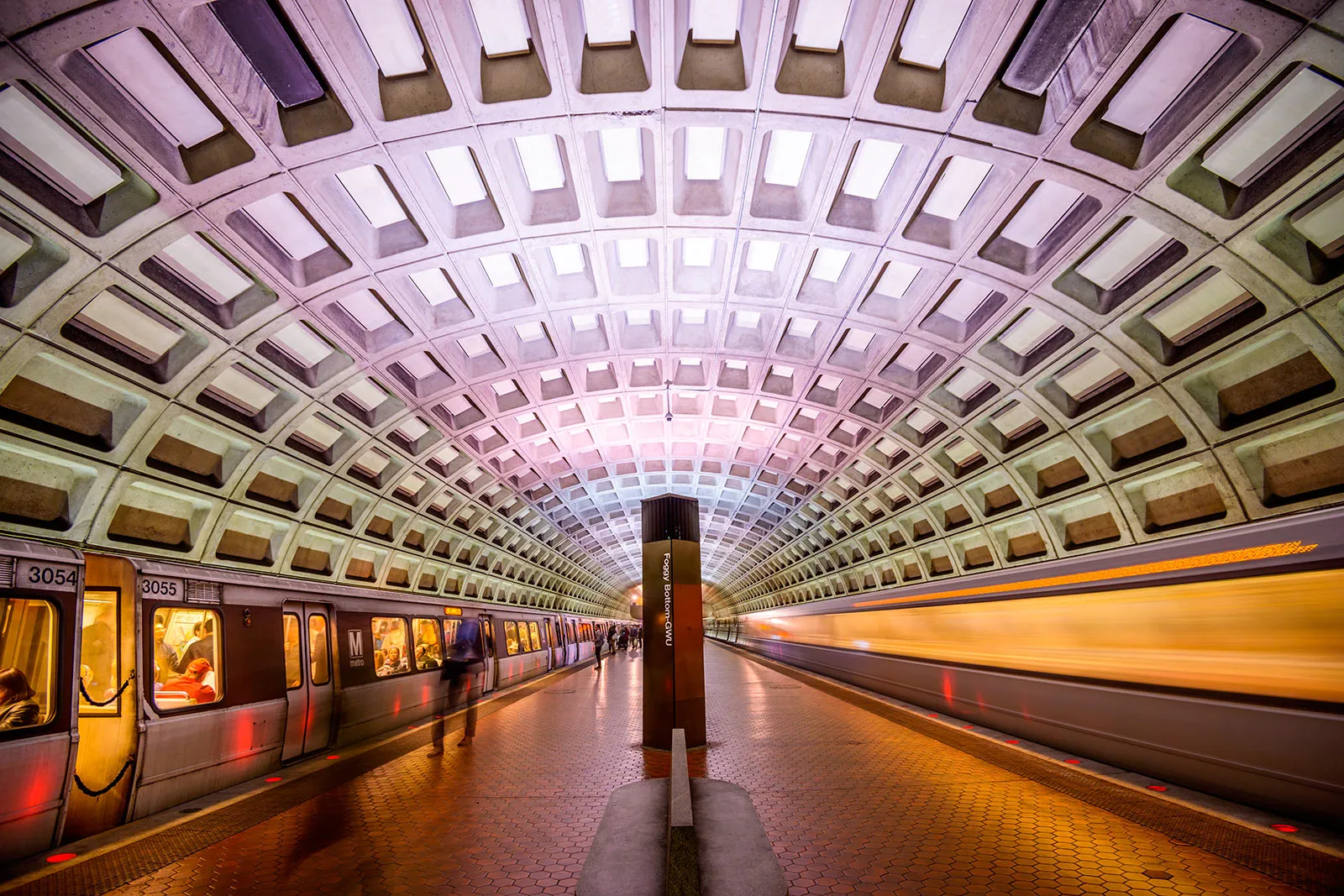
How Do I Get Around Washington, DC?
Metrorail & Metrobus Washington, DC has one of the safest, cleanest and most efficient transportation systems in the world. Metrorail and Metrobus are the most convenient ways to get around DC, with Metrobus providing connections for locations not serviced by Metrorail. The Walter E. Washington Convention Center even has a dedicated Metro station serviced by the Yellow and Green lines, and many hotels are conveniently located near Metro stations or bus routes. Metro operates from 5 a.m. to midnight on weekdays and from 7 a.m. to midnight on weekends. Metrobus runs hundreds of routes throughout the city and the greater Washington, DC area, with more than 1,400 buses using compressed natural gas or a hybrid electric drive system helping to keep DC eco-friendly. Riders can pay by purchasing a SmarTrip card, which allows users to load a designated amount on the card for repeated swiping. The cards can also be used as payment for Metrobus rides. Taxis, rental cars & parking Taxi service is plentiful and economical in DC. In fact, DC has one of the highest taxi-to-citizen ratios in the country, with more than 6,000 taxis servicing the city. Taxis use a metered system just like every other city in the country. All taxis also accept credit and debit cards as payment, as well as cash. You can also download the DC Taxi Rider app for your iPhone or Android, which allows you to choose from a regular, large, or wheelchair-accessible taxi, see a fare and time estimate before you hail the cab, and pay either through the app or in the vehicle. Of course, some visitors choose to drive their own vehicles. If you're driving in and around DC, ParkWhiz is a convenient way to compare prices at garages and lots around town so you can reserve your parking space before arriving. Uber is another great option for getting where you need to go all over DC. Simply sign up and download the app to your phone, and you can begin requesting a ride with the tap of a button. No cash is required, and tip is handled in the ride fare. Numerous car options are available, and you can even share a ride. Rental cars are yet another option. All the major rental companies have locations throughout DC, including Enterprise, and most have offices at the airports. Many DC-area hotels have parking facilities located within their structure. In addition to ParkWhiz, visitors can find convenient street or garage parking with SpotHero. DC Circulator The DC Circulator gets rave reviews from residents and visitors alike. The bus is free for all riders and travels along six specific routes designed for easy-on, easy-off access at points of interest throughout the District. Explore neighborhoods such as Adams Morgan, Dupont Circle, Georgetown, Woodley Park, U Street and Capitol Hill with the Circulator. The bus even offers a dedicated National Mall route for super easy access to DC’s majestic lineup of monuments and memorials. Schedules for every route are available, and buses run every 10 minutes. Walking & Biking Around DC One of the best ways to experience Washington, DC is on foot. The city’s wide sidewalks meander past the inspiring monuments and museums found on the National Mall, as well as the intimate museums, world-class theaters and splendid gardens in the city’s collection of neighborhoods. Those who prefer to explore on two wheels, Unlimited Biking offers rentals from two locations in DC, and has a wide variety of bikes to choose from, including kids' bikes and attachments. With each rental, helmets, locks and a map are included, and the friendly staff will help you plan your route to explore the city. Additionally, Capital Bikeshare has over 350 stations across DC, Virginia and Maryland. Its fleet includes more than 3,000 bicycles, and the system is easy: simply join (options range from a Day Key to a year-long membership) and access bicycles 24 hours a day. The first 30 minutes of each trip is free, with each additional half hour incurring a fee. Check out more suggestions on transportation in and around Washington, DC.