
All Articles
Meet Me at 9:30: A History of DC's 9:30 Club
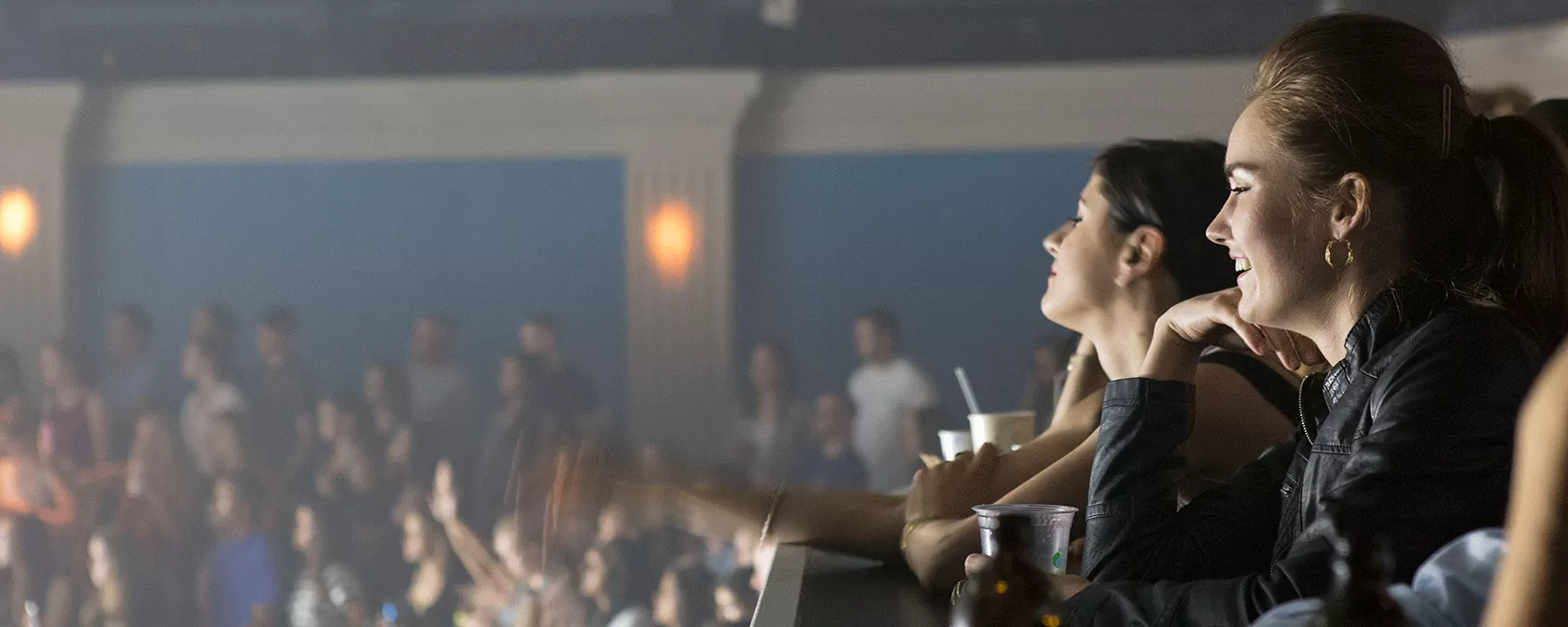
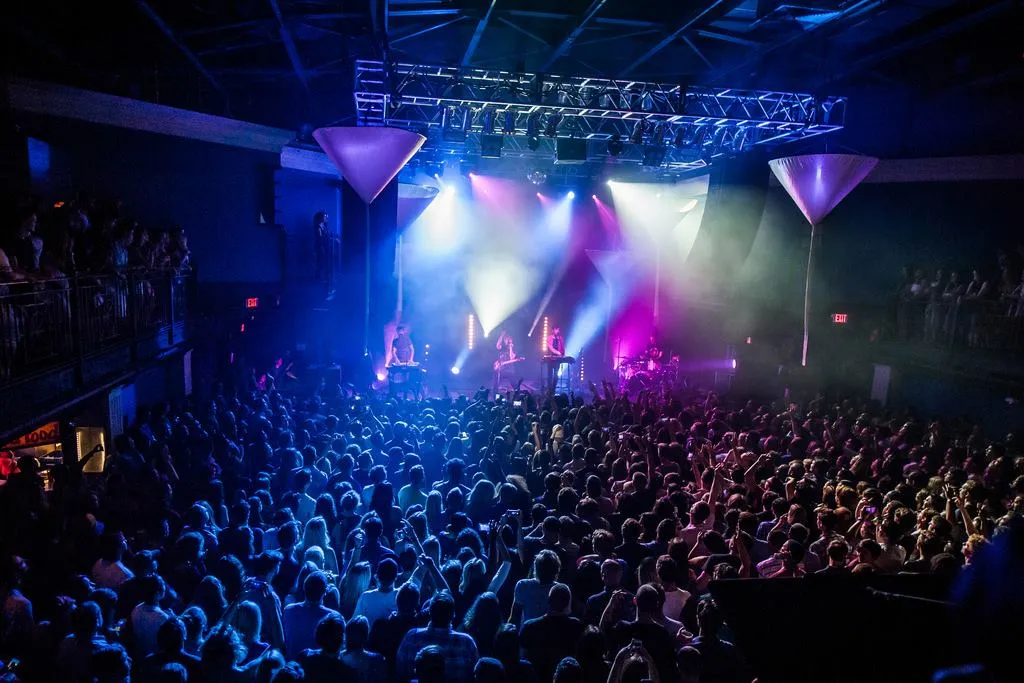
The 9:30 Club is a beacon for live music in the nation’s capital, a place where both renowned and up-and-coming artists from nearly every musical genre come to play. The venue is legendary in DC – the original club opened at 930 F Street NW in 1980 and moved to its current digs at 815 V Street NW in 1996, which was once the WUST Radio Music Hall and, prior to that, the site of a music club owned by local jazz legend Duke Ellington. In 2016, PBS launched Live at 9:30, a documentary series showcasing performances from a range of artists with interviews from band members and other special guests (you can stream the show anytime). To mark the occasion, we’ve gone back in time to examine the foundations of this DC institution, and relive its evolution into becoming the city’s most revered music venue. The Start of Something The 9:30 Club was founded by Dody DiSanto and Jon Bowers, and hosted its first show on May 31, 1980, featuring Massachusetts jazz-punk band the Lounge Lizards and local new wave group Tiny Desk Unit. Fun fact #1: NPR’s Tiny Desk Concerts creator, Bob Boilen, named the radio program after the Tiny Desk Unit, for which he played synthesizer. The club was situated inside the Atlantic Building, which had been built in 1888, and certainly not for the purpose of hosting some of the most vibrant and influential rock music acts of all-time. The old 9:30 Club is remembered for its intense and cathartic shows, with the venue packed to the gills with sweaty teens and music lovers. Thanks to DiSanto, you could also catch offbeat theme parties and performance art inside, establishing a gathering place for DC creatives, well outside the realm of politics. 9:30’s decor– which featured video monitors throughout the club, unheard of at the time – would also change frequently, with cutting-edge visuals created by Mark Holmes, who also bartended, served as disc jockey and created the posters for the venue. Holmes tragically passed away in 1990, and the current club features an exhibit dedicated to Holmes and his work in the downstairs area. The club became a hub for local and national bands that simply had nowhere else to play; the punk rock movement alienated owners of larger clubs all over the East Coast, but 9:30 was happy to welcome just about any group through its doors. DC’s hardcore music scene came into its own at the venue, with bands like Teen Idles, Minor Threat and Bad Brains performing to energetic crowds. The club also hosted all-ages and matinee events, so that younger, “straight-edge” fans could take in their favorite local bands. Of course, hometown sounds went beyond the punk set, as go-go music became a sensation in the city in the ‘80s as well. While various strains of punk music regularly echoed from the 9:30 stage, it also bellowed the locally grown sounds of go-go, with groups like Trouble Funk filling the venue. Fun fact #2: The original 9:30 Club was situated right next to Ford’s Theatre and had a back door where bands loaded in and out that led to the same alley John Wilkes Booth used for his escape after assassinating President Lincoln. This communal atmosphere not only catapulted 9:30 Club to the forefront of the city’s music scene, but also elevated DC’s cultural stature all over the country. As the ‘80s stretched on, you could catch an emerging indie band at the 9:30 Club nearly every night; some went on to superstardom. A few of the bands that took to the original club’s stage before they really hit it big: R.E.M., Nirvana (who, in 1991, wrote their 14-song set list on a paper plate before the show), Red Hot Chili Peppers, Smashing Pumpkins and Jane’s Addiction. The Big Move Seth Hurwitz and Rich Heinecke began booking shows for the 9:30 Club in 1981, and bought the establishment in 1986. The club’s notoriety only grew, and eventually, the cozy and condensed confines of 930 F Street NW could no longer hold the spectacle inside. As new venues like The Black Cat started opening, Hurwitz and Heinecke felt it was time to re-invent the club. On Jan. 5, 1996, the new 9:30 Club opened with a raucous show that fittingly featured the Smashing Pumpkins, who were in the midst of massive MTV stardom at the time. The legal capacity of the original venue was 199; the current iteration of 9:30 holds up to 1,200 people. Since then, the club has continued to welcome emerging artists from all over the world, as well as established acts. Fun fact #3: Bob Dylan, Radiohead, the Red Hot Chili Peppers and the Foo Fighters are some of the big names that have performed surprise shows at the second incarnation of the 9:30 Club. The original 9:30 Club helped revolutionize the DC music scene, establishing a new touchstone in the city’s storied musical history, which dates all the way back to the era of “Black Broadway.” With the establishment of the current 9:30 Club on V Street, the venue again ushered in a new era, leading to the surrounding area’s wealth of culture and art that has the U Street and Shaw neighborhoods thriving today. Time to Rock Now that you know about 9:30 Club’s history, check out Live at 9:30 to dig even deeper into this DC gem and the outstanding performances that it holds. And, for darn sake, go to a concert, because no article or video can fully replicate the experience of seeing a show at one of America’s greatest venues.
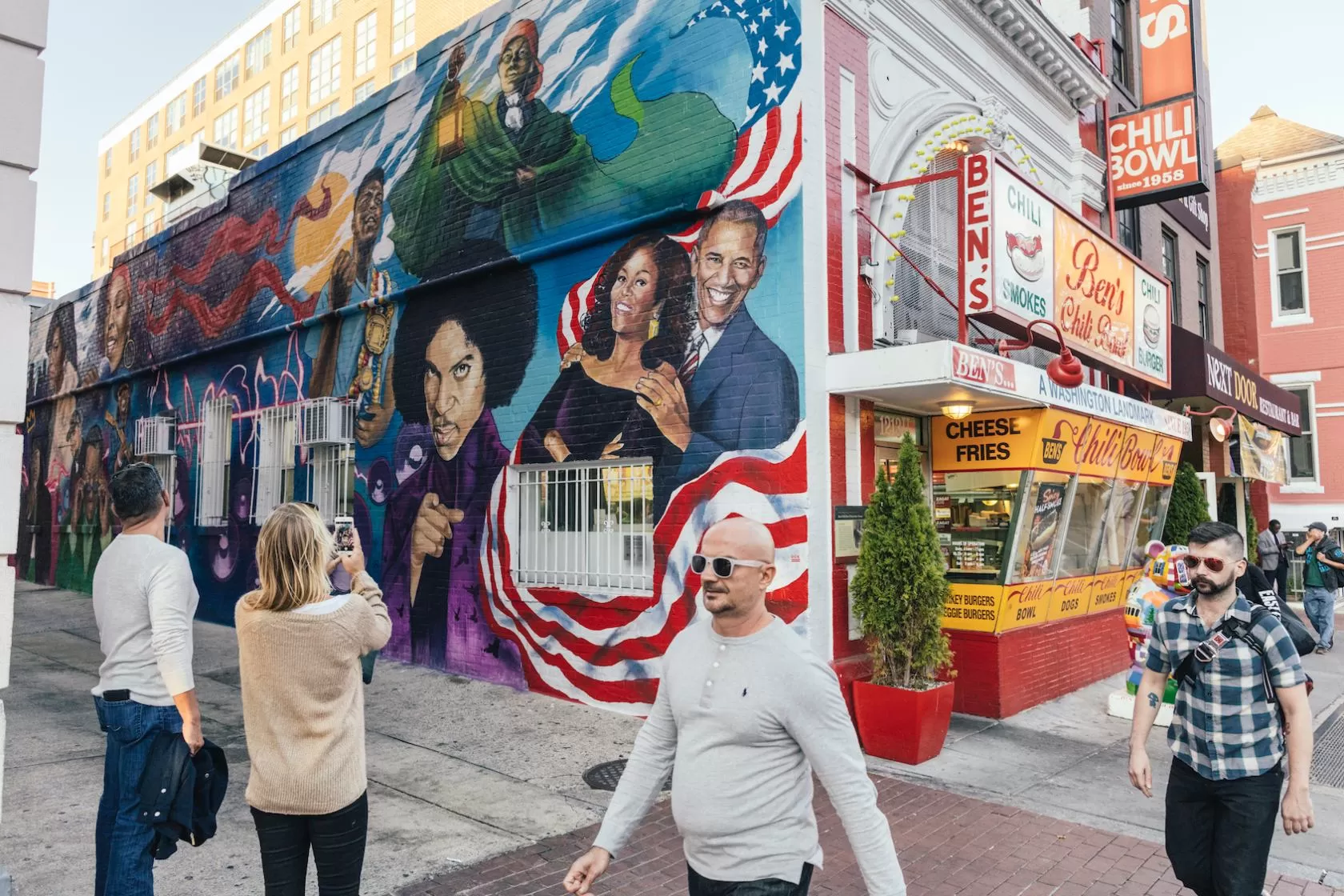
Q&A with Mrs. Virginia Ali, Matriarch of Ben’s Chili Bowl
What keeps a restaurant open for more than 65 years? What is it that draws national attention to a neighborhood eatery? What magnetic force can possibly be behind the amount of love and dedication that this city (this coast, this country) feels for Ben’s Chili Bowl and its half-smokes? Certainly one factor is its location on U Street – once known as DC’s Black Broadway – and the symbol of community Ben’s became as the city prevailed through segregation, the societal upheaval of the 1960s and ensuing decades of drastic change in the neighborhood. But the leading reason Ben’s has grown to be an institution in the nation’s capital is its people. The restaurant’s dedicated staff is led with heart by Virginia Ali, the widow of Ben, with whom she cofounded the restaurant when she was just 24 years old. Virginia is approaching 90 years old, yet she remains a walking lesson in warmth and hospitality. She wants every customer to feel at home and thanks to her smile and a pat on the back, everyone does. It’s clear that she’d give you whatever you needed to feel comfortable and cared for. You can begin to see why Martin Luther King, Jr., for one, chose to spend many of his DC lunchtimes at Ben’s, and why the restaurant stayed open and served meals during the riots on U Street after the civil rights leader was assassinated. In the week leading up to the March on Washington’s 60th anniversary, we had the chance to talk to Virginia about MLK and other Ben’s lore: Ben’s arrived on the scene, in a segregated country, five years before the March on Washington. What did DC feel like to you during those five years? VA: In 1958, I left Industrial Bank (where I’d worked since 1952) to open the restaurant. We were going through the civil rights movement down south. Washington had begun to open up a few places to be integrated. And it was after the March that we passed the Civil Rights Bill. The March was on August 28, 1963. And the Uprising [the assassination of Dr. King] took place five years later. Has Ben’s been integrated since it opened? VA: Of course! We were never the prejudiced people. White people could go wherever they wanted. If they’d gone to the Howard Theatre to see one of our big entertainers, there’d be a whole bunch of white people [in the restaurant after]. To put it in perspective, behind me, if you walk to the end of this alley, around that circle where those beautiful townhouses are, it was Children’s Hospital. Children’s Hospital! Which had all kinds of doctors and lawyers and everybody running down here for lunch. You know what I mean? Thompson’s Dairy was one of the big businesses in the community that delivered milk to my house every day. … Smith’s Storage right up the street; C & P [Chesapeake and Potomac] Telephone Company was in the area … so there were large businesses here. That brought everyone together? VA: Yeah. We all lived together. Do you remember any specifics from interactions with MLK? VA: Well, I do remember one: one day we were talking and he said he’d had a meeting with President Kennedy. And with Bayard Rustin, A. Philip Randolph and young John Lewis, and I don’t remember who else. And he had told President Kennedy, in order to bring attention to these injustices to Black people, he was going to bring a large group of protestors here. And he told me President Kennedy said to him, “I don’t think that’s a good idea. Because if you bring a large group of people here, and there’s an incident, it will set your movement back, Dr. King.” Dr. King said, “There will be. No. Incident.” Wow. VA: He brought 250,000 people. A sea of people. Did you attend the March? VA: Ben and I were there. A sea of people. And not a single incident. Just a very inspiring, beautiful day. And the very next year, guess what happened? They passed the Civil Rights Bill. The very next year. Do you have ideas about making more progress in America? VA: You know, the way I’ve operated my business certainly came from the teachings of my dad, my mom, from my home growing up. The way we lived. And that philosophy was: always, always, treat people the way you want to be treated. All people. Whether it’s the president, the judge, the guy on the corner, whatever it is – just treat all people the way you would like to be treated. And if you do that, you don’t have a problem. It’s that simple. It’s not rocket science at all. And it doesn’t take anything to do it but kindness. Ben’s is celebrating its 65th anniversary. It’s amazing to see such a happy story has lasted for so long. Do you ever think about what you would have done if there had never been Ben’s Chili Bowl? VA: No. And I do know that I love what I do. And when people came to me and said, “Are you going to stay here? Why didn’t you open someplace else?” I said, “This is the nation’s capital! It’s got to get better, right?” It’s got to get better. We are the nation’s capital. Check out Ben's Chili Bowl next time you're in DC. And if you want a taste of Ben's at home, order nationwide today.
QA Test Automated cron Article sync 1
As you return to traveling this year, Washington, DC should be at the very top of your list. The nation’s capital offers more than 100 free things to do, but it should come as no surprise that museums are some of the most popular attractions. We’ve gone into deep detail on four of the city’s most popular museums (including one dedicated to living animals), none of which charge admission. Find the latest updates on visiting museums, including Smithsonian's plans to have all of its museums open by the end of August 2021, mask mandates for all indoor museums and the latest ticketing requirements. Book your next vacation to the nation’s capital and visit these only-in-the-District museums, free of charge. In the heart of the nation’s capital lives a portal to wildlife from around the world. Smithsonian’s National Zoo offers a firsthand, family-friendly experience through a 163-acre urban park in the Woodley Park neighborhood teeming with roughly 2,700 animals that represent more than 390 species. The zoo is also connected to the Smithsonian Conservation Biology Institute (a non-public facility located in Front Royal, Va.), a global effort to conserve species and train future conservationists. This focus on preserving endangered animals extends to the zoo, as one-fifth of its exhibited species fall into this category. In the heart of the nation’s capital lives a portal to wildlife from around the world. Smithsonian’s National Zoo offers a firsthand, family-friendly experience through a 163-acre urban park in the Woodley Park neighborhood teeming with roughly 2,700 animals that represent more than 390 species. The zoo is also connected to the Smithsonian Conservation Biology Institute (a non-public facility located in Front Royal, Va.), a global effort to conserve species and train future conservationists. This focus on preserving endangered animals extends to the zoo, as one-fifth of its exhibited species fall into this category. In the heart of the nation’s capital lives a portal to wildlife from around the world. Smithsonian’s National Zoo offers a firsthand, family-friendly experience through a 163-acre urban park in the Woodley Park neighborhood teeming with roughly 2,700 animals that represent more than 390 species. The zoo is also connected to the Smithsonian Conservation Biology Institute (a non-public facility located in Front Royal, Va.), a global effort to conserve species and train future conservationists. This focus on preserving endangered animals extends to the zoo, as one-fifth of its exhibited species fall into this category. In the heart of the nation’s capital lives a portal to wildlife from around the world. Smithsonian’s National Zoo offers a firsthand, family-friendly experience through a 163-acre urban park in the Woodley Park neighborhood teeming with roughly 2,700 animals that represent more than 390 species. The zoo is also connected to the Smithsonian Conservation Biology Institute (a non-public facility located in Front Royal, Va.), a global effort to conserve species and train future conservationists. This focus on preserving endangered animals extends to the zoo, as one-fifth of its exhibited species fall into this category. In the heart of the nation’s capital lives a portal to wildlife from around the world. Smithsonian’s National Zoo offers a firsthand, family-friendly experience through a 163-acre urban park in the Woodley Park neighborhood teeming with roughly 2,700 animals that represent more than 390 species. The zoo is also connected to the Smithsonian Conservation Biology Institute (a non-public facility located in Front Royal, Va.), a global effort to conserve species and train future conservationists. This focus on preserving endangered animals extends to the zoo, as one-fifth of its exhibited species fall into this category. In the heart of the nation’s capital lives a portal to wildlife from around the world. Smithsonian’s National Zoo offers a firsthand, family-friendly experience through a 163-acre urban park in the Woodley Park neighborhood teeming with roughly 2,700 animals that represent more than 390 species. The zoo is also connected to the Smithsonian Conservation Biology Institute (a non-public facility located in Front Royal, Va.), a global effort to conserve species and train future conservationists. This focus on preserving endangered animals extends to the zoo, as one-fifth of its exhibited species fall into this category. In the heart of the nation’s capital lives a portal to wildlife from around the world. Smithsonian’s National Zoo offers a firsthand, family-friendly experience through a 163-acre urban park in the Woodley Park neighborhood teeming with roughly 2,700 animals that represent more than 390 species. The zoo is also connected to the Smithsonian Conservation Biology Institute (a non-public facility located in Front Royal, Va.), a global effort to conserve species and train future conservationists. This focus on preserving endangered animals extends to the zoo, as one-fifth of its exhibited species fall into this category. In the heart of the nation’s capital lives a portal to wildlife from around the world. Smithsonian’s National Zoo offers a firsthand, family-friendly experience through a 163-acre urban park in the Woodley Park neighborhood teeming with roughly 2,700 animals that represent more than 390 species. The zoo is also connected to the Smithsonian Conservation Biology Institute (a non-public facility located in Front Royal, Va.), a global effort to conserve species and train future conservationists. This focus on preserving endangered animals extends to the zoo, as one-fifth of its exhibited species fall into this category. In the heart of the nation’s capital lives a portal to wildlife from around the world. Smithsonian’s National Zoo offers a firsthand, family-friendly experience through a 163-acre urban park in the Woodley Park neighborhood teeming with roughly 2,700 animals that represent more than 390 species. The zoo is also connected to the Smithsonian Conservation Biology Institute (a non-public facility located in Front Royal, Va.), a global effort to conserve species and train future conservationists. This focus on preserving endangered animals extends to the zoo, as one-fifth of its exhibited species fall into this category. In the heart of the nation’s capital lives a portal to wildlife from around the world. Smithsonian’s National Zoo offers a firsthand, family-friendly experience through a 163-acre urban park in the Woodley Park neighborhood teeming with roughly 2,700 animals that represent more than 390 species. The zoo is also connected to the Smithsonian Conservation Biology Institute (a non-public facility located in Front Royal, Va.), a global effort to conserve species and train future conservationists. This focus on preserving endangered animals extends to the zoo, as one-fifth of its exhibited species fall into this category. In the heart of the nation’s capital lives a portal to wildlife from around the world. Smithsonian’s National Zoo offers a firsthand, family-friendly experience through a 163-acre urban park in the Woodley Park neighborhood teeming with roughly 2,700 animals that represent more than 390 species. The zoo is also connected to the Smithsonian Conservation Biology Institute (a non-public facility located in Front Royal, Va.), a global effort to conserve species and train future conservationists. This focus on preserving endangered animals extends to the zoo, as one-fifth of its exhibited species fall into this category. In the heart of the nation’s capital lives a portal to wildlife from around the world. Smithsonian’s National Zoo offers a firsthand, family-friendly experience through a 163-acre urban park in the Woodley Park neighborhood teeming with roughly 2,700 animals that represent more than 390 species. The zoo is also connected to the Smithsonian Conservation Biology Institute (a non-public facility located in Front Royal, Va.), a global effort to conserve species and train future conservationists. This focus on preserving endangered animals extends to the zoo, as one-fifth of its exhibited species fall into this category. In the heart of the nation’s capital lives a portal to wildlife from around the world. Smithsonian’s National Zoo offers a firsthand, family-friendly experience through a 163-acre urban park in the Woodley Park neighborhood teeming with roughly 2,700 animals that represent more than 390 species. The zoo is also connected to the Smithsonian Conservation Biology Institute (a non-public facility located in Front Royal, Va.), a global effort to conserve species and train future conservationists. This focus on preserving endangered animals extends to the zoo, as one-fifth of its exhibited species fall into this category. In the heart of the nation’s capital lives a portal to wildlife from around the world. Smithsonian’s National Zoo offers a firsthand, family-friendly experience through a 163-acre urban park in the Woodley Park neighborhood teeming with roughly 2,700 animals that represent more than 390 species. The zoo is also connected to the Smithsonian Conservation Biology Institute (a non-public facility located in Front Royal, Va.), a global effort to conserve species and train future conservationists. This focus on preserving endangered animals extends to the zoo, as one-fifth of its exhibited species fall into this category. In the heart of the nation’s capital lives a portal to wildlife from around the world. Smithsonian’s National Zoo offers a firsthand, family-friendly experience through a 163-acre urban park in the Woodley Park neighborhood teeming with roughly 2,700 animals that represent more than 390 species. The zoo is also connected to the Smithsonian Conservation Biology Institute (a non-public facility located in Front Royal, Va.), a global effort to conserve species and train future conservationists. This focus on preserving endangered animals extends to the zoo, as one-fifth of its exhibited species fall into this category. In the heart of the nation’s capital lives a portal to wildlife from around the world. Smithsonian’s National Zoo offers a firsthand, family-friendly experience through a 163-acre urban park in the Woodley Park neighborhood teeming with roughly 2,700 animals that represent more than 390 species. The zoo is also connected to the Smithsonian Conservation Biology Institute (a non-public facility located in Front Royal, Va.), a global effort to conserve species and train future conservationists. This focus on preserving endangered animals extends to the zoo, as one-fifth of its exhibited species fall into this category. In the heart of the nation’s capital lives a portal to wildlife from around the world. Smithsonian’s National Zoo offers a firsthand, family-friendly experience through a 163-acre urban park in the Woodley Park neighborhood teeming with roughly 2,700 animals that represent more than 390 species. The zoo is also connected to the Smithsonian Conservation Biology Institute (a non-public facility located in Front Royal, Va.), a global effort to conserve species and train future conservationists. This focus on preserving endangered animals extends to the zoo, as one-fifth of its exhibited species fall into this category. In the heart of the nation’s capital lives a portal to wildlife from around the world. Smithsonian’s National Zoo offers a firsthand, family-friendly experience through a 163-acre urban park in the Woodley Park neighborhood teeming with roughly 2,700 animals that represent more than 390 species. The zoo is also connected to the Smithsonian Conservation Biology Institute (a non-public facility located in Front Royal, Va.), a global effort to conserve species and train future conservationists. This focus on preserving endangered animals extends to the zoo, as one-fifth of its exhibited species fall into this category. In the heart of the nation’s capital lives a portal to wildlife from around the world. Smithsonian’s National Zoo offers a firsthand, family-friendly experience through a 163-acre urban park in the Woodley Park neighborhood teeming with roughly 2,700 animals that represent more than 390 species. The zoo is also connected to the Smithsonian Conservation Biology Institute (a non-public facility located in Front Royal, Va.), a global effort to conserve species and train future conservationists. This focus on preserving endangered animals extends to the zoo, as one-fifth of its exhibited species fall into this category. In the heart of the nation’s capital lives a portal to wildlife from around the world. Smithsonian’s National Zoo offers a firsthand, family-friendly experience through a 163-acre urban park in the Woodley Park neighborhood teeming with roughly 2,700 animals that represent more than 390 species. The zoo is also connected to the Smithsonian Conservation Biology Institute (a non-public facility located in Front Royal, Va.), a global effort to conserve species and train future conservationists. This focus on preserving endangered animals extends to the zoo, as one-fifth of its exhibited species fall into this category. In the heart of the nation’s capital lives a portal to wildlife from around the world. Smithsonian’s National Zoo offers a firsthand, family-friendly experience through a 163-acre urban park in the Woodley Park neighborhood teeming with roughly 2,700 animals that represent more than 390 species. The zoo is also connected to the Smithsonian Conservation Biology Institute (a non-public facility located in Front Royal, Va.), a global effort to conserve species and train future conservationists. This focus on preserving endangered animals extends to the zoo, as one-fifth of its exhibited species fall into this category. In the heart of the nation’s capital lives a portal to wildlife from around the world. Smithsonian’s National Zoo offers a firsthand, family-friendly experience through a 163-acre urban park in the Woodley Park neighborhood teeming with roughly 2,700 animals that represent more than 390 species. The zoo is also connected to the Smithsonian Conservation Biology Institute (a non-public facility located in Front Royal, Va.), a global effort to conserve species and train future conservationists. This focus on preserving endangered animals extends to the zoo, as one-fifth of its exhibited species fall into this category. In the heart of the nation’s capital lives a portal to wildlife from around the world. Smithsonian’s National Zoo offers a firsthand, family-friendly experience through a 163-acre urban park in the Woodley Park neighborhood teeming with roughly 2,700 animals that represent more than 390 species. The zoo is also connected to the Smithsonian Conservation Biology Institute (a non-public facility located in Front Royal, Va.), a global effort to conserve species and train future conservationists. This focus on preserving endangered animals extends to the zoo, as one-fifth of its exhibited species fall into this category.