
All Articles
Exploring Historic Old Town Alexandria in Virginia
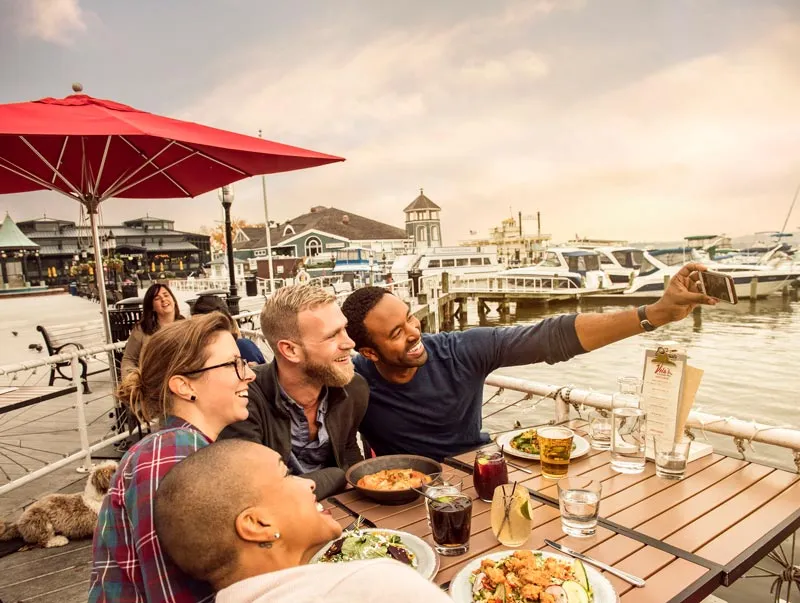
Tell me more about historic Old Town Alexandria Set foot onto Old Town Alexandria’s red brick sidewalks, and you could be fooled into thinking you have traveled back in time. The small city was founded in 1749 as a colonial tobacco port, and still boasts cobblestone streets, 18th-century buildings and even a town crier, all of which will make you feel like you’re in George Washington’s era. And that’s not a coincidence. George, whose Mount Vernon estate is nine miles down the road, frequented Old Town Alexandria businesses. Many of these places are still in operation today, like Gadsby’s Tavern (now a restaurant/museum hybrid) and Christ Church. His farm even sold produce at the Saturday farmers' market in Market Square, which has been operating since 1753 (it’s still a great place to buy flowers and a hot ham biscuit). There’s even a dramatic architectural salute to the first commander in chief: the George Washington Masonic National Memorial, a 331-foot-tall granite structure that holds exhibits on the president, a 17-foot-tall statue of him and a diagonal elevator that whisks visitors to the top of the tower. Other historic attractions include the Carlyle House, a grand, 1753 merchant’s house with a pristine city garden and impressive interior carvings, and the Athenaeum, a pink, neoclassical-style 1851 building that once held a bank but now holds an arts center. You can see these and other signs of the past on guided walking tours (including candlelit ghost treks close to Halloween). There's also Alexandria's Spite House, a must-see for Instagrammers and the skinniest historic house in America at just seven feet wide (it's a private residence located at 523 Queen Street). Dining, shopping and more But amid all that ye olde charm, there’s also a bustling, modern town known for its walkable streets, independent and national stores and a vibrant dining scene. You’ll uncover them on the main drag, King Street, as well as small side streets, where offerings range from fashionable shoe stores, chic home boutiques and worth-a-hunt vintage clothing and decor shops. More than 80 painters, sculptors and jewelers work and sell at the Torpedo Factory Art Center, a World War II-era munitions factory-turned-artist haven and cultural mecca. Restaurants and bars cluster along King Street and near the waterfront, where you'll find fine dining, speakeasies and international fare from Thai to Mexican. Many are located in historic storefronts or old shipping buildings, just adding to the throwback appeal. You can raise a glass of award-winning craft beer from Port City Brewing Company at most of the city's restaurants and pubs, or head out to the brewery in West End for a tour and special events (think: beer yoga). Still not enough? There are plenty of things to do along the Old Town Alexandria waterfront, from sightseeing cruises and romantic strolls to ghost tours and so much more.
Fly High at the National Air and Space Museum's Steven F. Udvar-Hazy Center
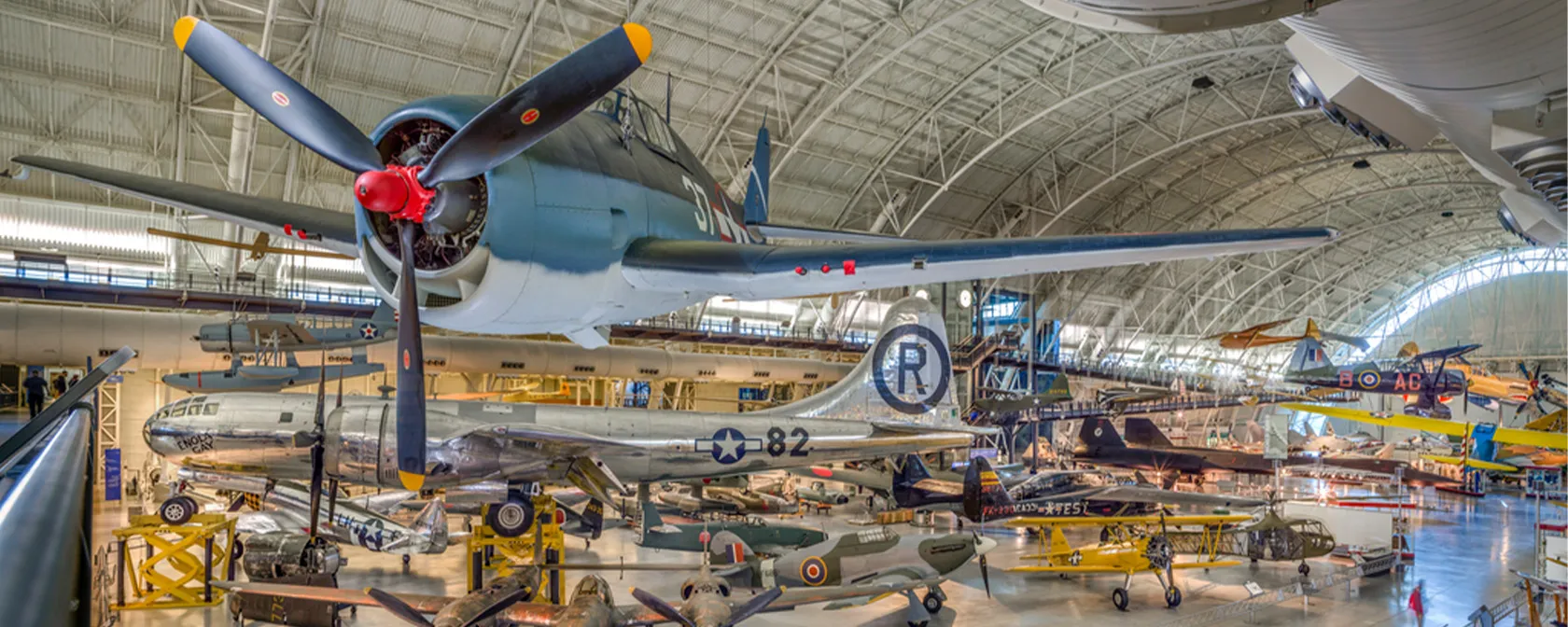
All about the Smithsonian's Steven F. Udvar-Hazy Center Opened in 2003, the Steven F. Udvar-Hazy Center serves as a partner facility to the National Air and Space Museum. The two locations together attract more than 8 million visits per year, making the National Air and Space complex the most popular museum in the United States. For aviation enthusiasts young and old, the Udvar-Hazy Center is just plain cool. The expansive museum consists of two hangars – the Boeing Aviation Hangar and the James S. McDonnell Space Hangar – which house dozens of aircraft and spacecraft. Some of the most notable include the Lockheed SR-71 Blackbird, a Concorde and the space shuttle Discovery. The Mary Baker Engen Restoration Hangar has an observation overlook, allowing visitors to see the preservation and restoration work underway by the Museum’s collections staff. Things to do at the Steven F. Udvar-Hazy Center The aircraft and spacecraft hanging overhead would be impressive enough, but the Udvar-Hazy Center also offers thousands of additional artifacts to view and many interactive, family friendly exhibits and activities. Prepare to take off and explore Sport Aviation, World War II Aviation, Space Science, and more. Talk to the Museum’s docents, who are stationed throughout the exhibit space both in person and via web conferencing, and ready to answer your questions and share the stories of the Museum’s collection. Enhance your experience with a giant screen film in the Airbus IMAX Theater (open Wednesday – Sunday), a simulator ride, or virtual reality experience. Before departure, browse the museum store and take home unique aviation and space themed souvenirs. Visiting the Steven F. Udvar-Hazy Center Regular hours are 10 a.m. – 5:30 p.m. at the Steven F. Udvar-Hazy Center, located at 14390 Air and Space Museum Parkway in Chantilly, Va., just minutes from Washington Dulles International Airport. The center can be reached by car via I-66 or the Dulles Toll Road. See detailed directions. On-site parking is available for $15 and is free for vehicles that arrive after 4 p.m. The center can also be reached via Metro. Take the Silver Line to the Wiehle-Reston East station and transfer to the Fairfax Connector Bus No. 983. The bus stops directly in front of the Steven F. Udvar-Hazy Center.
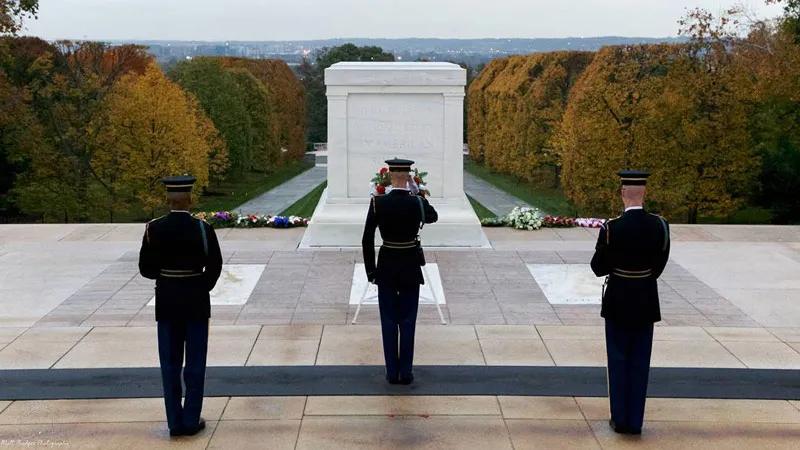
Guide to Visiting Arlington National Cemetery
What is Arlington National Cemetery? The Arlington National Cemetery is the country’s largest military cemetery and serves as the final resting place for more than 400,000 military veterans and their immediate family from the fronts of Iraq and Afghanistan, as well as World Wars I and II, the Korean conflict, Vietnam, the Cold War and America’s Civil War. The cemetery conducts between 27 and 30 funerals every weekday. The site is open to the public 365 days a year with free admission for those who wish to tour the site and pay their respects. Important sites at Arlington National Cemetery Arlington National Cemetery is the home of several well-known historic sites, including the Tomb of the Unknown Soldier, which is a tribute to unidentified fallen soldiers who fought in World War I, World War II, Korea and Vietnam. The Tomb of the Unknown Soldier is a large white sarcophagus that is guarded 24 hours a day, 365 days a year by Tomb Guard sentinels from the elite 3rd U.S. Infantry Regiment. The Changing of the Guard ritual—an elaborate, somber ceremony where a sentinel seamlessly takes over guard duty for the previous sentinel—happens every hour from October through March and every half hour from April through September. The gravesite of President John F. Kennedy is also on view at Arlington National Cemetery. At his funeral on Nov. 25, 1963, Jacqueline and Robert Kennedy lit an eternal flame that remains alight today. Two of Kennedy’s children and Jacqueline Bouvier Kennedy Onassis are also buried alongside the president. In addition to the Kennedy family, President William Howard Taft, Senator Robert F. Kennedy, Supreme Court Justice Thurgood Marshall, world champion boxer Joe Louis, the seven Space Shuttle Challenger astronauts and the Tuskegee Airmen are also buried at Arlington National Cemetery. Arlington House, the former residence of Robert E. Lee, sits on a hill overlooking the cemetery. Originally built to be a living memorial to George Washington, in 1864 the grounds were taken over by the federal government to serve as a burial site for Civil War soldiers. Over the years, the house was also used as a plantation estate and home to 63 slaves, a military headquarters, a community for emancipated slaves and a national cemetery. The preserved historic home is open for public tours daily. On Memorial Day and Veterans Day, thousands of visitors attend remembrance services in the Memorial Amphitheater. These special services are often attended by the President or Vice President of the United States. Getting to and touring Arlington National Cemetery The easiest way to get to Arlington National Cemetery is by Metro via the direct Arlington Cemetery stop on the Blue Line. Metrobus routes also stop at the site and it is accessible by several major roadways, including the George Washington Parkway. Once you’ve arrived, start at the Welcome Center, which offers an overview of the site. Here you can also sign up for a bus tour that stops at various sites throughout the cemetery. The cemetery is built into a hill and requires extensive walking if you choose to skip the shuttle.

QA Test Automated cron Article sync 1
As you return to traveling this year, Washington, DC should be at the very top of your list. The nation’s capital offers more than 100 free things to do, but it should come as no surprise that museums are some of the most popular attractions. We’ve gone into deep detail on four of the city’s most popular museums (including one dedicated to living animals), none of which charge admission. Find the latest updates on visiting museums, including Smithsonian's plans to have all of its museums open by the end of August 2021, mask mandates for all indoor museums and the latest ticketing requirements. Book your next vacation to the nation’s capital and visit these only-in-the-District museums, free of charge. In the heart of the nation’s capital lives a portal to wildlife from around the world. Smithsonian’s National Zoo offers a firsthand, family-friendly experience through a 163-acre urban park in the Woodley Park neighborhood teeming with roughly 2,700 animals that represent more than 390 species. The zoo is also connected to the Smithsonian Conservation Biology Institute (a non-public facility located in Front Royal, Va.), a global effort to conserve species and train future conservationists. This focus on preserving endangered animals extends to the zoo, as one-fifth of its exhibited species fall into this category. In the heart of the nation’s capital lives a portal to wildlife from around the world. Smithsonian’s National Zoo offers a firsthand, family-friendly experience through a 163-acre urban park in the Woodley Park neighborhood teeming with roughly 2,700 animals that represent more than 390 species. The zoo is also connected to the Smithsonian Conservation Biology Institute (a non-public facility located in Front Royal, Va.), a global effort to conserve species and train future conservationists. This focus on preserving endangered animals extends to the zoo, as one-fifth of its exhibited species fall into this category. In the heart of the nation’s capital lives a portal to wildlife from around the world. Smithsonian’s National Zoo offers a firsthand, family-friendly experience through a 163-acre urban park in the Woodley Park neighborhood teeming with roughly 2,700 animals that represent more than 390 species. The zoo is also connected to the Smithsonian Conservation Biology Institute (a non-public facility located in Front Royal, Va.), a global effort to conserve species and train future conservationists. This focus on preserving endangered animals extends to the zoo, as one-fifth of its exhibited species fall into this category. In the heart of the nation’s capital lives a portal to wildlife from around the world. Smithsonian’s National Zoo offers a firsthand, family-friendly experience through a 163-acre urban park in the Woodley Park neighborhood teeming with roughly 2,700 animals that represent more than 390 species. The zoo is also connected to the Smithsonian Conservation Biology Institute (a non-public facility located in Front Royal, Va.), a global effort to conserve species and train future conservationists. This focus on preserving endangered animals extends to the zoo, as one-fifth of its exhibited species fall into this category. In the heart of the nation’s capital lives a portal to wildlife from around the world. Smithsonian’s National Zoo offers a firsthand, family-friendly experience through a 163-acre urban park in the Woodley Park neighborhood teeming with roughly 2,700 animals that represent more than 390 species. The zoo is also connected to the Smithsonian Conservation Biology Institute (a non-public facility located in Front Royal, Va.), a global effort to conserve species and train future conservationists. This focus on preserving endangered animals extends to the zoo, as one-fifth of its exhibited species fall into this category. In the heart of the nation’s capital lives a portal to wildlife from around the world. Smithsonian’s National Zoo offers a firsthand, family-friendly experience through a 163-acre urban park in the Woodley Park neighborhood teeming with roughly 2,700 animals that represent more than 390 species. The zoo is also connected to the Smithsonian Conservation Biology Institute (a non-public facility located in Front Royal, Va.), a global effort to conserve species and train future conservationists. This focus on preserving endangered animals extends to the zoo, as one-fifth of its exhibited species fall into this category. In the heart of the nation’s capital lives a portal to wildlife from around the world. Smithsonian’s National Zoo offers a firsthand, family-friendly experience through a 163-acre urban park in the Woodley Park neighborhood teeming with roughly 2,700 animals that represent more than 390 species. The zoo is also connected to the Smithsonian Conservation Biology Institute (a non-public facility located in Front Royal, Va.), a global effort to conserve species and train future conservationists. This focus on preserving endangered animals extends to the zoo, as one-fifth of its exhibited species fall into this category. In the heart of the nation’s capital lives a portal to wildlife from around the world. Smithsonian’s National Zoo offers a firsthand, family-friendly experience through a 163-acre urban park in the Woodley Park neighborhood teeming with roughly 2,700 animals that represent more than 390 species. The zoo is also connected to the Smithsonian Conservation Biology Institute (a non-public facility located in Front Royal, Va.), a global effort to conserve species and train future conservationists. This focus on preserving endangered animals extends to the zoo, as one-fifth of its exhibited species fall into this category. In the heart of the nation’s capital lives a portal to wildlife from around the world. Smithsonian’s National Zoo offers a firsthand, family-friendly experience through a 163-acre urban park in the Woodley Park neighborhood teeming with roughly 2,700 animals that represent more than 390 species. The zoo is also connected to the Smithsonian Conservation Biology Institute (a non-public facility located in Front Royal, Va.), a global effort to conserve species and train future conservationists. This focus on preserving endangered animals extends to the zoo, as one-fifth of its exhibited species fall into this category. In the heart of the nation’s capital lives a portal to wildlife from around the world. Smithsonian’s National Zoo offers a firsthand, family-friendly experience through a 163-acre urban park in the Woodley Park neighborhood teeming with roughly 2,700 animals that represent more than 390 species. The zoo is also connected to the Smithsonian Conservation Biology Institute (a non-public facility located in Front Royal, Va.), a global effort to conserve species and train future conservationists. This focus on preserving endangered animals extends to the zoo, as one-fifth of its exhibited species fall into this category. In the heart of the nation’s capital lives a portal to wildlife from around the world. Smithsonian’s National Zoo offers a firsthand, family-friendly experience through a 163-acre urban park in the Woodley Park neighborhood teeming with roughly 2,700 animals that represent more than 390 species. The zoo is also connected to the Smithsonian Conservation Biology Institute (a non-public facility located in Front Royal, Va.), a global effort to conserve species and train future conservationists. This focus on preserving endangered animals extends to the zoo, as one-fifth of its exhibited species fall into this category. In the heart of the nation’s capital lives a portal to wildlife from around the world. Smithsonian’s National Zoo offers a firsthand, family-friendly experience through a 163-acre urban park in the Woodley Park neighborhood teeming with roughly 2,700 animals that represent more than 390 species. The zoo is also connected to the Smithsonian Conservation Biology Institute (a non-public facility located in Front Royal, Va.), a global effort to conserve species and train future conservationists. This focus on preserving endangered animals extends to the zoo, as one-fifth of its exhibited species fall into this category. In the heart of the nation’s capital lives a portal to wildlife from around the world. Smithsonian’s National Zoo offers a firsthand, family-friendly experience through a 163-acre urban park in the Woodley Park neighborhood teeming with roughly 2,700 animals that represent more than 390 species. The zoo is also connected to the Smithsonian Conservation Biology Institute (a non-public facility located in Front Royal, Va.), a global effort to conserve species and train future conservationists. This focus on preserving endangered animals extends to the zoo, as one-fifth of its exhibited species fall into this category. In the heart of the nation’s capital lives a portal to wildlife from around the world. Smithsonian’s National Zoo offers a firsthand, family-friendly experience through a 163-acre urban park in the Woodley Park neighborhood teeming with roughly 2,700 animals that represent more than 390 species. The zoo is also connected to the Smithsonian Conservation Biology Institute (a non-public facility located in Front Royal, Va.), a global effort to conserve species and train future conservationists. This focus on preserving endangered animals extends to the zoo, as one-fifth of its exhibited species fall into this category. In the heart of the nation’s capital lives a portal to wildlife from around the world. Smithsonian’s National Zoo offers a firsthand, family-friendly experience through a 163-acre urban park in the Woodley Park neighborhood teeming with roughly 2,700 animals that represent more than 390 species. The zoo is also connected to the Smithsonian Conservation Biology Institute (a non-public facility located in Front Royal, Va.), a global effort to conserve species and train future conservationists. This focus on preserving endangered animals extends to the zoo, as one-fifth of its exhibited species fall into this category. In the heart of the nation’s capital lives a portal to wildlife from around the world. Smithsonian’s National Zoo offers a firsthand, family-friendly experience through a 163-acre urban park in the Woodley Park neighborhood teeming with roughly 2,700 animals that represent more than 390 species. The zoo is also connected to the Smithsonian Conservation Biology Institute (a non-public facility located in Front Royal, Va.), a global effort to conserve species and train future conservationists. This focus on preserving endangered animals extends to the zoo, as one-fifth of its exhibited species fall into this category. In the heart of the nation’s capital lives a portal to wildlife from around the world. Smithsonian’s National Zoo offers a firsthand, family-friendly experience through a 163-acre urban park in the Woodley Park neighborhood teeming with roughly 2,700 animals that represent more than 390 species. The zoo is also connected to the Smithsonian Conservation Biology Institute (a non-public facility located in Front Royal, Va.), a global effort to conserve species and train future conservationists. This focus on preserving endangered animals extends to the zoo, as one-fifth of its exhibited species fall into this category. In the heart of the nation’s capital lives a portal to wildlife from around the world. Smithsonian’s National Zoo offers a firsthand, family-friendly experience through a 163-acre urban park in the Woodley Park neighborhood teeming with roughly 2,700 animals that represent more than 390 species. The zoo is also connected to the Smithsonian Conservation Biology Institute (a non-public facility located in Front Royal, Va.), a global effort to conserve species and train future conservationists. This focus on preserving endangered animals extends to the zoo, as one-fifth of its exhibited species fall into this category. In the heart of the nation’s capital lives a portal to wildlife from around the world. Smithsonian’s National Zoo offers a firsthand, family-friendly experience through a 163-acre urban park in the Woodley Park neighborhood teeming with roughly 2,700 animals that represent more than 390 species. The zoo is also connected to the Smithsonian Conservation Biology Institute (a non-public facility located in Front Royal, Va.), a global effort to conserve species and train future conservationists. This focus on preserving endangered animals extends to the zoo, as one-fifth of its exhibited species fall into this category. In the heart of the nation’s capital lives a portal to wildlife from around the world. Smithsonian’s National Zoo offers a firsthand, family-friendly experience through a 163-acre urban park in the Woodley Park neighborhood teeming with roughly 2,700 animals that represent more than 390 species. The zoo is also connected to the Smithsonian Conservation Biology Institute (a non-public facility located in Front Royal, Va.), a global effort to conserve species and train future conservationists. This focus on preserving endangered animals extends to the zoo, as one-fifth of its exhibited species fall into this category. In the heart of the nation’s capital lives a portal to wildlife from around the world. Smithsonian’s National Zoo offers a firsthand, family-friendly experience through a 163-acre urban park in the Woodley Park neighborhood teeming with roughly 2,700 animals that represent more than 390 species. The zoo is also connected to the Smithsonian Conservation Biology Institute (a non-public facility located in Front Royal, Va.), a global effort to conserve species and train future conservationists. This focus on preserving endangered animals extends to the zoo, as one-fifth of its exhibited species fall into this category. In the heart of the nation’s capital lives a portal to wildlife from around the world. Smithsonian’s National Zoo offers a firsthand, family-friendly experience through a 163-acre urban park in the Woodley Park neighborhood teeming with roughly 2,700 animals that represent more than 390 species. The zoo is also connected to the Smithsonian Conservation Biology Institute (a non-public facility located in Front Royal, Va.), a global effort to conserve species and train future conservationists. This focus on preserving endangered animals extends to the zoo, as one-fifth of its exhibited species fall into this category. In the heart of the nation’s capital lives a portal to wildlife from around the world. Smithsonian’s National Zoo offers a firsthand, family-friendly experience through a 163-acre urban park in the Woodley Park neighborhood teeming with roughly 2,700 animals that represent more than 390 species. The zoo is also connected to the Smithsonian Conservation Biology Institute (a non-public facility located in Front Royal, Va.), a global effort to conserve species and train future conservationists. This focus on preserving endangered animals extends to the zoo, as one-fifth of its exhibited species fall into this category.