
All Articles

Two-for-One: Check Out Related Attractions in Washington, DC
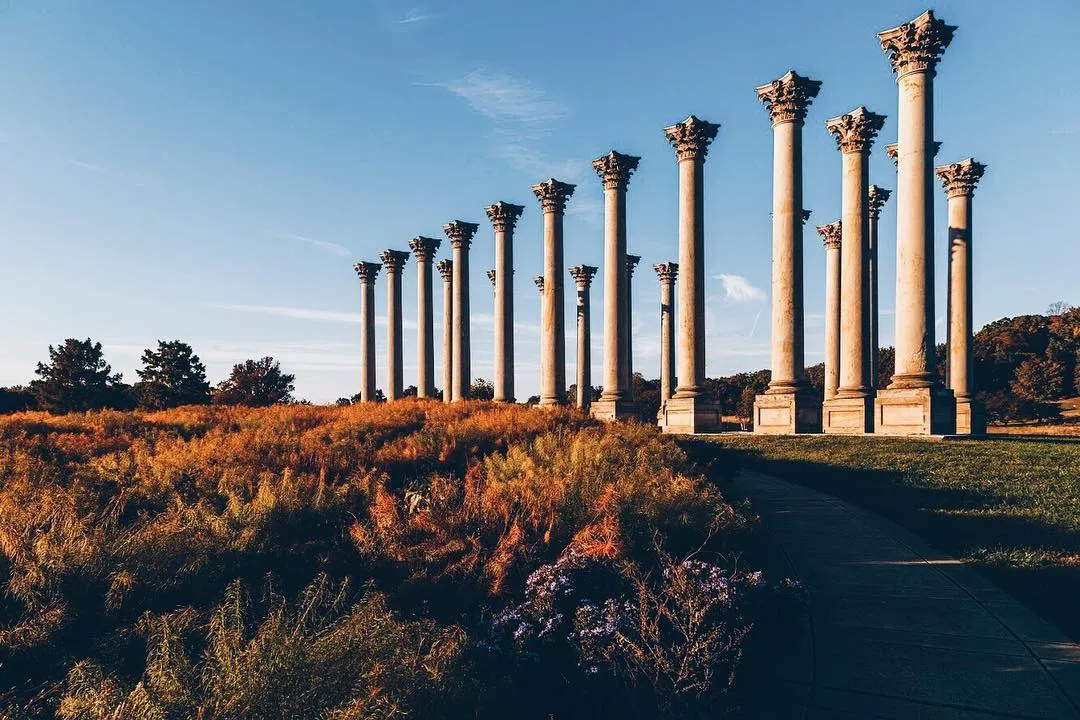
Lincoln Memorial/President Lincoln’s Cottage There are so many cool aspects of the Lincoln Memorial: its positioning on the Mall, the larger-than-life statue of Abe, some of his most famous words inscribed on the walls, its view of the Reflecting Pool. Make sure you read our guide to the monument for even more details. You will then want to visit President Lincoln’s Cottage, a 250-acre campus in Northwest DC which features a historic site and museum in commemoration of the locale, where Lincoln developed the Emancipation Proclamation. Book a guided tour to enrich the day (and don’t forget to explore Ford’s Theatre as part of your Lincoln-themed itinerary). Check out a Frederick Douglass exhibit at the National Portrait Gallery/Cedar Hill The first joint acquisition of the National Portrait Gallery and the Smithsonian American Art Museum (the two share a building) is Sir Isaac Julien’s fascinating moving image installation, which blends period reenactments across five screens to give the viewer insight into the life, accomplishments, activism and brilliance of Frederick Douglass (1818-1895). After you view the awesome installation focused on Douglass at the Gallery, head over to Cedar Hill, also known as the Frederick Douglass National Historic Site, where the icon lived for the last two decades of his life. Both locations are free to visit. U.S. Capitol Building/U.S. National Arboretum The world-famous domed building that is home to the U.S. House of Representatives and the Senate can be toured for free; just make sure to reserve a date and time for your excursion and you can enjoy the insights of a professional tour guide as you walk through the Capitol Building. What you may not know: over at the U.S. National Arboretum (which offers free admission as well), you can take in the National Capitol Columns, an installation of 22 Corinthian columns that once supported the east portico of the building. The Arboretum also features 446 acres of natural beauty and the National Bonsai & Penjing Museum. National Museum of African American History & Culture (NMAAHC)/African American Civil War Memorial You’ll want to reserve timed passes to the latest Smithsonian museum to grace the Mall. Since NMAAHC opened in 2016, it’s become one of the most popular attractions in DC thanks to its comprehensive look at the Black experience in America, from slavery to the Civil Rights Movement to Black Lives Matter. Just across town, check out the African American Civil War Memorial, located at the corner of Vermont Avenue, 10th Street and U Street NW. We highly recommend additional exploration of the neighborhood, one of the most vibrant and historic in DC; it was once known as “Black Broadway”. National Air & Space Museum/Steven F. Udvar-Hazy Center Did you know that you can take your imagination to infinity and beyond at two separate locations in the DC area? Aside from the National Mall’s museum, which recently unveiled the first phase of a multi-year renovation, there’s the Steven. F Udvar-Hazy Center, located just south of Dulles Airport in Chantilly, Va. Both museums are free to visit, but you will need a timed-entry pass for the Air & Space Museum in the District, which ensures the facilitation of crowds. Passes are not required for the Udvar-Hazy Center. George Washington’s Mount Vernon/Tudor Place The riverside abode of the first U.S. president (located in Mount Vernon, Va.) is a scenic marvel that also offers immersive historical experiences, four gardens, tours of the expansive mansion and exciting events year-round. While not as large of an estate, Tudor Place in DC’s Georgetown neighborhood was home to six generations of Martha Washington’s descendants from 1805 to 1983, providing additional (and fascinating) context to the history of the first First Family of the nation. You can also learn essential history about the enslaved workers and families who lived and worked on both properties during your visits. The John F. Kennedy Center for the Performing Arts/Atlas Performing Arts Center Affectionately known as the Kennedy Center, the one-of-a-kind performance hub is a cultural metropolis unto itself, featuring some of the world’s most talented performers through a wide range of plays, concerts, operas, comedy shows and much more. Millennium Stage hosts a free performances Wednesday through Saturday nights at 6 p.m. and The REACH is a jaw-dropping indoor/outdoor on-site expansion. Over on H Street NE, the neighborhood staple that is Atlas Performing Arts Center may offer productions and performances on a smaller scale, but they’re no less alluring and enlightening. Local theater companies (including ExPats Theatre and Mosaic Theater) bring cutting-edge new plays to Atlas throughout the year. The Center also hosts dance performances, improv shows, symphony concerts and the annual Intersections Festival, a community-focused, weeks-long commemoration of art that positively impacts our society through education, inspiration and entertainment.
U.S. International Travel Guidance Amid COVID-19 Pandemic
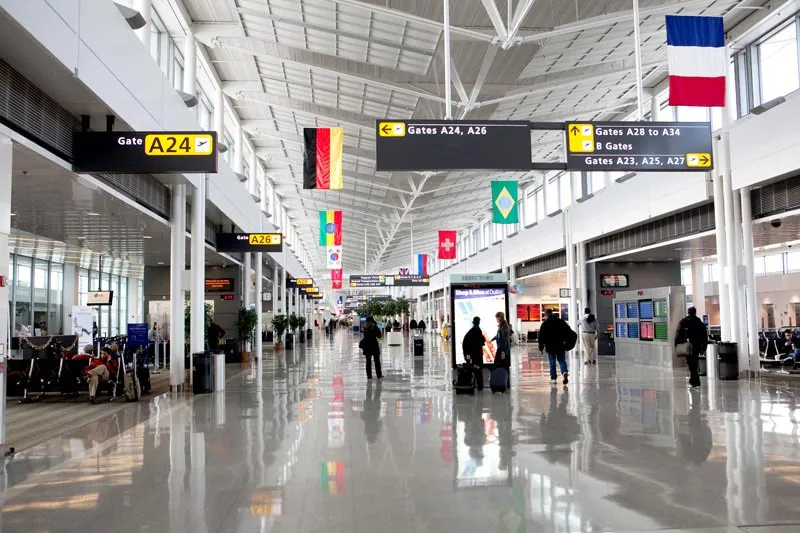
Starting Nov. 8, 2021, international travelers are welcomed back to the U.S. and Washington, DC. To travel, all non-U.S. citizens and non-U.S. immigrant air travelers must follow the guidance below: Be fully vaccinated to travel to the U.S. by plane and provide proof of vaccination prior to boarding. Only limited exceptions apply. You are required to show a negative COVID-19 test result or documentation of recovery from COVID-19 when you travel to the U.S. by air. The timing of your test depends on your vaccination status and age. Masks are required indoors on public transportation (including airplanes) and indoors in U.S. transportation hubs (including airports). If you are a not fully vaccinated, you will not be allowed to enter the U.S. Only limited exceptions apply to the requirement to show proof of vaccination. Accepted vaccines must be approved or authorized by the FDA or World Health Organization. Please refer to the list of accepted vaccines by the CDC. Requirements for children: Children under 18 are excepted from the vaccination requirement. Children between the ages of 2 and 17 are required to take a pre-departure test. Contact tracing: The CDC is issuing a contract tracing order that requires all the airlines flying into the U.S. to file and share contact information that will allow public health officials to follow up with inbound air travelers who are potentially infected or have been exposed to someone who is infected. Take a travel assessment form to find out if you can board a flight to the U.S. For more detailed information, including limited exceptions and acceptable proof of vaccination, please refer to the CDC.

Übernachtungsmöglichkeiten
Nur ein Tag in Washington, DC reicht nicht. Zum Glück gibt es zahlreiche Hotels und Resorts, um Kraft für zwei Wochen voller Abenteuer zu tanken [“adventures” links to Things To Do]. Mit familienfreundlichen Hotels, Luxusmarken, modernen Boutiquen und mehr werden Ihnen all Ihre Wünsche erfüllt. Wo auch immer Sie unterkommen, in Washington, DC sind Sie mehr als willkommen. Unsere Unterkünfte umfassen: Hotels Bed and Breakfasts (Privatzimmer mit Frühstück) Boutique-Hotels Preiswerte Unterbringung Unterkünfte für Langzeitaufenthalte Erkunden Sie unsere Viertel, um Ihren Lieblingsort in DC zu finden. Übernachtungsmöglichkeiten finden.

Using Pronouns in the Workplace with Gaëlle Ivory of Howard University
Let’s start with your background, your work and your pronouns. My name is Gaëlle Amazan Ivory and my background is in higher education, student affairs and diversity and inclusion. My pronouns are she/her and they/them. I began working in higher education as an undergraduate at Temple University in 2007. I worked as a Ph.D. teaching assistant at Syracuse University in 2013 and then I began working professionally in higher education in 2014. In each of these positions, I’ve worked in student affairs and was involved in inclusion work. Currently, I work at Howard University as the Assistant Director of Intercultural Affairs. What purpose do pronouns serve? Generally, the purpose of pronouns are to replace nouns. Examples of pronouns are she, it, we, and I. In higher education, we use pronouns to give others a way to describe us both when we are present and we are not. Typically, I use names to address others. When I choose not to use a name, pronouns are helpful to refer to others. Why are pronouns important, both inside and outside of the business world? Pronouns are important because identity is important. Each person has qualities that make up who they are and these qualities matter to them. I use she/her and they/them pronouns because I feel that these pronouns capture a part of who I am. Each person has a right to decide for themselves which pronouns they use and they have a right to be addressed by the pronouns they’ve decided upon. Both in and out of the business world, people interact with one another, and pronouns, if used appropriately, can assist with these interactions. Consider each time you use pronouns. Consider each time you say words like “he”, “she” or they”. These words arguably make up a majority of the words we use, at least in the English language. This is another point: that there are languages where pronouns look differently or don’t exist at all. Pronouns are particularly important in the English language. Because in English, pronouns make up such a large part of language, they are important to understand and use correctly. Most importantly, it is important to address others using the pronouns they share with you. What is Gender Inclusive language? Gender Inclusive language refers to the notion that gender is not binary. Oftentimes, people make references to “both genders,” “opposite sex” or say “he or she”. Gender Inclusive language submits that gender is fluid and includes genders other than men and women. The binary language suggests that gender only includes men and women and this erases nonbinary genders. Gender Inclusive language allows for an environment that recognizes and celebrates all genders. What are some tips for using pronouns in the workplace? Be mindful that people often make assumptions about gender based on the way others look and behave. These assumptions can be harmful. In the workplace, it is best to establish inclusive spaces in which all genders feel safe and celebrated. When all genders feel safe and celebrated, pronouns can be a natural part of the environment. Tip 1: Ensure that diversity, equity and inclusion (DEI) is included in workplace policy to ensure an environment that does not tolerate discrimination. Tip 2: If a person is not sure of a person’s pronouns, they can introduce themselves using their names and their own pronouns, then ask the other person what their pronouns are. Tip 3: If a person is sure of another person’s pronouns, it is because that other person shared them previously. Tip 4: Just because a person shared their pronouns with you does not mean they shared them with others. When you receive a person’s pronouns, also ask if this is information that can be shared with others. Tip 5: Include pronouns in workplace documents where other optional demographic information is asked. This helps to normalize the use of pronouns. Also, include pronouns in email signatures. Tip 6: Don’t get discouraged if you make a mistake. If you misgender someone, apologize, make a commitment to not repeat the mistake and continue to do better. Tip 7: If you think you know a person’s gender and the pronouns are different than you thought they would be, recognize that your thoughts are a reflection of your own assumptions about gender and not a reflection of what their correct pronouns should be. Accept a person’s pronouns without question. Tip 8: Do research about pronouns. Language is always changing and it is helpful to remain current on DEI work.