All Articles
Guide to the Presidential Inauguration
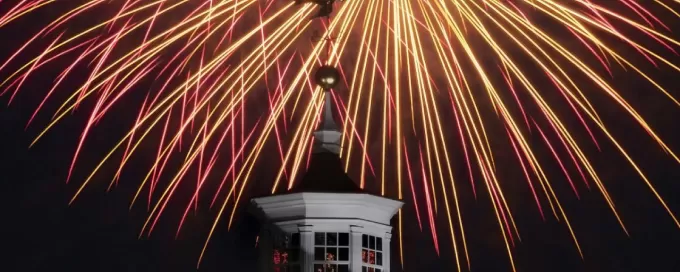
The Presidential Inaugural Committee asks that Americans stay home and celebrate this year's inauguration virtually. District of Columbia Mayor Muriel Bowser issued an order that pauses museum operations and indoor dining until Friday, Jan. 22, 2021 at 5 a.m. Even for those activities that are not paused by order, the Mayor strongly encourages residents and visitors to be cautious and to limit their exposure to other people so as to limit the spread of COVID-19. Note the latest travel safety information before planning any visit to DC. There are few events that you can experience that are guaranteed to go down in history. The President’s swearing-in ceremony is one of them. This year, watch from home as president-elect Joe Biden and vice president-elect Kamala Harris are sworn in. Take in the Action The official proceedings of Inauguration Day commence around noon on Jan. 20 on the West Lawn of the U.S. Capitol, with the vice president-elect and president-elect taking the Oaths of Office, followed by the inaugural address. This year, the official swearing-in ceremony will be held on the West Front of the U.S. Capitol on Jan. 20, 2021, with in-person attendance limited to Congress due to safety protocols. Tune in to the official Presidential Inauguration YouTube channel to see official events. Instead of a traditional inaugural parade, the Bidens will arrive at the White House with a presidential escort consisting of representatives from every branch of the military. A “virtual parade” showcasing communities across the country will be televised. The parade will begin at approximately 3 p.m. on Inauguration Day. Visit the website of the Presidential Inauguration Committee for more information. Please note that a virtual lighting ceremony honoring American lives lost due to COVID-19 will take place on Jan. 19 at 5:30 p.m. at the Lincoln Memorial Reflecting Pool. Communities across the country are invited to join by lighting buildings and ringing church bells. There will be a primetime television program hosted by Tom Hanks at 8:30 p.m. on Jan. 20 titled “Celebrating America” instead of traditional inaugural balls. Participating artists include Ant Clemons, Jon Bon Jovi, Demi Lovato and Justin Timberlake. Tune in to the official Presidential Inauguration YouTube channel to find more official events.
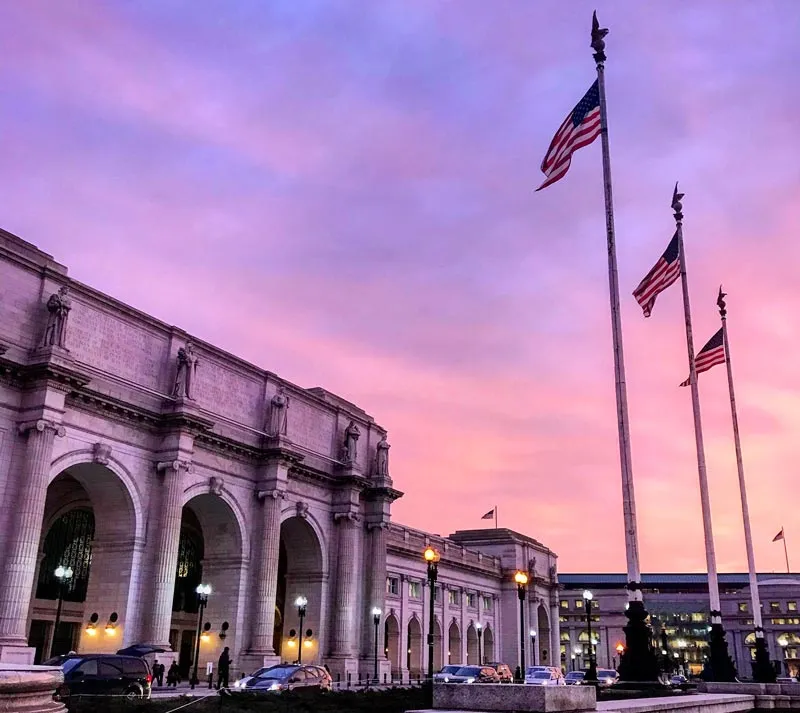
Guide to Union Station in Washington, DC
DC’s Union Station receives roughly 40 million visitors per year. Its beautiful architecture, various shops and dining options and status as one of the largest transportation hubs in the country, as well as a healthy dose of history, make the station a popular destination. We break down the DC landmark below. Transportation Options at Union Station Union Station is one of the busiest spots for transit and travel in the country. Numerous transportation modes are available, including rail options in the form of Metro, Amtrak, MARC trains and the Virginia Railway Express. There is a taxi dispatch at the Main Hall entrance that is open from 8 a.m. – 1 a.m. daily. You can also easily catch a bus or rent a car at Union Station. Parking is available at the Union Station Parking Garage at 30 Massachusetts Avenue NE. You can also book a sightseeing tour from Union Station through Old Town Trolley Tours. Shopping & Dining at Union Station The shopping options at Union Station are plentiful and address an array of needs and interests. The roster includes Walgreens, Warby Parker, Lee's Flower Shop, Andrew's Ties and many, many more. There's a restaurant for every taste inside Union Station. Quick options like Raising Cane's, Cava, Chipotle, Potbelly, Shake Shack and Taco Bell are on-site. You can enjoy a delicious cup of coffee from Blue Bottle Coffee or a flavorful smoothie from Jamba Juice. For bakery specialties, head to Cinnabon or grab a Chicago-style pizza at UNO Pizzeria & Grill. History The construction of Union Station was fully completed in April 1908, launching one of DC’s largest transportation hubs in the process. Architect Daniel Burnham designed the Beaux Arts building, which featured a jaw-dropping Main Hall (also known as the “General Waiting Room”) that dazzled patrons. By the early 1940s, roughly 200,000 passengers would pass through the station on any given day, as the railways were the most popular avenue for long-distance travel at the time. The station faced difficulties after the Second World War as plane travel became more popular. The facility was turned into a new National Visitor Center in 1976, but for only a short time due to poor funding and organization. By 1981, the building was in total disarray, leading to the structure being closed to the public and prompting Congress to pass the Union Station Redevelopment Act. Union Station reopened in 1988 with restored elements and three new levels of retail space. Its next difficulty arose from an earthquake that shook DC in August of 2011. By the fall of 2016, the entire Main Hall of the station had been restored, matching the Beaux Arts splendor showcased by Burnham in the early 1900s. These days, Union Station is again a crown jewel for DC, serving as one of the country’s busiest rail facilities as well as a prime destination for shopping and dining. If you’re looking for more information on DC’s transportation hubs, find out what you need to know about getting around Washington, DC.
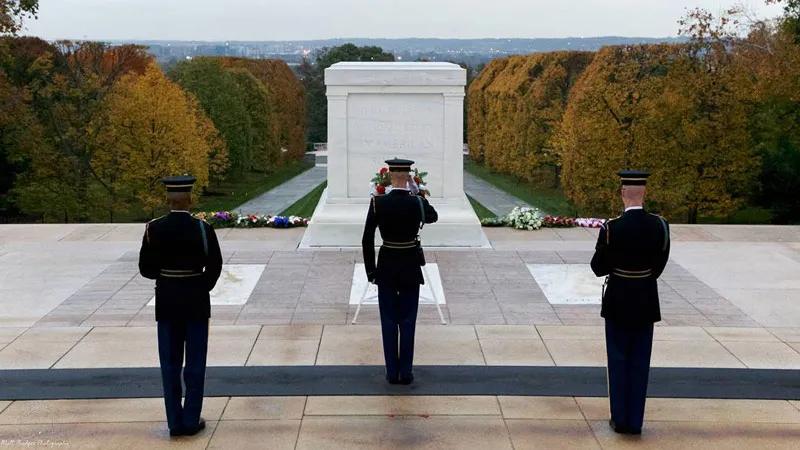
Guide to Visiting Arlington National Cemetery
What is Arlington National Cemetery? The Arlington National Cemetery is the country’s largest military cemetery and serves as the final resting place for more than 400,000 military veterans and their immediate family from the fronts of Iraq and Afghanistan, as well as World Wars I and II, the Korean conflict, Vietnam, the Cold War and America’s Civil War. The cemetery conducts between 27 and 30 funerals every weekday. The site is open to the public 365 days a year with free admission for those who wish to tour the site and pay their respects. Important sites at Arlington National Cemetery Arlington National Cemetery is the home of several well-known historic sites, including the Tomb of the Unknown Soldier, which is a tribute to unidentified fallen soldiers who fought in World War I, World War II, Korea and Vietnam. The Tomb of the Unknown Soldier is a large white sarcophagus that is guarded 24 hours a day, 365 days a year by Tomb Guard sentinels from the elite 3rd U.S. Infantry Regiment. The Changing of the Guard ritual—an elaborate, somber ceremony where a sentinel seamlessly takes over guard duty for the previous sentinel—happens every hour from October through March and every half hour from April through September. The gravesite of President John F. Kennedy is also on view at Arlington National Cemetery. At his funeral on Nov. 25, 1963, Jacqueline and Robert Kennedy lit an eternal flame that remains alight today. Two of Kennedy’s children and Jacqueline Bouvier Kennedy Onassis are also buried alongside the president. In addition to the Kennedy family, President William Howard Taft, Senator Robert F. Kennedy, Supreme Court Justice Thurgood Marshall, world champion boxer Joe Louis, the seven Space Shuttle Challenger astronauts and the Tuskegee Airmen are also buried at Arlington National Cemetery. Arlington House, the former residence of Robert E. Lee, sits on a hill overlooking the cemetery. Originally built to be a living memorial to George Washington, in 1864 the grounds were taken over by the federal government to serve as a burial site for Civil War soldiers. Over the years, the house was also used as a plantation estate and home to 63 slaves, a military headquarters, a community for emancipated slaves and a national cemetery. The preserved historic home is open for public tours daily. On Memorial Day and Veterans Day, thousands of visitors attend remembrance services in the Memorial Amphitheater. These special services are often attended by the President or Vice President of the United States. Getting to and touring Arlington National Cemetery The easiest way to get to Arlington National Cemetery is by Metro via the direct Arlington Cemetery stop on the Blue Line. Metrobus routes also stop at the site and it is accessible by several major roadways, including the George Washington Parkway. Once you’ve arrived, start at the Welcome Center, which offers an overview of the site. Here you can also sign up for a bus tour that stops at various sites throughout the cemetery. The cemetery is built into a hill and requires extensive walking if you choose to skip the shuttle.

Guide to Visiting the Washington Monument
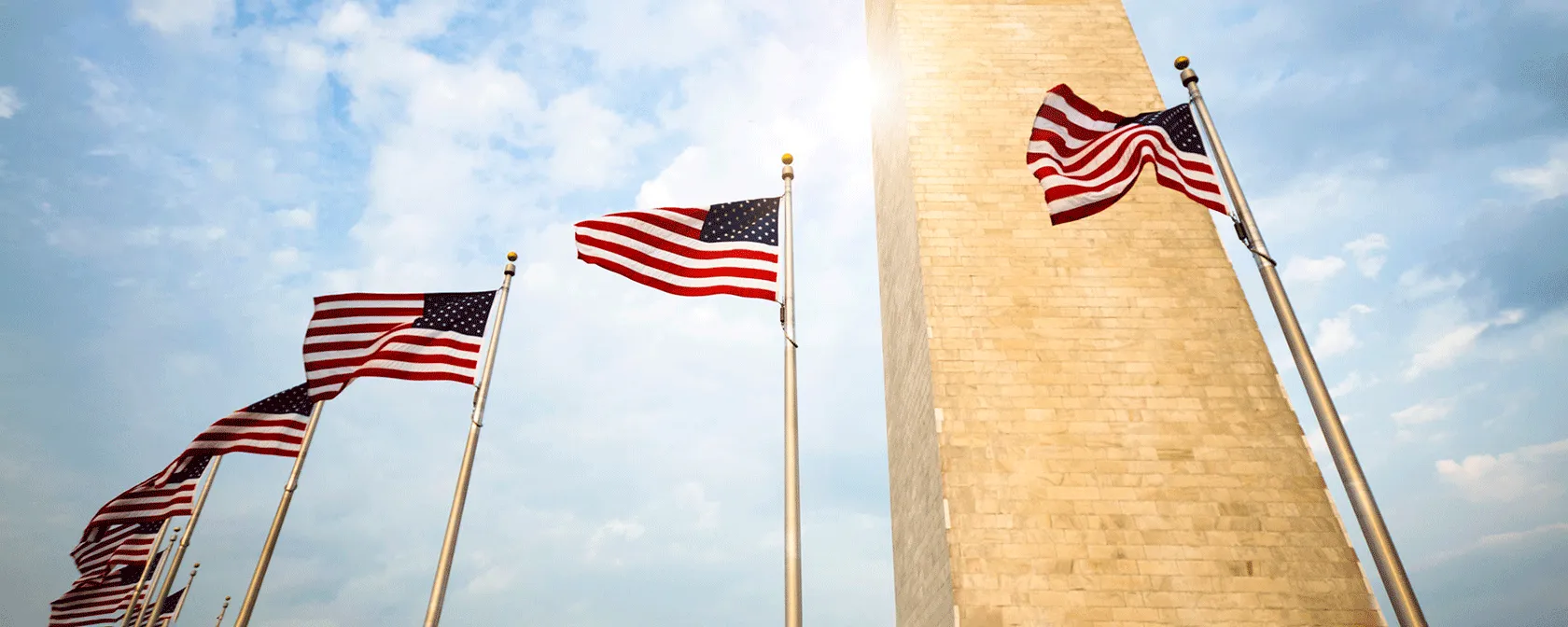
Built to honor George Washington, the Continental Army's commander-in-chief and the first United States president, the Washington Monument was once the tallest building in the world at just over 555 feet. The monument to America’s first president still holds the title of the world’s tallest stone structure and obelisk. The New & Improved Washington Monument After years of renovations and reopening in 2019, the Washington Monument has raised expectations for visitors with a new state-of-the-art elevator that will efficiently move hundreds of visitors up to the observation deck daily. The minute-long ride up 50 stories to the top of the world's tallest free-standing stone structure includes a video from the National Park Service about what to expect. From the observation deck, you can see nearly 25 miles into the horizon in every direction, including landmarks like the U.S. Capitol, the White House, Arlington National Cemetery and the Washington National Cathedral. Part of what makes traveling in the elevator so historic is that, on the two-minute descent, it offers a glimpse of the interior walls, which are lined with stones that commemorate George Washington, placed by states, civic groups and others. The modern system gives the National Park Service operators better control of the elevator with remote access from the ground. Before experiencing the new elevator, visitors will encounter another improvement to traveling to the top of the Washington Monument – an upgraded security screening facility at the base of the structure. The new security structure can accommodate up to 20 visitors and has more modern screening equipment. The Washington Monument is open 9 a.m. to 5 p.m. daily (last available tour ticket is at 4 p.m.) except for December 25, July 4 and part of July 3. Visitors can reserve tickets on recreation.gov in advance. A limited number of walk-up tickets are available on a first-come, first-serve basis beginning at 8:45 a.m. outside of the Washington Monument Lodge. Find out more information with our Washington Monument tour and ticket guide for both groups and individuals. More on the Washington Monument Maintained by the National Park Service, the Washington Monument is located on the center of the National Mall between the U.S. Capitol and the Lincoln Memorial. The easiest way to get to the monument is by taking the Metro. The two closest Metro stops are Federal Triangle and Smithsonian, both on the Blue, Orange and Silver lines. If traveling by bus, take DC Circulator’s National Mall route or ride Metrobus routes 32, 34, or 36. If driving, visitor parking is available on Ohio Drive, between the Lincoln and Jefferson memorials. Note that street parking is often limited near the National Mall. Why does the Washington Monument have two colors? It wasn't easy to build Washington Monument. The structure was originally designed by Robert Mills, with construction beginning in 1848. The combination of the Civil War, the Know Nothing Party's rise to control of the Washington National Monument Society through an illegal election and lack of funding led to a halt in construction in 1854. When construction resumed in 1879, marble was used from a different quarry, and time and weather erosion led to the difference in color, which begins at the 150-foot mark. The monument was finally completed in 1884 by Thomas Casey and the U.S. Army Corps of Engineers and an elevator was added to the monument in 1889.

Guide to Washington, DC-Area Airports
There are three major airports in the Washington, DC region: Ronald Reagan Washington National Airport (airport code: DCA), Washington Dulles International Airport (airport code: IAD) and Baltimore/Washington International Thurgood Marshall Airport (airport code: BWI). Both American Airlines and United Airlines service all three airports. If you're looking for general information about how to get to all three DC-area airports, discover the best transportation options for your trip. You can also book a greeter through Air General Traveler Services, which can provide interline transfer connections, baggage and porter services, arrangements for airline lounge access, arrangements for hotel business centers and airport shopping assistance. For those with accessibility needs, call TSA Cares at 1-855-787-2227 at least 72 hours prior to traveling with any questions about screening policies, procedures and what to expect at the security checkpoint. Which airport are you looking to learn more about? Ronald Reagan Washington National Airport (airport code: DCA) Washington Dulles International Airport (airport code: IAD) Baltimore/Washington International Thurgood Marshall Airport (airport code: BWI) Ronald Reagan Washington National Airport Ronald Reagan Washington National Airport is located just across the Potomac River in Virginia and is the closest airport to DC. (It’s also the airport you’re most likely to spot senators and representatives heading home to their districts.) Reagan Airport offers nonstop flights to 95-plus destinations on eight airlines. How to Get To/From Reagan Airport Reagan Airport is accessible via its own Metro stop on the Blue and Yellow lines. To catch a taxi, look for the official taxi stand outside of baggage claim (a ride into downtown DC will cost about $15-20). Rideshare apps like Uber and Lyft are also good options to get to and from the airport. Driving is also a possibility, as the airport has multiple garages and parking lots. For more information, check out the Reagan Airport transportation and parking page. Reagan Airport Map & Flight Information You can find everything you need at Reagan Airport with the terminal map. And with so many flights each day, use the airport’s flight guide to find the best options to and from DC. Where to Eat & Shop at Reagan Airport Arrive early or have a layover? Rest assured, there are plenty of dining and shopping options at Reagan Airport. Local favorites include Good Stuff Eatery’s burgers (from former Top Chef contestant Spike Mendelsohn), CAVA for fast-casual Mediterranean bowls bursting with flavor and the legendary Ben's Chili Bowl. Accessibility The Metropolitan Washington Airports Authority is fully committed to providing universal access to all public facilities and services at Ronald Reagan Washington National Airport for all of its patrons. For detailed information regarding ground transportation, the Sunflower lanyard program, pet relief areas, wheelchair rentals, public restroom access, security checkpoint access and additional amenities, visit the airport's website. Washington Dulles International Airport Washington Dulles International Airport is located 26 miles from DC in suburban Virginia. Dulles Airport is also the primary international airport for the DC region, with almost 140 nonstop domestic and international destinations on nearly 40 airlines. How to Get To/From Dulles Airport Dulles Airport is connected to DC on Metro's Silver line. It also has a dedicated access road that makes getting to or from the airport efficient via car, taxi or airport shuttle. Washington Flyer taxi cabs exclusively service Dulles Airport and taxi stands are located outside the main terminal – a taxi or rideshare into DC will cost about $60-$70. For more information on parking and car rentals, visit the Dulles Airport transportation and parking page. Dulles Airport Map & Flight Information Dulles Airport is a busy international airport with a number of terminals and gates. Make sure you view the airport and terminal map for the most up-to-date information. The Dulles Airport flight guide will also help with upcoming scheduled flights, as well as arrival and departure information. Where to Eat & Shop at Dulles Airport With everything from duty-free souvenirs to high-end designers and even a spa, you can satisfy all your dining and shopping needs at Dulles Airport. Look for an outpost of local fave Chef Geoff’s or stop by &pizza for build-your-own personal pies. Accessibility The Metropolitan Washington Airports Authority is fully committed to providing universal access to all public facilities and services at Washington Dulles International Airport for all of its patrons. For detailed information regarding ground transportation, the Sunflower lanyard program, public parking, pet relief areas, wheelchair rentals, public restroom access, security checkpoint access and additional amenities, visit the airport's website. Baltimore/Washington International Thurgood Marshall Airport Baltimore/Washington International Thurgood Marshall Airport (referred to as BWI Airport) is a bit further from DC near Baltimore, Md., but oftentimes that means you can find even better flight deals. The airport has grown to 90-plus domestic and international destinations and services more than 25 million passengers each year. How to Get To/From Baltimore/Washington International Airport BWI Airport is located 32 miles from DC and is accessible via an MARC/Amtrak train route that picks up and drops off at Union Station. Taxis, Uber and Lyft are also available at the airport. Make sure to visit the BWI Airport transportation page for information about parking, car rentals and more. Baltimore/Washington Airport Map & Flight Information This BWI Airport interactive map will help you find your way around the terminals, while the airport’s flight guide is a great resource for finding scheduled flights, as well as arrival and departure information. Where to Eat & Shop at Baltimore/Washington Airport BWI Airport has great places to eat and shop for travelers, as well as a fitness center if you’re looking to get in a quick workout before your flight. Accessibility For detailed information regarding wheelchair service, TSA passenger support specialists, lift-equipped buses, animal relief areas, public restroom access and services for the visually impaired and hard-of-hearing, visit the BWI's website. Now that you know all about the airports near Washington, DC, learn more about getting to the District. And make sure to learn more about TSA Precheck and get to your gate quicker.