
All Articles
Visiting the Smithsonian National Museum of Natural History in Washington, DC
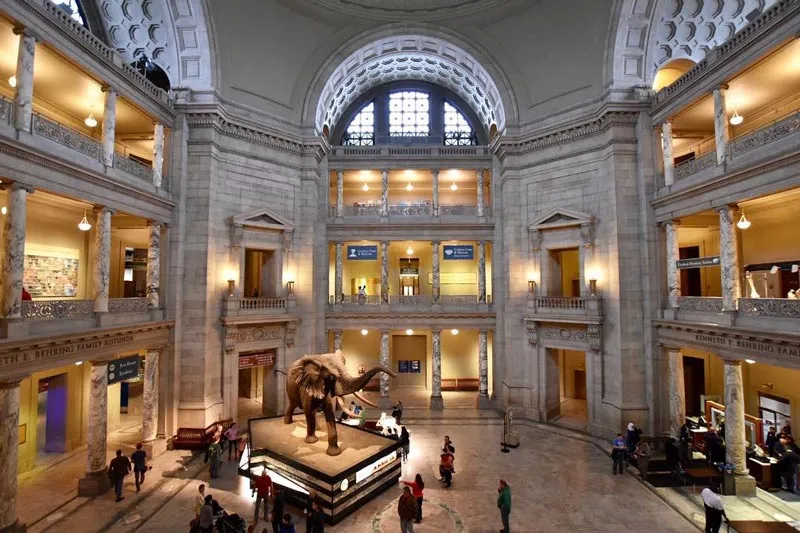
Planning your visit to the Natural History Museum The Smithsonian National Museum of Natural History opened in 1910 to invoke discovery and education of the natural world. Its green dome and immense size (comparable to 18 football fields) are signatures, as well as the 140 million-plus natural science specimens and cultural artifacts that the museum contains. The Museum of Natural History is centrally located in Washington, DC on the National Mall. Like all Smithsonian Institution museums, admission is free. Its regular hours are 10 a.m. – 5:30 p.m., but hours are extended during the spring and summer with a closing time of 7:30 p.m. The museum is open every day of the year except Dec. 25. The most convenient way to reach the museum is via public transportation. Public parking is scarce, but there are parking spaces available for visitors with disabilities. If using Metrorail, take the Orange or Blue lines to the Smithsonian station and use the Mall exit. If taking Metrobus, use the 32, 34 or 36 routes. What’s inside the National Museum of Natural History? The museum contains some of the most famous artifacts in the world. The Janet Annenberg Hooker Hall of Geology, Gems and Minerals has the supposedly cursed Hope Diamond on display. Meanwhile, Q?rius, the museum’s education center, offers teens and tweens a lab where they can make their own scientific discoveries. After a five-year renovation, the museum has reopened its David H. Koch Hall of Fossils. The 31,000-square-foot exhibit’s theme is Deep Time, borrowed from a scientific phrase that illustrates how Earth’s history has played out over billions of years. Prepare to be amazed, overwhelmed, engaged and dazzled by one of the biggest exhibitions to come to DC in years. Other permanent exhibits include an insect zoo and The Sant Ocean Hall, which features an exact replica of a living North Atlantic right whale. A visit to the Museum of Natural History is only the beginning – keep exploring the incredible selection of free museums and attractions available in the nation's capital.
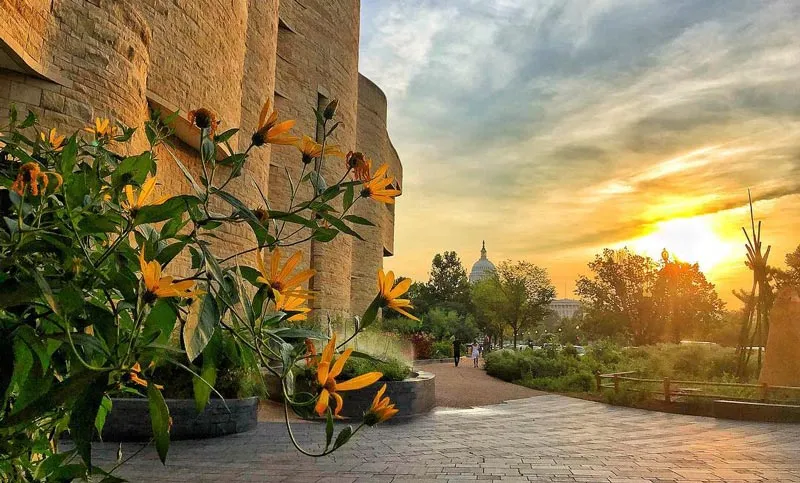
Visiting the Smithsonian National Museum of the American Indian in Washington, DC
What is the Smithsonian National Museum of the American Indian and where is it? The National Museum of the American Indian (NMAI) is located on Independence Avenue SW on the National Mall. The museum boasts one of the world’s most expansive collections of Native American objects, photographs, artifacts and media. The NMAI is dedicated to bringing Native voices to life throughout its contemplative exhibitions and colorful activities. The easiest way to get there is via public transportation. If traveling by Metrorail, get off at the L’Enfant Plaza stop on the Blue, Orange, Silver, Green and Yellow lines and use the Maryland Avenue/Smithsonian Museums exit. If traveling by bus, take the DC Circulator’s National Mall route or the 30, 32, 34 or 36 Metrobus lines. What’s inside the National Museum of the American Indian? The NMAI provides its first “wow!” moment before you even walk in the door. The building (designed entirely by Native architects) is one of DC’s most visually striking, with its curvilinear structure and limestone material designed to resemble rock formations affected by wind and water over thousands of years. The museum's collections represent more than 12,000 years of history across 1,200-plus indigenous cultures from the Americas. These objects range from the aesthetic to the religious to the historical, helping to form a comprehensive catalogue of Native American culture. Ongoing exhibitions at the museum include Return to a Native Place: Algonquian Peoples of the Chesapeake, which allows you to meet the Native peoples of the Chesapeake Bay through maps, ceremonial objects, photographs and interactive displays. These details can help you have a deeper understanding of just how prevalent Native Americans were, and are, to the areas surrounding DC. The Great Inka Road: Engineering an Empire takes you back to earlier Andean cultures to explore the foundations of the Inka Road. You will learn of technologies that made the road possible, the politics and cosmology of the Inka world and the legacy that the Inka Empire left, from the colonial period to today. Of course, the museum regularly features new exhibits, so check to see what’s on display before you go. Your visit must include the National Native American Veterans Memorial, located on museum grounds. The touching tribute to Native heroes is beautifully designed, featuring an elevated stainless-steel circle balanced on a stone drum.
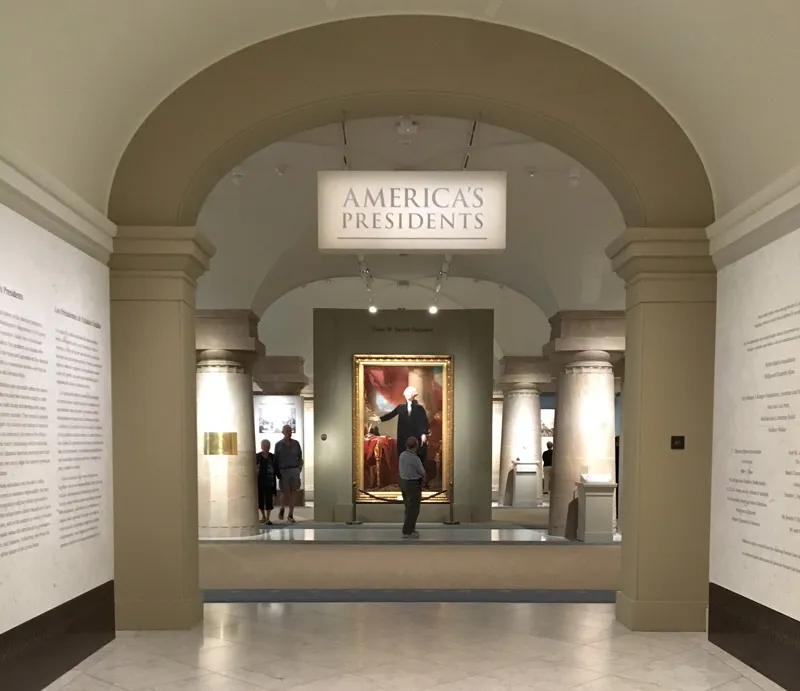
Visiting the Smithsonian National Portrait Gallery in Washington, DC
What and where is the Smithsonian National Portrait Gallery? Painting a picture of the many influential people throughout America’s history, the National Portrait Gallery is a must-see for pop culture fans, history buffs and art lovers alike. From activists and actors to presidents and poets, the museum displays paintings, photographs and sculptures of the people that have come to define America as we know it. Located at 8th and F streets NW, the Portrait Gallery is inside the Donald W. Reynolds Center, which also serves as the space for the Smithsonian American Art Museum. Admission is free, and the museum is open from 11:30 a.m. – 7 p.m. seven days a week. The building also features the beautiful Robert and Arlene Kogod Courtyard, a quiet place to work or relax with free Wi-Fi. For accessibility information check out our guide on accessibility within the Smithsonian museums. The easiest way to get to the National Portrait Gallery? Use the Metro’s Red Line, stop at Gallery Place/Chinatown, and you’re a short walk away. The DC Circulator services the neighborhood via the Georgetown-Union Station route, so a trip by bus is convenient as well. Before or after your museum experience, explore Penn Quarter and Chinatown and all of the dining and entertainment options that it offers. What’s inside the National Portrait Gallery? The National Portrait Gallery’s permanent exhibits take comprehensive looks at icons from different segments of U.S. history – The Struggle for Justice focuses on Civil Rights leaders, while 20th Century Americans showcases important figures from the past century specifically. And of course, what individuals have shaped this country more than the presidents in charge of leading it? The presidents of the United States are forever immortalized in America’s Presidents, the only complete collection of presidential portraits outside of the White House. The exhibit recently underwent an extensive renovation and has reopened with new interactive elements and layouts. The exhibit features multiple images of every president (the current commander-in-chief excluded), including the famous “Lansdowne” portrait of George Washington (painted by Gilbert Stuart), a stunning portrait of Barack Obama by Kehinde Wileythe, the Alexander Gardner “cracked-plate” portrait of Abraham Lincoln and even caricatured sculptures of Lyndon Johnson, George H.W. Bush and Jimmy Carter. Dive even deeper into the history and growth of the U.S. with American Origins, 1600-1900, a series of nearly 20 galleries arranged in chronological order. You can embark on a visual journey from the first days of contact between Native Americans and European explorers to the end of the Civil War. Using art forms ranging from daguerreotypes (the earliest form of photography) to modern photographic prints, American Origins gives a fantastic overview of our country as it grew from infancy to independence to economic power as the 20th century approached. BRAVO! takes visitors from the beginnings of modern entertainment in the late 19th century to the present day. Sports fans will be drawn to Champions, a collection of artifacts, memorabilia, portraits and videos celebrating figures whose athletic achievements have become a part of the American story. The gallery also regularly rotates new and exciting exhibits in and out of its halls, meaning there is always something fresh to observe. Check the Gallery’s website for current and upcoming exhibits.
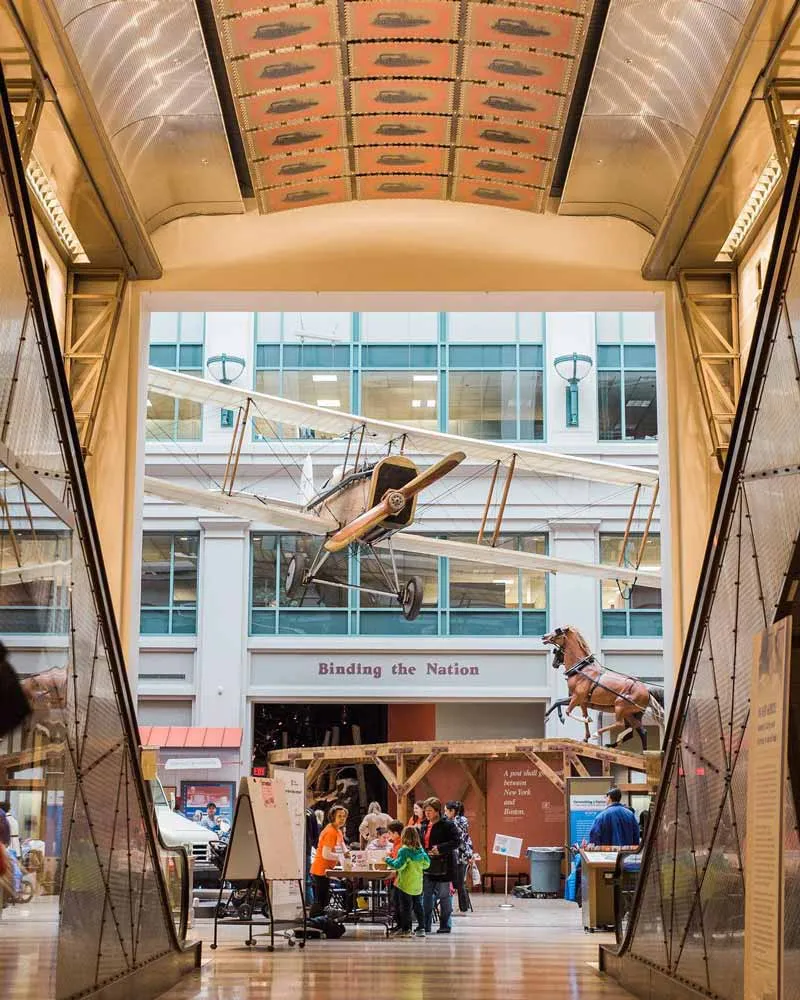
Visiting the Smithsonian National Postal Museum in Washington, DC
Since its opening in 1993 in the historic City Post Office Building, the Smithsonian National Postal Museum has served to honor and celebrate America’s proud postal history. Located next to Union Station in DC’s NoMa neighborhood, the museum houses a vast collection of stamps, historic artifacts and interactive exhibits. Visitors will learn the fascinating evolution of how Americans have used the mail to communicate with each other and the world. What’s inside the Smithsonian National Postal Museum? Whether it be early automobiles on dirt roads, stagecoaches chugging across the country, prop planes in the skies above or being pulled by actual horsepower, guests will take a walk through history and see how mail has been transported in a variety of eye-catching displays. Visitors to the Postal Museum will also discover the art of stamp making and design and how to start their own collection, allowing patrons to see the diversity of postage from around the globe. Collectors will marvel at the William H. Gross Stamp Gallery, the largest of its kind. The Postal Museum houses an atrium sporting a 90-foot-high ceiling and vital objects from the postal past. Three airmail planes hang overhead, while a stagecoach from 1851 and a 1932 Ford Model A postal truck also adorn the room. Take a journey on a colonial post road, browse through a 1920s-style post office and experience the National Philatelic Collection, which features more than 5.9 million items. Planning your visit to the National Postal Museum Hours & Ticketing The National Postal Museum resides at 2 Massachusetts Avenue NE and is open from 10 a.m. – 5:30 p.m. daily. December 25 is the only day of the year that the museum is closed and admission is free. Best way to get there. Street parking is available nearby and all-day paid parking can be had at Union Station, located right next to the museum. If you elect to use public transportation, take the Metro's Red Line to Union Station and use the Massachusetts Avenue exit – the museum is across the street. The DC Circulator connects the museum and Union Station to the National Mall. The museum is accessible by wheelchair, with ramps at its 1st Street entrance and North Capitol Street entrance, via the U.S. Post Office.
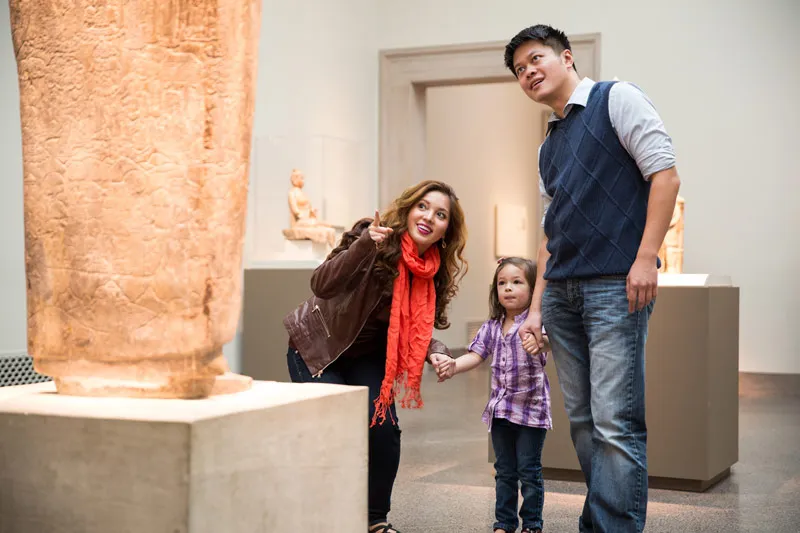
Visiting the Smithsonian's National Museum of Asian Art in Washington, DC
What is the National Museum of Asian Art and how do I get there? The vibrant and colorful world of Asian art is all around at this breathtaking museum located on the National Mall and part of the Smithsonian Institution museums. The National Museum of Asian Art is located at 1050 Independence Avenue SW. The museum opened to the public in 1987, with Dr. Arthur M. Sackler as its primary donor. His immense collection of Asian art included famous Chinese jades and ancient bronzes, necessitating a new Smithsonian museum dedicated to works from Asian nations more than 60 years after the Freer Gallery opened in 1923, whose founder was a railroad-car manufacturer named Charles Lang Freer. The museum now contains more than 26,000 objects across 6,000 years of history. The museum is open daily from 10 a.m. – 5:30 p.m., except on December 25. Admission is always free. In terms of transportation, on-street parking is very limited, so using Metrobus or Metrorail is the best option to reach both galleries. Use the Smithsonian Metro station on the Orange, Blue and Silver lines. The 32, 34 or 36 Metrobus routes all serve the National Mall area. The DC Circulator’s National Mall route will also take you near the museums – making it easy to continue your exploration afterwards. The Freer Gallery features a handicap accessible entrance on Independence Avenue at 12th Street SW. What’s inside the National Museum of Asian Art? Expect a wide variety of Asian art from several regions and eras, including Islamic works, Chinese art, ancient Near Eastern art and pieces from South and Southeast Asia and the Himalayas. It all adds up to a comprehensive and historical look at some of the world’s most fascinating cultures. The museum also hosts events and film screenings, with some held at other museums around town. Check the calendar to see if you can catch one during your DC visit. A final insider tip: make sure to check out the beautiful Enid A. Haupt Garden, situated just outside of the galleries. The four-acre public garden boasts gorgeous fountains, brick paths for walking, a famous Parterre and beautiful scenery.
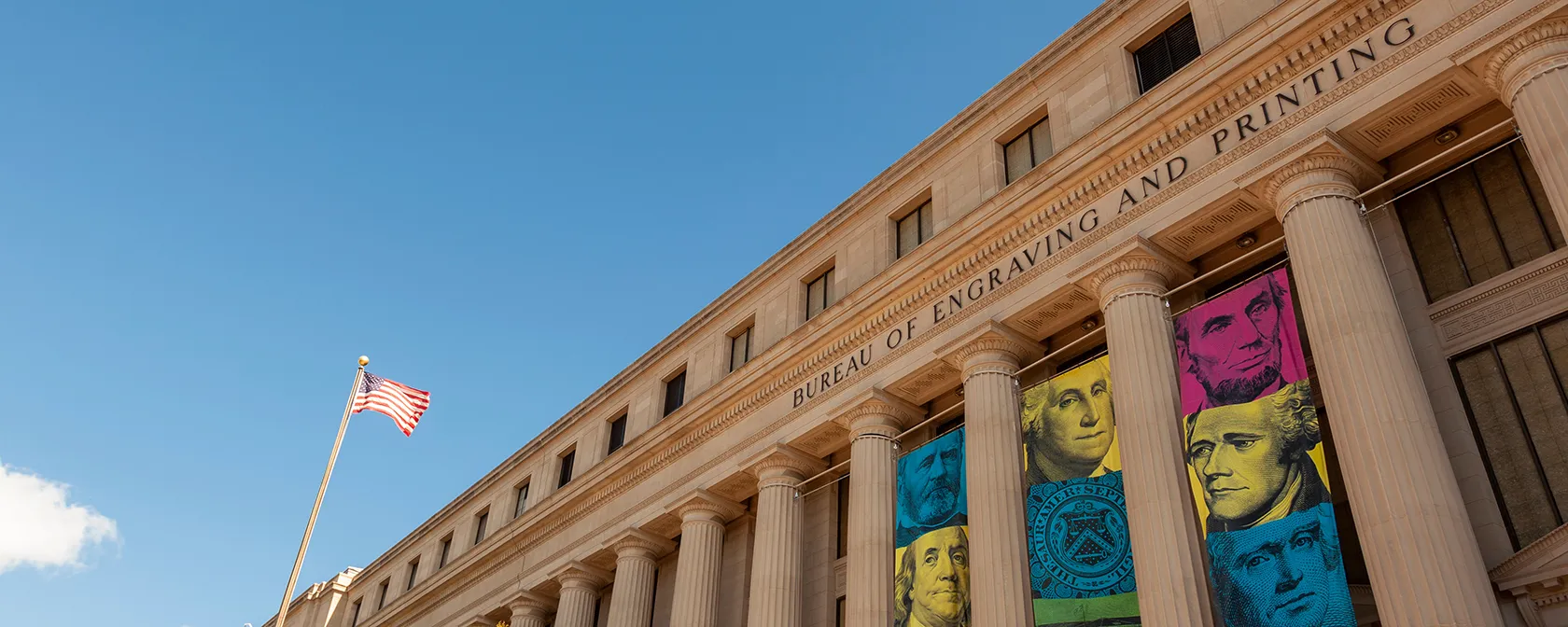
Visiting the U.S. Bureau of Engraving & Printing in Washington, DC
What and where is the U.S. Bureau of Engraving & Printing? The U.S. Bureau of Engraving and Printing, founded in 1862, produces Federal Reserve Notes (also known as paper money, or U.S. dollars) for the Federal Reserve, our country’s central bank (note that coins are made by the United States Mint). The Bureau also produces Treasury securities, military commissions and award certificates, ID cards, invitations and an additional range of security documents for government agencies, making it the largest producer of government security documents in the U.S. The Bureau has two locations: one in Forth Worth, Tx. and the other in, you guessed it, Washington, DC. The official address is 301 14th Street SW, Washington, DC 20228. The facility features two adjacent buildings, with the facade of the main building facing Raoul Wallenburg Place SW, the Tidal Basin and the Jefferson Memorial. Take a tour of the "money factory" Tickets, which are distributed on a first-come, first-served basis, are required for the tour from March through November. The ticket booth is located at Raoul Wallenburg Place SW (formerly known as 15th Street) and opens at 8 a.m., Monday through Friday. The booth closes when all tickets have been distributed for the day. Group tours for groups of 10 up to 30 people run every 30 minutes from 11 a.m. – noon. Limited reserved tour times are offered. To reserve a group tour, fill out the Group Reservation Request Form and e-mail it to TourScheduler@bep.gov. You can learn more about group tours by calling 202-874-2330 or 1-866-874-2330. Call 202-874-2330 for more information about the accessible entrance. All visitors must pass through a security screening before entering the Bureau. Tour guides will direct visitors to enter the building when appropriate. What will I see on the tour? The 40-minute experience will enlighten you on all things related to U.S. currency. The tour begins with an introductory film that details the function of the Bureau and its importance. Along the way, you’ll witness millions of dollars being printed as you stroll through the gallery that overlooks the production floor. The tour also includes exhibits that dive further into the production of our national currency. There’s also a gift shop, open from 8:30 a.m. – 2:45 p.m., that features currency products for sale.