
All Articles
Visiting the U.S. National Arboretum in Washington, DC
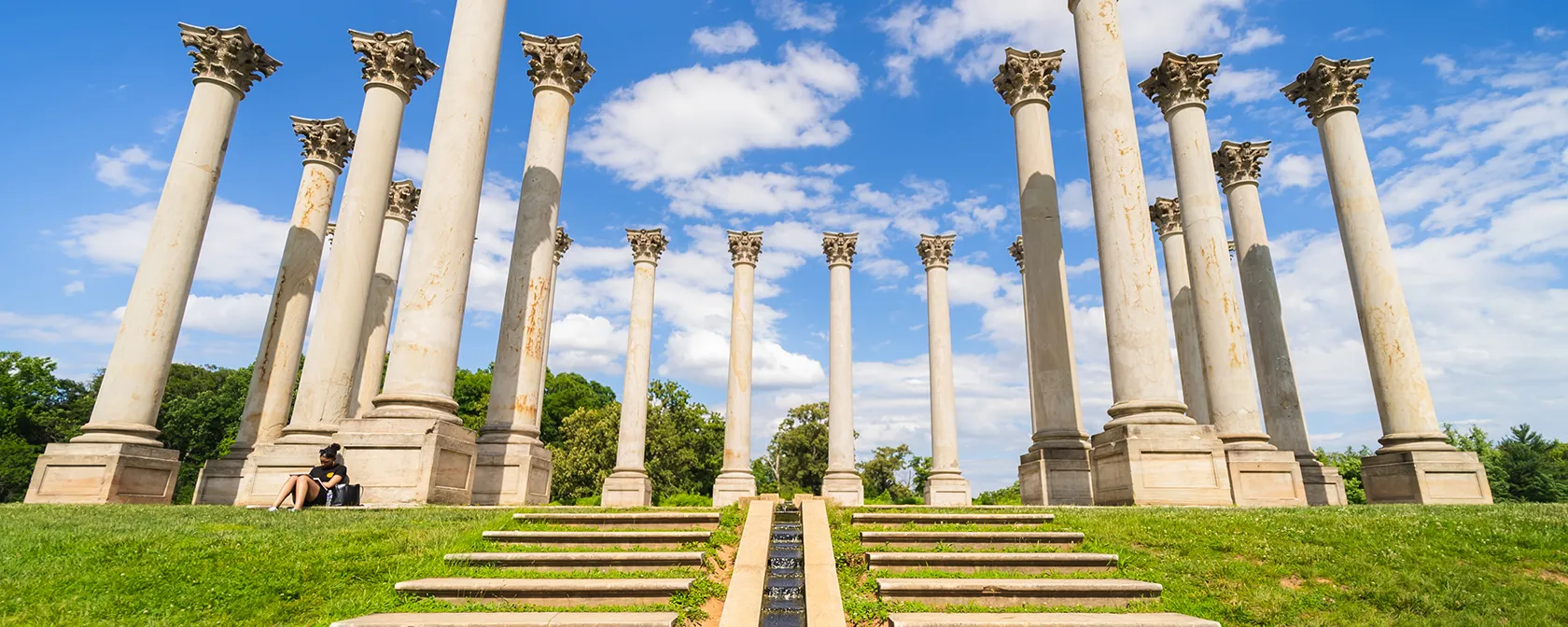
What and where is the U.S. National Arboretum? The U.S. National Arboretum is located at 3501 New York Avenue NE in Washington, DC. The grounds are open to the public from 8 a.m. to 5 p.m. every day of the year except Dec. 25. The Arboretum’s popular National Bonsai & Penjing Museum is open from 10 a.m. to 4 p.m. every day except for federal holidays that fall from November through February. Admission to the Arboretum and the museum is free of charge. Established in 1927 by an act of Congress, the Arboretum aims to increase the aesthetic, environmental and economic importance of landscape and ornamental plants. The attraction does so through gardens and exhibits, long-term botanical research and conservation of resources. The gorgeous, 446-acre property makes for an inspiring and visually captivating visit at any time of the year. The easiest way to reach the National Arboretum is by car, as the grounds are located approximately 10 minutes from the U.S. Capitol Building. Parking is readily available, or you can use Uber or Lyft. Please note that the Arboretum’s R Street entrance is closed after 2 p.m. from Monday through Friday, so make sure to use the New York Avenue entrance if visiting at that time or later. Driving directions from numerous points in the DMV area are available on the Arboretum’s website. If you choose to use Metrorail, exit at the Stadium Armory station on the Blue and Orange lines. Then, use the B-2 Metrobus and exit on Bladensburg Road. From there, walk two blocks to R Street, where you will make a right. Two blocks further, you’ll find the Arboretum gates. What to see and do at the U.S. National Arboretum? The Arboretum presents a stunning collection of plants, with each given its own display. One of the most popular is the Gotelli Conifer Collection, which showcases conifers that hail from a range of climates, including the Arctic and subtropical regions. Japanese maples, ornamental grasses and daffodils combine with the conifers to create an alluring array of colors. Make sure to stop in the gazebo, where you will have a full view of the Conifer Collection while resting. The aforementioned National Bonsai & Penjing Museum is another notable feature of the Arboretum. The museum is a riveting collection of legendary miniature Japanese and Chinese trees. The Japanese art of bonsai goes back more than one thousand years, a practice of growing beautiful trees in artful containers. The art of penjing is an even earlier version of the same practice, with both providing a calming effect on the observer. You’ll learn of this fascinating art and its conversation elements as you are dazzled by these living sculptures and natural scenes. The museum literally changes with the seasons, so it’s worth repeated visits. No discussion of the Arboretum is complete without mentioning the National Capitol Columns. The permanent installation features 22 Corinthian columns that supported the east portico of the U.S. Capitol when it was built in 1828. Once the dome of the Capitol was completed in 1864, builders realized that the columns were not properly constructed to support the dome, creating an odd and unsettling visual. The strange aesthetic was not solved until 1958, and it took until the 1980s for the columns to find their resting place on the Ellipse Meadow in the Arboretum. Now, the site of the columns serves as one of the most beautiful (and Instagram-worthy) sights in the nation’s capital. The U.S. National Arboretum also offers azalea blossoms, making it one of the best places to view blossoms in the District. The azalea blossoms usually peak at a different time than the blossoms found near the Tidal Basin, offering an additional opportunity to marvel at the beautiful trees and their scenic flowers. This arrangement of blossoms is located near the Capitol Column Overlook and the Flowering Tree Walk. Finally, make sure to take note of the Arboretum’s events, which can include moonlight-adorned hikes and celebrations and educational programs.
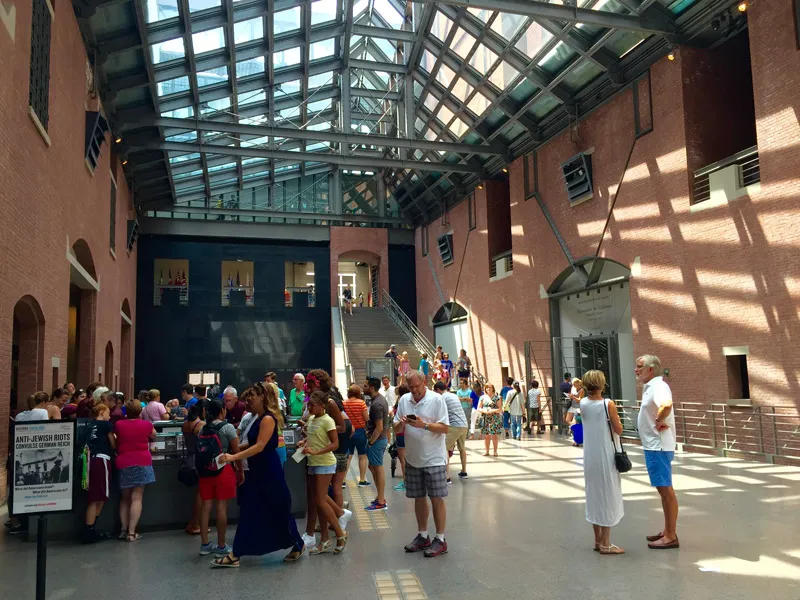
Visiting the United States Holocaust Memorial Museum in Washington, DC
What and where is the United States Holocaust Memorial Museum? The United States Holocaust Memorial Museum is located on the National Mall, just south of Independence Avenue SW, between 14th Street and Raoul Wallenberg Place SW. Its official address is 100 Raoul Wallenberg Place SW, Washington, DC 20024. The museum serves as a living memorial to the Holocaust, one of the worst tragedies the world has ever seen. Its purpose is to educate its visitors on the dangers of hatred and the atrocities of genocide, and how society can confront challenges to freedom and human dignity. Hours & Ticketing The museum is open from 10 a.m. to 5:20 p.m. every day of the year except for Yom Kippur and Christmas Day, December 25. Admission to the museum is free, but from March 1 to Aug. 31, timed tickets (subject to a $1 transaction fee) are needed to enter the museum’s permanent exhibition, which details the story of the Holocaust from 1933-1945. At any other time of the year, you can enter every part of the museum for free. Find out more info on acquiring tickets to the United States Holocaust Memorial Museum. Best way to get there. The easiest way to get to the United States Holocaust Memorial Museum is via Metrorail or the DC Circulator’s National Mall route. The closest Metro stop is the Smithsonian station on the Orange, Blue and Silver lines, just one block from the museum. The closest Circulator stop is no. 6 on the Mall route, which will take you directly in front of the museum. The facility is accessible to visitors who require mobility assistive devices. What exhibits are inside the United States Holocaust Memorial Museum? The centerpiece of the United States Holocaust Memorial Museum is its permanent exhibition, simply titled The Holocaust. Covering three floors, the exhibit uses artifacts, photographs and film to provide a chronological telling of the tragedy, with each floor covering a different era. Along the way, you will see personal objects that belonged to survivors, as well as hear their eyewitness testimonies. The museum’s other exhibits, which often rotate, further serve to educate visitors about the perils of discrimination and violence motivated by prejudice. The learning does not have to stop there. The United States Holocaust Memorial Museum’s website is also full of resources in order to further inform citizens about the damaging effects of prejudice and discriminatory violence, as well as how to confront such behavior and beliefs. The museum frequently hosts film screenings and events, including first-person testimonials from brave survivors of the Holocaust.
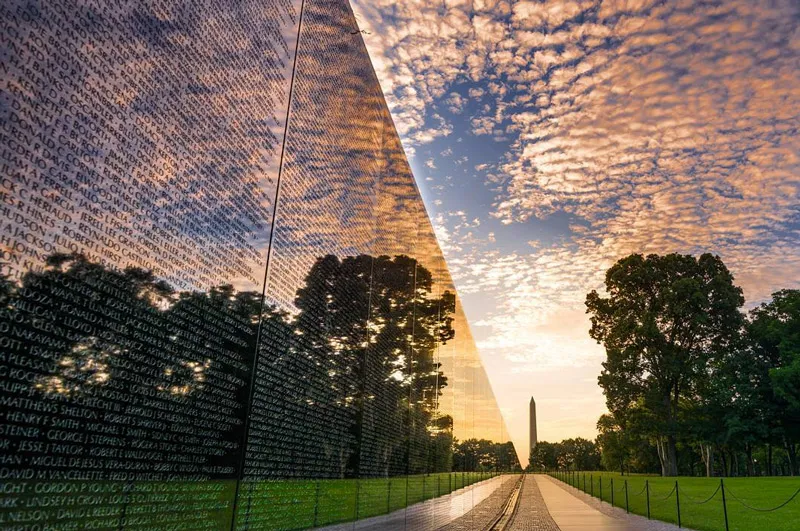
Visiting the Vietnam Veterans Memorial in Washington, DC
What is the Vietnam Veterans Memorial and where is it? The Vietnam Veterans Memorial on the National Mall pays tribute to the brave members of the U.S. Armed Forces who fought in the Vietnam War and were killed or missing in action. The memorial consists of three separate parts: The Three Soldiers statue, the Vietnam Women’s Memorial and the Vietnam Veterans Memorial Wall, also known as The Wall That Heals, which is the most popular feature. The memorial is free and open to the public 24 hours a day, with rangers on duty to answer questions from 9:30 a.m. to 10 p.m. daily. Interpretive programs are provided throughout the day and upon request. You’ll find the memorial located near Constitution Gardens on the National Mall. The closest Metro stops are Foggy Bottom or Federal Triangle on the Orange, Blue and Silver lines. Visitors can also get to the memorial via the DC Circulator’s National Mall route and Metrobus routes 32, 34 and 36. One of the nation’s most poignant war memorials The Vietnam Veterans Memorial Wall provides one of the National Mall’s most powerful scenes. In truth, the “wall” is actually made up of two identical walls that each stretch 246 feet and 9 inches, containing more than 58,000 names. The names are listed in chronological order based on the date of casualty, and within each day, names are shown in alphabetical order. Perhaps the memorial wall’s most defining characteristic is a visitor’s ability to see his or her reflection at the same time as the engraved names, connecting the past and the present like few other monuments can. If you wish to spot the name of a relative or friend while there, search the Vietnam Veterans Memorial Fund’s Virtual Wall before you embark or find the on-site list. Just south of the Vietnam Veterans Memorial Wall is the Vietnam Women’s Memorial, which commemorates the 265,000 women that served in the Vietnam War, many of whom worked as nurses. The 2,000 pound bronze structure stands 15 feet tall and depicts three women attending to a wounded soldier, reflecting the unity required during the conflict. The third part of the Vietnam Veterans Memorial is The Three Soldiers (also known as The Three Servicemen) bronze statue, another moving reminder of the disparate groups that had to come together during the Vietnam War. Each of the three soldiers stands seven feet tall, situated on top of a one-foot granite base, and are arranged as if to show the three soldiers gazing upon the memorial wall at the names of their fellow comrades. Honoring veterans On any given visit, you may encounter former servicemen at the memorial. In fact, the Honor Flight Network is a non-profit dedicated to bringing vets, often elderly, to DC to visit the memorials which honor their service to the nation. These visits are often filled with emotions and help provide closure for veterans by reinforcing the importance of their service and sacrifice.
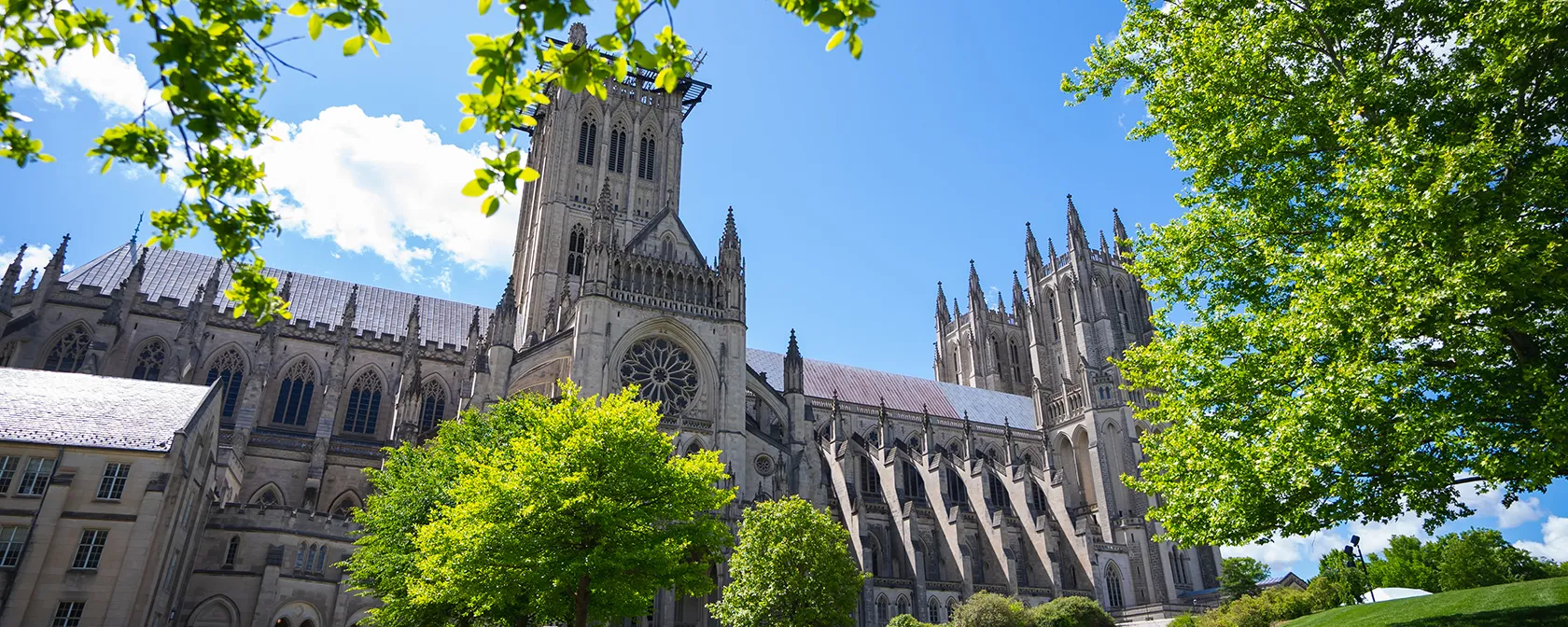
Visiting the Washington National Cathedral
Stained-glass windows, Gothic spires and flying buttresses make the Washington National Cathedral look ages old, but the grand church was actually constructed during the 20th century. Though overseen by the Episcopal Church, the house of worship welcomes people of all faiths to its impressive site on the highest point in DC. History and architecture Stonemasons and builders erected the cathedral beginning in 1907, completing it 83 years later in 1990. Carved from Indiana limestone, the structure boasts a 30-story-tall central tower, an interior nine-bay nave and 215 stained glass windows, including one embedded with a moon rock. Inside, you’ll find a crypt level where Helen Keller and President Woodrow Wilson are buried. On the nave level, you’ll discover an intricately carved wooden choir area and numerous serene chapels. On the exterior, you can search out the 112 gargoyles (decorative rain spouts) and grotesques (carved stone creatures) with the help of a map (available at the entrance) or via guided tours conducted during summer months. Be on the lookout for the grotesque of Darth Vader and the hippie gargoyle. The grounds You’ll find 59 acres of grounds designed by Frederick Law Olmsted Jr. around the National Cathedral. Enclosed by stone walls, the medieval-style Bishop’s Garden includes herb plantings, roses and a 13th-century Norman arch. Stone paths wind through Olmstead Woods, one of the only old-growth forests in DC. There’s also a cafe serving coffee, desserts, brunch and lunch located on the grounds in the 1904 Old Baptistry building. Guided tours and a self-guided tour brochure can help you explore the green spaces. Seeing the Cathedral Church services and musical performances are the only way to experience the cathedral for free. Sunday services are open to all, and Monday through Thursday at 5:30 p.m., evening concerts fill the nave with singing. Outside of spiritual visits, admission to the cathedral is required: $12 for adults, $8 for children ages 5 to 17 and free for kids 4 and under. The cathedral offers daily guided walking highlights tours with admission at 10:15 a.m. Monday through Saturday, and 1 p.m. on Sunday, although check the tour schedule for the latest updates. Numerous ticketed specialty tours, including seasonal gargoyle hunts, artisanship-themed walks and tower climbs, are available to be booked in advance. You can also sightsee with Big Bus Tours, and its hop-on, hop-off tickets let you exit the bus to explore inside the cathedral once you're there. After the National Cathedral, make a day of it exploring the Upper Northwest neighborhood.

Voyages en groupes internationaux
Sur les millions de visiteurs qui se rendent à Washington, DC chaque année, beaucoup viennent en groupes. Pour cause, la ville facilite les voyages en groupes par son accessibilité, ses réglementations claires en matière de transport en bus, ses options culinaires exceptionnelles, ses visites éducatives et ses nombreux musées gratuits. Voyages en groupes internationaux à Washington, DC Avec ses ambassades, sa cuisine aux accents internationaux, ses grands événements sportifs, ses musées gratuits et ses festivals renommés comme le National Cherry Blossom Festival, la ville accueille des touristes du monde entier. Vous vous sentirez comme chez vous dans cette ville plus qu’agréable. Transport de groupes Le Convention Metro Pass : le meilleur moyen pour permettre aux groupes de visiter Washington, DC. Procurez-vous des pass Metrorail illimités de trois jours pour vos excursions en groupes. Contactez Margaret Luo pour organiser votre voyage en groupe ou appelez le +(202) 789-7039.