
All Articles
Guide to Hosting Unique Events in Washington, DC Sports Venues
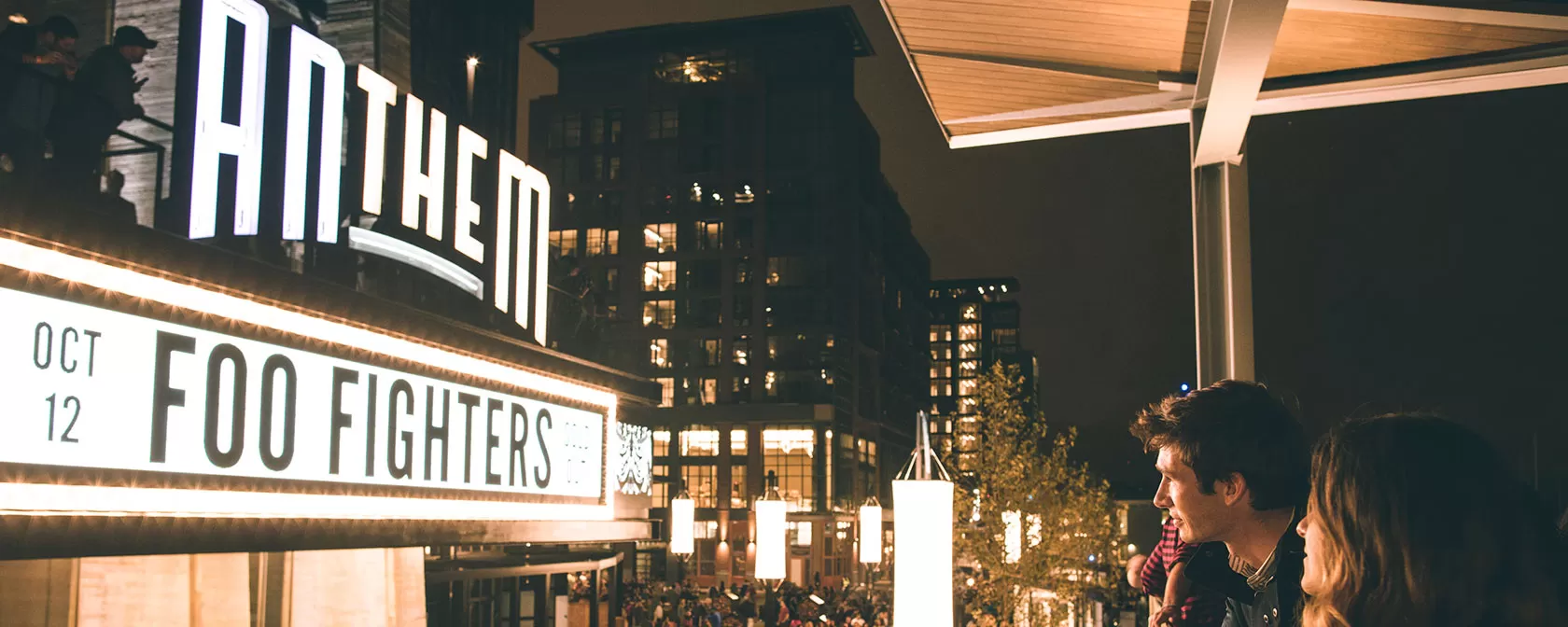
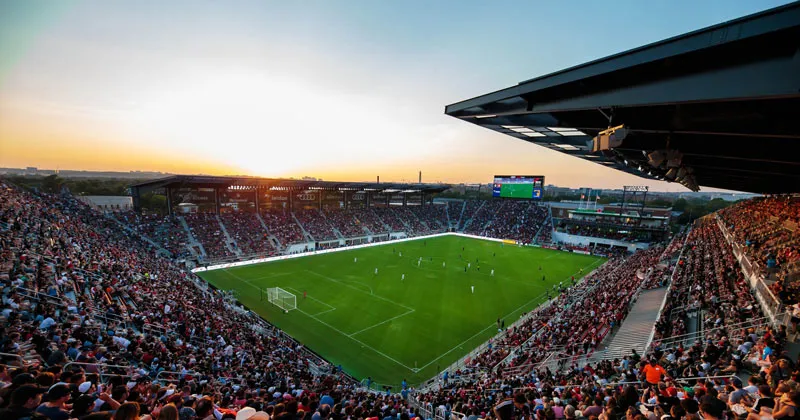
The nation's capital is a premier destination for sports spectators with a robust local athletic community. Its sports and entertainment venues are versatile and exciting, whether it is the newly opened Audi Field and The Arena or Nationals Park and Capital One Arena. DC’s facilities are flexible for any sporting event – be it e-sports, squash, or CrossFit®️. Northwest DC Capital One Arena Located in the Chinatown/Penn Quarter neighborhood, Capital One Arena is home to the AFL's Washington Valor, NBA’s Washington Wizards, NHL’s Washington Capitals and the NCAA’s Georgetown Hoyas’s Men’s Basketball Team. In addition to world-class sporting events, the 20,000-seat arena offers concerts, family shows, trade shows and special events. Events at Capital One Arena: 2016 Atlantic Coast Conference (ACC) Men’s Basketball Tournament (March 8-12, 2016), which returns to DC in 2021 2017 Big Ten Conference Men’s Basketball Tournament (March 8-12, 2017) 2018 Atlantic 10 Men’s Basketball Tournament (March 7-11, 2018), which returns to DC in 2022 2019 NCAA Men’s East Regional Championship (Sweet 16 & Elite 8) (March 29-31, 2019) Hugh Jackman – 1st solo musical tour (July 1, 2019) WWE Live: SummerSlam Heatwave Tour (July 6, 2019) Squash on Fire Squash On Fire is a world-class, membership-free squash facility located in downtown DC. The facility features eight courts, a locker room with showers, treadmills and stationary bikes for warming up, an in-house restaurant and bar and a pro store, so the boutique gym has the luxe amenities of a traditional club. Events at Squash on Fire: World Squash Federation Men’s World Team Championship (Dec. 14-21, 2019) Walter E. Washington Convention Center The Walter E. Washington Convention Center is as functional as it is artistically impressive. The 2.3-million-square-foot space hosts meetings, conventions and events of every kind, from medical industry annual meetings to comic book-inspired expos and board retreats. You can mold all 703,000 square feet of exhibition space inside the convention center into whatever shape you need. Within its two levels and five exhibit halls is a 473,000 square-foot exhibit hall that can be subdivided into three rooms, 198,000 square feet of flexible meeting space, a 52,000 square-foot ballroom and 77 breakout rooms. In addition to meetings and convents, special events at the Walter E. Washington Convention Center include: National Book Festival (Annual event hosted in the summer) Washington Auto Show (Annual event hosted in the winter) 2018 MLB All-Star Game FanFest (July 13-17, 2018) Capitol Hill Volleyball Classic (Feb. 15-17, 2019) Pokémon World Championships (Aug. 16-18, 2019) Southeast DC DC Armory The DC Armory, located east of the U.S. Capitol building, can host conventions, circuses and inaugural balls as well as concerts, expos, sporting events and trade shows. The Armory can be adapted to audiences from 10 to 10,000 people and its interior features nearly 70,000 square feet of exhibition space. The Armory is the home of the DC National Guard and the DC Rollergirls, a female flat-track roller derby league. Events at the DC Armory: Marine Corps Marathon Expo (Annual event hosted in October) Boxing: Luis Ortiz vs. Tony Thompson (March 5, 2016) Boxing: Adrien Broner vs. Ashley Theophane (April 1, 2016) Mid Atlantic CrossFit Challenge (April 12-14, 2019) Title IX Holiday Invitational Conference and Classic (Annual event hosted in December) Nationals Park Nationals Park is in the Capitol Riverfront neighborhood in Southeast DC. Nats Park is more than just a baseball stadium – it is one of the largest venues in DC, boasting the ability to accommodate approximately 40 to 40,000 guests. On non-game days, attendees can access exclusive spaces such as the field, clubhouse and dugouts. Meeting attendees can try their hand at batting practice in the Nationals’ cages or compete with the Racing Presidents on the warning track, a fan-favorite. Their indoor club spaces and conference center are perfect for a business meeting, fundraising gala, convention party or social event. With 55,000+ square feet in 14 indoor spaces and 250,000+ square feet in eight outdoor spaces, Nationals Park one of DC’s most flexible venues. Events at Nationals Park: IPW Closing Ceremony (June 7, 2017) 2018 MLB All-Star Game (July 17, 2018) Spartan Race: Stadion Series (May 2019) RFK Stadium Robert F. Kennedy Memorial Stadium, the historic DC sports venue that has entertained spectators with its crowd-pleasing sightlines since 1961, is affectionately known as “RFK” around the globe. The home turf for professional, collegiate and high school games during its history, RFK was the first major stadium designed specifically as a multisport facility for both football and baseball. Construction on the stadium began in September 2018 to reimagine the 190-acre campus and transform the fields of nearly 27 acres of asphalt into three new state-of-the-art artificial turf fields with community amenities. The $32 million five short-term program elements are part of restoring the Campus as one of the District's original sports and entertainment corridors in the city. The fields open in June 2019 and the RFK Campus redevelopment project will continue over the next two to five years including a market hall, three pedestrian bridges and more. Music fans have also been thrilled by performances under the stars at RFK by artists such as Elton John, the Rolling Stones, Stevie Wonder, U2, the Eagles and the Grateful Dead. Events at RFK Stadium: 2015 World Police & Fire Games Opening Ceremony (June 26, 2015) USA Rugby: Wales vs. South Africa (June 2, 2018) International Friendly: Peru vs. El Salvador (March 26, 2019) Events DC High School Football Kickoff Classic (Annual event hosted in September) Festival Grounds at RFK Stadium Situated along the Anacostia River, the RFK Stadium Festival Grounds has hosted several popular sporting events and music festivals. Major events held there include the Rock ‘n’ Roll USA Marathon and ShamrockFest. The Rock ‘n’ Roll USA Marathon is the only marathon run entirely in Washington, DC and features local bands as well as a celebratory finish line festival on the festival grounds. ShamrockFest, one of the largest St. Patrick’s Day festivals held in the Mid-Atlantic region, features over 50 bands and DJ’s on 10 stages as well as food and beverages, carnival rides and more. Events at Festival Grounds: Red Bull Global Rally Cross (July 29-30, 2016) Rock ‘n’ Roll USA Marathon (March 9, 2019) ShamrockFest (March 23, 2019) Wanderlust 108 Yoga (Sept. 28, 2019) Entertainment and Sports Arena The new state-of-the-art home to Washington, DC’s WNBA Washington Mystics, located in Congress Heights, also hosts the NBA G League Capital City Go-Go, exhilarating concerts, pounding boxing matches and thrilling e-sports tournaments. It opened in September 2018. The 118,000-square foot, 4,200-seat facility is open year-round and prepped to host your next tournament, as well as your next concert or prize fight. Advanced arena WiFi is capable of pushing gigabits of data per second throughout the venue, making it a prime hub for DC’s e-sports community while intimate seating allows fans to get a prime view of the boxing ring during an MMA match. The venue is operated and managed by Events DC, the District’s convention and sports authority. Events at Entertainment and Sports Arena: Professional Fighters League Semi-Finals (Oct. 20, 2018) Red Bull Conquest (Nov. 16-17, 2018) Events DC Holiday Hoops Fest (Dec. 22, 2018) Colonial Athletic Association (CAA) Men’s Basketball Tournament (2020-2022) Southwest DC Audi Field Audi Field, located in Buzzard Point in Southwest DC is home to D.C. United, the most championed professional team in the Washington, DC. The state-of-the-art stadium, which opened in July 2018, hosts a variety of other sporting and cultural events, community activities and concerts. The capacity holds 20,000 fans, and also has 31 luxury suites, a bike valet, and 500,000 total square feet of mixed-use retail and residential space on site. Events at Audi Field: U.S. Mens National Soccer Team vs. Jamaica National Soccer Team (June 5, 2019) Toronto Football Club (FC) vs. DC United (June 29, 2019) Premier Lacrosse League (July 7, 2019)
Guide to LEED-Certified Hotels & Venues
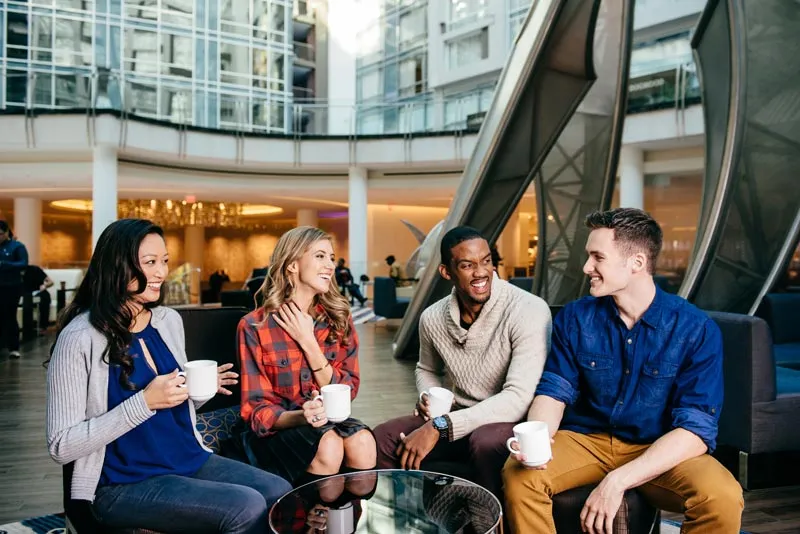
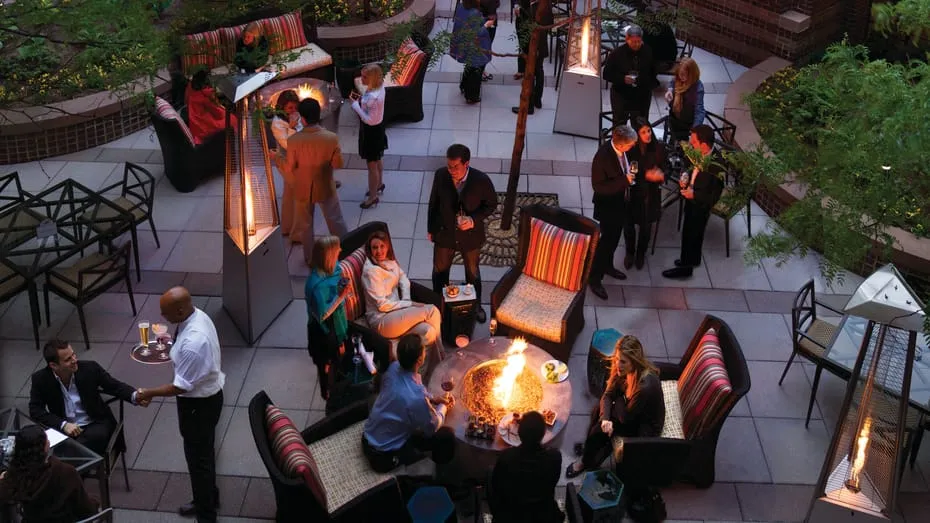
The Wharf The Hoffman-Madison Waterfront mixed-use development at The Wharf in Southwest DC is the perfect example of a new environmentally-friendly development that is LEED-Neighborhood Development Gold status. The sustainability pillars contributing to the neighborhood include InterContinental Washington, DC- The Wharf, a LEED Gold-certified hotel and the dual-branded property featuring the Hyatt House and Canopy by Hilton, which achieved its LEED Gold-certification. Highlights of the development’s sustainability initiatives include more than 87 percent of material being diverted from landfill and disposal, flooring made from low volatile organic compounds and the hotel’s respective structures made from 23 percent recycled content. Farmers Restaurant Group All of the delicious farm-to-table restaurants in Farmers Restaurant Group – Founding Farmers, Farmers Fishers Bakers, and Farmers & Distillers – are LEED-certified. Founding Farmers was the first full service, upscale casual restaurant to pursue LEED certification and many more continue to follow suit. The mezzanine level of Founding Farmers has a capacity of up to 75 guests while the General’s Parlor on the lower level of Farmers & Distillers is a 16-seat private dining room. The Concordia Located between Dupont Circle and Washington Circle, The Concordia boasts a LEED Gold-certification, providing guests with an environmentally conscious experience. Among the hotel’s many features are guestroom kitchen appliances that are Energy Star-rated and a green roof and green screen that reduce rain water runoff from entering local waterways and help insulate the building from the elements. Motto by Hilton Washington DC City Center The Motto by Hilton Washington DC City Center is LEED Silver-certified with a design full of extensive green features. You will find refillable water stations throughout the hotel, a vegetated roof area for hosting events and smart LED lighting and air conditioning with infrared sensors that auto shut when you are not in the room. Hilton Washington DC National Mall Hilton Washington DC National Mall is a LEED Silver-certified hotel with 23,000 sq. ft. of meeting space, a unique Solarium offering a year-round indoor/outdoor ambience and poolside event space with fire pits, cabanas and a bar that can accommodate up to 300 people. Marriott Marquis Washington DC As the only hotel adjacent to the Walter E. Washington Convention Center, the Marriott Marquis Washington DC is a LEED Silver-certified 15-story property with 105,000 sq. feet of meeting space, making it one of the largest LEED Silver-certified hotels in the U.S. Nationals Park Nationals Park is the nation’s first major professional stadium to become LEED Silver-certified by the U.S. Green Building Council. The project incorporates a variety of sustainable design elements including a brownfield redevelopment located near the Anacostia River, energy conserving light fixtures and an intricate water filtration system. Audi Field The 20,000-seat home field of the D.C. United team of Major League Soccer is a LEED Gold-certified venue. Audi Field also partners with Recycle Track Systems and New Columbia Solar on multiple sustainable initiatives throughout the stadium. Viceroy Washington DC The 178-room Viceroy Washington DC is LEED Silver-certified, featuring green key switches in each guest room, low-emitting materials such as paint, finishes and floorings and refillable bottles of showering essentials as opposed to disposable bottles. Eaton Washington DC Eaton Washington DC is LEED Gold-certified, featuring many sustainable initiatives throughout the hotel and house. Guestrooms feature the most natural and organic mattresses and bathroom amenities are 100 percent natural, while the rooftop features an herb garden and wind turbine. Once you're done reading about LEED-certified hotels and venues, check out why DC is one of the healthiest, greenest and most livable cities in the nation.
Guide to Sustainable Spaces for Your Next Event
Companies are increasingly adopting sustainable practices, energy-efficient lighting and reusable products to reduce their carbon footprints and save costs. Their efforts benefit meeting planners considering the Washington metropolitan area, which is a destination that boasts multiple key industries and shares a common vision for a sustainable planet as the world’s first LEED Platinum city according to the U.S. Green Building Council. Check out the variety of sustainable spaces the city boasts in each quadrant. Northeast DC: Right Proper Brewing Company is run completely on solar power, producing almost all of the company’s consumed electricity. As part of their leadership’s focus on the local community and their Brookland neighbors, the independent craft brewery wanted to minimize its environmental impact. For a brewery, this means returning to the roots of brewing. Right Proper proudly says “our beer starts and ends with the sun.” The company also uses LED lights in the tasting rooms and production facilities and gives spent grain away for free to local farmers. DC Harvest is a beautiful local restaurant on H Street, perfect for a business meeting or gathering for up to 60 guests. The family-owned restaurant specifically sources products from local farms and vendors, offering one of the freshest farm-to-table meals in the District. Northwest DC: Set in historic Georgetown, the Four Seasons Hotel Washington, DC prides itself in its green initiatives, especially when booking events. Planners and attendees can “determine their shade of green” by choosing filtered water by the pitcher over plastic bottles, organic meal breaks and recycled notepads. The Forbes five-star hotel also gives attendees the option of adding extra plants for additional oxygenation and airport pickup via a hybrid sedan. The highly anticipated Eaton DC opening summer 2018 approaches sustainability from inside the hotel to the event spaces and beyond. Guestrooms feature natural and organic mattresses and bathroom amenities, while the rooftop houses an herb garden and wind turbine. The hotel employs an aerobic food waste decomposition system that eliminates food waste on-site. Ben’s Chili Bowl, located on U Street where some of mural artist Aniekan Udofia's beautiful alleyway murals live, runs on energy-efficient HPT8, reducing energy use by up to 50 percent in comparison to its original 60-year-old lighting. The Ben’s Chili Bowl location on H Street NE, which opened in 2015, also boasts efficient lighting, HVAC and Energy Star-certified appliances. Farmers Restaurant Group, the brand that runs Farmers & Distillers, Farmers Fishers Bakers and Founding Farmers, makes sustainability their mission and was named one of the “10 Most Sustainable Restaurants in America” by HuffPost. The brand has in-house recycling and composting programs that keep 90 percent of waste out of landfills and uses Energy Star qualified appliances and monitors, low-flow faucet aerators, refurbished-recycled materials in furniture and green cleaning products. The Walter E. Washington Convention Center is committed to reducing its carbon footprint and making a difference through its “Know the Code” color-coded recycling and waste minimization program. The program has helped the convention center take the lead on extensive recycling initiatives, along with its PepsiCo partnership that has installed “dream machines” surrounding the convention center to encourage beverage container recycling rates. Monumental Sports, the operator of Capital One Arena in Chinatown, recently embarked on a new solar project with OneEnergy Baker Point solar. Baker Point solar produces clean renewable energy for the arena, which is now operating using 25 percent solar energy. Southwest DC: The 100 percent wind-powered Mandarin Oriental is a proud partner of the Anacostia River Keepers, who offer a series of volunteer cleanups removing thousands of pounds of trash a year from the Anacostia. Mandarin Oriental also offers Anacostia River Keepers’ services to organizations that want to add sustainability and charity elements to their events. The new Wharf along the Southwest Waterfront has multiple green options. Choose from InterContinental Washington, DC - The Wharf or the dual-branded property featuring the Hyatt House and Canopy by Hilton, all of which offer a variety of sustainable meeting spaces with breathtaking waterfront views. Highlights of the development’s sustainability initiatives include more than 87 percent of material being diverted from landfill and disposal, flooring made from low VOC and hotel buildings comprised of recycled content. Audi Field is the new green home of Major League Soccer’s D.C. United. The 20,000-seat field, which opened in July 2018, is not only LEED Gold certified, but also a partner to Recycle Track Systems and New Columbia Solar. Recycle Track Systems is implementing food waste composting and staff training. There will be a short educational pregame video that is meant to teach fans how to recycle waste. In addition, solar panels in the venue are expected to offset the stadium’s electrical usage by one third. Southeast DC: Nationals Park is the nation’s first major professional stadium to become LEED Silver-certified. The project incorporates a variety of sustainable design elements including a brownfield redevelopment that is located near the Anacostia River, energy conserving light fixtures and an intricate water filtration system. District Winery is DC’s first winery, boasting 17,000 sq. feet in Capitol Riverfront and overlooking the Anacostia River. The vibrant waterfront venue has LED lighting, energy-efficient equipment and a green roof for storm water control. Northern Virginia: The National Conference Center in Leesburg, Va. is Green Seal™ GS-33 Silver and Virginia Green™ certified. The National continues to host eco-friendly events and sustainable meetings, taking proactive measures to save energy. As a member of the International Association of Conference Centers (IACC) and the winner of the 2010 Loudon Country Green Business Challenge, it is no surprise that green initiatives are a priority for the National Conference Center, which boasts 250,000 square feet of meeting space and 250 meeting rooms. Lansdowne Resort and Spa is committed to protecting the environment and conserving natural resources, as a Virginia Green Lodging facility. The resort sports high-efficiency LED lighting in all guest rooms, restaurants and public areas; bee hives that support vital bee populations and a certified Monarch Butterfly way station to help bolster the population of local Monarch butterflies; and all restaurants are committed to purchasing fresh and sustainable foods grown locally. Continue your exploration of one of the healthiest, greenest and most livable cities and plan your next green meeting or event in Washington, DC.

Guide to the DC Streetcar
After a more than a 50-year hiatus, the DC Streetcar, one of the city’s first modes of public transportation made its triumphant return in 2016, transporting riders through the revitalized H Street NE corridor. What is it? The DC Streetcar makes traveling within the District much easier for residents and visitors, connecting commuters to the bustling H Street NE neighborhood up to Benning Road with a modern twist. The innovative streetcar design is a far cry from the days when the District’s streetcars were drawn by horse. Operating on fixed rails with low floors for quick and easy boarding and wheelchair accessibility, each streetcar can accommodate about 150 people, seated and standing. The average streetcar travels between 25 and 35 miles per hour. Where does it pick up and drop off? The H Street/Benning Road Line is currently the only route and runs east starting from Union Station toward Oklahoma Avenue and west starting at the Benning Road/Oklahoma Avenue stop. The streetcars run every 10-15 minutes. The Streetcar Tracker provides real-time vehicle arrivals for eastbound and westbound travel. When can I ride it? Hours of operation are Monday through Thursday from 6 a.m. to midnight, Friday from 6 a.m. to 2 a.m., Saturday from 8 a.m. to 2 a.m., and Sunday from 8 a.m. to 10 p.m. How much does it cost to ride? DC Streetcar is currently free to ride until the District Department of Transportation announces a change in fare policy. How can I ride it? Riders may board DC Streetcar at any of the eight stops on the H Street/Benning Road Line. When waiting for a streetcar, please stand clear of the platform edge. Once the doors open, let others disembark before boarding, and board carefully, noting areas reserved for disabled or elderly riders. All stops and streetcars are ADA accessible. On the streetcar, press the “stop request” button to exit. Check out the ‘How to Ride’ brochure for more riding tips. What’s next? Future lines may serve the neighborhoods of Georgetown, Anacostia, Woodley Park/Adams Morgan, Congress Heights, Buzzard Point and Rhode Island/Eastern Avenue. The DC Streetcar system adds to the neighborhood’s transportation options and it allows you to experience the lively H Street NE corridor, a locally beloved neighborhood with arcade bars, live music venues, bustling cafes and top restaurants! If you liked this piece, you may want to read some more tips to getting around DC.
Guide to the National Cherry Blossom Festival in Washington, DC
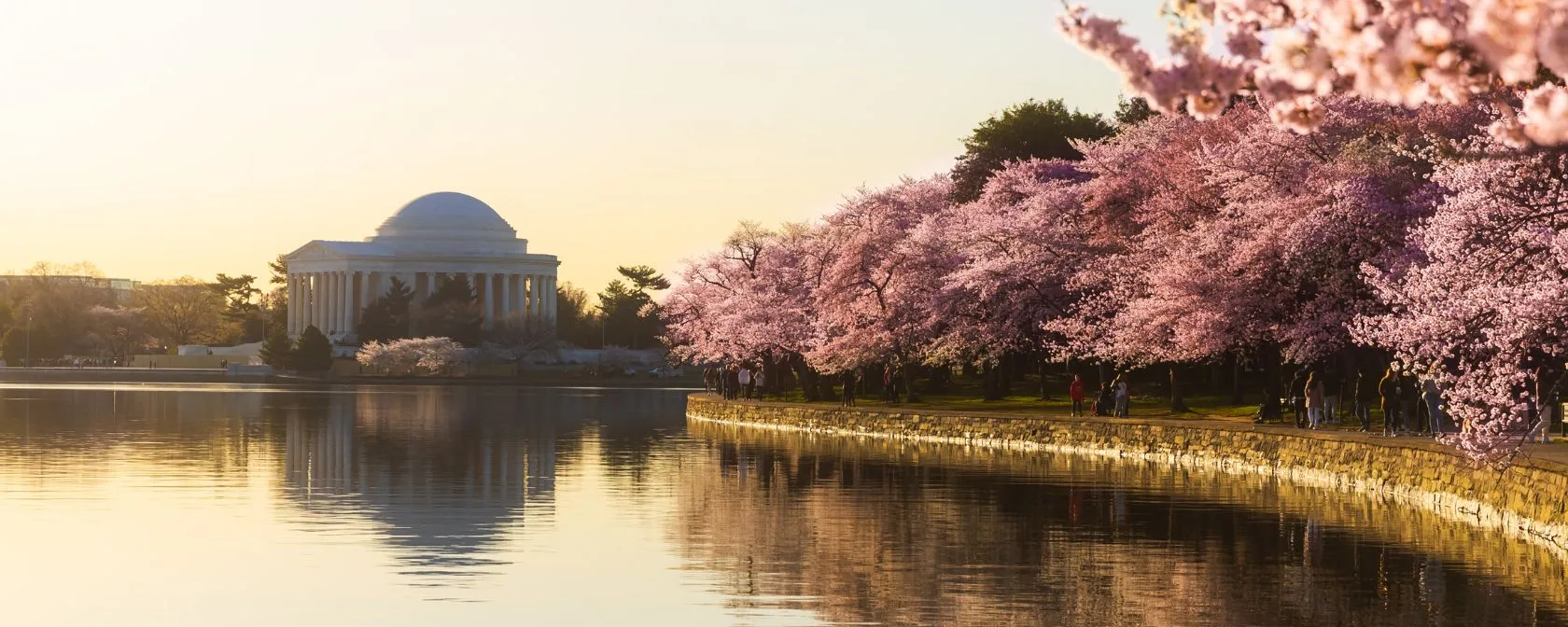
Nothing signifies the arrival of spring in the nation's capital quite like the blooming of the cherry blossom trees and the National Cherry Blossom Festival to celebrate the occasion. Visitors descend upon Washington, DC each year to admire the 3,000-plus trees. The Festival is full of events that honor American and Japanese cultures and represents a close bond forged between the two countries that began with Tokyo Mayor Yukio Ozaki’s gift of the trees back in 1912. Speaking of trees: you can assist in the effort to preserve and protect DC's iconic cherry trees through the Trust for the National Mall's Adopt a Cherry Tree campaign. The National Park Service offers the latest information regarding peak bloom date predictions. The National Cherry Blossom Festival offers an array of celebratory events that feature local businesses and provide a riveting showcase for Japanese culture. For those who wish to celebrate from afar, enthusiasts can see the cherry blossoms via the live BloomCam. Tell me more about DC's cherry blossoms and peak bloom Peak bloom is the magical period when visitors can see the cherry blossoms in full bloom. The peak bloom dates are defined as the days when 70 percent of the trees surrounding the Tidal Basin have opened their buds, creating an unforgettable sea of pink and white. The National Park Service (NPS) is responsible for measuring the growth of the buds of the trees and provides a prediction of when peak bloom will arrive each year. On average, peak bloom occurs between the last week of March and the first week of April, but the date changes year-to-year. For instance, 2024’s peak bloom occurred on March 17 due to early warm weather, while 2018's bloom did not happen until April 5 due to a cold winter. The blooming period, when 20 percent of the blossoms are open before the petals and leaves fall, can last up to 14 days, depending on weather conditions. Just remember that "forecasting peak bloom is almost impossible more than 10 days in advance," according to NPS. The best viewing of the cherry blossom trees typically lasts four to seven days after peak bloom begins, but the blossoms can last for up to two weeks under ideal conditions. For more tips to help plan your visit, make sure to check out our list of things you need to know about the National Cherry Blossom Festival. Please do your part in helping to protect the National Mall and the cherry blossoms. We kindly remind you to enjoy the blossoms, but never pick them (it’s against the law). More about the National Cherry Blossom Festival The National Cherry Blossom Festival isn't just a celebration of the blossoms—it's a four-week-long cultural festival held across the city. Components of the Festival include the Opening Ceremony, Art in Bloom, the Blossom Kite Festival, Petalpalooza, the annual Parade, Sakura Matsuri - Japanese Street Festival and the annual Pink Tie Party fundraiser. How do I get to the cherry blossom trees surrounding the Tidal Basin? There are many great ways to get to the stunning cherry blossom trees surrounding the Tidal Basin. The DC Circulator's National Mall route makes stops directly on the Tidal Basin at the Jefferson and Martin Luther King, Jr. memorials, as well as other popular sites near the cherry blossoms. If you're taking the Metro, use the Blue, Orange or Silver lines and exit at the Smithsonian Metro stop. From there, it’s a 10-15 minute walk to the Tidal Basin Welcome Area, located at 1501 Maine Avenue SW. Via Metrobus, the 32 and 36 routes will drop you at the National Mall, near the Washington Monument. A 10-minute walk south will bring you to the Tidal Basin Welcome Area & ANA Stage. For more information about getting to the blossoms, check out our guide to reaching the most-popular cherry blossom spots in DC, as well as less-populated areas for blossom revelry. Where can I stay during the National Cherry Blossom Festival? Celebrate springtime by checking out these National Cherry Blossom Festival partner hotels as well as spring packages, deals and discounts at some of the city's best places to stay. In addition to these hotel packages, many DC-area hotels offer special cherry blossom-themed deals and discounts, which may include a free spring-inspired cocktail, chocolates, meals or more. Make sure to check out all the places to stay in Washington, DC. Fun facts about Washington, DC’s cherry blossoms The first donation of 2,000 trees, received in 1910, was burned on orders from President William Howard Taft. Insects and disease had infested the gift, but after hearing about the plight of the first batch, the Japanese mayor sent another 3,020 trees to DC two years later. First Lady Helen Herron Taft planted the first tree in West Potomac Park. Many First Ladies, including Mamie Eisenhower, Lady Bird Johnson, Hillary Clinton and Laura Bush, have officially commemorated the blossoms. On March 27, 2012, Michelle Obama took up the cause by planting a cherry tree to mark the centennial of the blossoms. One of the earliest recorded peak blooms occurred on March 15, 1990, while the latest recorded peak bloom occurred on April 18, 1958. The majority of the cherry blossom trees around the Tidal Basin are of the Yoshino variety. But another species, the Kwanzan, usually blooms two weeks after the Yoshino trees, giving visitors a second chance to catch the blossoms.